Vertical Lifelines
A vertical lifeline is the rope that runs straight down a ladder, a rooftop drop, or the side of a structure so a worker can climb while a rope grab trails behind and locks the instant it is loaded. Every line here is a KStrong assembly, sold by the length from a 25 ft rope in the mid two figures up to a 500 ft coil in the low four, and split by two things: what the rope is made of and how each end is finished. All of them ride with a rope grab and clip to a harness below and an anchor above, so the rope is one piece of a system, not the whole answer. The guide below covers the rope choice, the end fittings, and the OSHA and ANSI numbers that decide which line belongs on which job.
Compare Vertical Lifelines
| Model | Price | Overall Length | Capacity | |
|---|---|---|---|---|
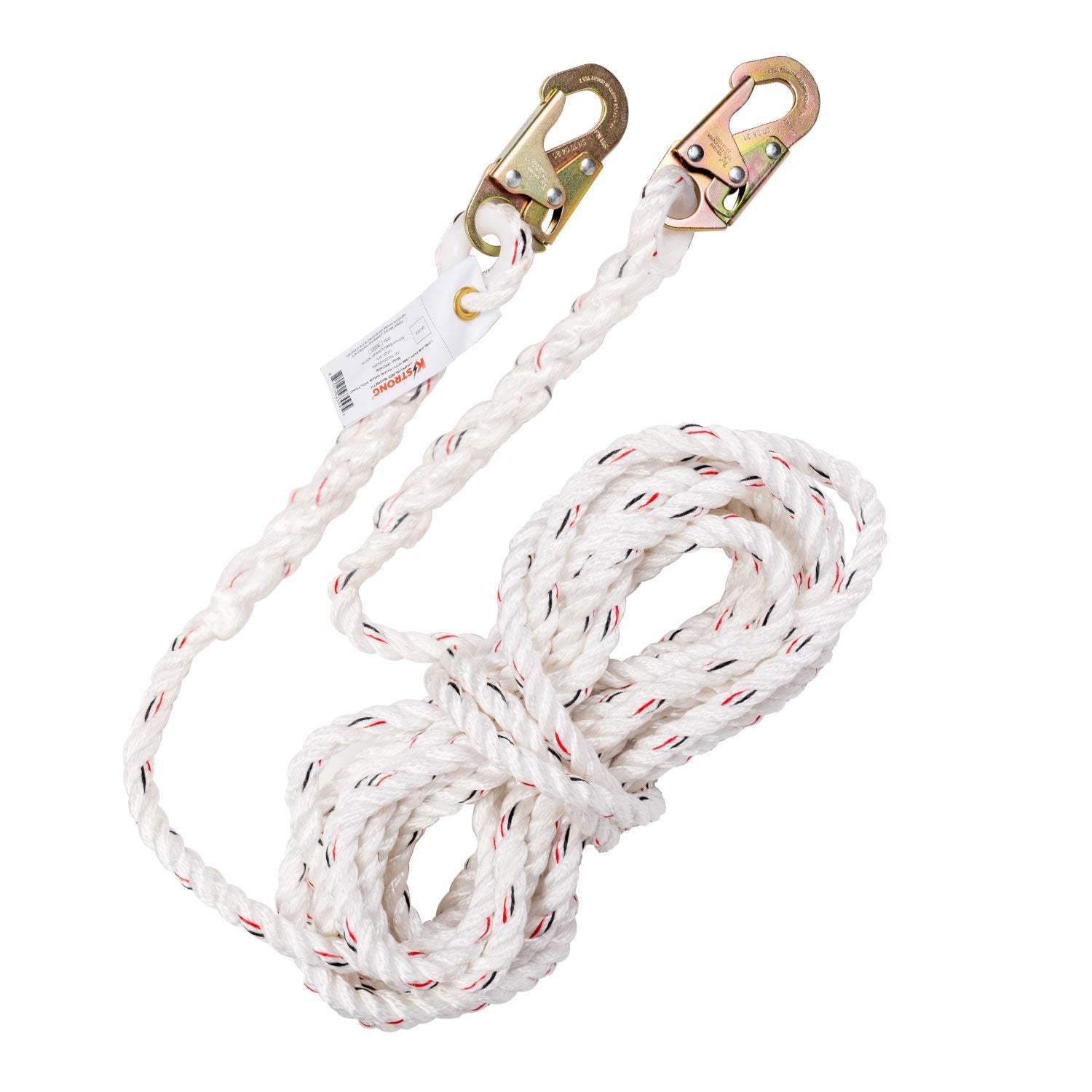
| KStrong® Vertical White Polydac Rope Lifeline with Snap Hooks at Both Ends | $93 | 25-200 ft | 310 lb | View → |
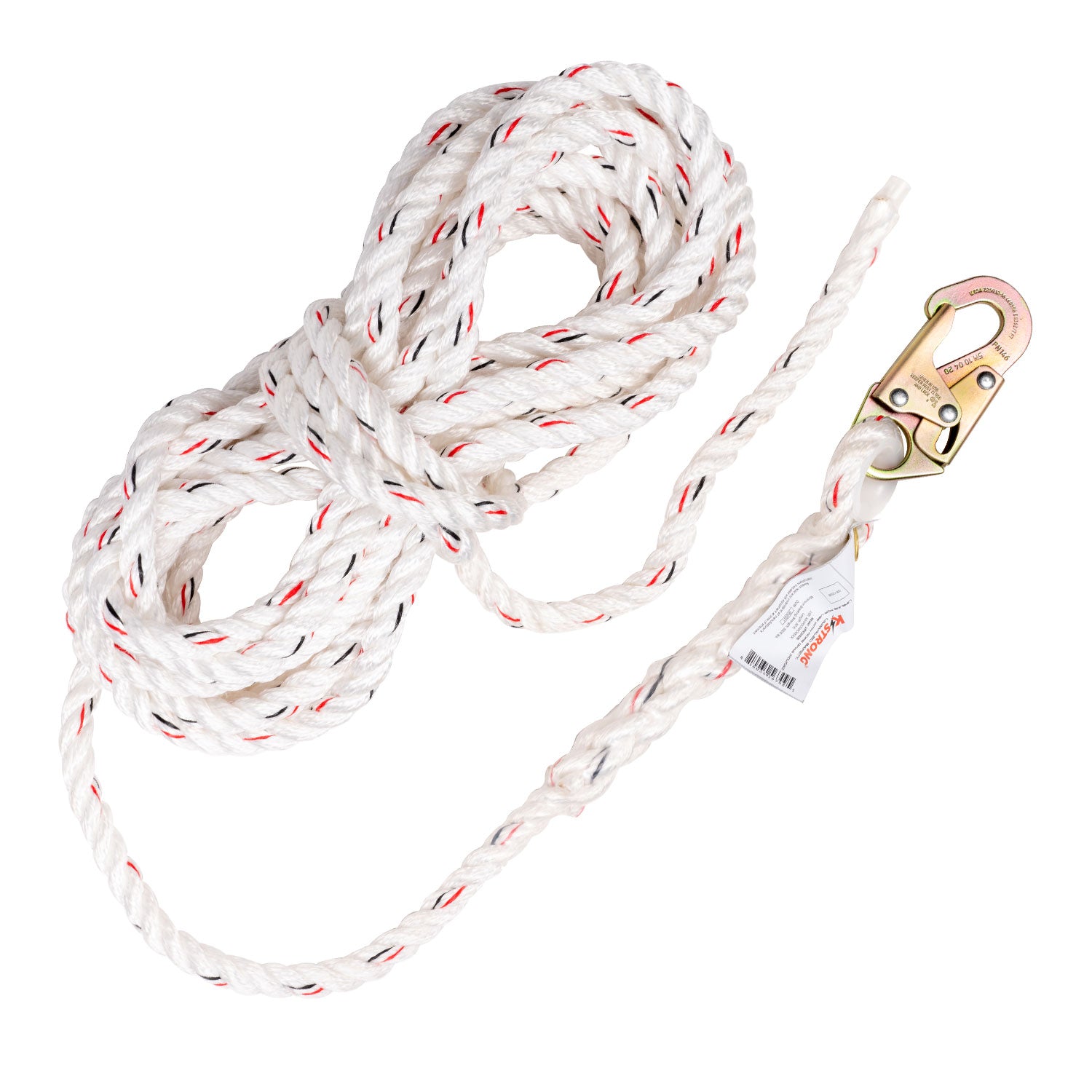
| KStrong® Vertical Polysteel Rope Lifeline with snap hook and taped ends | $57 | 25-500 ft | — | View → |
 In Stock
 In Stock
 In Stock
Vertical Lifelines Buying Guide
Where a vertical line belongs. A vertical lifeline solves one geometry: up and down. The rope hangs from an anchor above the work, a rope grab rides it, and the worker climbs a ladder or works a rooftop drop with the grab locking within inches if they slip. When the travel runs sideways along an edge or a beam, a horizontal lifeline is the right tool, and when the work stays inside a small radius of one overhead point, a self retracting lifeline reels the slack back instead of leaving a rope to manage. All three sit under fall protection lifelines; this shelf is the rope-and-grab answer for a vertical drop.
Polysteel or Polydac. The rope choice sets the price and the service life. Polysteel is a polypropylene and polyester blend, the lighter and lower cost option, and the 25 ft Polysteel line is the cheapest way onto this shelf at around $57. Polydac wraps a polypropylene core in a polyester cover, and that outer yarn is what buys abrasion and UV resistance for a rope that lives outdoors, so the white Polydac lines run higher, from about $74 for 25 ft. Both come in 25, 50, 100, 200, and 500 ft lengths, so you size the rope to the drop plus enough tail to reach the anchor and set the grab.
How the ends are finished. The end fittings decide how the rope hangs. Two of these lines carry a snap hook on one end with the opposite end taped, so the hook clips the anchor and the whipped end feeds the rope grab and keeps the lay from unraveling. The third is a Polydac line with snap hooks at both ends, which gives you a clip point at the top and the bottom, useful when you want to connect the lower end rather than terminate it. That both-ends version tops out at 200 ft, where the single-hook lines carry a 500 ft option.
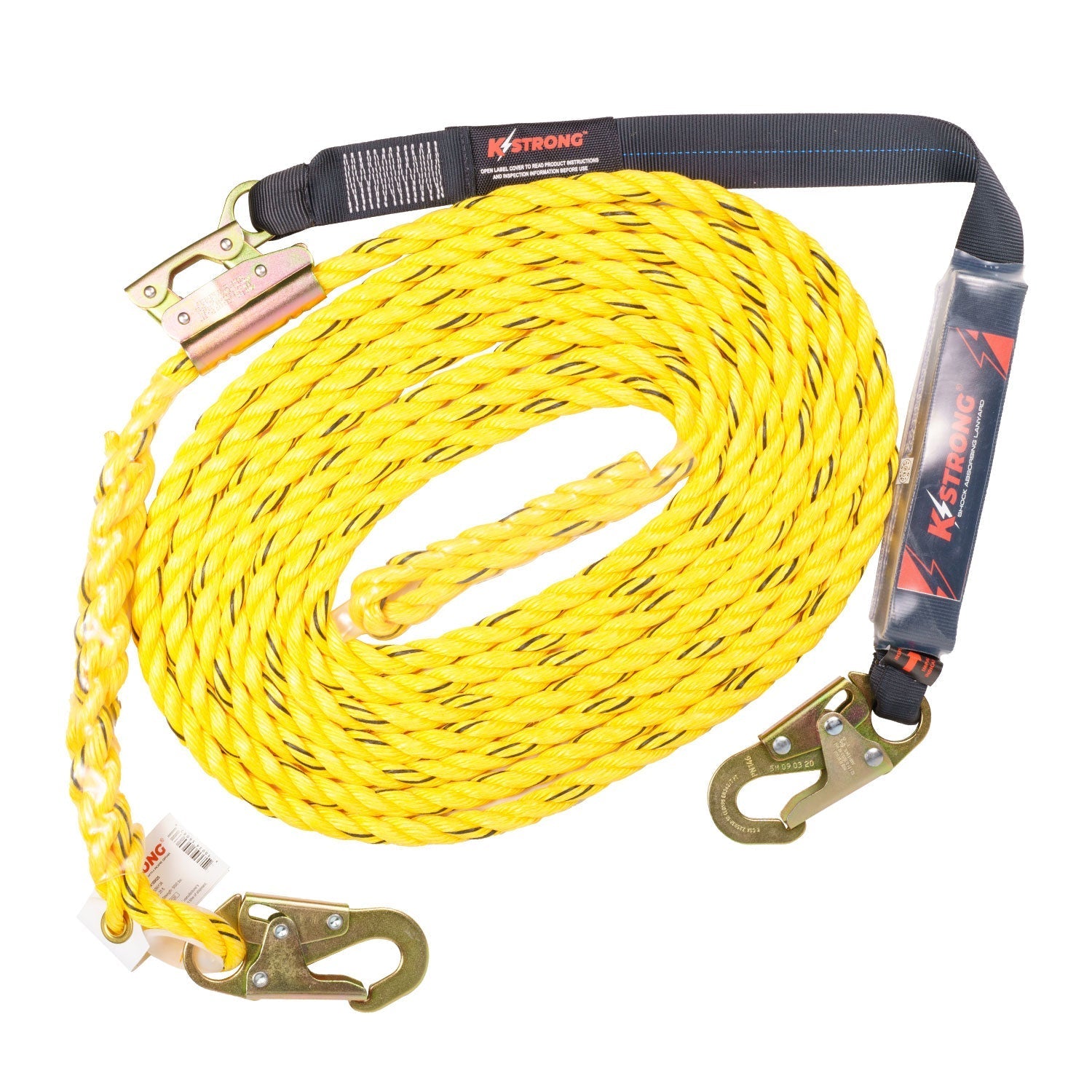
The rope is half the system. A rope alone arrests nothing. It needs a rope grab built to ANSI/ASSP Z359.15, the standard for single anchor lifelines and fall arresters, a full body harness on the worker, and an anchor rated above. If you would rather buy the set matched than piece it together, the roofers kits box the harness, rope, grab, and anchor in one carton; if you are replacing the D-ring end, the safety harnesses shelf covers it.
The OSHA and ANSI numbers. OSHA 1926.502(d) sets the floor: every vertical lifeline in a personal fall arrest system has to hold at least 5,000 lb, and each worker gets an independent line, so two people never share one rope. The Polydac lines carry that 5,000 lb rating on the spec sheet. For roofing, 1926.501(b)(10) triggers fall protection once the edge sits 6 ft above the level below, which is the job most of these ropes are bought for. Match the rope length to the fall clearance so the worker is caught before reaching the surface underneath.
Frequently Asked Questions
No. These are the rope assemblies on their own, sold by the length. Each is meant to run with a self-tracking rope grab that meets ANSI/ASSP Z359.15, which rides the line and locks when it is loaded. If you want the rope, grab, harness, and anchor matched in one box, look at the roofers kits instead.
Polysteel is the lighter polypropylene and polyester blend and the lower cost option. Polydac wraps a polypropylene core in a polyester cover that resists abrasion and UV, so it holds up better on a rope that lives outdoors. Both are built for vertical fall arrest; the difference is durability and price.
Size the rope to the vertical drop plus enough tail to reach the anchor above and set the rope grab. These come in 25, 50, 100, 200, and 500 ft, with the both-ends snap hook Polydac line topping out at 200 ft. Leave enough clearance that the worker is caught before reaching the surface below.
No. OSHA 1926.502(d) requires each worker on a personal fall arrest system to be attached to a separate vertical lifeline, and each line has to hold a minimum of 5,000 lb. The only narrow exception covers elevator shaft construction under specific conditions.
The snap hook clips to your anchor point. The taped, or whipped, end is finished so the rope does not unravel and so a rope grab can be fed onto it. One Polydac line carries snap hooks at both ends instead, giving you a connecting point at the top and the bottom.