Vertical Lifting Clamps
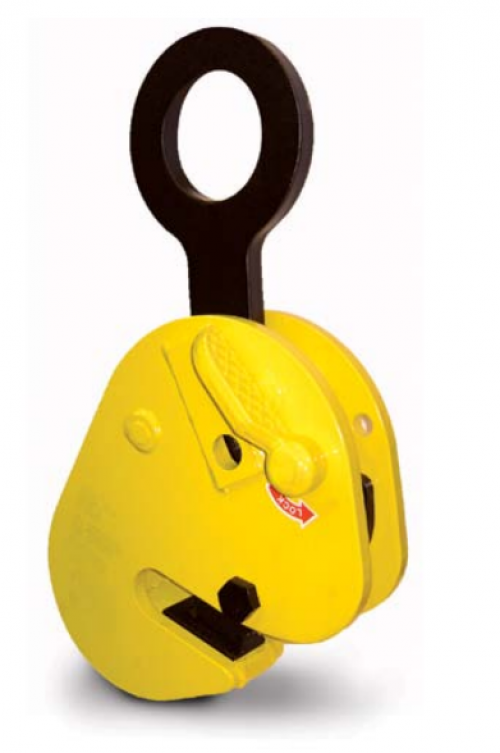
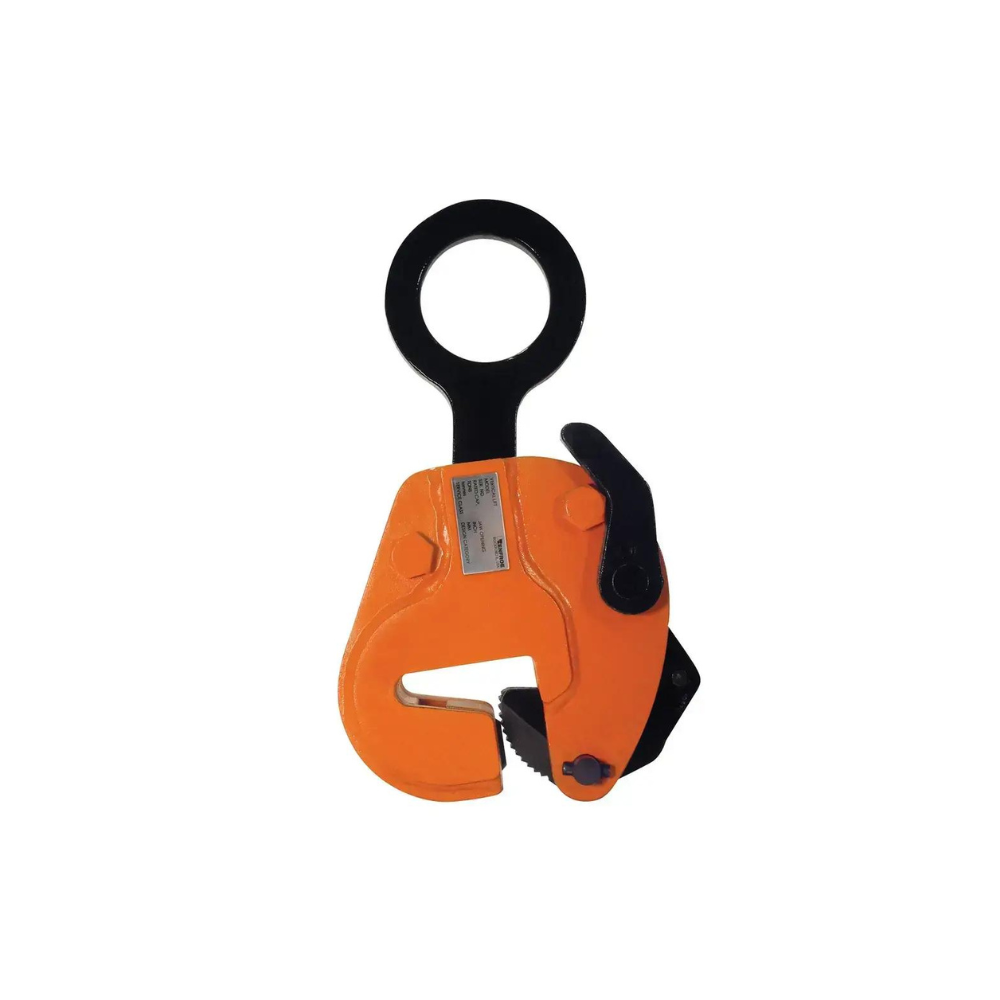
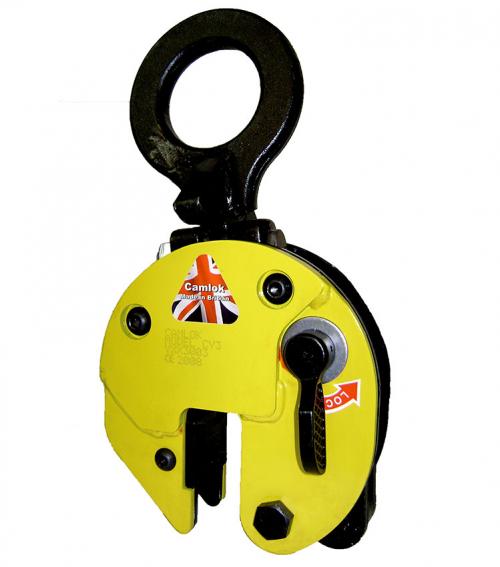
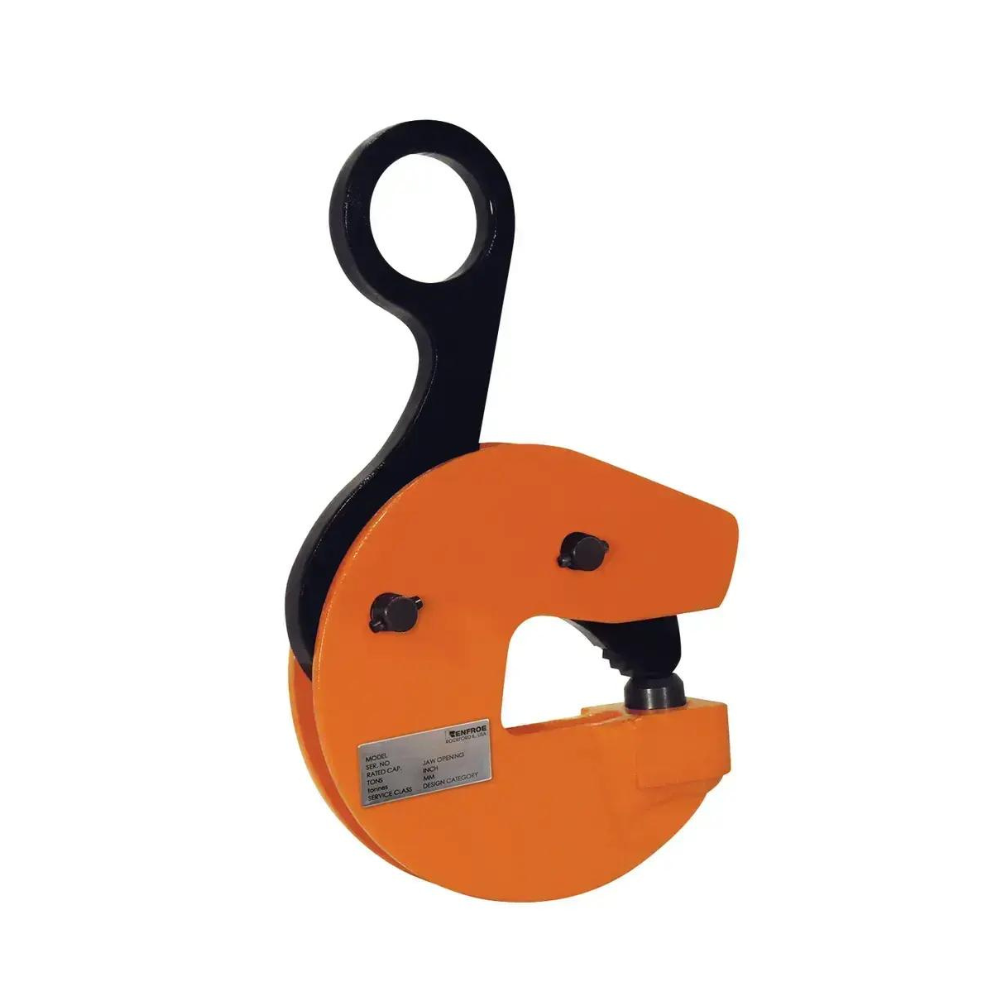
A vertical lifting clamp grips the top edge of a steel plate lying flat, lifts it, and lets it swing to hang on edge, so a plate goes from stacked to standing with no sling passed underneath. This collection is the vertical-grip half of plate handling, built on the cam clamps fab shops and plate yards actually reach for: Vestil's economy plate clamps from $117 at 1,000 to 6,600 lb, Bison's vertical and universal clamps from $201, Camlok's CY steel plate clamps, and the Renfroe locking and non-locking clamps from Caldwell that set the fabrication-floor standard. Alongside them sit the turning tools, Camlok CG girder clamps and the CP pitching clamp that rotate structural steel through 90 degrees, Tandemloc i-beam clamps for gripping flanges, and non-marring clamps for polished and coated plate. Every device here is a below-the-hook lifter under ASME B30.20, and the guide sorts them by the two numbers that size every clamp: working load limit and jaw range.
Compare Vertical Lifting Clamps
| Model | Price | Capacity | |
|---|---|---|---|
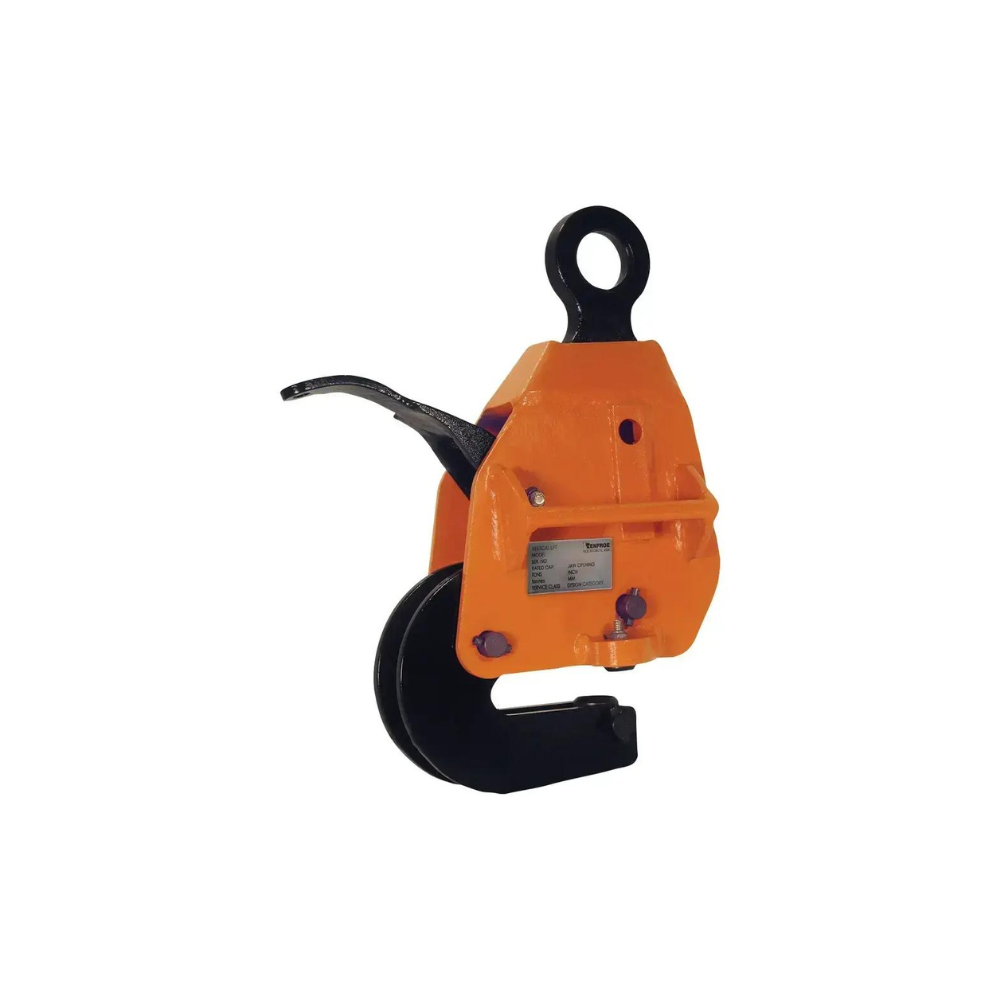
| Caldwell Lifting Solutions Renfroe SEA Locking Type Lifting Clamps | $3,229 | 1-15 ton | View → |
| Caldwell Lifting Solutions Renfroe NMRSC Locking Screw Type Non-Marring Lifting Clamps | $2,940 | 1/2 ton | View → |
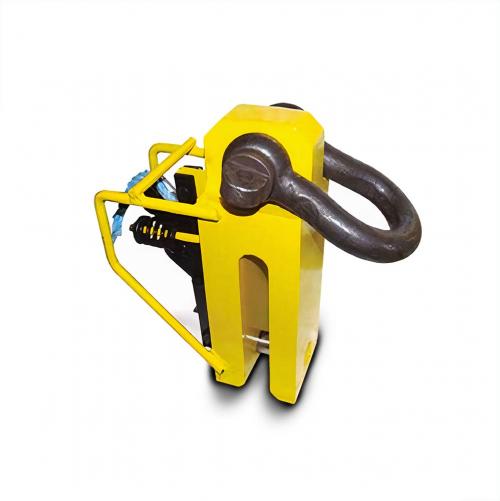
| Camlok CP Pitching Clamp | $2,800 | 4,409-11,023 lb | View → |
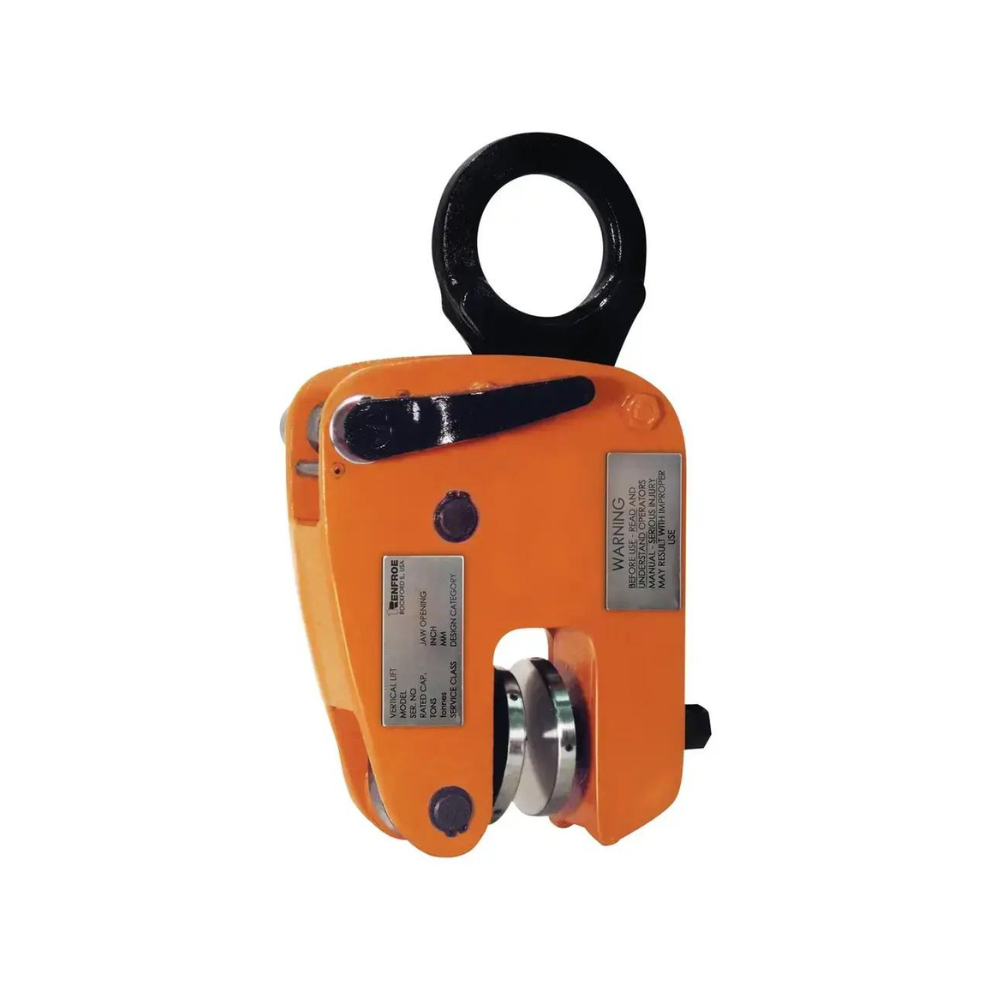
| Caldwell Lifting Solutions Renfroe NMBL Locking Type Non-Marring Lifting Clamps | $2,562 | 1-4 ton | View → |
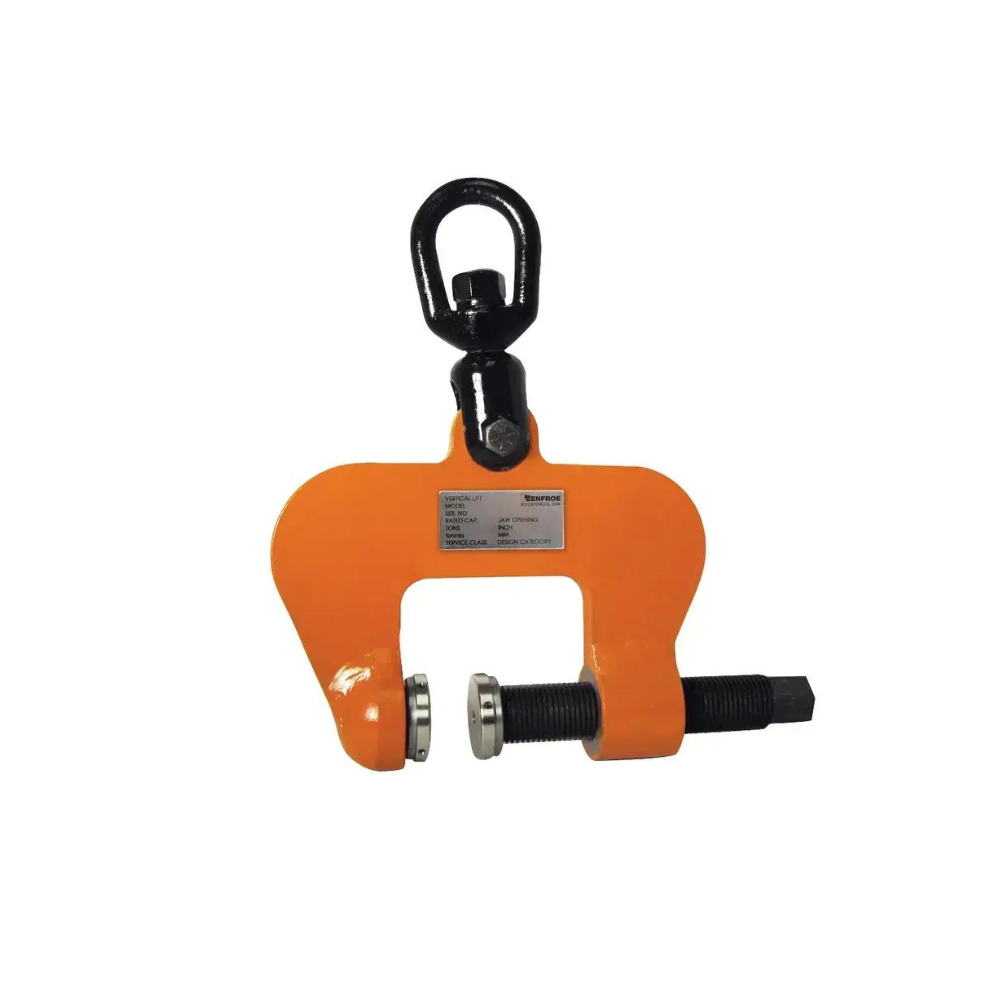
| Camlok CG Girder Turning Clamps | $2,348 | 2,200-13,200 lb | View → |
| Caldwell Lifting Solutions Renfroe SX Locking Type Lifting Clamps | $2,042 | 2-4 ton | View → |
 In Stock
 In Stock
 In Stock
 In Stock
 In Stock
 In Stock
 In Stock
 In Stock
 In Stock
 In Stock
 In Stock
 In Stock
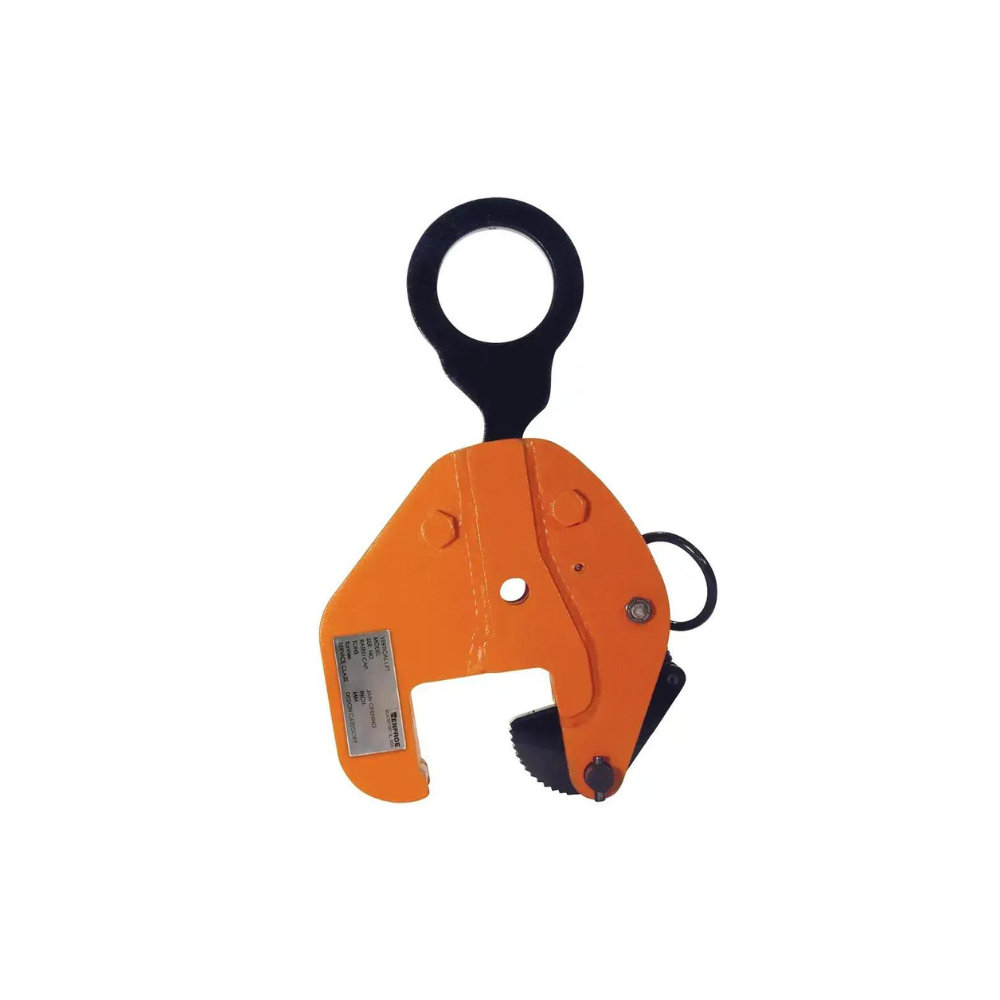 In Stock
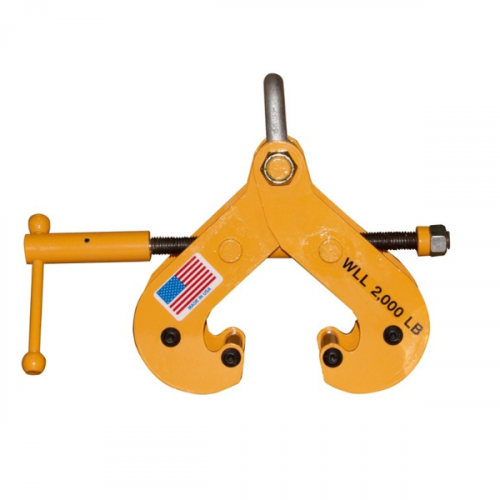 In Stock
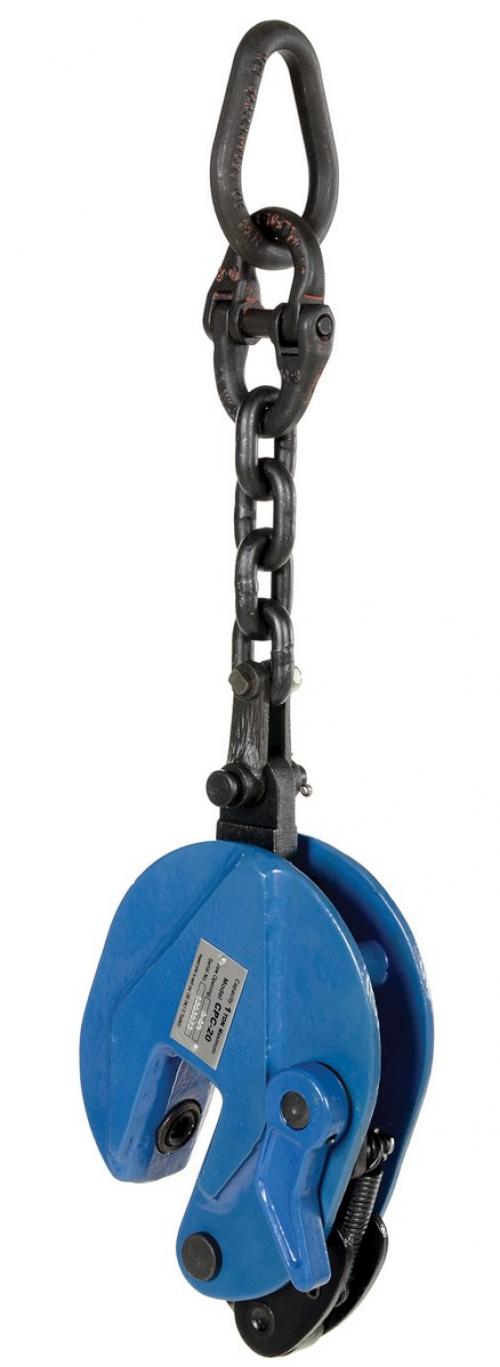 In Stock
Vertical Lifting Clamps Buying Guide
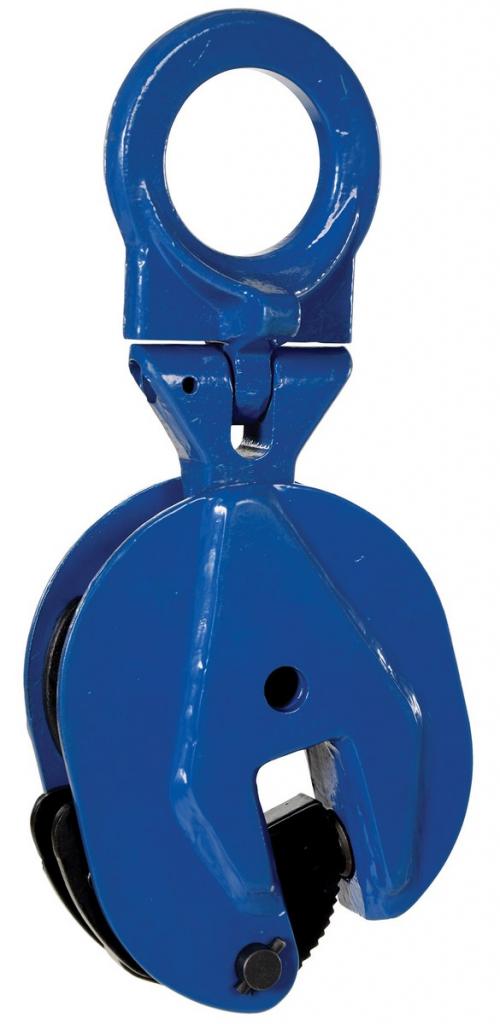
The cam does the gripping, and the load sets the force. A vertical plate clamp is a cam and a pad under a hook. Open the jaw, seat it over the top edge of the plate, take up the slack, and as the lift begins the cam pivots and drives its toothed jaw harder into the plate face. Grip force rises in direct proportion to the load's weight, which is the whole safety idea: a heavier plate clamps itself tighter, not looser. That geometry is why the clamp needs no power and no separate tightening on a straight vertical pick. It also sets the rules. The teeth have to reach clean steel, so mill scale, paint, grease, and frost all cut into the grip a maker rated on bare plate. And the pull has to stay vertical and in line with the clamp body, because a side load the cam was never built to see is how a plate walks out of the jaw.
Locking or non-locking is a question about slack. A non-locking clamp grips only while the load keeps tension on it. The Renfroe AST from $877 is that pattern, and it belongs to controlled, repetitive handling where the plate stays loaded from pick to set. Let the plate touch down, or let it bounce and unload the cam for a moment mid-turn, and a non-locking jaw can relax. A locking clamp adds a spring that holds the cam against the pad at near-zero grip, so the jaw keeps its bite with the load off. The Renfroe DG from $728 and SX from $1,315, and the Bison and Vestil locking clamps, all carry that mechanism plus a lock-open position that lets one hand seat and release the clamp on the plate. Buy the lock unless a specific workflow argues against it, because slack finds every rig eventually, and the moment a clamp is most likely to let go is the moment the load goes slack.
WLL and jaw range both have to fit. Every clamp carries two numbers, and a plate has to satisfy both. The working load limit covers the weight. The jaw range, stenciled on the body, covers the plate thickness, and the rule from every clamp maker is blunt: never put a clamp on material thinner or thicker than that stamped range. Too thick and the jaw will not close; too thin and the cam cannot reach a proper bite, so a clamp rated for tons can drop a plate that weighs a fraction of its limit. Camlok's CY clamps print it as a pair, a 0 to 20 mm jaw at 1,000 kg or a 0 to 32 mm jaw at 2,000 and 3,000 kg, and the Renfroe SX ties a 2 or 4 ton rating to a maximum plate thickness of an inch to an inch and a half by build. Size the jaw to the plate first, then confirm the plate weighs less than the WLL.
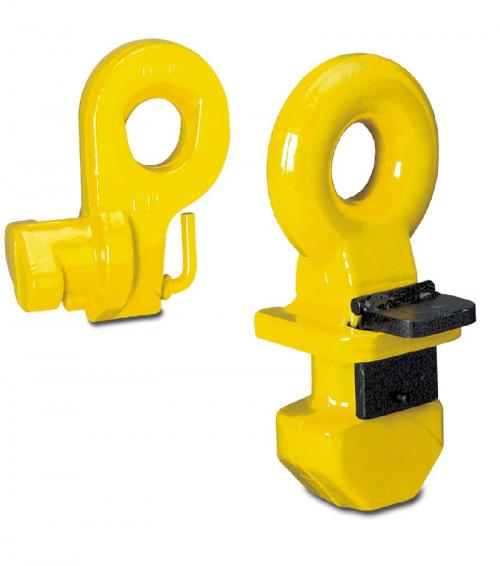
Lifting is one job; turning is another. Some picks flip the plate as well as lift it. A plain vertical clamp already rotates a plate from flat to hanging as it comes off the stack, and a 90-degree-rated clamp will hold it on edge for welding or fit-up. Turning heavier structural steel is its own tool. The Camlok CG girder turning clamps from $1,795, at 2,200 to 13,200 lb, lift a rolled beam and roll it through 90 degrees to land it vertical or horizontal, working singly or in matched pairs on a spreader for a long girder, on a 4 to 1 design factor. The CP pitching clamp handles plate the same way at 2,000 to 5,000 kg, and Tandemloc's i-beam clamps from $694 grip a structural flange at 2,000 to 10,000 lb for a straight vertical pick. Container work gets its own hardware in the Camlok top and bottom lifting lugs, a set of four that engages a standard box at its corner castings.
Finished, coated, and stainless plate wants a non-marring clamp. A toothed cam leaves a signature, a row of bite marks in the plate face, which is fine on structural stock and unacceptable on polished, painted, or stainless sheet. The non-marring clamps solve it by gripping through smooth hardened pads instead of teeth. The Renfroe NMBL locking non-marring clamp from $2,329 covers 1 to 4 tons, and the NMRSC screw-adjusted non-marring clamp from $2,940 clamps thicker material and holds pressure by a hand-set screw as well as the cam. They run several times the price of a toothed clamp, which is the cost of moving finished plate without dressing out a scar afterward. Match the pad rating to the plate's surface hardness too, because a clamp meant for mild steel can slip on hardened or highly polished stock.
Rate it, mark it, inspect it. Every clamp here is a below-the-hook lifting device, which puts it under ASME B30.20 and its BTH-1 design rules with the same discipline you give a sling. That means a legible capacity and jaw-range marking the crew can read before the pick, an inspection before each use, and a documented periodic one. The rejection points are specific to clamps: worn or rounded jaw teeth that no longer bite, a weak or seized cam spring that fails to hold the jaw at near-zero grip, a bent or gouged pivot, and any locking mechanism that will not snap closed and hold. A clamp that fails any of those comes out of service until a qualified person repairs it or it is replaced, because on a vertical pick the clamp is the only thing between the plate and the floor.
Frequently Asked Questions
A vertical clamp grips the top edge of a plate and lifts it on edge, so the plate hangs vertically, and many let it swing from flat to standing during the pick. A horizontal clamp grips a plate lying flat and works in opposed pairs to keep the plate flat in the air. The clamps in this collection are the vertical-grip type; horizontal plate clamps sit in their own collection.
Buy locking unless you have a specific, repetitive, always-loaded workflow that argues otherwise. A locking clamp holds jaw pressure even when the load goes slack, covering set-down, bounce, and mid-turn moments where a non-locking clamp can relax. The Renfroe DG and SX are locking; the AST is the non-locking pattern for controlled handling.
Match two numbers. The plate thickness has to fall inside the jaw-opening range stenciled on the clamp, never thinner or thicker, and the plate has to weigh less than the working load limit. Both must be true at once. A clamp can drop a light plate that falls outside its jaw range, so check the jaw first.
Yes, and it is a common use. A plain vertical clamp rotates a plate from flat to hanging as it lifts, and 90-degree-rated clamps hold it on edge. For structural steel, the Camlok CG girder turning clamp and CP pitching clamp are built to roll a beam or plate through 90 degrees and land it vertical or horizontal.
A non-marring clamp. The Renfroe NMBL and NMRSC grip through smooth hardened pads instead of teeth, so they move polished, coated, and stainless plate without leaving bite marks. Confirm the plate's surface hardness is within the clamp's rated range, since very hard or slick surfaces can reduce grip.
Yes. They are below-the-hook lifting devices under ASME B30.20, so they need a legible capacity marking, an inspection before each use, and a documented periodic inspection. Reject any clamp with worn jaw teeth, a weak or seized cam spring, a bent pivot, or a locking mechanism that will not hold.