Start with capacity
Capacity is the first and most important spec: the rated load the hoist can lift, which must never be exceeded. The rule is to round up, if your heaviest load falls between standard ratings, choose the next size larger. A 4,300-lb load, for example, calls for a 3-ton (6,000-lb) hoist, not a 2-ton one. Never size a hoist right at or below your load, and account for any dynamic effects. Pick a capacity that comfortably exceeds your heaviest lift, and confirm the rating on the hoist itself. Getting capacity right is the foundation of a safe hoist choice.
Lift height and headroom
Two vertical measurements matter. Lift height (the height of lift, or HOL) is how far the hook needs to travel, from lowest to highest position, so it must cover your deepest lift and highest placement. Headroom is the hoist's own vertical dimension, the space it occupies between the beam and the hook at full lift, which eats into your available height. To confirm reach, subtract the hoist's headroom from your beam-to-floor height. In low-clearance bays, a low-headroom hoist design preserves precious lift height. Always check that the hoist physically fits your space and reaches your loads.
Match the duty classification
Duty cycle is the spec buyers most often underestimate, and it's critical. A hoist has a duty classification (under the ASME/HMI or FEM/ISO systems) based on how many lifts per hour, the average versus maximum load, and the number of starts and stops. Run a hoist beyond its duty class and it wears out prematurely and can fail. So estimate your real usage honestly, occasional maintenance lifting and constant production cycling are worlds apart, and choose a duty class that matches or exceeds it. Do not underspecify duty to save money; it's a false economy that shortens the hoist's life.
Choose the power source
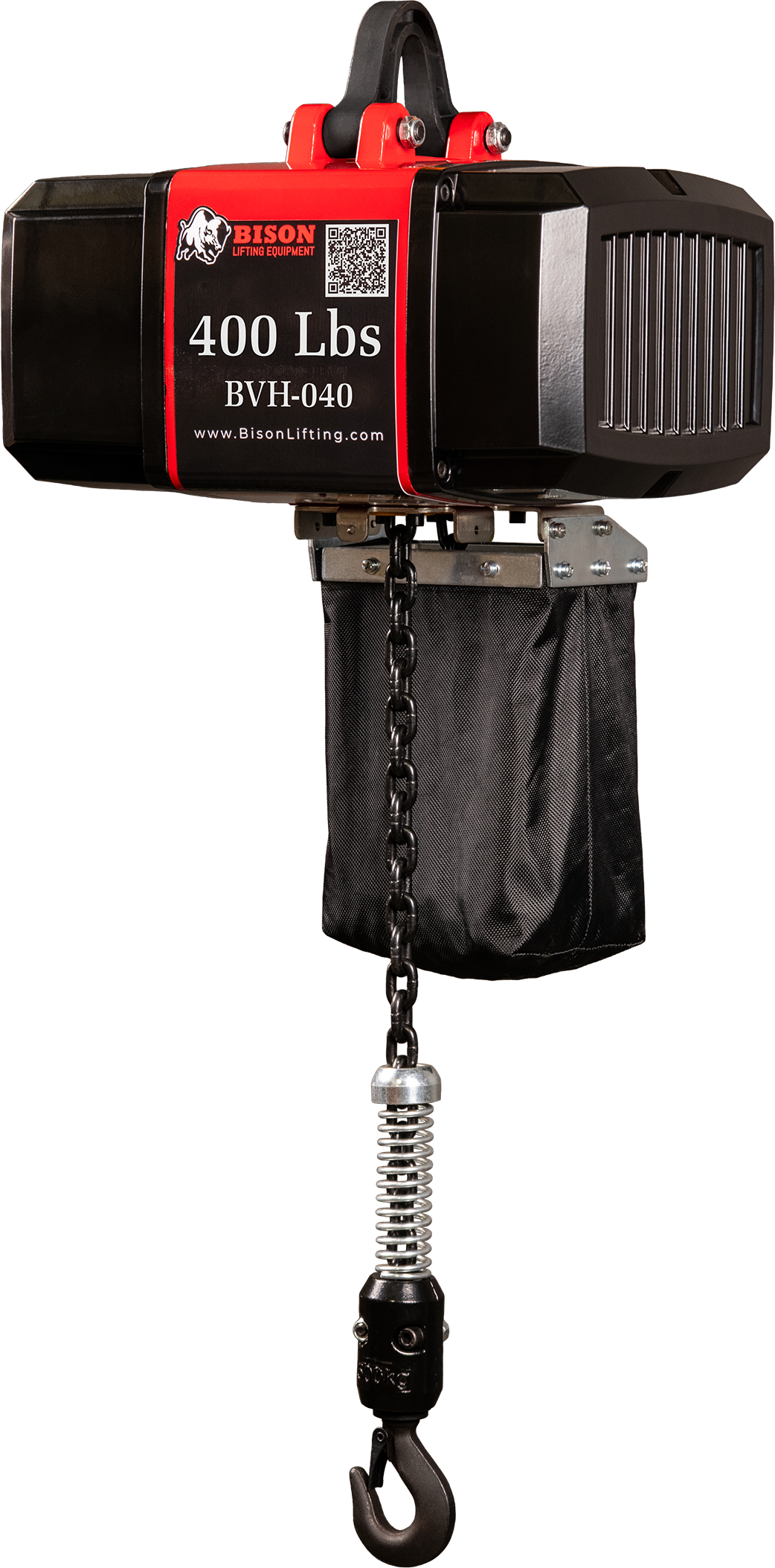
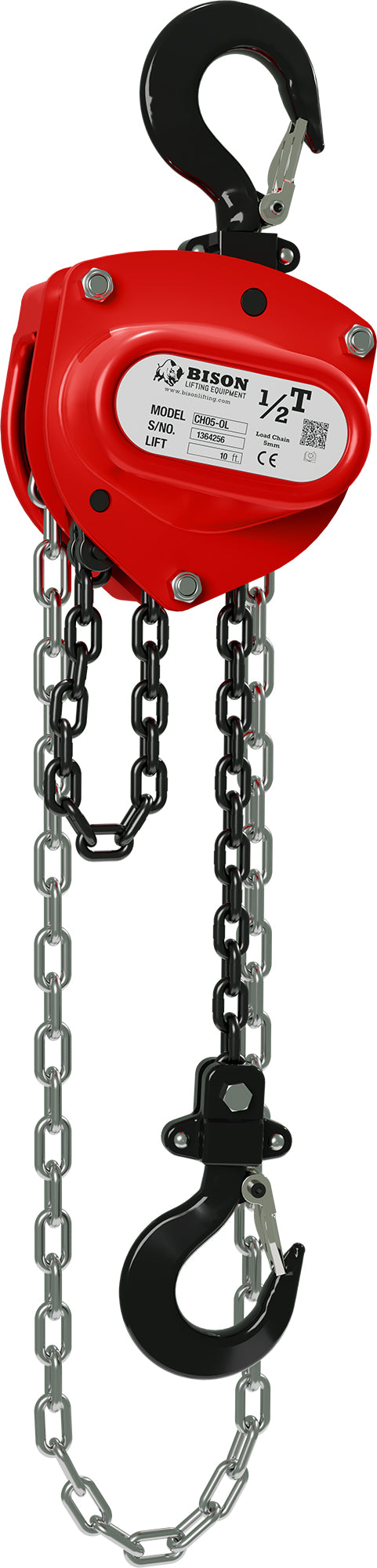
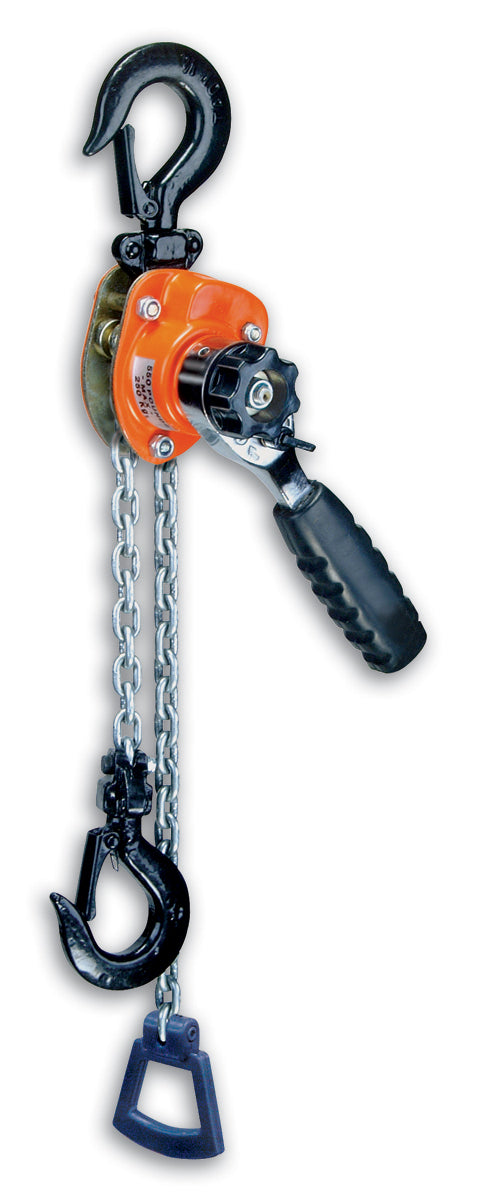
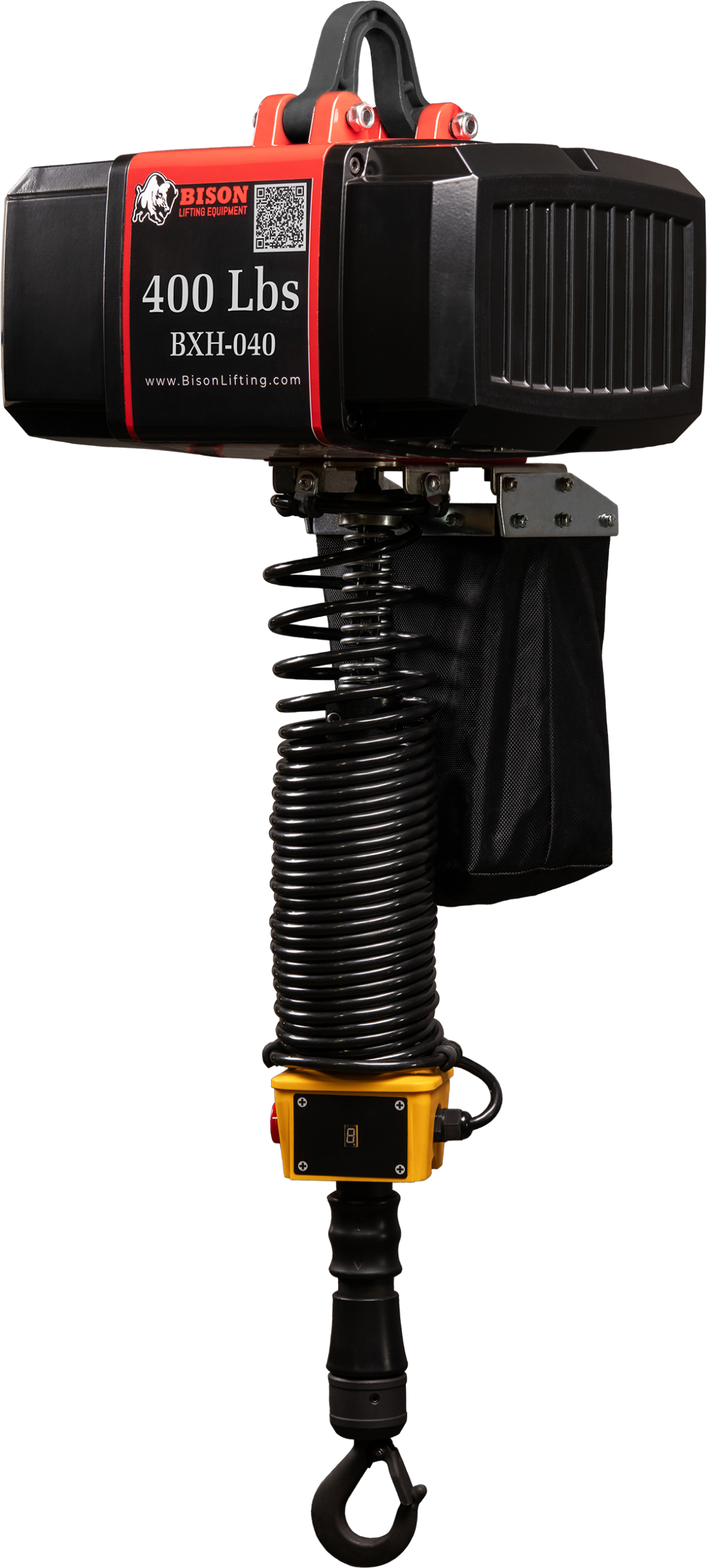
Pick the power source for your work and environment. A manual hand-chain hoist needs no power and suits infrequent or remote lifting. An electric hoist is fast and effortless for frequent, heavy production work, if suitable power is available at the lift point. An air (pneumatic) hoist is the choice for hazardous, explosion-prone areas and continuous high-duty use, given a compressed-air supply. Our electric vs manual chain hoist guide weighs the two most common options. Match the power type to how hard you lift and what your environment allows.
Fixed hook or trolley suspension
Decide how the hoist mounts. A fixed-hook (or lug) suspension hangs the hoist at one point for straight up-and-down lifting. A trolley suspension lets the hoist travel along a beam, so you can move the load horizontally, essential on a monorail or bridge, and available as a plain push trolley or a motorized one. If your lift is at a single fixed point, a hook mount is simplest; if you need to move loads along a line, specify a trolley, and match its type (push or motorized) to your hoist and workload. Note that trolleys affect headroom, so factor that into your height calculation.
Consider the environment
Where the hoist works shapes the choice. Hazardous or explosive atmospheres call for an air hoist or a specially-rated electric unit, not a standard electric hoist. Outdoor or corrosive settings may need weatherproofing or particular finishes. Extreme duty or dirty conditions favor rugged designs. And tight spaces may demand a low-headroom or compact hoist. Don't just spec the lift, spec the environment around it, since a hoist that's wrong for the conditions won't last or won't be safe. Environment can override the otherwise-obvious power or design choice.
Don't forget the supporting structure
A hoist is only as safe as what it hangs from. The beam, trolley, crane, or fixed point must be rated to carry the hoist plus its full-rated load, with margin, so confirm the supporting structure before you hang a hoist on it. Overloading a beam or an under-rated mount is as dangerous as overloading the hoist itself. If you're adding a hoist to an existing crane or beam, verify the structure's capacity; if you're building new, size the support to the hoist. The jib crane or gantry you mount it on is part of the safe-lifting system.
The bottom line
Choose a hoist by capacity (rounded up), lift height and headroom, duty classification, power source, and suspension, with capacity and duty the two specs that matter most. Match the power type and design to your environment, and confirm the supporting structure is rated for the load. Never underspecify capacity or duty to save money. Work through these specs against your real loads and usage, and you'll pick a hoist that lifts safely for years. Compare units in our best electric chain hoists guide, and see the full what is a hoist overview.
Speed and control options
Beyond the core specs, lifting speed and control affect daily use. Single-speed hoists lift at one rate, simple and economical. Two-speed and variable-frequency-drive (VFD) hoists offer a slow, precise speed for positioning and a fast speed for travel, which protects fragile loads, reduces shock on the hoist and structure, and speeds up work. For delicate or high-precision lifting, or simply to extend the hoist's life, the smoother control of a two-speed or VFD unit is worth considering. Match the control sophistication to how precise and how frequent your lifting is; casual lifting rarely needs it, production often does.