The short answer
The choice between manual and electric comes down to volume and effort. A manual stacker, and its semi-electric middle ground, costs less and is simpler, but you supply the muscle to move it (and, on a fully manual unit, to pump the lift). A fully electric stacker powers both travel and lifting, so the operator just steers, which pays off when you stack frequently or move loads far. Match the machine to your workload: light and occasional favors manual, heavy and constant favors electric.
Manual (hand) stackers
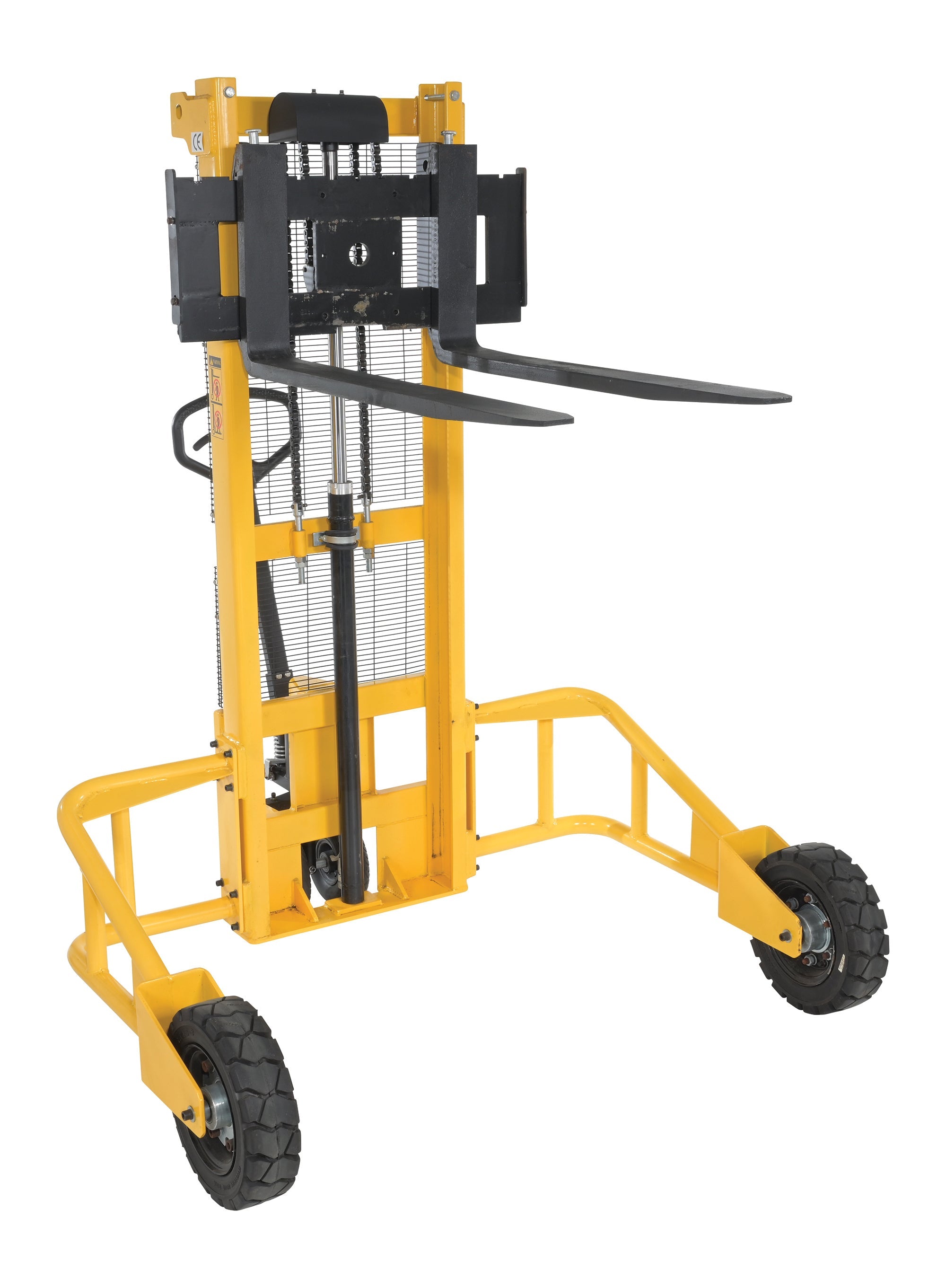
A fully manual stacker uses push travel and a hand-pump hydraulic lift. It's the cheapest option, $1,000 to $3,000, and the simplest, with little to break. The trade-off is effort: pushing a loaded stacker and pumping it up is genuine work, which is fine occasionally but tiring at volume. Manual stackers suit light loads, short moves, and infrequent stacking, a stockroom that racks a few pallets a day, say. If your stacking is light and occasional, a manual unit saves money without much downside.
Semi-electric: the middle ground
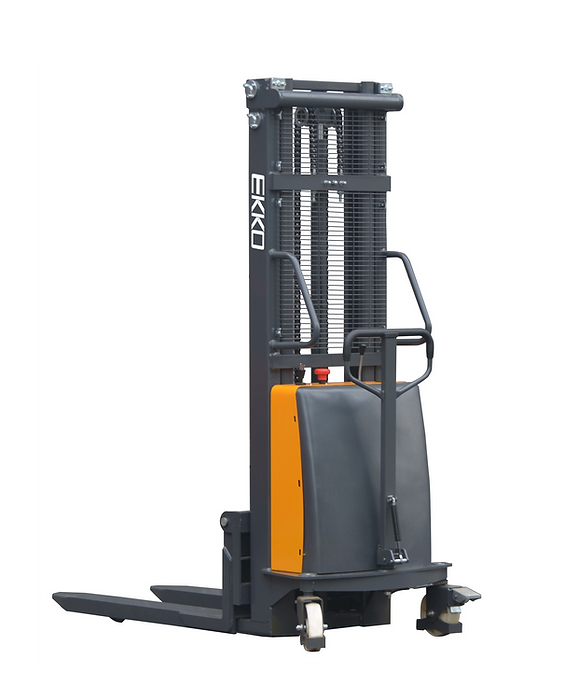
Semi-electric stackers, like the EKKO EA15E, split the difference: a powered lift removes the hardest part, the pumping, while you still push to move. This delivers roughly 80 percent of a full-electric unit's ease at about half the cost, which is why it's the value sweet spot for so many operations. You get effortless lifting for a modest price, and the push travel is manageable for moderate distances. For most buyers who stack regularly but don't need powered travel across long distances, semi-electric is the smart middle choice.
Fully electric stackers
A fully electric stacker powers both the drive and the lift, so the operator neither pushes nor pumps. This dramatically increases productivity and cuts fatigue on frequent, heavy, or long-distance work, workers can stack all day without wearing out. The cost is higher, $7,000 to $30,000 or more, plus battery care. For high-volume operations, that cost is repaid in labor savings, faster cycles, and fewer strain injuries. If your team stacks constantly or moves loads long distances, fully electric is worth the premium.
How to decide
Ask how often and how hard you'll stack. Light, occasional stacking of moderate loads, choose a manual or semi-electric stacker and save money. Frequent stacking, heavy loads, or long travel distances, choose fully electric and bank the productivity and reduced fatigue. A useful rule: if stacking is a core, all-day part of the operation, electric usually pays back; if it's occasional, manual or semi-electric is the better spend. Also weigh the operators, powered units ease physically demanding work. Our cost guide breaks down the price tiers.
Don't forget lift height and capacity
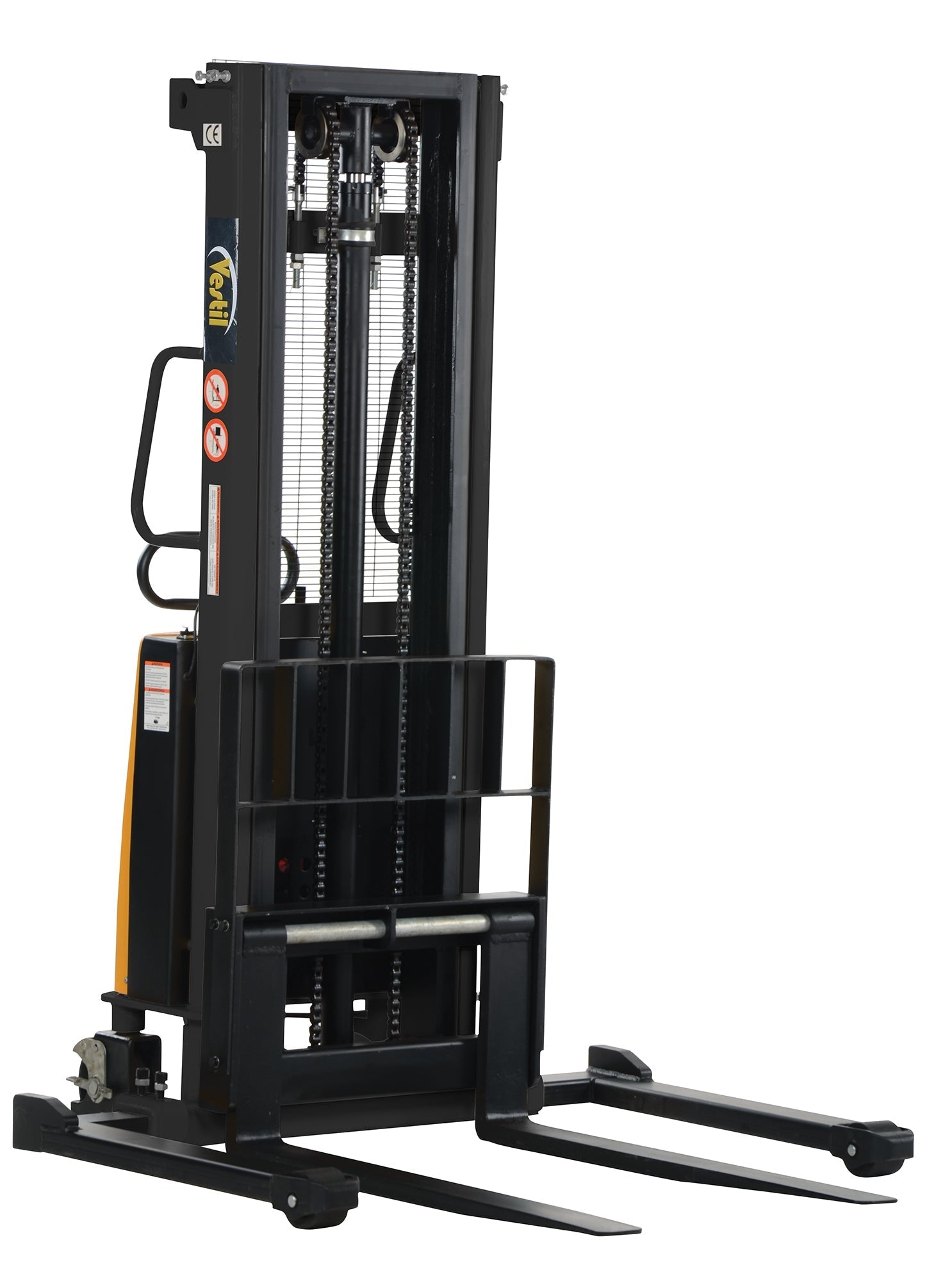
Power type is the main decision, but don't lose sight of the other specs. Whatever you choose, the stacker still has to reach your top rack (match the lift height, up to 138 inches on the EKKO EA15E or 150 on the Vestil electric unit) and carry your heaviest load with margin. A manual stacker that can't reach your racking, or an electric one under-rated for your loads, is the wrong buy regardless of power. Settle the manual-versus-electric question, then confirm the height and capacity fit your operation.
The bottom line
Choose a manual or semi-electric pallet stacker for light, occasional stacking and a lower price; choose a fully electric stacker for frequent, heavy, or long-distance work, where its productivity and reduced fatigue repay the higher cost. The semi-electric tier is the value middle ground for many. Decide by your stacking volume and effort, not the sticker alone, then confirm lift height and capacity fit. Compare real models in our best pallet stackers guide.
Battery types on powered stackers
If you go semi-electric or fully electric, the battery shapes both cost and daily use. Lead-acid batteries cost less up front but are heavier, charge more slowly, and need maintenance; lithium batteries cost more initially but charge fast, last longer, and need little care. You'll also need a charger and a place to charge. Over years, a cheaper lead-acid unit can cost more than a lithium one once you count replacements and downtime. When comparing powered stackers, look past the sticker to the battery type and its lifecycle cost.
Operator safety and ergonomics
Beyond productivity, powered stackers reduce the physical strain of the work, which matters for operator safety. Manually pushing and pumping a loaded stacker is demanding and, done repeatedly, raises the risk of strain and fatigue injuries. Powered drive and lift remove that effort, which is a real benefit in high-volume settings and for a wider range of operators. If your team stacks frequently, the ergonomic case for electric adds to the productivity case. Whatever you choose, train operators on safe stacking, loads at height demand care regardless of power type.