Why fall clearance matters
One of the most heartbreaking fall-protection failures is a fall that's arrested, the harness and lanyard work perfectly, but the worker still hits the ground or a lower level, because there wasn't enough clearance for the system to fully stop them first. Fall clearance is the minimum vertical distance required below the anchor (or work surface) for the fall to be arrested safely, and miscalculating it is a leading cause of these deaths. It's not something to eyeball; it must be calculated for your specific setup, your connector, anchor position, and the drop below. Getting clearance right is one of the most important things you do before working at height.
The components of fall clearance
Total fall clearance is the sum of several distances. Free-fall distance is how far the worker drops before the connector begins to arrest them (up to 6 feet with a shock-absorbing lanyard, much less with an SRL). Deceleration distance is how far they travel while the energy absorber deploys, up to about 3.5 feet. Harness stretch and D-ring slide-up add roughly 1 foot. The worker's height, from the dorsal D-ring to their feet, adds about 5 feet. And a safety factor of about 3 feet is added as margin. You add all of these to find the clearance needed below the anchor.
A worked example
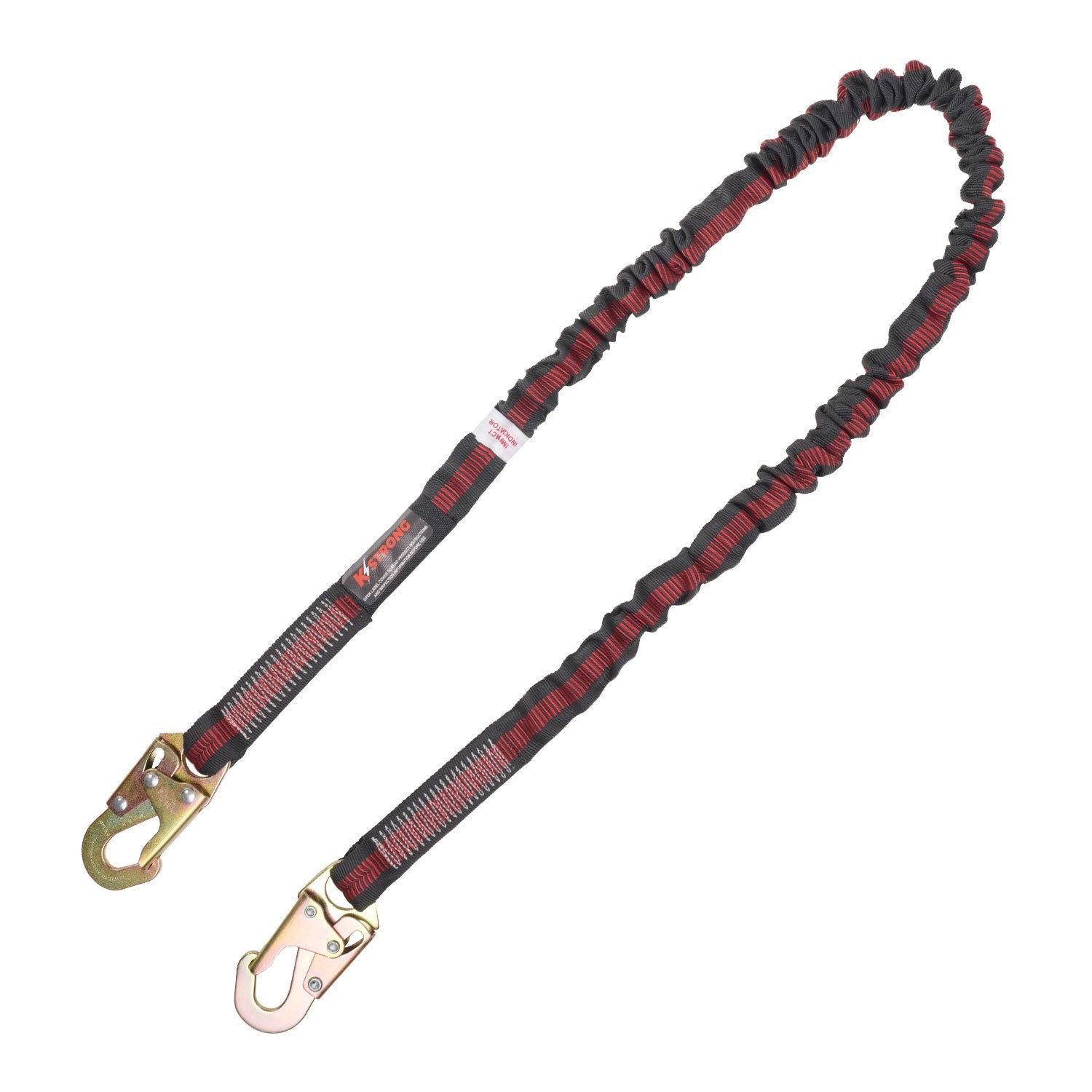
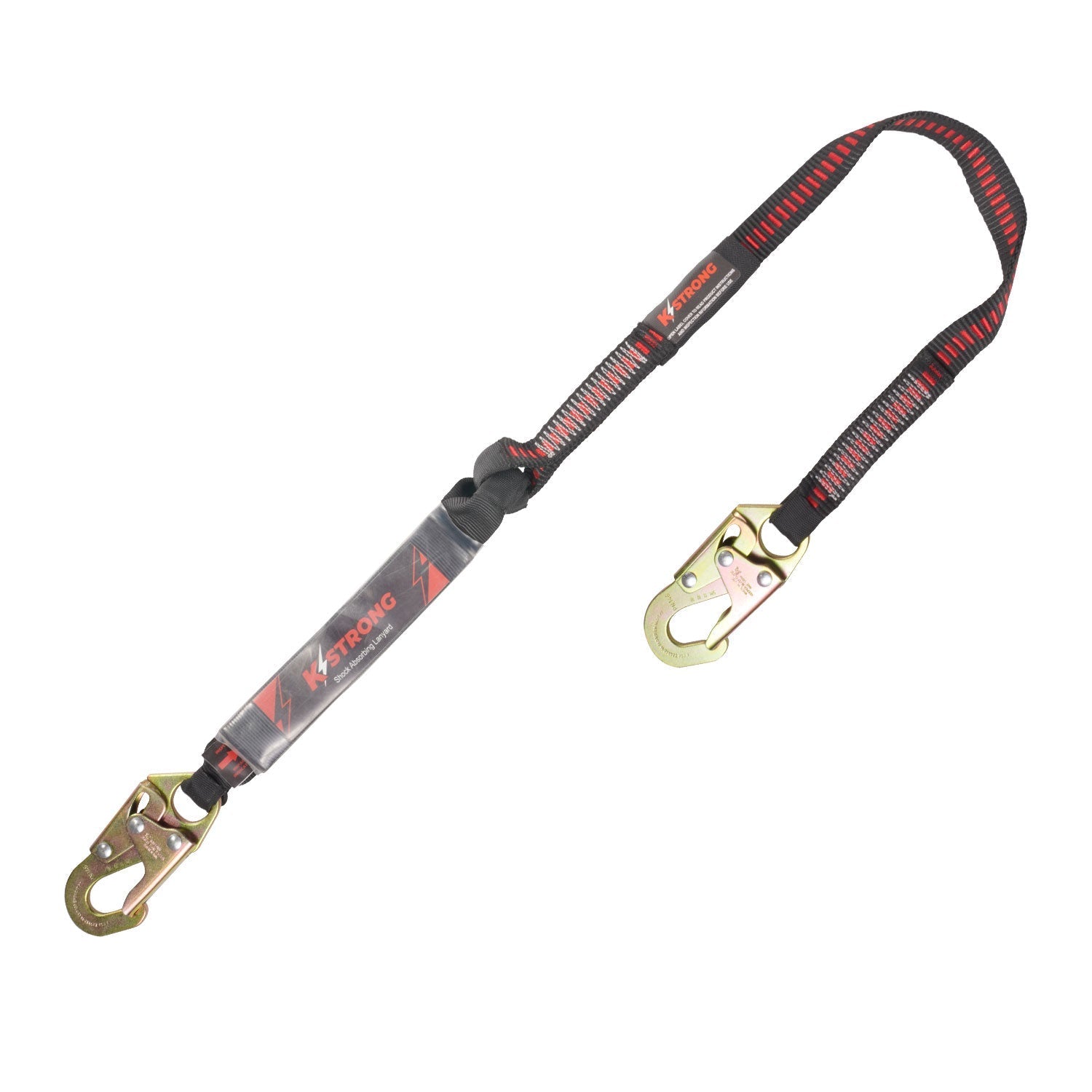
Put the numbers together for a 6-foot shock-absorbing lanyard tied off at D-ring height. Free fall of about 6 feet, plus roughly 3.5 feet of deceleration, plus about 1 foot of harness stretch, plus about 5 feet for the worker's height below the D-ring, plus a 3-foot safety factor, totals roughly 18.5 feet of required clearance below the anchor. That's a lot, far more than many people expect, and it's exactly why lanyards can't be used where there isn't much room below. If you don't have around 18-plus feet of clearance, a shock-absorbing lanyard won't stop the worker in time, and you need a different connector.
Why an SRL needs much less
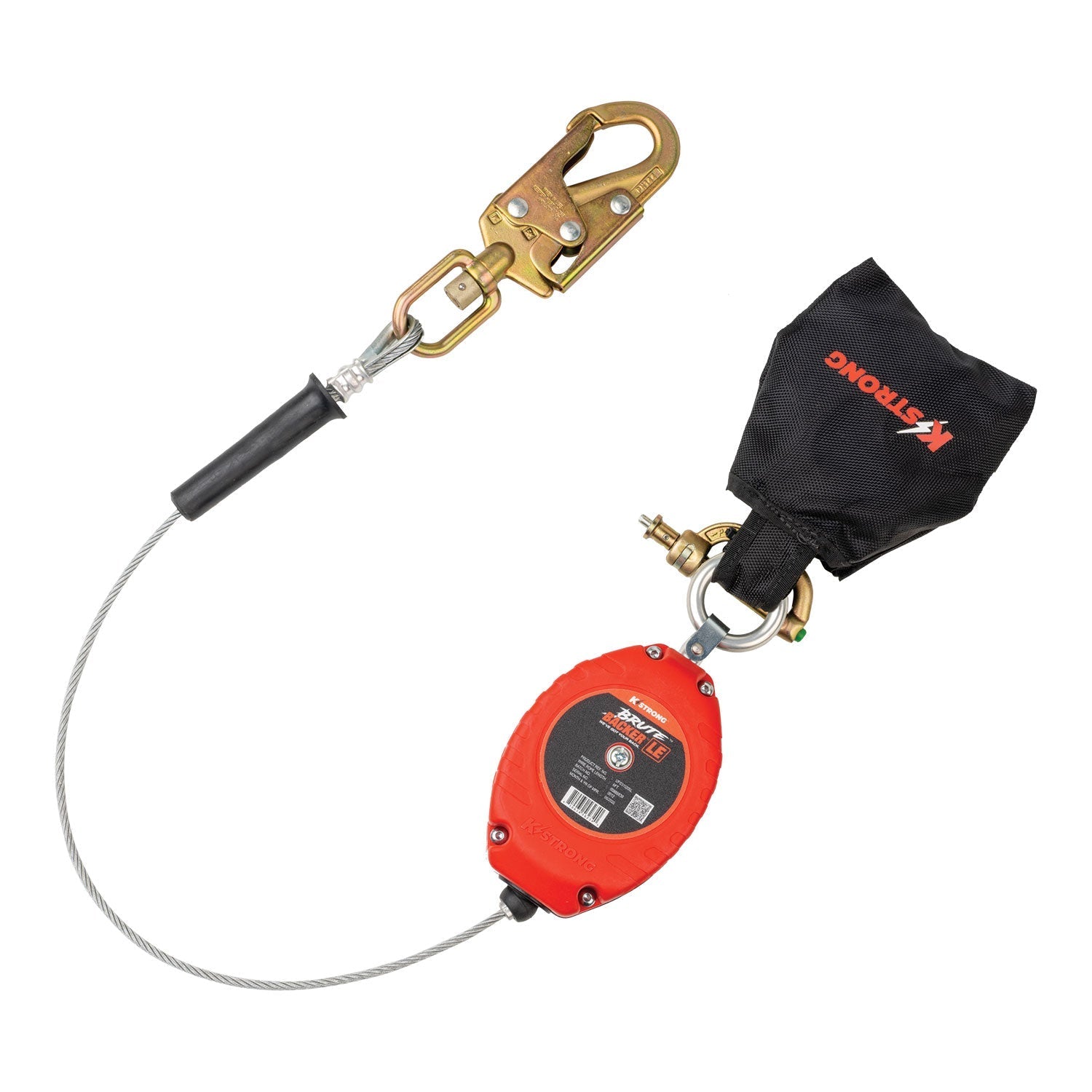
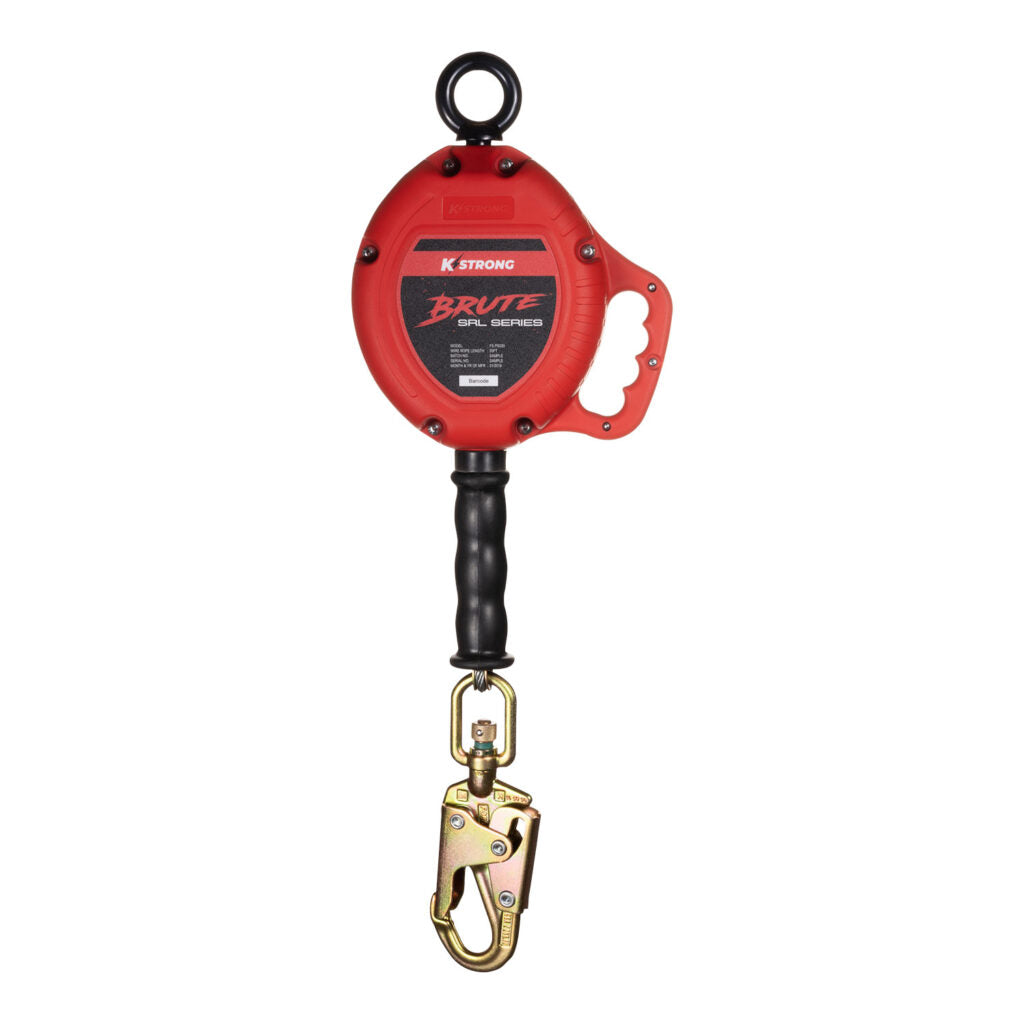
The same calculation shows why an SRL is the answer for tight clearance. Because an SRL keeps the line taut and locks almost immediately, its free-fall distance is minimal, often a foot or two, instead of the lanyard's 6 feet, and it arrests over a short distance. That slashes the total clearance required, so an SRL can be used safely in spaces where a lanyard would let the worker hit the ground. This is the single biggest practical reason to choose an SRL: when the drop below the anchor is limited, the SRL's short fall distance is what makes fall arrest possible at all. Always check the SRL's own clearance spec, but it's far less than a lanyard's.
Anchor position and swing falls
Clearance isn't only vertical. If the anchor is offset to the side rather than directly overhead, a fall becomes a swing fall (a pendulum), which changes the effective clearance and adds the hazard of striking structure as the worker swings. So anchor position affects clearance, and you should place anchors as directly above the work as possible, both to minimize the drop and to reduce swing. When the anchor must be offset, account for the swing in your clearance calculation and watch for obstructions in the swing path. Vertical clearance alone isn't enough if a swing fall can carry the worker into something.
Use the manufacturer's data
While the component formula gives you a reliable estimate, the authoritative numbers come from the equipment's own data. Manufacturers publish required-clearance figures for their specific lanyards and SRLs, based on the actual free-fall and deceleration characteristics of that model, and you should use those when available. The standard assumptions (3.5-foot deceleration, 1-foot stretch, 5-foot worker height, 3-foot safety factor) are industry conventions, not a single OSHA-mandated total, so treat the formula as the method and the manufacturer's chart as the confirming source. Calculate with the components, then verify against the specific product's clearance requirement.
The bottom line
Fall clearance is the minimum drop needed below the anchor to stop a falling worker before they hit a lower level, and it must be calculated: free-fall + deceleration (~3.5 ft) + harness stretch (~1 ft) + worker height (~5 ft) + safety factor (~3 ft). A 6-foot shock-absorbing lanyard needs roughly 18.5 feet; an SRL needs far less, which is why it's used in tight spaces. Account for anchor position and swing falls, and confirm against the manufacturer's data. See our shock-absorbing lanyard vs SRL and fall protection guide.
Don't forget the worker's height
A component people routinely underestimate is their own body. The clearance calculation measures from the anchor down, but the worker hangs from the dorsal D-ring between the shoulder blades, so their whole lower body, roughly 5 feet from D-ring to feet, extends below the point the system arrests. Forgetting this 5 feet is a classic and dangerous error that makes a setup seem to have enough clearance when it doesn't. Always include the worker's height below the D-ring in the total. It's a big part of why a 6-foot lanyard needs around 18 feet, not just the 6 plus deceleration people first imagine.