What an SRL is
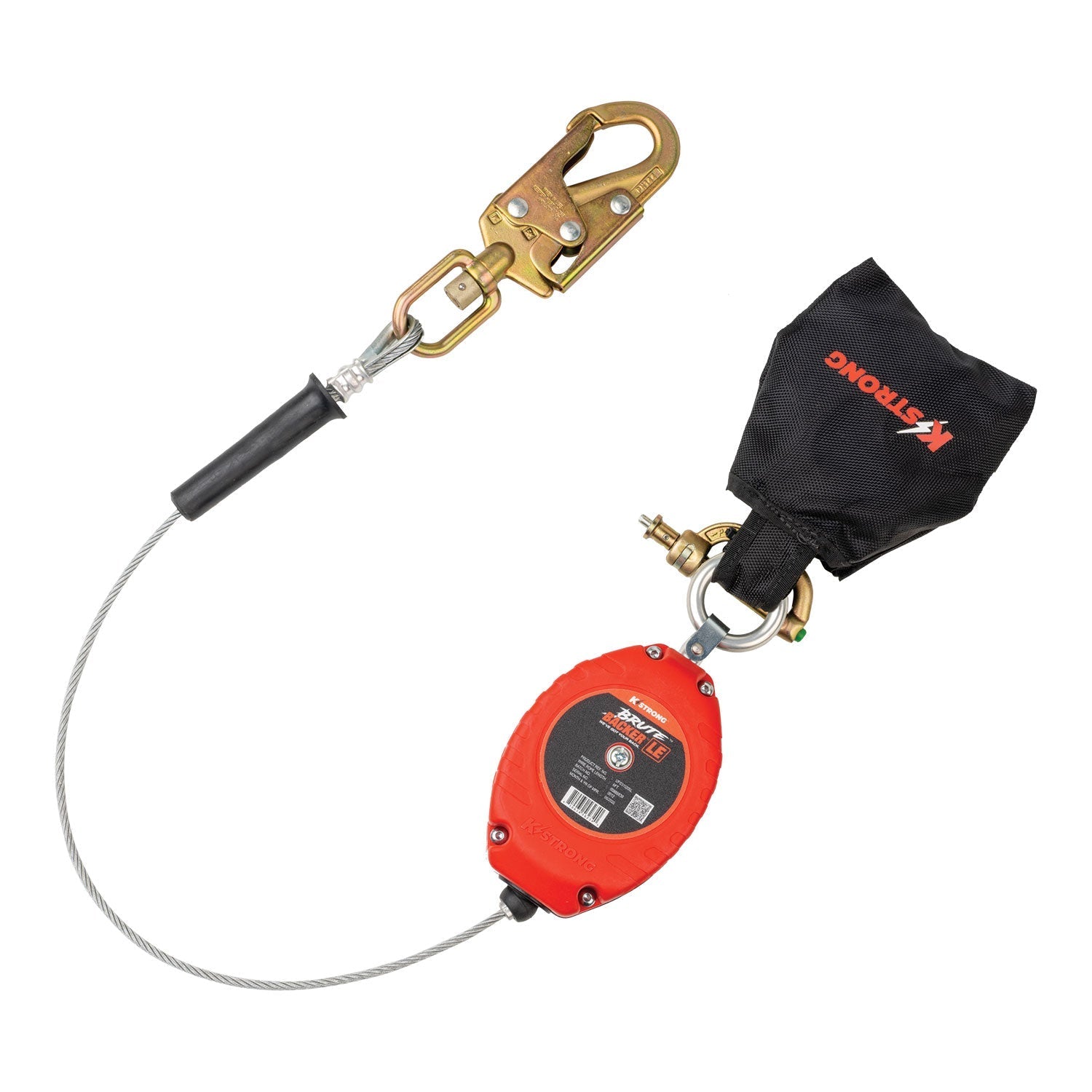
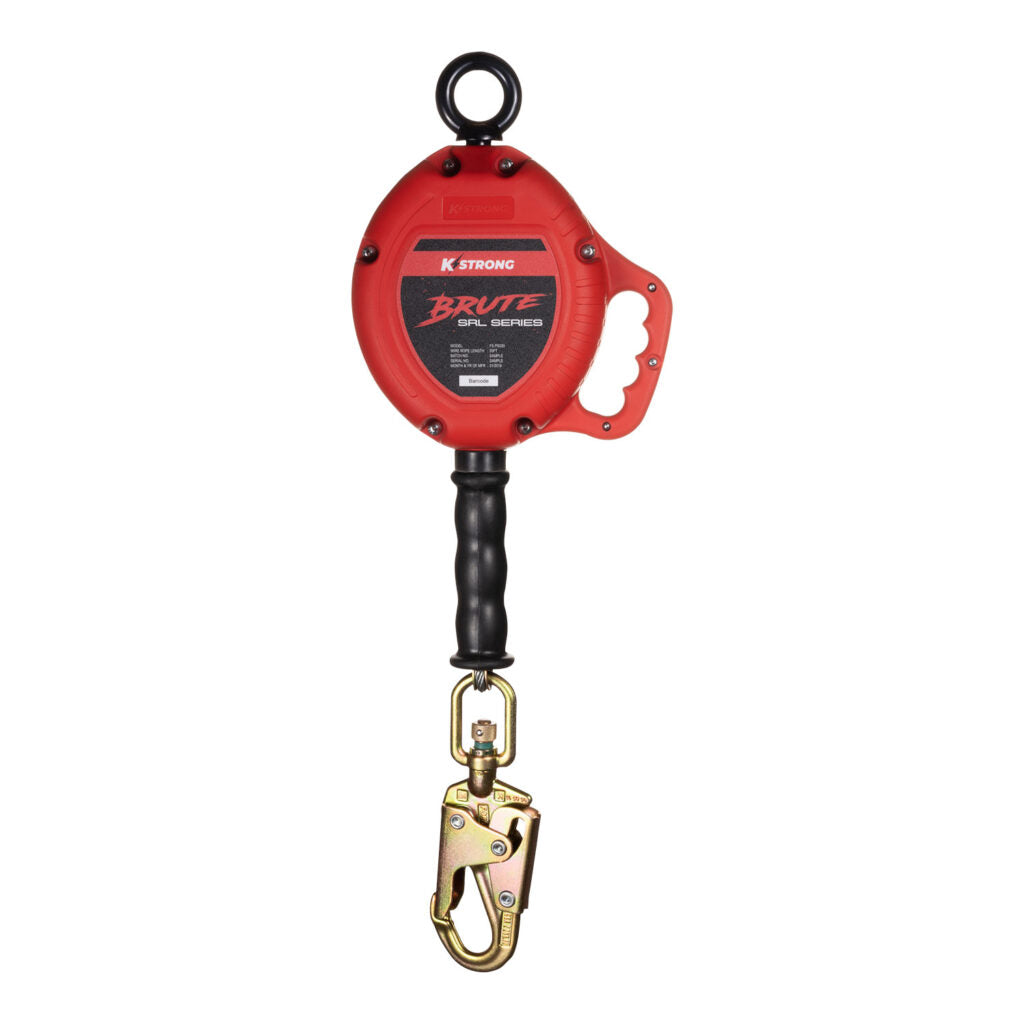
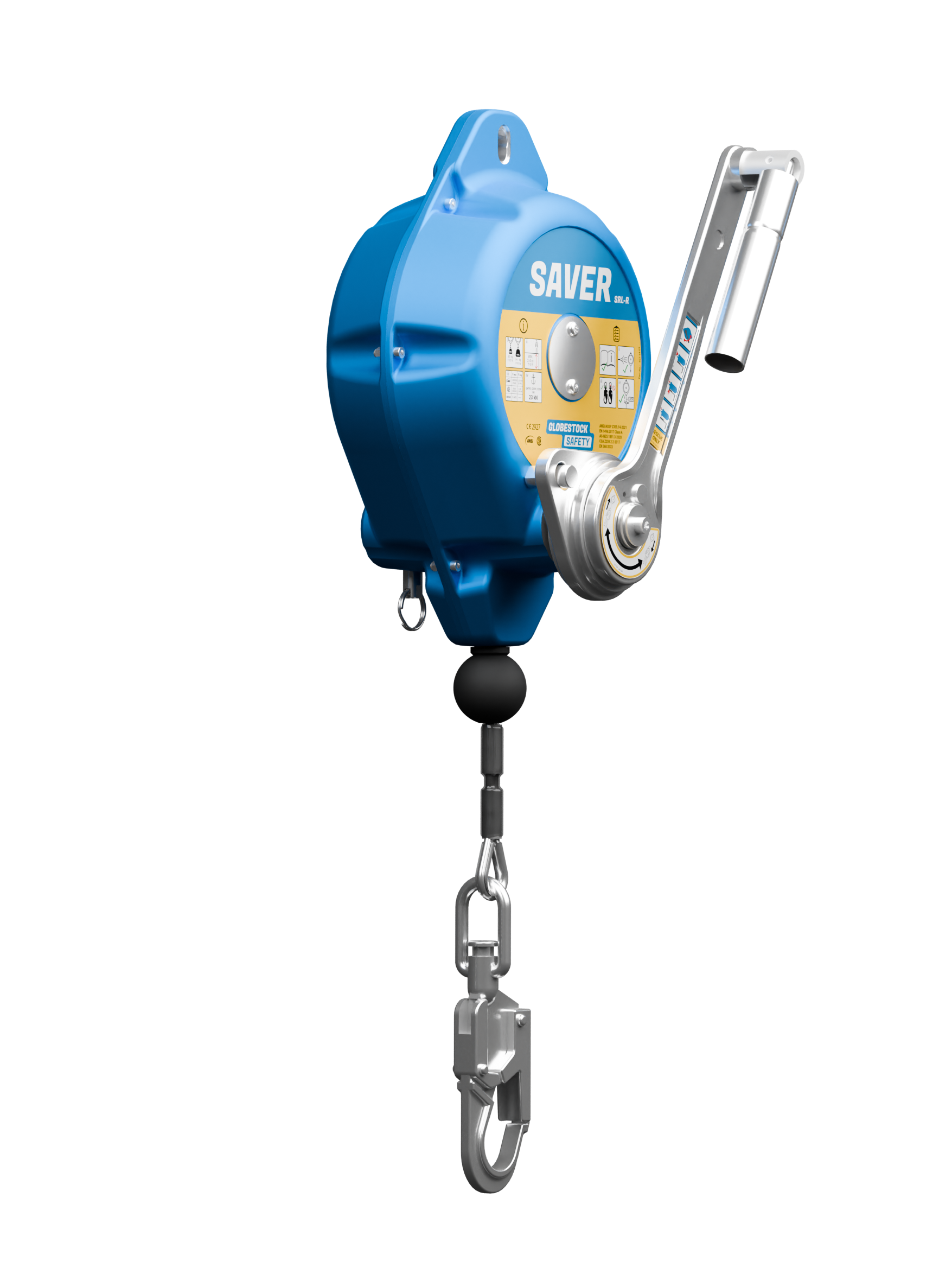
A self-retracting lifeline (SRL), sometimes called a self-retracting lanyard, is one of the two main fall-arrest connectors, and the more advanced one. Inside its housing is a spring-loaded drum holding a web or cable lifeline that extends as the worker moves away and retracts as they move back, always keeping the line taut. If the worker falls, a sudden pull on the line triggers a locking mechanism, just like a car seatbelt, that stops the payout almost immediately, then an internal energy-management system arrests the fall over a short distance. Our BRUTE SRL is a cable model built for this.
How an SRL works
The mechanism is elegant. Under normal movement, the drum lets the line pay out and reel in smoothly, so there's never dangerous slack, the line just follows the worker. But the drum has a centrifugal or inertial locking mechanism tuned to speed: slow, normal movements let the line move freely, while the sudden, fast payout of a fall trips the lock instantly. Once locked, an internal brake or energy absorber dissipates the fall's energy over a short distance, keeping the arrest force within safe limits. It's the same seatbelt principle applied to fall protection: free movement normally, instant lock in an emergency.
The big advantage: shorter fall distance
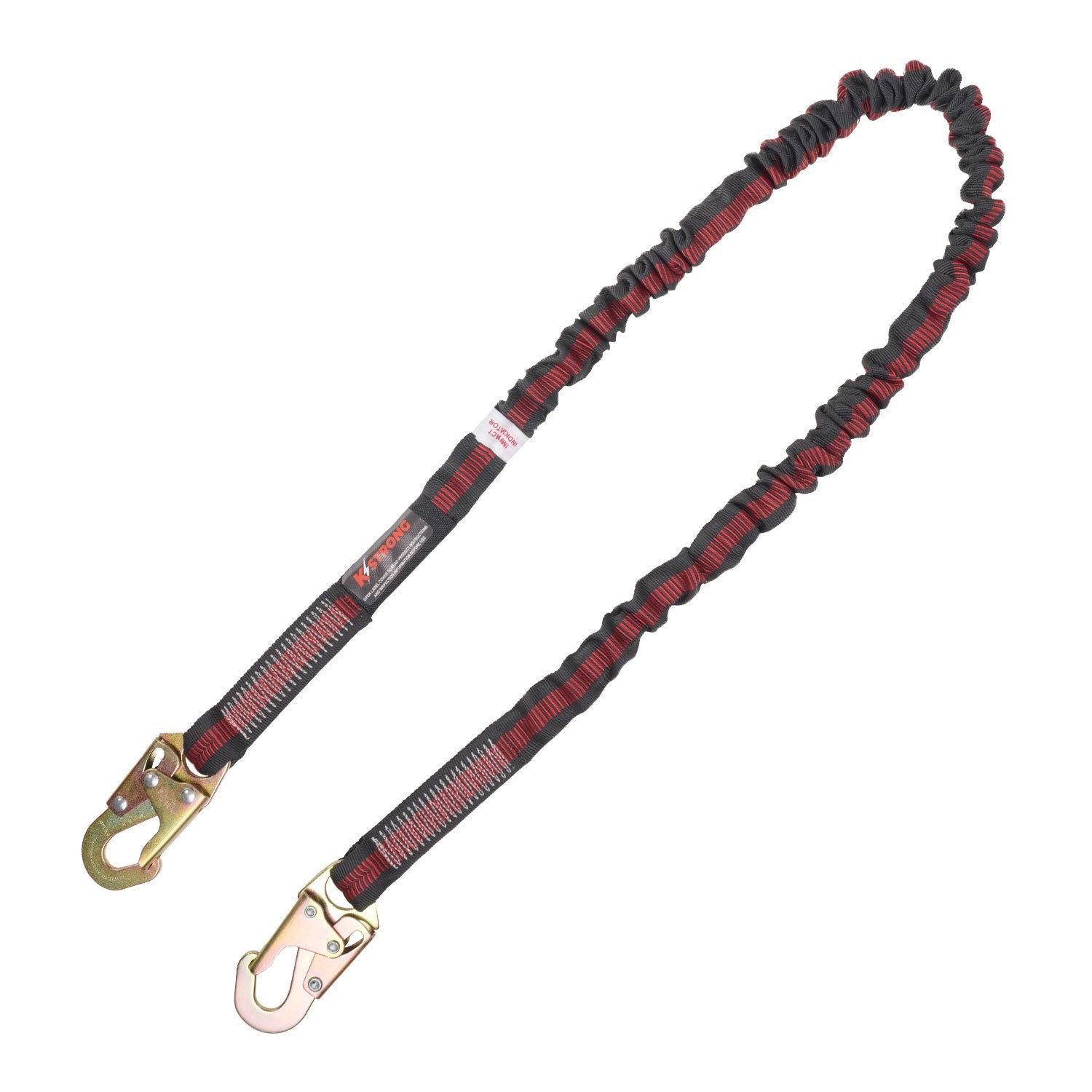
The defining benefit of an SRL is how quickly it stops a fall. Because the line stays taut and the lock trips almost immediately, an SRL arrests a fall in a much shorter distance than a shock-absorbing lanyard, which allows up to 6 feet of free fall first. That shorter fall distance means an SRL needs far less clearance below, making it the go-to connector where there isn't much room, near a floor, a lower platform, or an obstruction. It also means less force and less chance of striking something on the way down. Where clearance is the constraint, the SRL's short arrest distance is often the deciding, sometimes the only, safe option.
SRL classes: Class 1 and Class 2
SRLs are classified under ANSI Z359.14 by how they may be anchored, and it matters. A Class 1 SRL is designed to be anchored at or above the worker's dorsal D-ring, and it allows only minimal free fall, the traditional overhead tie-off. A Class 2 SRL is rated for anchoring at foot level (overhead-and-below use), tolerating greater free fall before it engages, for situations where you can only tie off at your feet. Using an SRL below its rated anchoring position is dangerous, so you must match the class to how you'll anchor it. Confirm the SRL's class suits your tie-off point before you use it.
Leading-edge (SRL-LE) models
A special category, the leading-edge SRL (SRL-LE), addresses one of the most dangerous scenarios: tying off at foot level where the lifeline may run over a sharp edge, such as a roof or platform edge. In a fall over an edge, a standard lifeline can be cut, and the fall forces are higher. SRL-LE models, like our BRUTE LE, add extra energy-absorbing capacity and abrasion-resistant lifelines built to survive contact with an edge. If your work involves foot-level tie-off near an unprotected edge, you need an LE-rated SRL, a standard SRL is not built for that hazard, and using one there can be fatal.
Inspection and care
An SRL has moving parts, so inspection is important. Before each use, check the housing for cracks and damage, pull the lifeline out and let it retract to confirm it pays out and reels in smoothly, give it a sharp tug to verify the locking mechanism engages, and inspect the lifeline (web or cable) and the hook for damage. Check any load indicator on the hook or line, if it shows the SRL has arrested a fall, retire the unit. SRLs also require periodic factory or authorized-service inspection per the manufacturer's schedule. Because it's a mechanical device, an SRL demands more inspection care than a simple lanyard.
When to use an SRL
Choose an SRL when fall clearance is limited and you need the shortest possible arrest distance, when you want more mobility with a taut, self-managing line, or when you must anchor at foot level or over an edge (with a Class 2 or LE-rated model). It costs more than a lanyard and needs more inspection, but it buys shorter falls and better usability. Where clearance is ample and budget matters, a shock-absorbing lanyard may suffice; where room is tight or the tie-off is low, the SRL is the safer choice. Match the class to your anchoring, and calculate clearance either way.
The bottom line
A self-retracting lifeline (SRL) keeps its line taut and locks like a seatbelt on a sudden pull, arresting a fall in a much shorter distance than a lanyard and needing far less clearance below. SRLs are classified for how they anchor, Class 1 (at or above the dorsal D-ring) and Class 2 (foot-level), with leading-edge (LE) models for tie-off over sharp edges. Match the class to your tie-off, inspect the mechanism before use, and retire any that has arrested a fall. See our shock-absorbing lanyard vs SRL and fall clearance guides, and browse our SRLs and lifelines.
Personal SRLs and twin-leg setups
SRLs come in sizes from large overhead units to compact personal SRLs (sometimes called PFLs) that mount right at the harness dorsal D-ring, and in twin-leg configurations for 100% tie-off while moving. A twin-leg SRL, like a twin-leg lanyard, lets you connect the second leg to a new anchor before releasing the first, so you stay continuously protected as you move, with the SRL's short fall distance on both legs. For workers moving around at height who also need minimal fall distance, a twin-leg personal SRL combines continuous tie-off with the seatbelt-like quick arrest, though at a higher cost than a lanyard.