What a gantry crane is
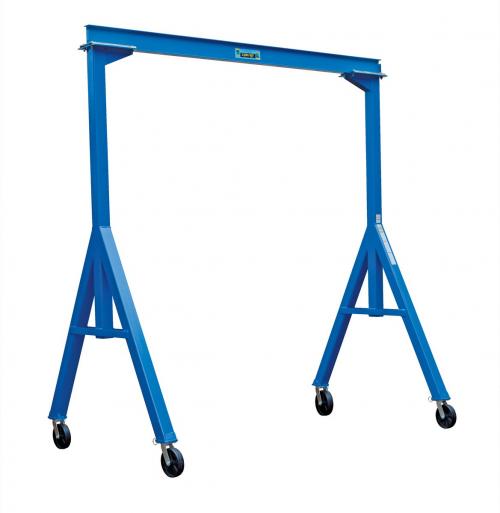
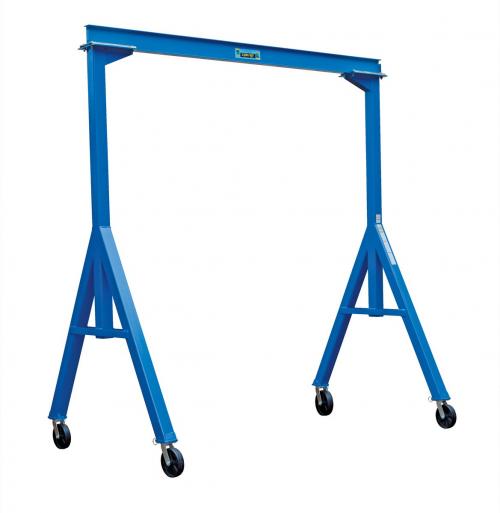
A gantry crane is a bridge crane that stands on its own legs instead of hanging from a building. A horizontal beam spans between two upright legs, and those legs ride on wheels, on floor tracks or free-rolling casters, so the entire crane moves to wherever the load is. A hoist and trolley travel along the beam to lift and position the load. The big advantage is that a gantry needs no overhead building structure at all, which makes it portable, flexible, and cheaper than a fixed bridge crane. Our gantry cranes cover the common workshop capacities and spans.
How a gantry crane works
The gantry's design is straightforward and self-supporting. The two legs carry the load down to the floor, the beam between them holds the hoist and lets it travel side to side, and the wheels let you reposition the whole crane. On a fixed-track gantry, the crane rolls along rails set in the floor for a defined path; on a caster-mounted portable gantry, it rolls freely in any direction. Because everything is supported by the crane itself, there's no need to reinforce a ceiling or install runway rails, you set the gantry down where you need it and lift.
Portable and adjustable gantries
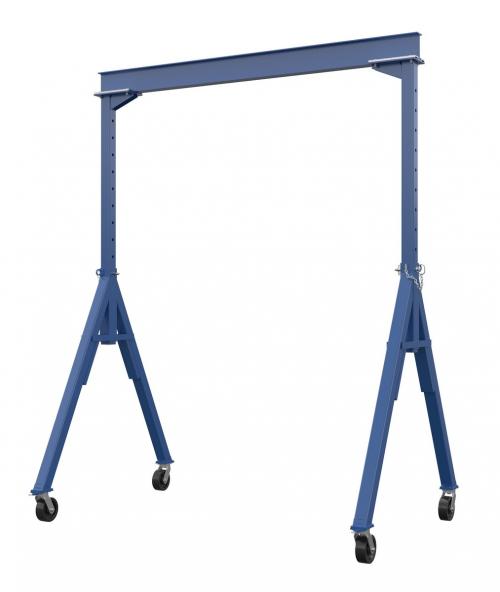
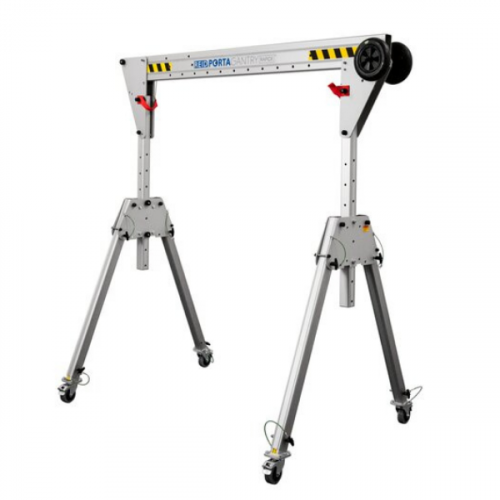
Many gantry cranes are built for flexibility. Portable gantries roll on casters and can be moved between work areas or even between sites, and adjustable gantries let you change the height and sometimes the span to suit different loads and clearances. Some break down for transport and storage. This portability is a major reason to choose a gantry: one crane can serve several locations, and it can be stored out of the way when not in use. If your lifting happens at changing spots, or you need to move or stow the crane, a portable adjustable gantry is ideal.
Fixed-track versus portable gantries
Gantries come in two broad styles. Fixed-track (rail-mounted) gantries roll along rails set into the floor, giving them a defined travel path and typically higher capacity and stability for heavy, repetitive work along a line. Portable (caster-mounted) gantries roll freely on wheels, trading some capacity and stability for the freedom to go anywhere and be repositioned easily. Choose a fixed-track gantry for heavy lifting along a set path, and a portable one for flexible, move-anywhere lifting of light-to-moderate loads. Most shop and maintenance use favors the portable type for its versatility.
Capacity and span
Gantry cranes span a wide range. Shop and portable models commonly handle 1 to 5 tons, with heavy fixed gantries going much higher, and spans and heights are chosen to fit the work, a 10-foot height and span is a common shop size, as on our Vestil gantries. As always, choose a capacity above your heaviest load with margin, and a span and height that cover your loads and give clearance. A taller gantry reaches over bigger loads; a wider span covers more area but demands more of the structure. Match both to your actual lifting, covered in our what capacity gantry crane do I need guide.
Where gantry cranes are used
Gantries suit any operation that needs real lifting capacity but not a permanent overhead crane. Machine shops use them to lift and move heavy parts and dies. Warehouses and yards use them for loading and positioning. Maintenance crews roll them to equipment that needs servicing. Outdoor sites use them where no building structure exists to hang a crane. And rental and multi-site contractors value their portability. Wherever heavy loads must be lifted at changing locations, or a building can't support an overhead crane, the gantry's self-supporting, mobile design is the practical answer.
Gantry versus bridge and jib cranes
A gantry sits between the jib and the bridge crane. A jib crane covers one workstation with a rotating boom and lighter loads. A bridge crane covers an entire bay from permanent runway rails for the heaviest continuous work. A gantry gives heavy capacity like a bridge but rolls on the floor like nothing else, no building structure, fully mobile, at lower cost than a bridge. We compare all three in our jib vs gantry vs bridge crane guide. Choose a gantry when you want capacity and mobility without permanent structure.
Choosing a gantry crane
Size a gantry by capacity, span, height, and mobility. Pick a capacity above your heaviest load (round up). Choose a span to cover your work area and a height that clears your tallest load, adjustable models add flexibility here. Decide between fixed-track (for heavy, path-based lifting) and portable casters (for move-anywhere versatility). And confirm the floor can bear the concentrated wheel loads. For most shops, a portable adjustable gantry in the 1-to-5-ton range covers the work. Compare models in our best portable gantry cranes guide.
The bottom line
A gantry crane is a self-supporting bridge on wheeled legs that rolls to the load, delivering heavy lifting without building structure and at lower cost than a fixed bridge crane. Portable and adjustable models add mobility and flexibility, making gantries ideal for shops, yards, and changing-location lifting. Size the capacity, span, and height to your loads, and choose fixed-track or portable by your needs. Browse our gantry cranes, compare crane types in our jib vs gantry vs bridge guide, or see the best portable gantry cranes.