Steel Service Cart
A steel service cart is a welded, shelved cart built to carry tools, parts, and work in process through a plant for years rather than months, and this collection pairs that workhorse with the purpose-built carts a flat deck cannot handle. The spine is Valley Craft's 12 gauge utility carts, two, three, and four shelves of formed steel rated from 2,000 to 3,600 lb, sized from 36 by 18 in up to 60 by 30 in, in grey, blue, or red. Around them sit the odd-load specialists: Star Industries brick carts, Vestil V-groove pipe movers, heavy-duty cradle carts, portable carpet dollies, parts bins, lockable security carts, and the caster-steer and fifth-wheel-steer trailers that move a loaded deck behind a tugger. If your load is boxes and parts on shelves, start with the service cart; if it is an awkward shape a shelf cannot hold, the answer is one aisle over, and both live here.
Compare Specialty Carts
| Model | Price | Capacity | |
|---|---|---|---|
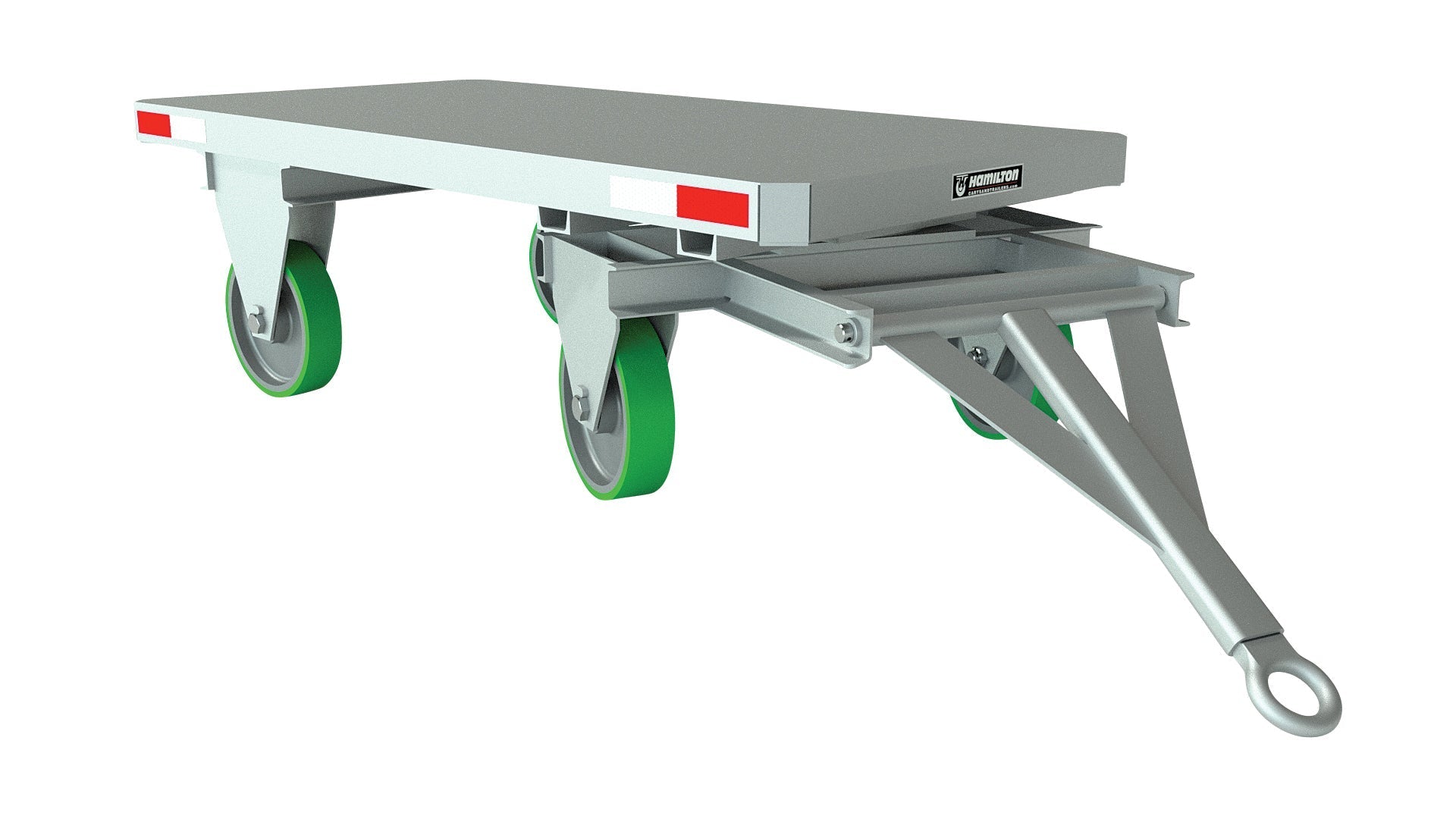
| Vestil Fifth Wheel Steer Trailers | $7,009 | 4,500-10,000 lb | View → |
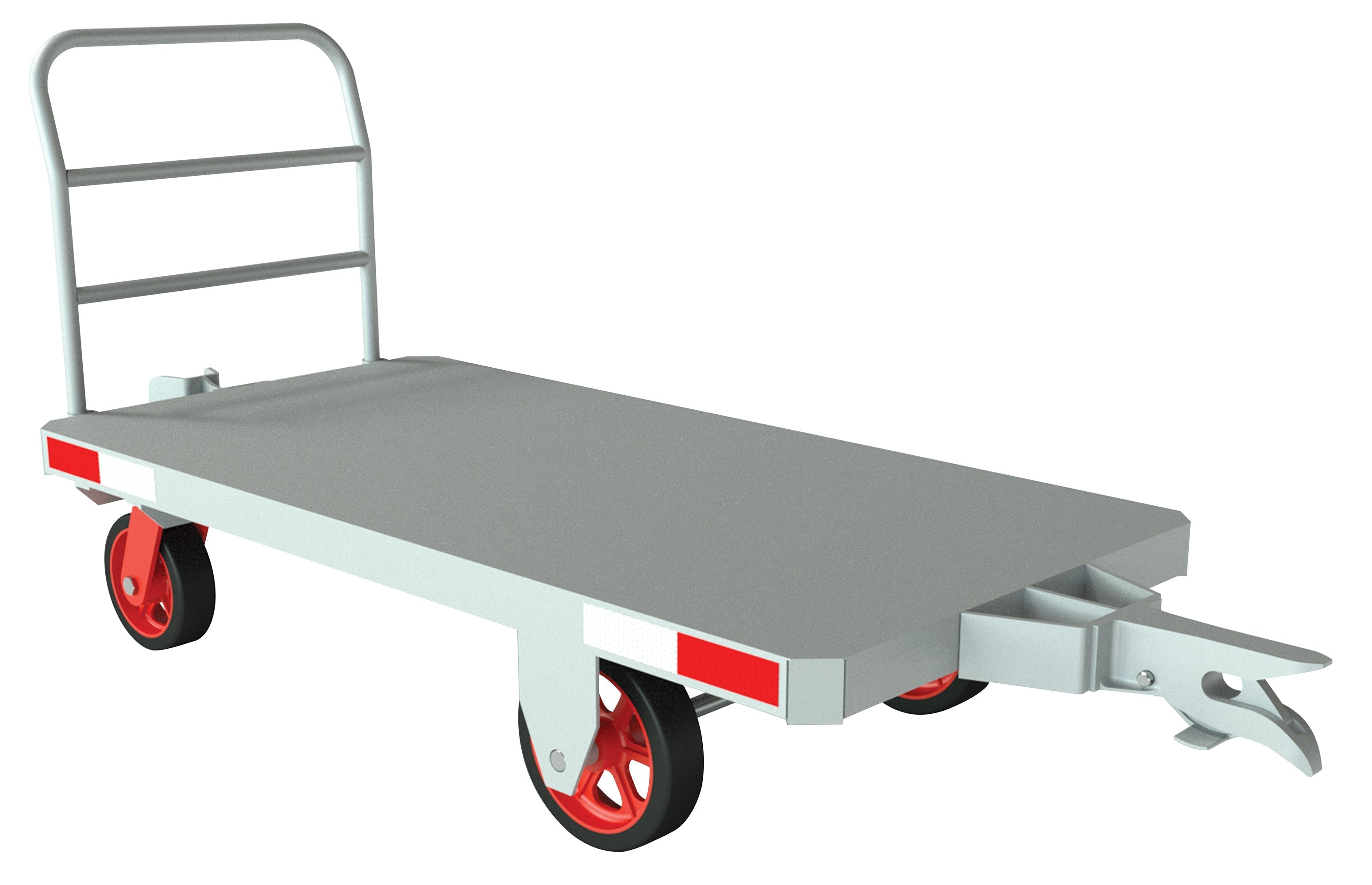
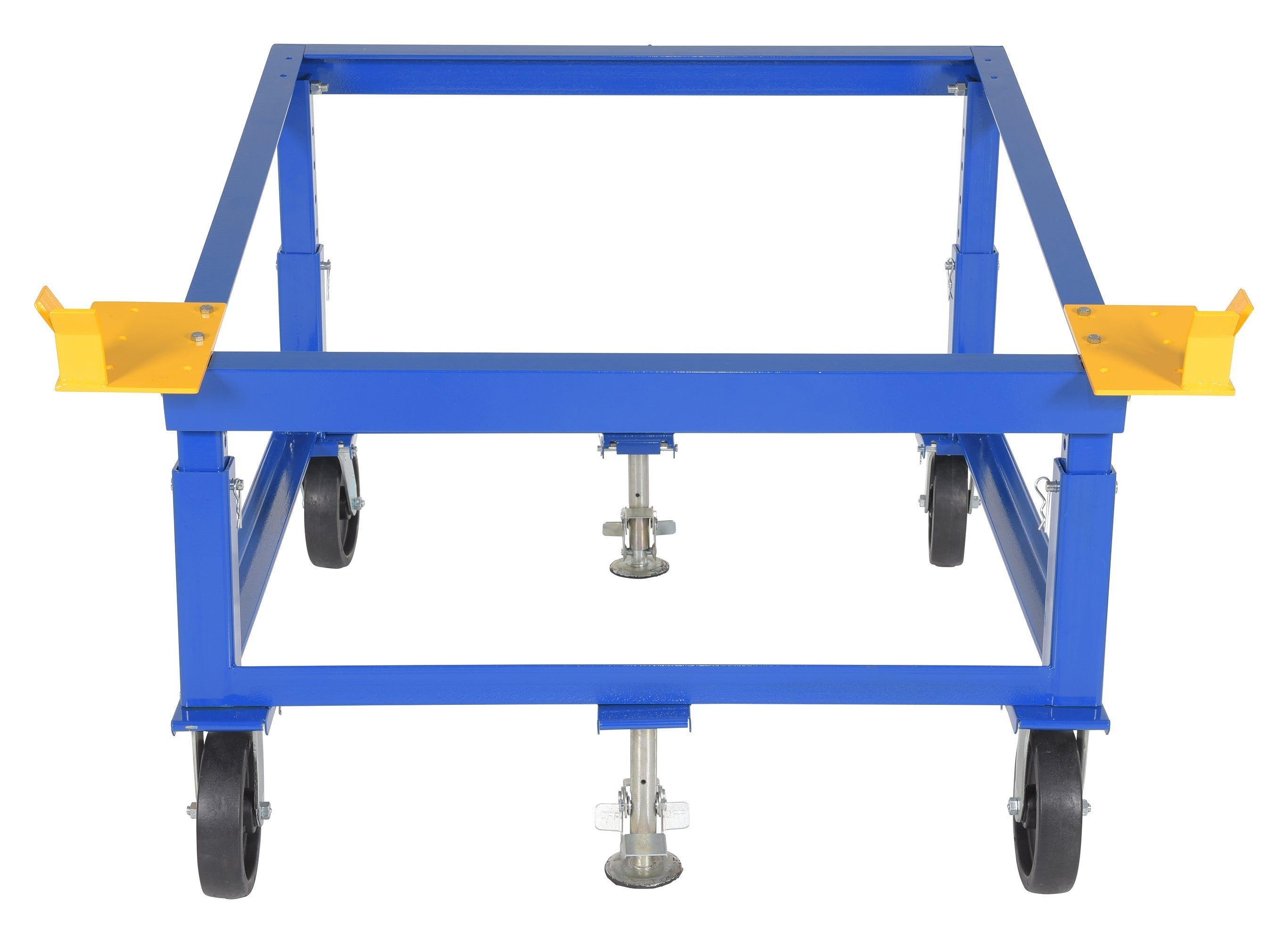
| Vestil Caster Steer Towable Trailers | $6,887 | 3,000-4,000 lb | View → |
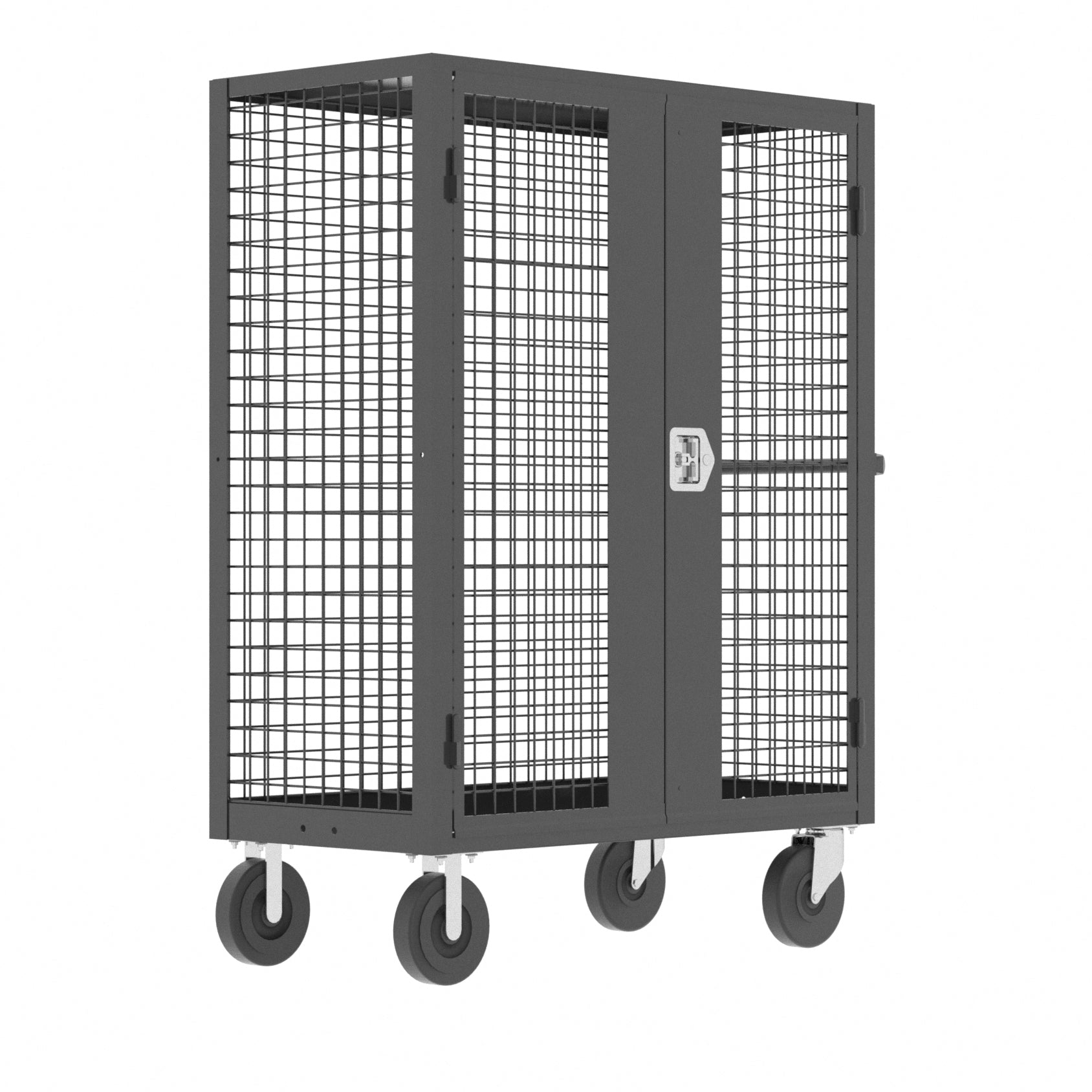
| Valley Craft Security Carts | $1,625 | 2,000 lb | View → |
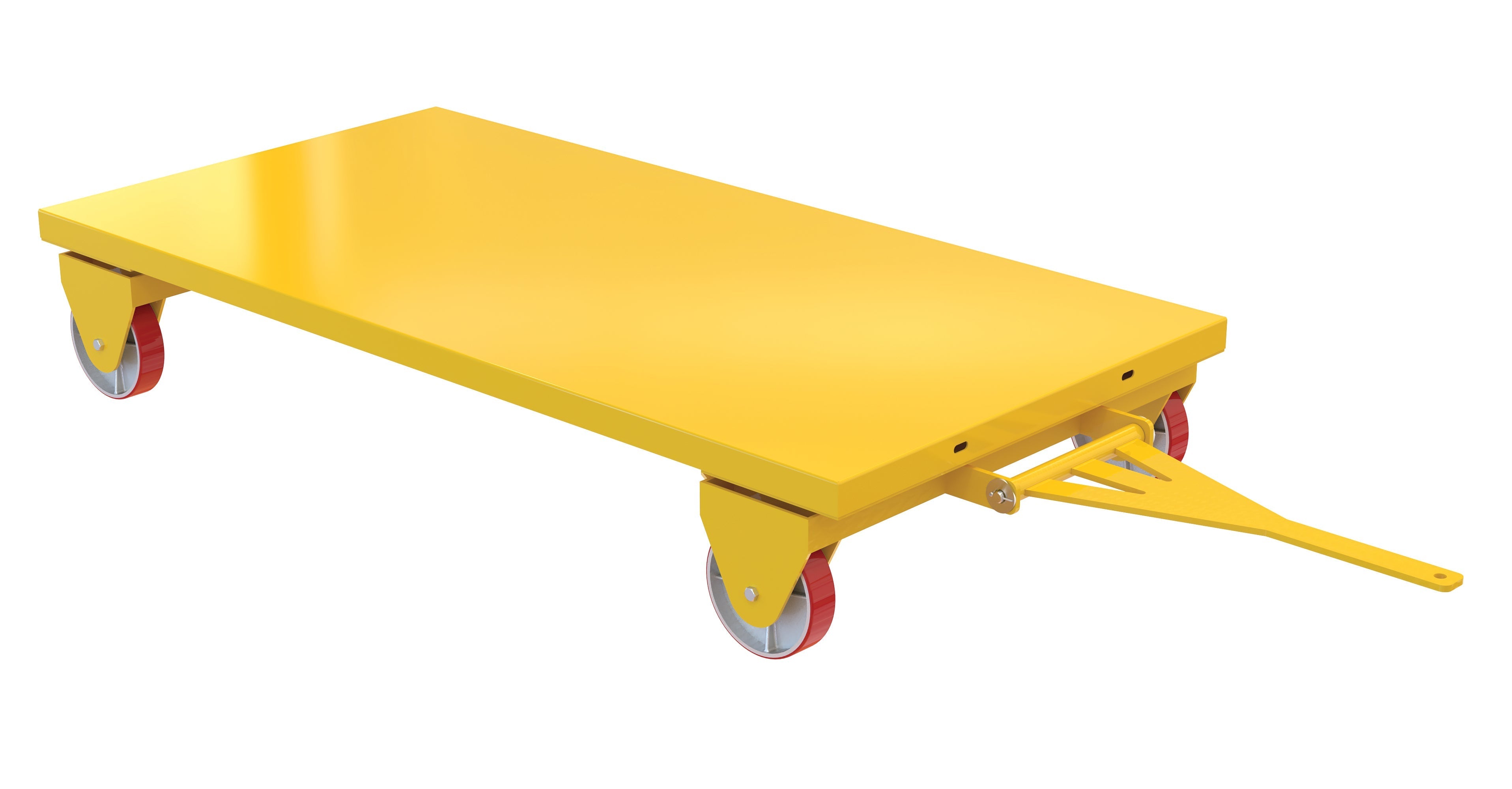
| Vestil All Wheel Steer Truck | $1,576 | — | View → |
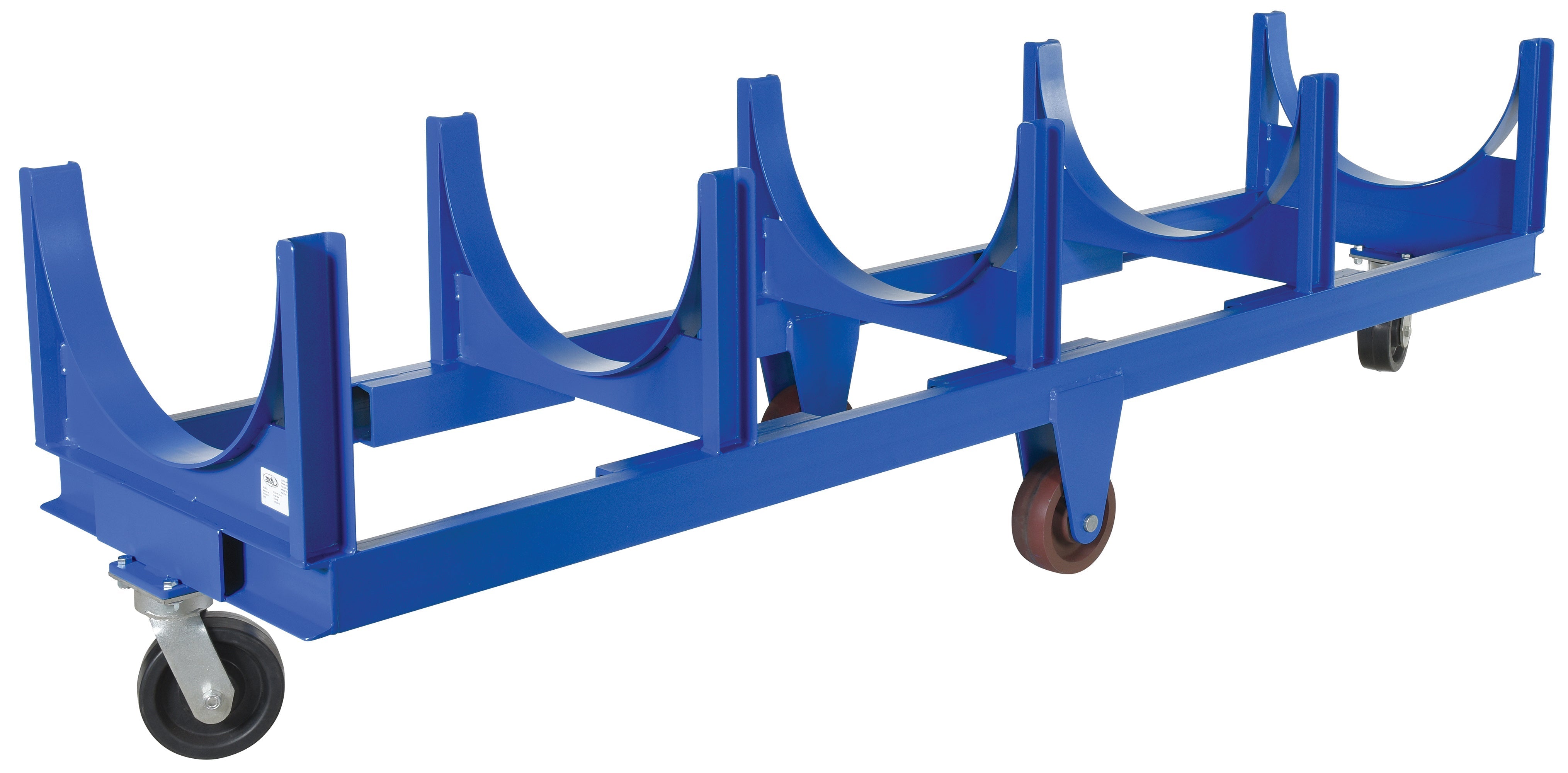
| Vestil Heavy-Duty Cradle Carts | $1,371 | 4,000-10,000 lb | View → |
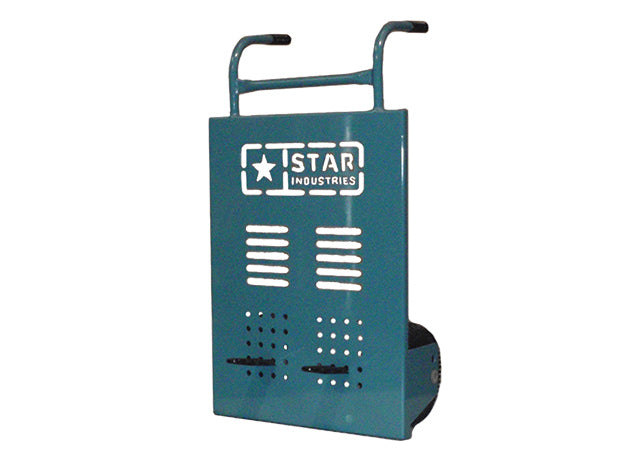
| Star Industries Brick Carts | $879 | 1,000 lb | View → |
 In Stock
 In Stock
 In Stock
 In Stock
 In Stock
 In Stock
 In Stock
 In Stock
 In Stock
 In Stock
 In Stock
 In Stock
 In Stock
Specialty Carts Buying Guide
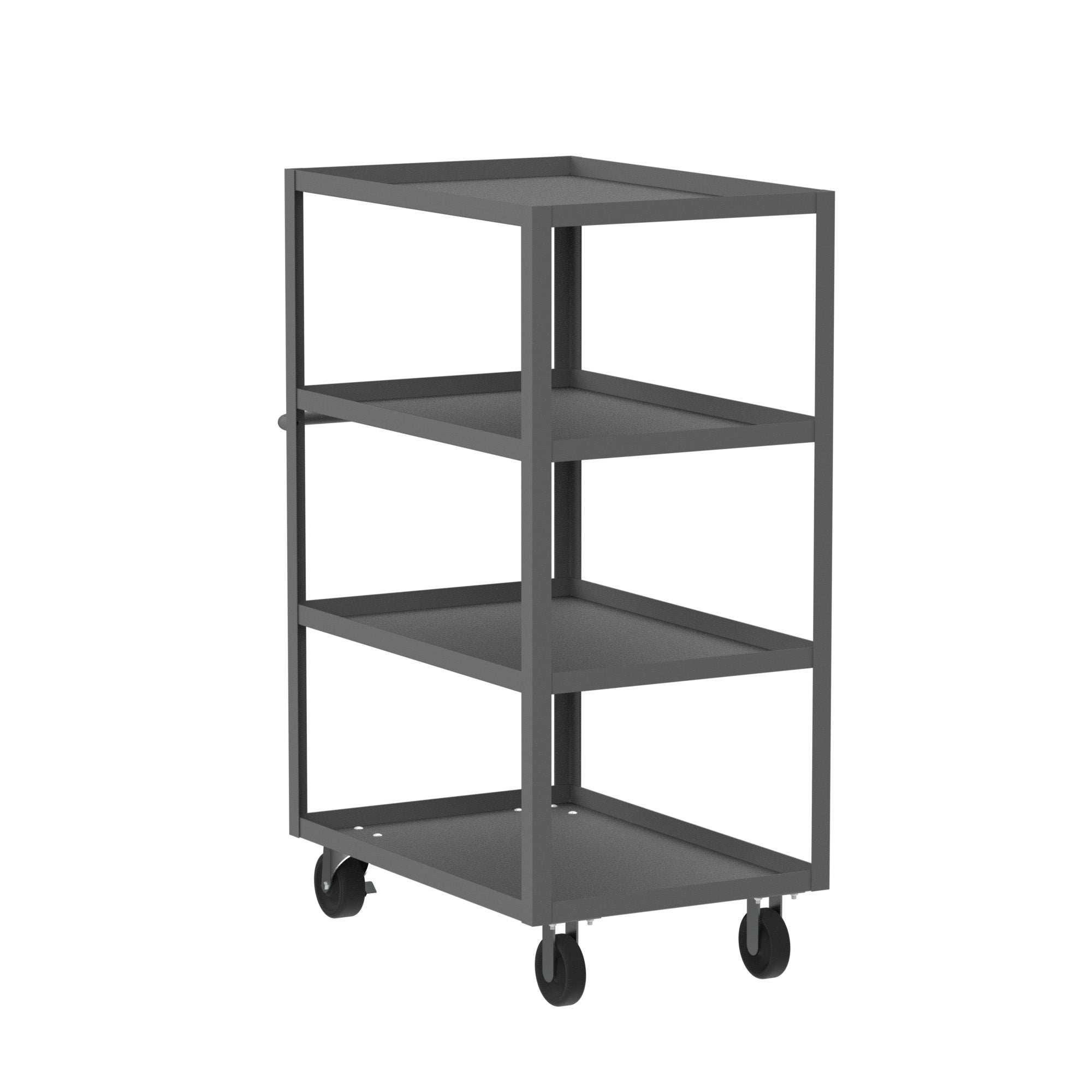
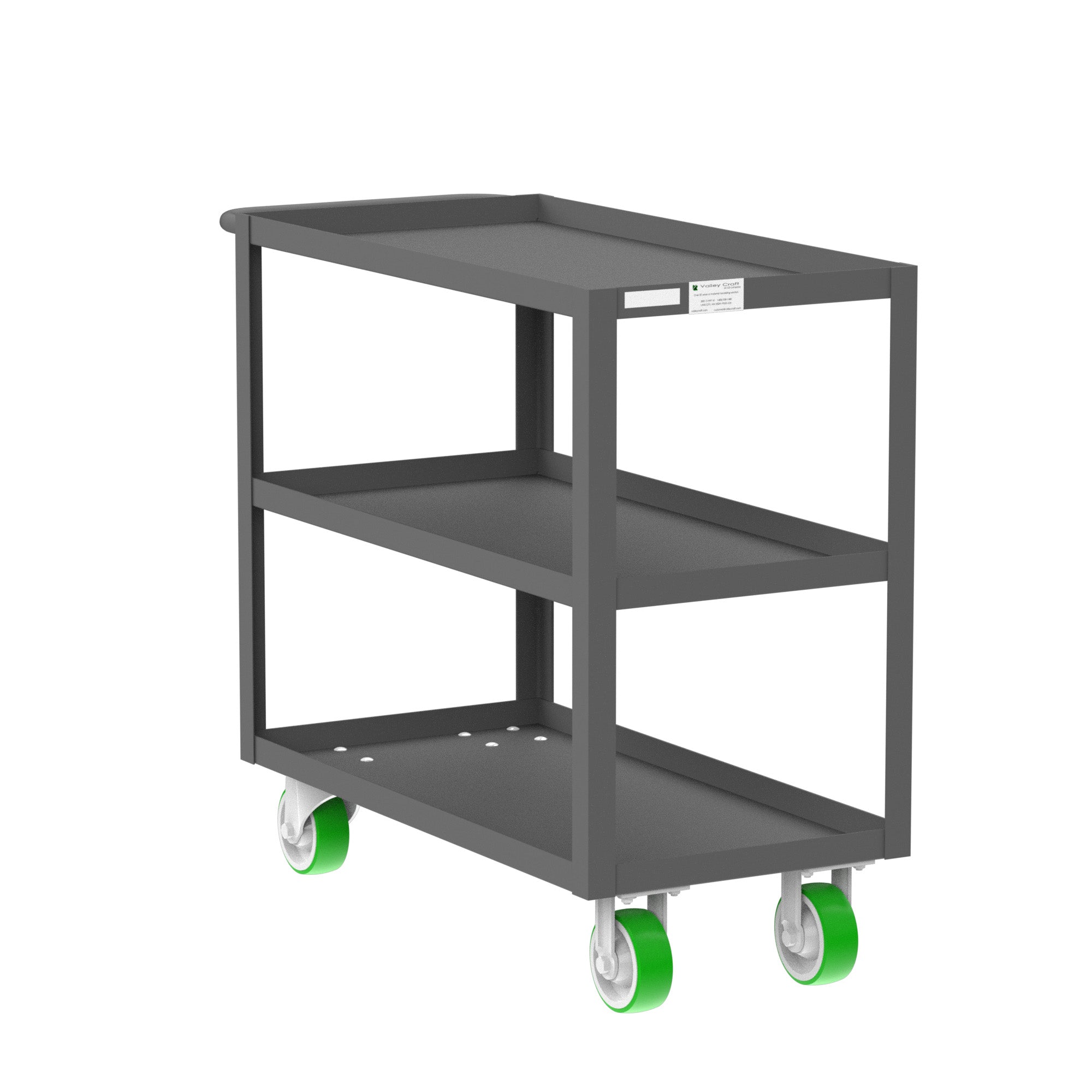
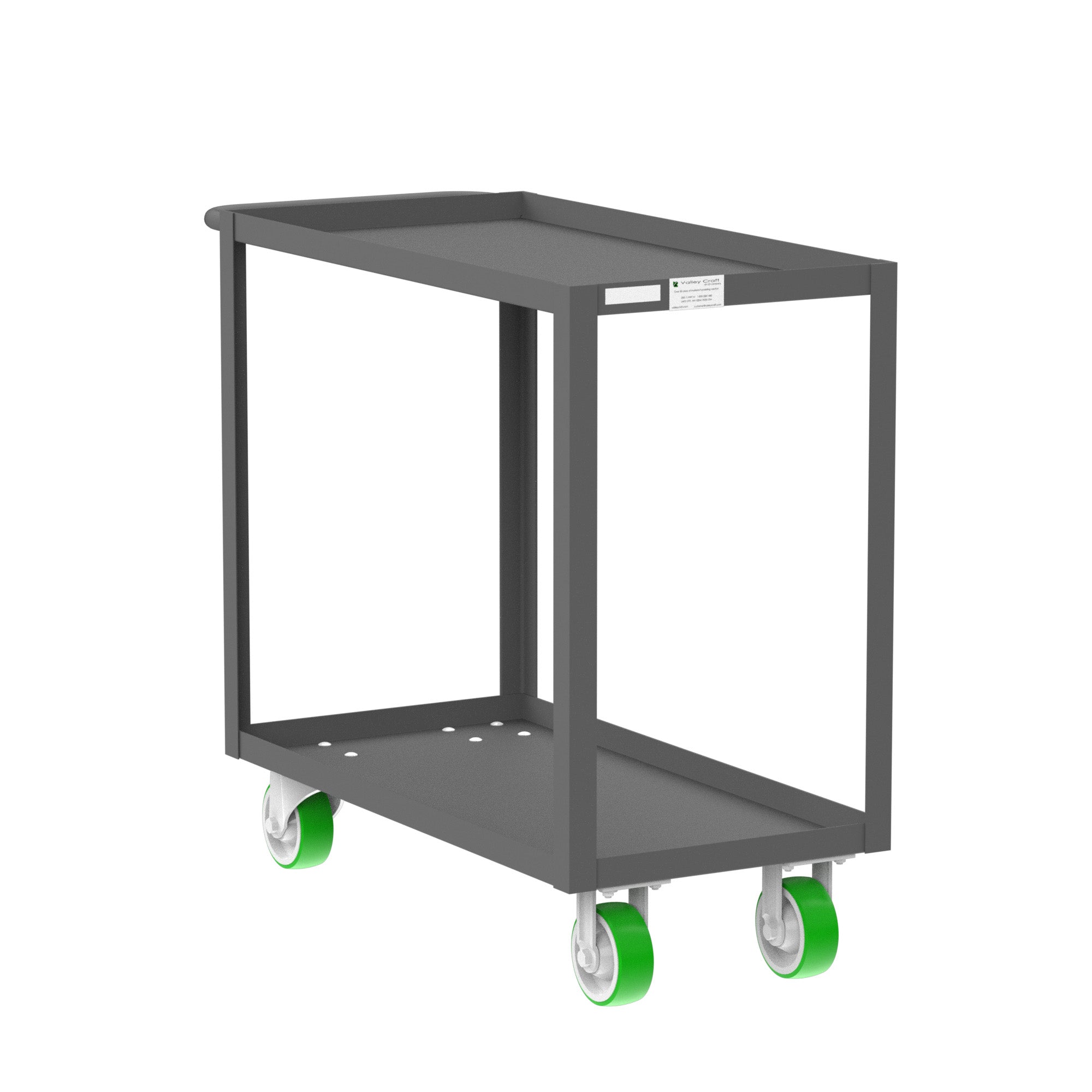
Start with the steel service cart, then count the shelves. The workhorse of this collection is Valley Craft's 12 gauge utility cart, a welded steel service cart that carries parts, tools, and work in process on a daily route without loosening or racking out of square. The choice is shelf count. The two and three shelf models are rated 2,000 lb and start under $400; the four shelf steps up to 3,600 lb for heavier or denser loads. Each comes in a standard model with lipped shelves that keep small parts aboard, or a flat top for boxes and long stock that overhang. Sizes run 36 by 18 in up to 60 by 30 in. For the wider shelved, wire, and mail patterns a maintenance floor runs on, the service carts collection carries the rest of the utility range.
What 12 gauge actually buys you. Gauge is the spec that separates plant equipment from a hardware store cart. Twelve gauge carbon steel is about 0.105 inch thick, formed and welded into shelves and a frame that take years of loading at rated weight instead of bending on the first heavy day. That is the difference from the tube and wire carts sold for occasional garage duty: a published capacity you can put in a safety plan, industrial casters you can replace, and a build that survives a forklift's near miss. Everything in the parent industrial carts and dollies hub is chosen on the same basis, load rating first and price second, because a cart that becomes a recurring purchase was never the cheap option.
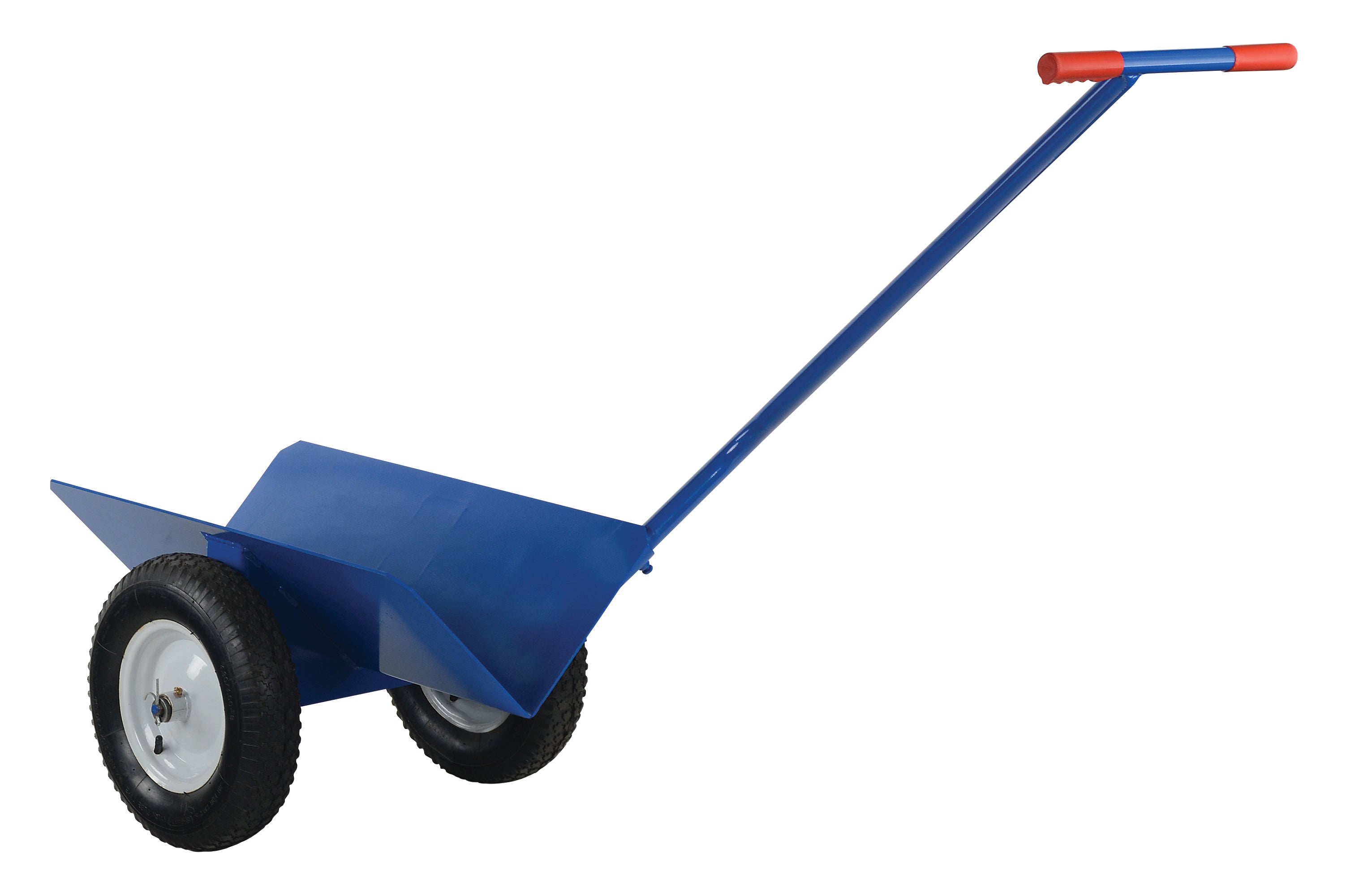
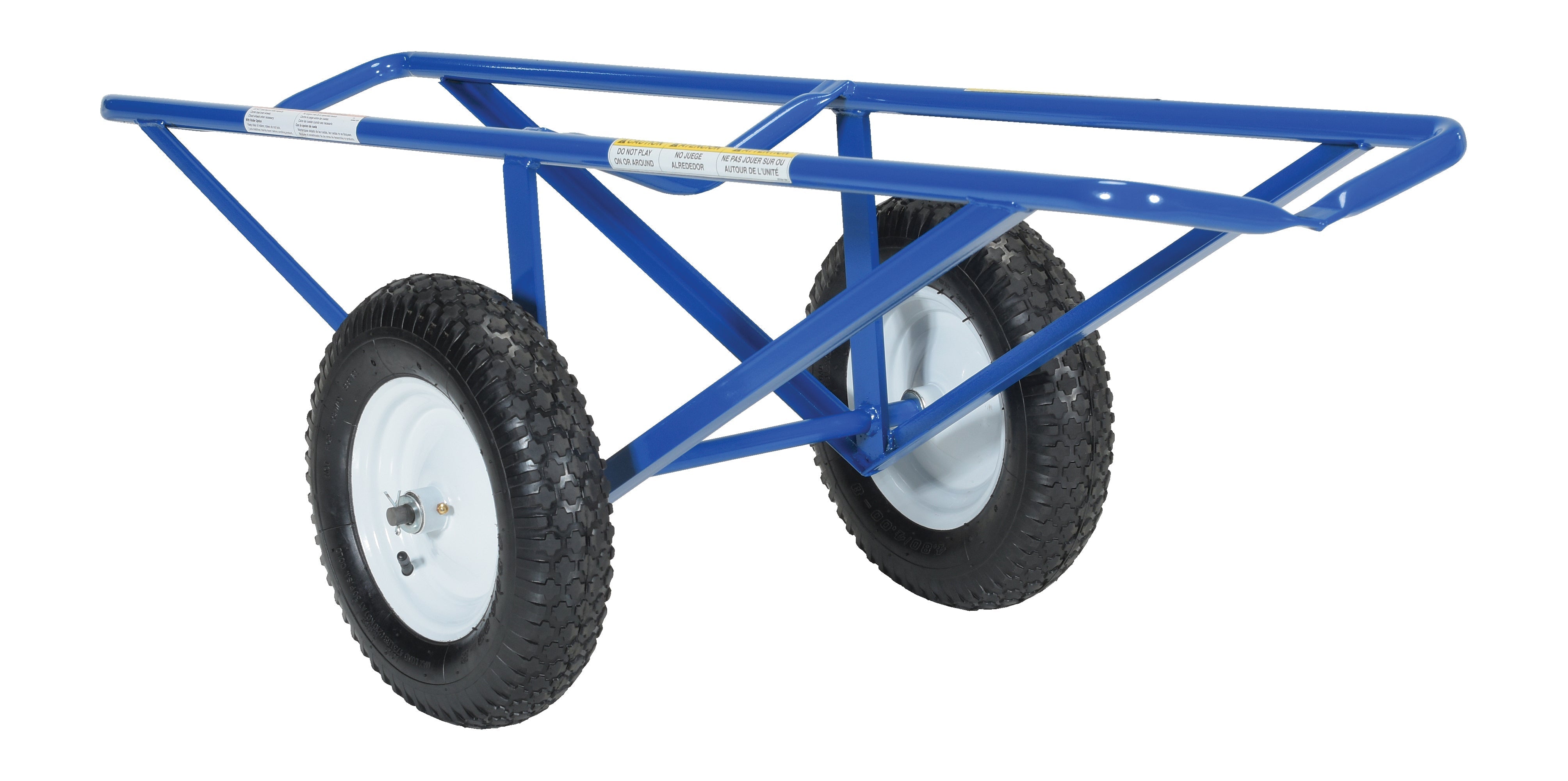
Pipe, cradles, and round stock that wants to roll. A flat deck fights round loads; these carts hold them. Vestil's V-groove pipe movers seat pipe, conduit, and tube in a grooved channel so it tracks straight rather than rolling off, rated 600 or 1,000 lb and starting near $340. For larger cylindrical work, the heavy-duty cradle carts hold shafts, rolls, coils, and machine bases in a saddle, with ratings from 4,000 lb to 10,000 lb and deck lengths from about 30 in to over 120 in for long stock. When the round load is a full machine that has to be jacked and rolled into place, that is a machine moving job with rollers and toe jacks, not a cart one, so plan the lift before the load leaves the ground.
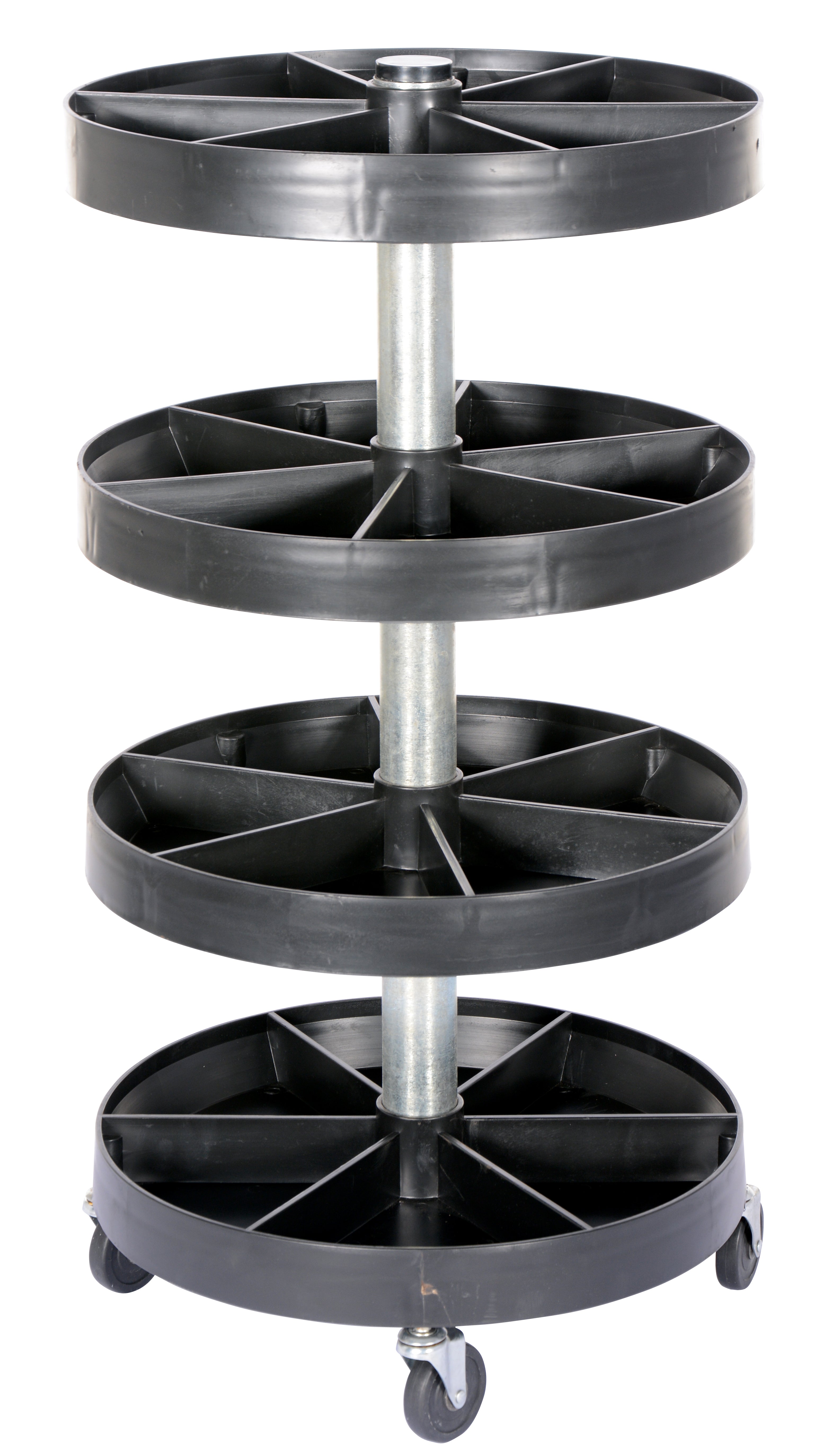
Brick, sheet goods, rolls, and loose parts. The rest of the odd-load shelf is built around one awkward shape each. Star Industries brick carts move a strapped cube of block or brick on an 8 in fork at 1,000 lb, in a Rough Terrain or Deluxe Rough Terrain build for the job site rather than the smooth aisle. Vestil's portable carpet dollies and dispensers roll a carpet roll and let you pull length off it, rated 500 lb on pneumatic or foam filled wheels for showroom and warehouse floors. The portable parts bin and the economical pallet and container transporter handle loose small parts and palletized containers on a budget. Flat sheet goods belong one aisle over, on panel carts, and anything already sitting on a pallet rides a pallet jack instead of a cart.
Locking a cart around tools and high value stock. When the cart's job is to keep its load from walking off, Valley Craft's security carts wrap a lockable steel enclosure around a 2,000 lb deck, with your choice of no interior shelf, one, or two adjustable shelves and sizes from 48 by 24 in to 60 by 30 in. It is the mobile lockup for tooling, test gear, and high theft consumables that move between departments. For the caged mesh trucks that do the same job while keeping the contents visible, see the security trucks collection.
When the cart gets towed. The heaviest movers here stop being pushed and start being towed behind a tugger in a train, and the choice is the steering geometry under the deck. Caster steer towable trailers ride on swivel casters that turn to follow the tow vehicle, rated 3,000 and 4,000 lb, and they maneuver tightly at lighter weights. Fifth wheel steer trailers use a turntable plate like a road trailer, sit lower, and are the pick when loads run heavy and service is severe, with ratings to 10,000 lb, polyurethane or pneumatic wheels, and decks to 60 by 144 in. The all wheel steer truck tracks precisely for tight in-plant routes. One rule covers all of them: the trailer needs no license, but the tugger pulling it is a powered industrial truck under OSHA 29 CFR 1910.178, so its operator does need documented training. The powered tow units themselves live in trailer movers.
Frequently Asked Questions
A steel service cart is a welded, shelved cart built for daily plant duty, carrying tools, parts, and work in process rather than the occasional garage load. In this collection that is Valley Craft's 12 gauge utility cart, formed from steel about 0.105 inch thick, rated 2,000 lb on the two and three shelf models and 3,600 lb on the four shelf. Service cart and utility cart name the same thing; the specs that matter are the gauge and the published capacity.
Match shelves to how you stage the load. Two shelves suit bulky items and give the most clear height between decks; three is the common maintenance and parts pick choice; four packs the most staging into one footprint and carries up to 3,600 lb. Pick the standard model with lipped shelves to corral small parts, or the flat top when boxes and long stock overhang the edges.
Caster steer trailers ride on swivel casters that turn to follow the tugger, which makes them nimble at lighter weights, up to 4,000 lb here. Fifth wheel steer trailers use a turntable plate like a highway trailer, sit lower to the floor, and hold their line better under heavy loads, with ratings to 10,000 lb. Choose caster steer for tight, lighter moves and fifth wheel steer for heavy loads and long, straight runs.
The trailer itself carries no certification requirement. The tugger that tows it does. OSHA classifies powered tow tractors as powered industrial trucks under 29 CFR 1910.178, which requires documented operator training and evaluation before use and re-evaluation at least every three years. The trailers here are unpowered decks, so the training rule attaches to the machine pulling them.
Use a cart shaped for the load. Vestil's V-groove pipe movers seat pipe and conduit in a grooved channel so it tracks straight, rated 600 or 1,000 lb. For heavier cylindrical work such as shafts, rolls, and machine bases, the heavy-duty cradle carts hold the load in a saddle at 4,000 to 10,000 lb. Both beat strapping a round load to a flat deck and hoping it stays put.