Heavy Duty Ratchet Straps
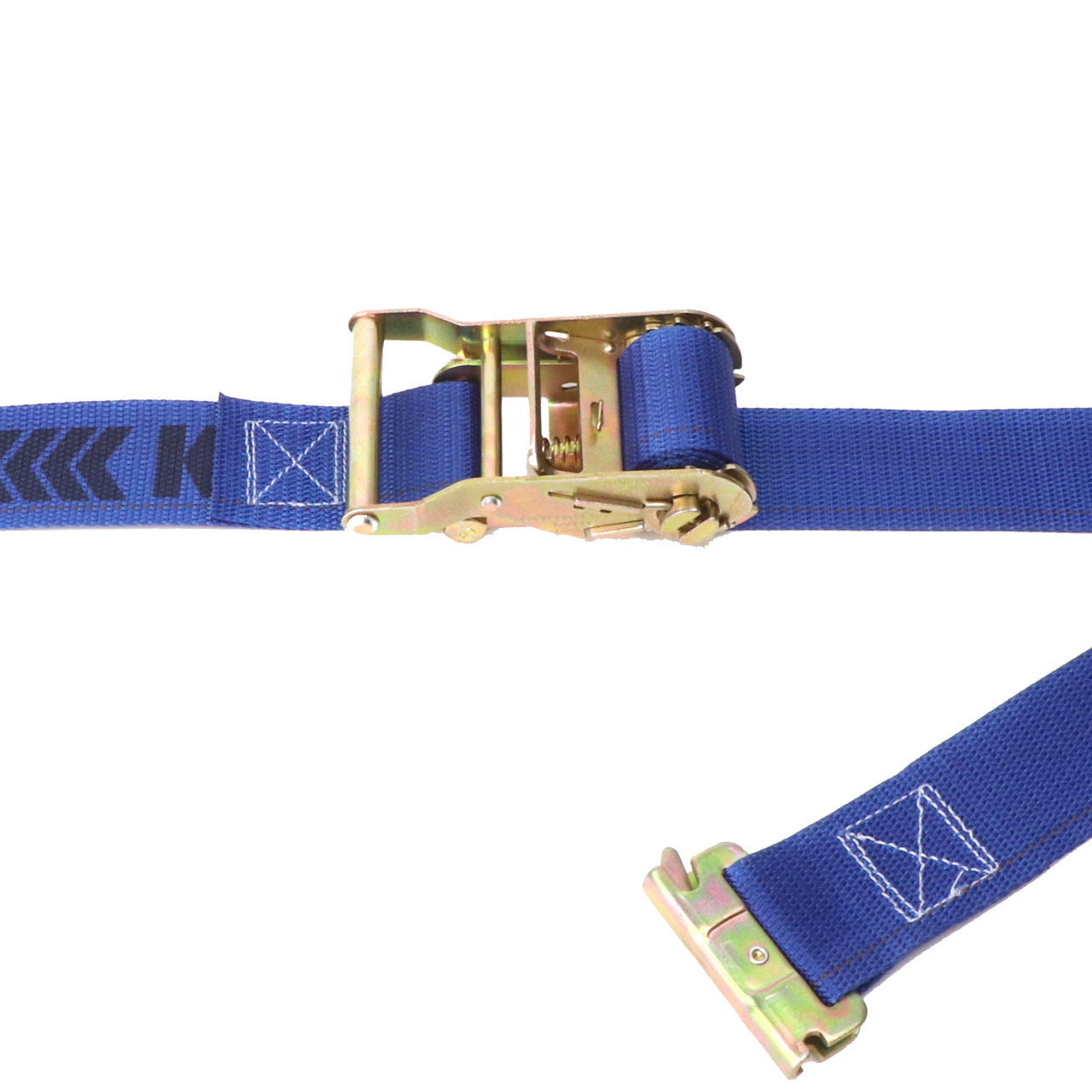
Heavy duty ratchet straps are the 2, 3, and 4 inch tiedowns that hold real freight down, the ones a roadside inspector expects to see over machinery, steel, lumber, and palletized loads rather than a kayak. This collection runs the two lines flatbed fleets already trust, Kinedyne and Lift-All, from a standard 2 inch flat hook strap rated 3,335 lb up to Lift-All Load Hugger Tuff-Edge tiedowns at 15,000 lb. Between those ends sit Kinedyne's abrasion-resistant K-FORCE and Rhino MAX webbing at 4,000 lb in 2 inch, 5,400 lb straps in 3 and 4 inch, and 4 inch K-FORCE builds that reach 6,670 lb. Every strap here carries a heat-treated steel ratchet and a stenciled working load limit tag sized to meet DOT, CVSA, and WSTDA marking rules. The guide below sorts them by width and rating first, then by webbing line, hook, and ratchet handle, so you buy the class the load actually needs.
Compare Heavy Duty Ratchet Straps
| Model | Price | Capacity | |
|---|---|---|---|
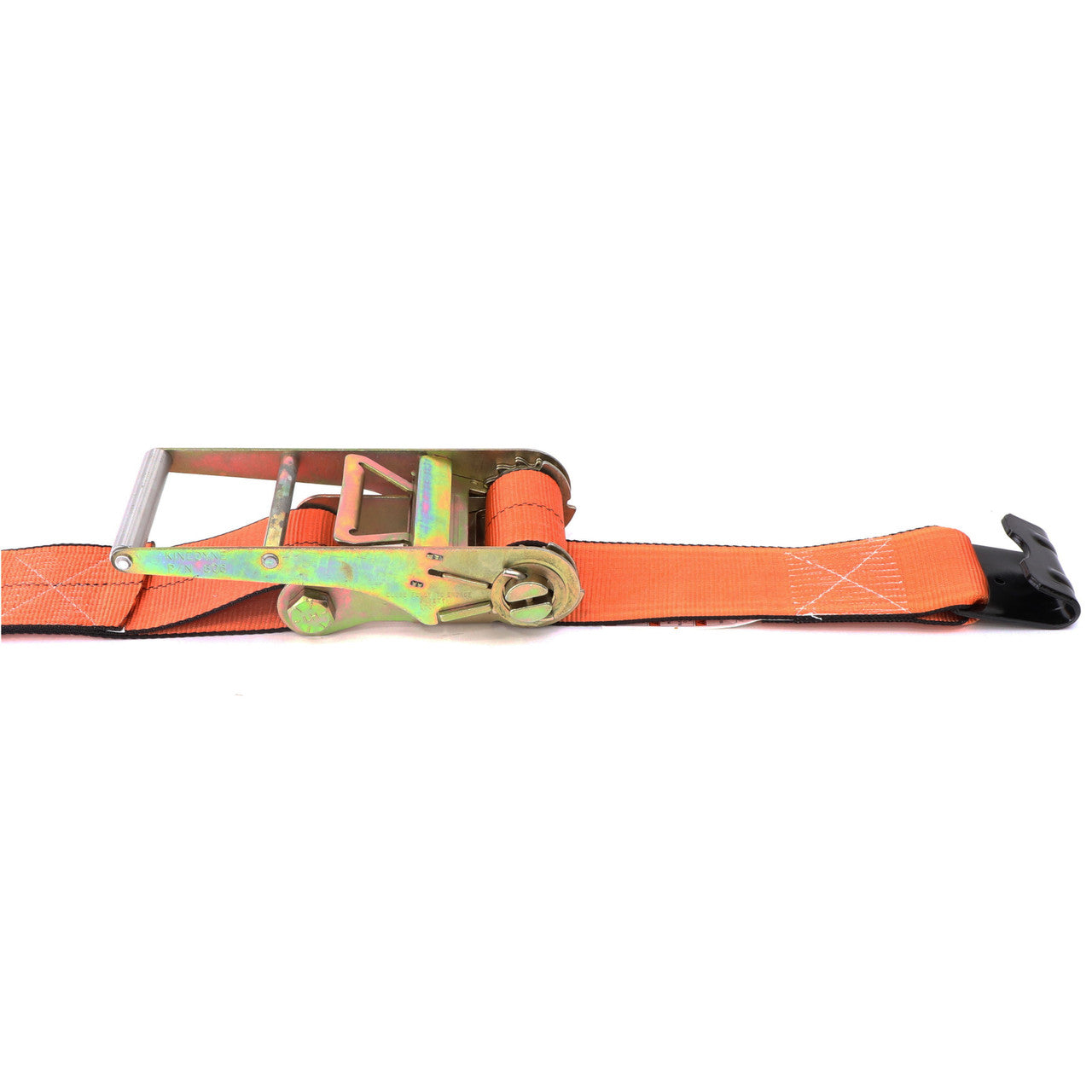
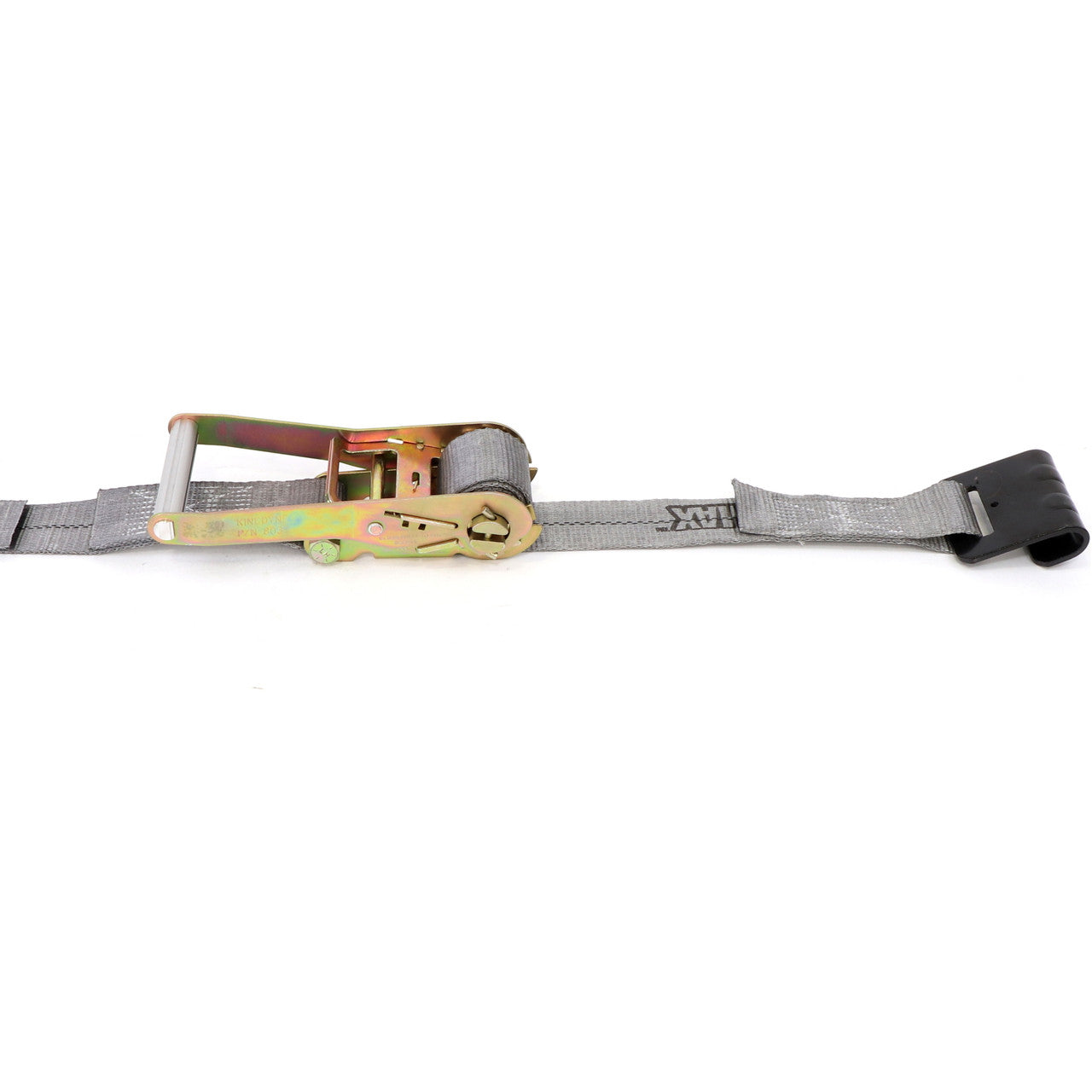
| Kinedyne 4" K-FORCE™ Flat Hook Ratchet Strap | $104 | 6,670 lb | View → |
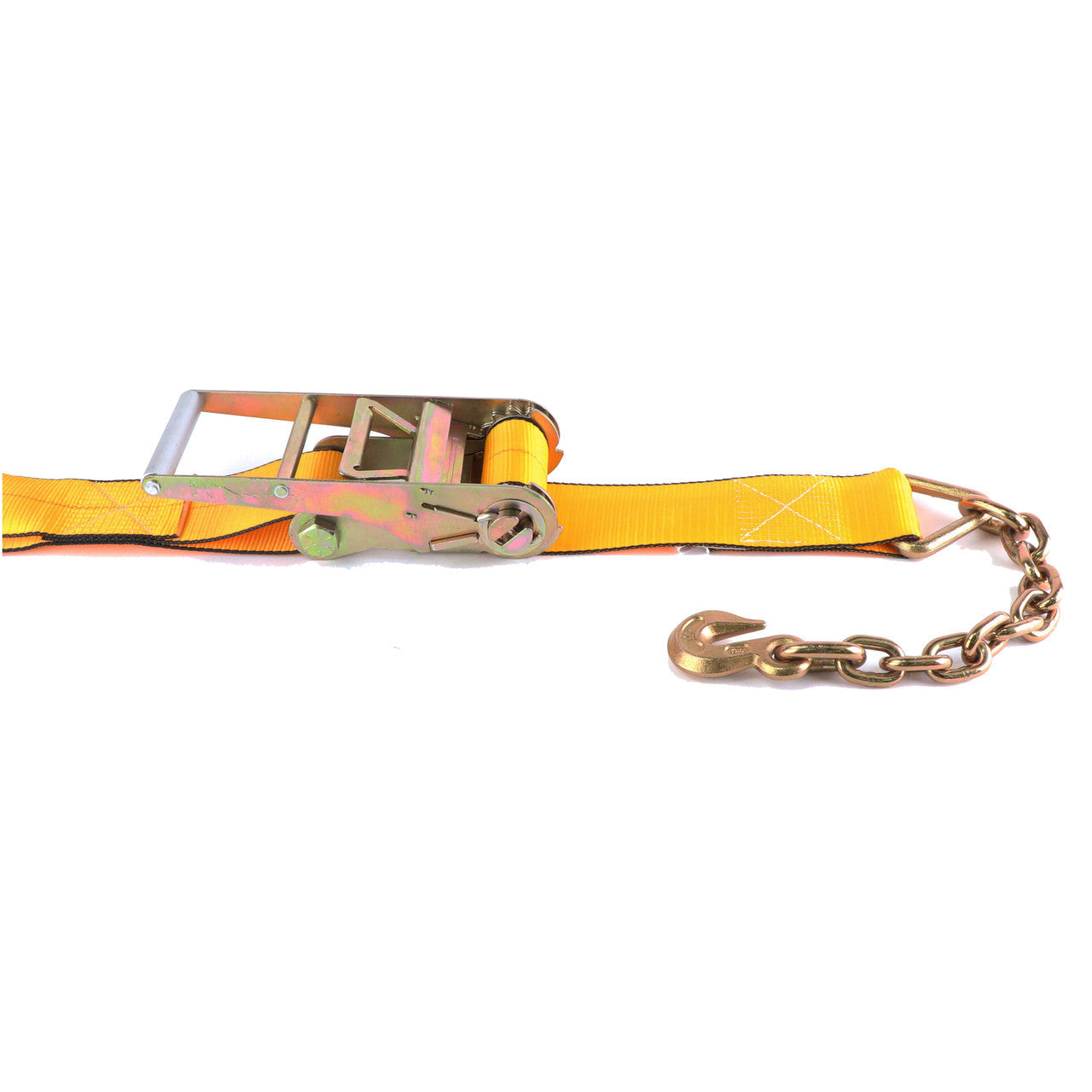
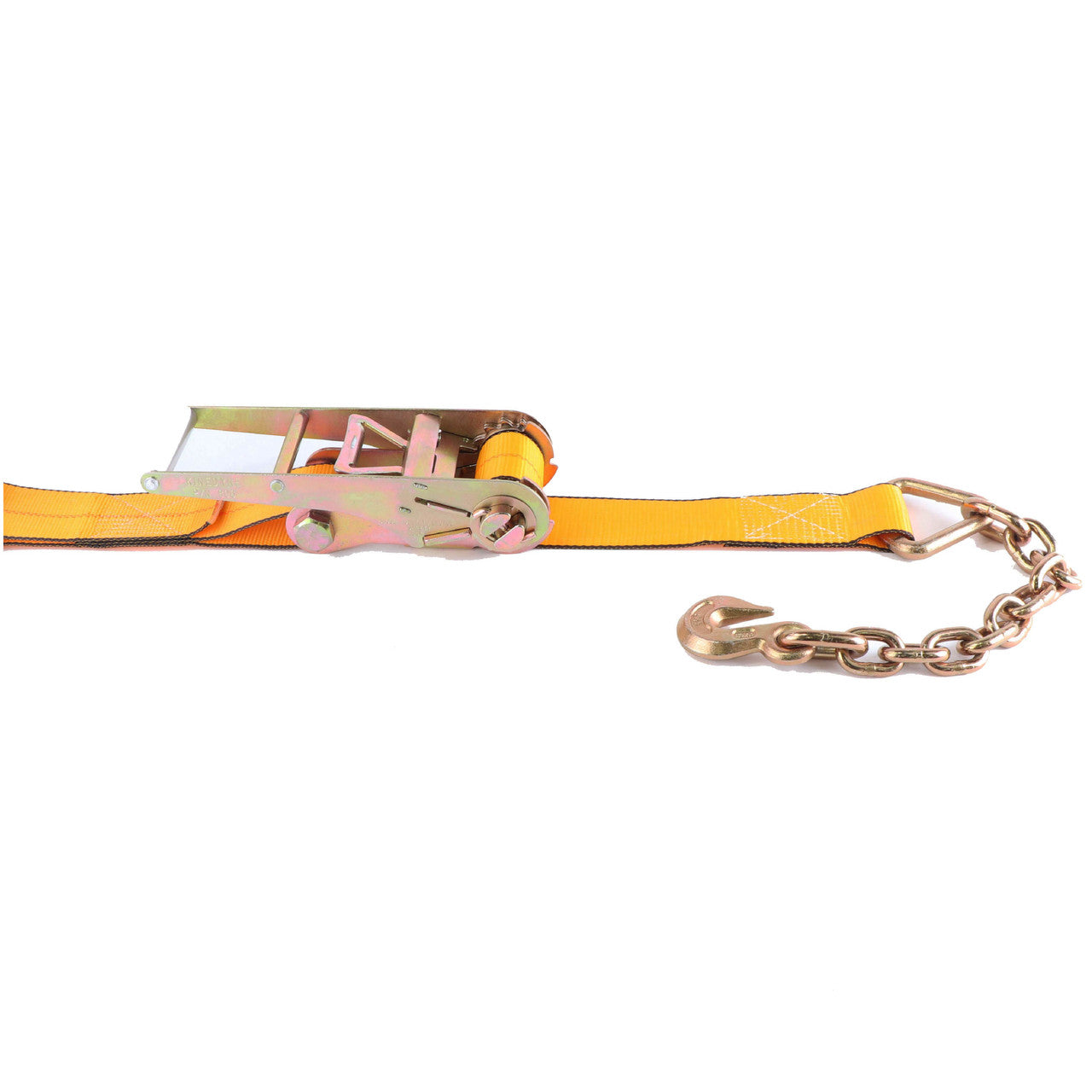
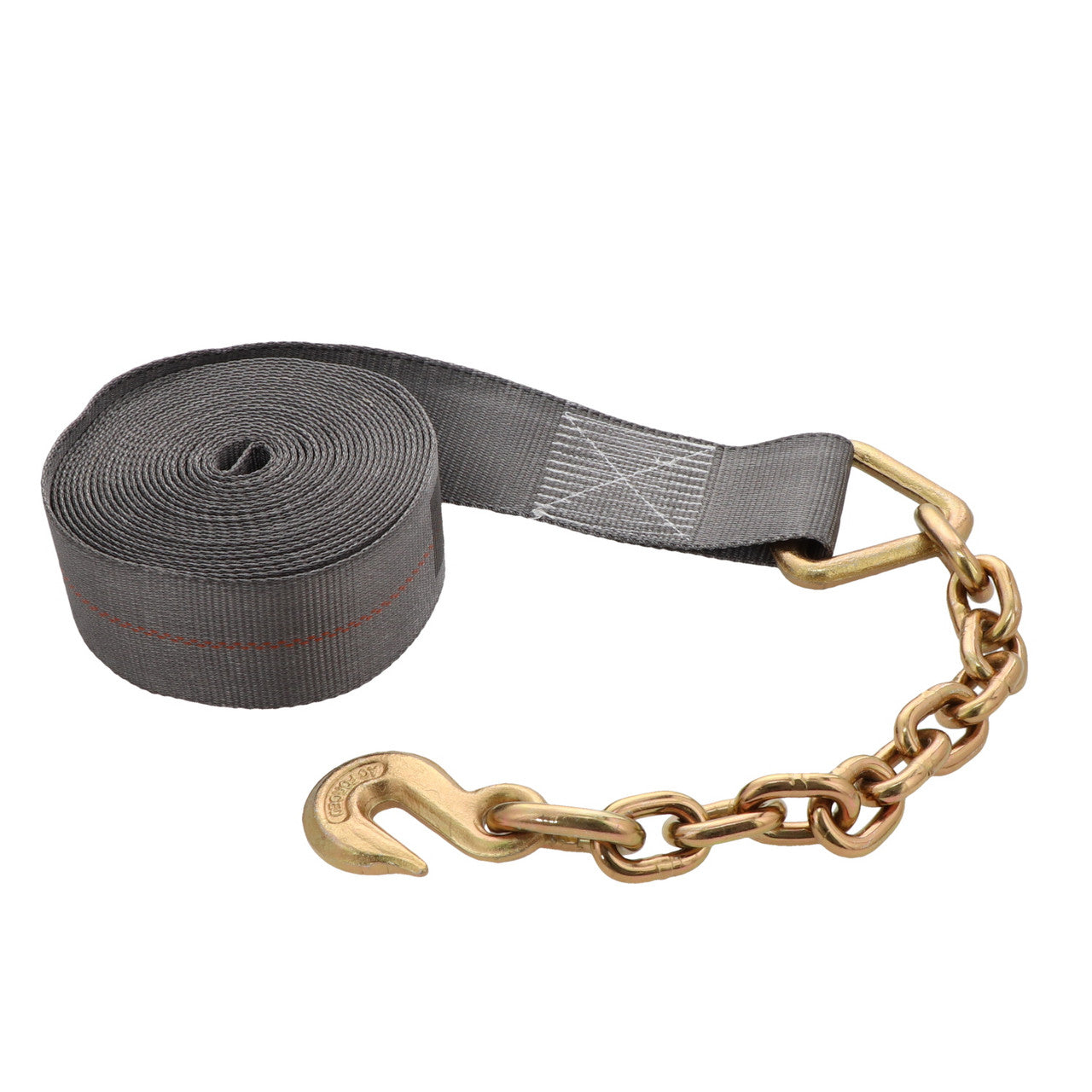
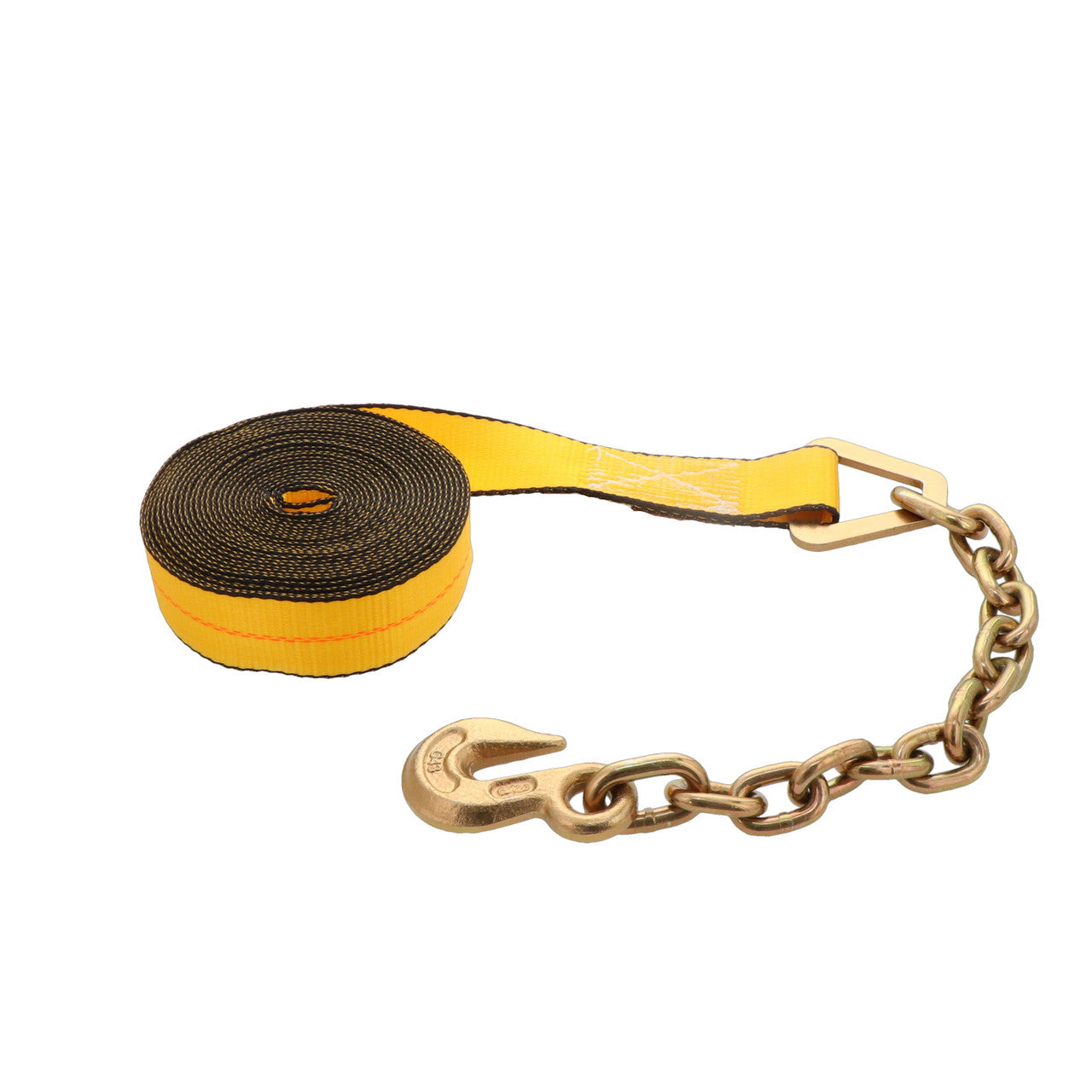
| Kinedyne 4" by 30' Chain Anchor Ratchet Strap | $102 | 5,400 lb | View → |
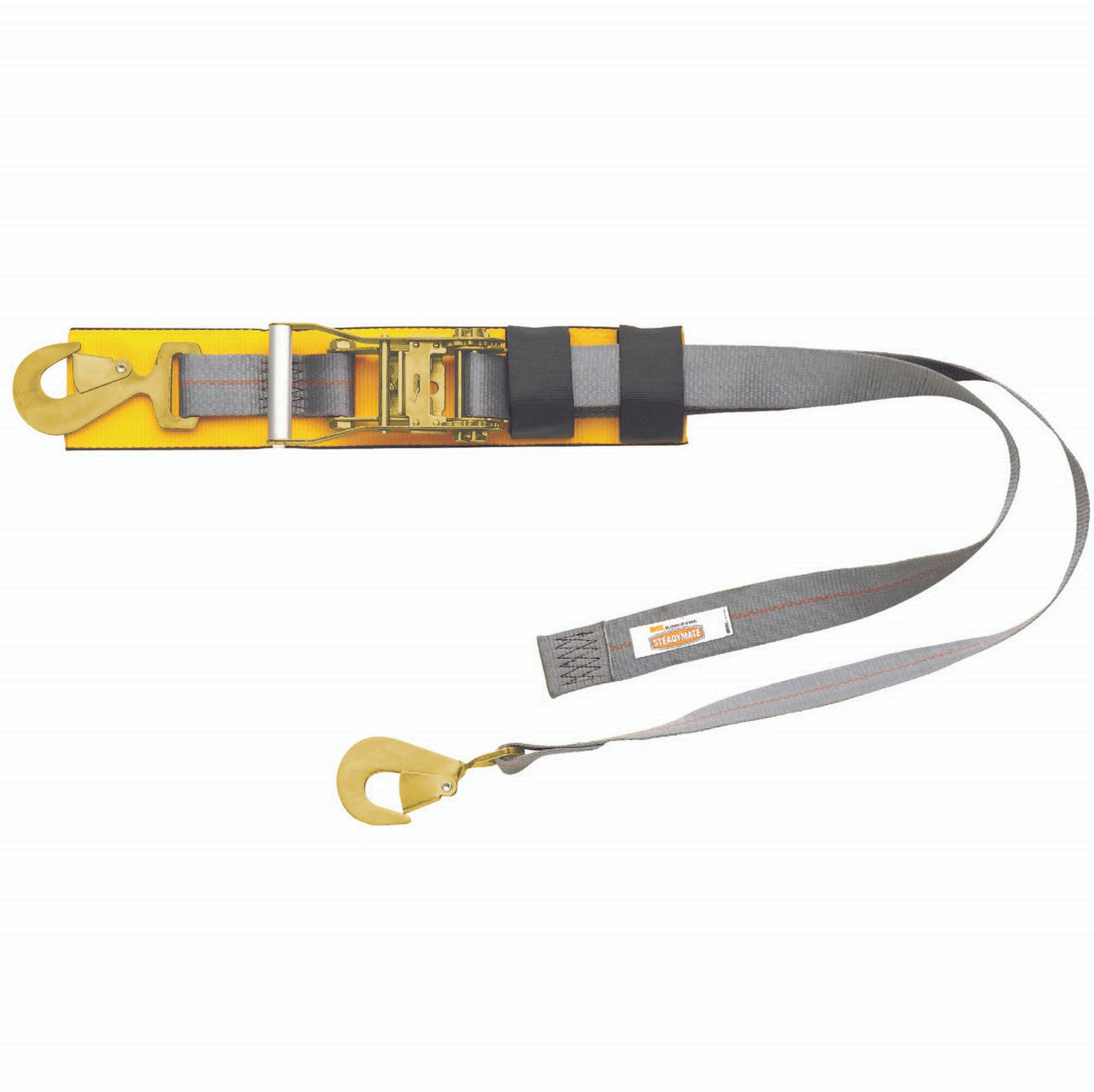
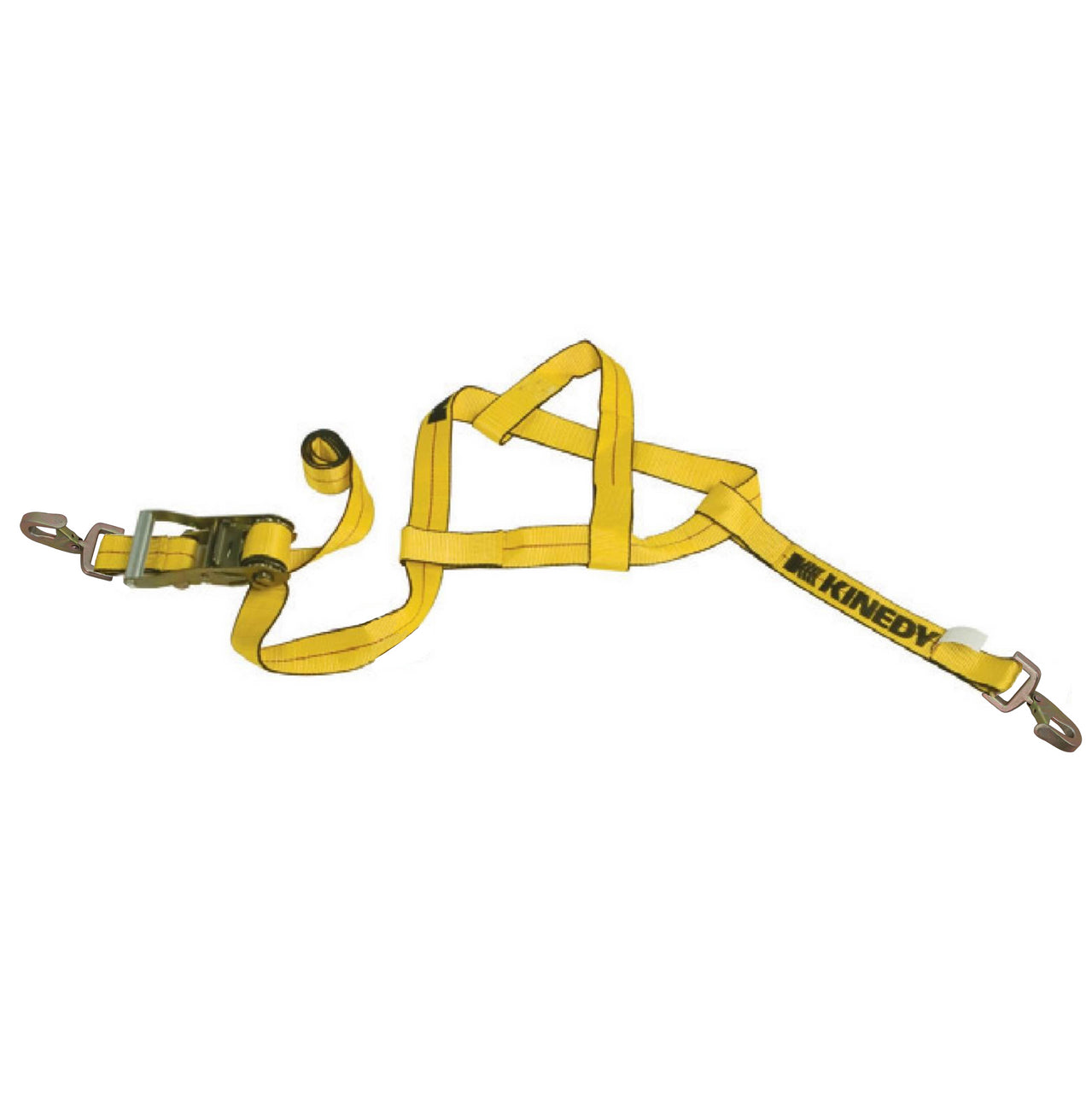
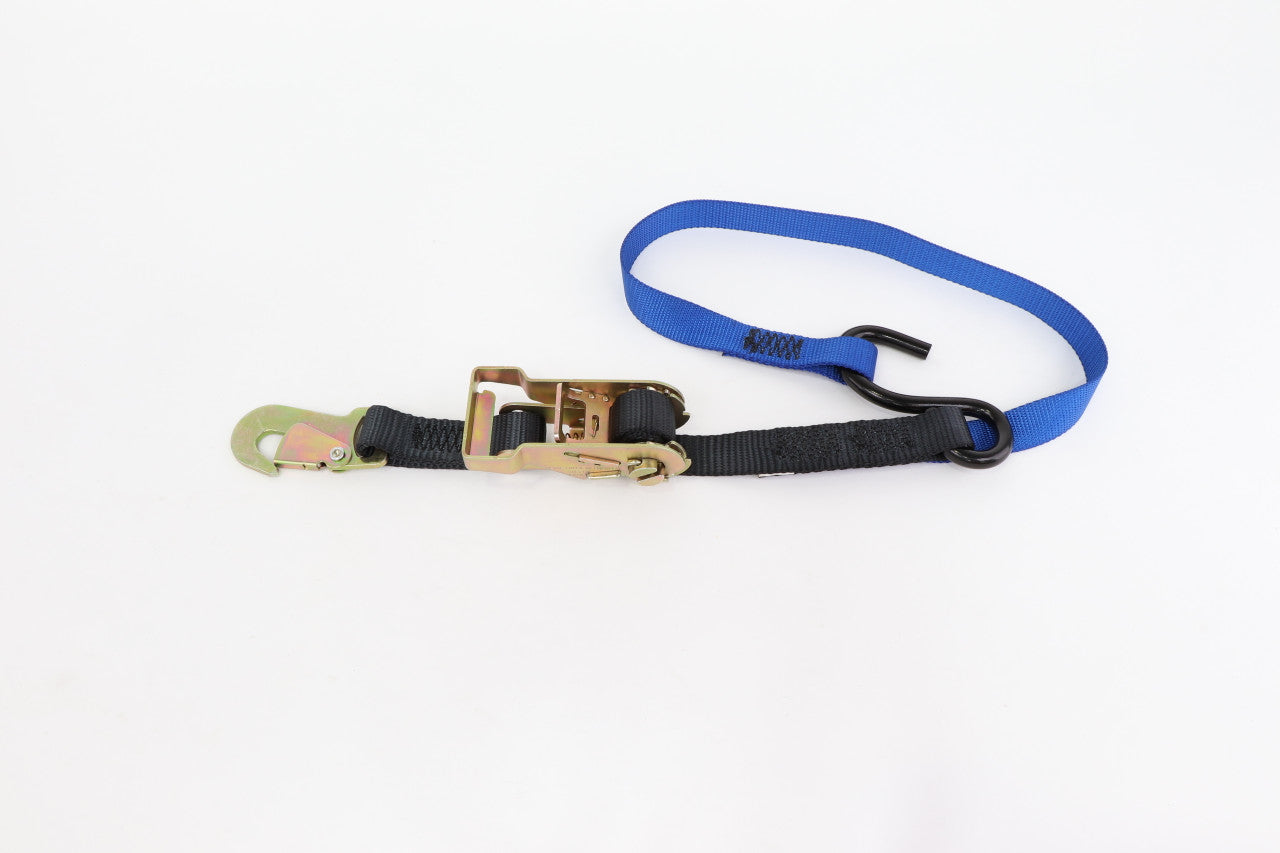
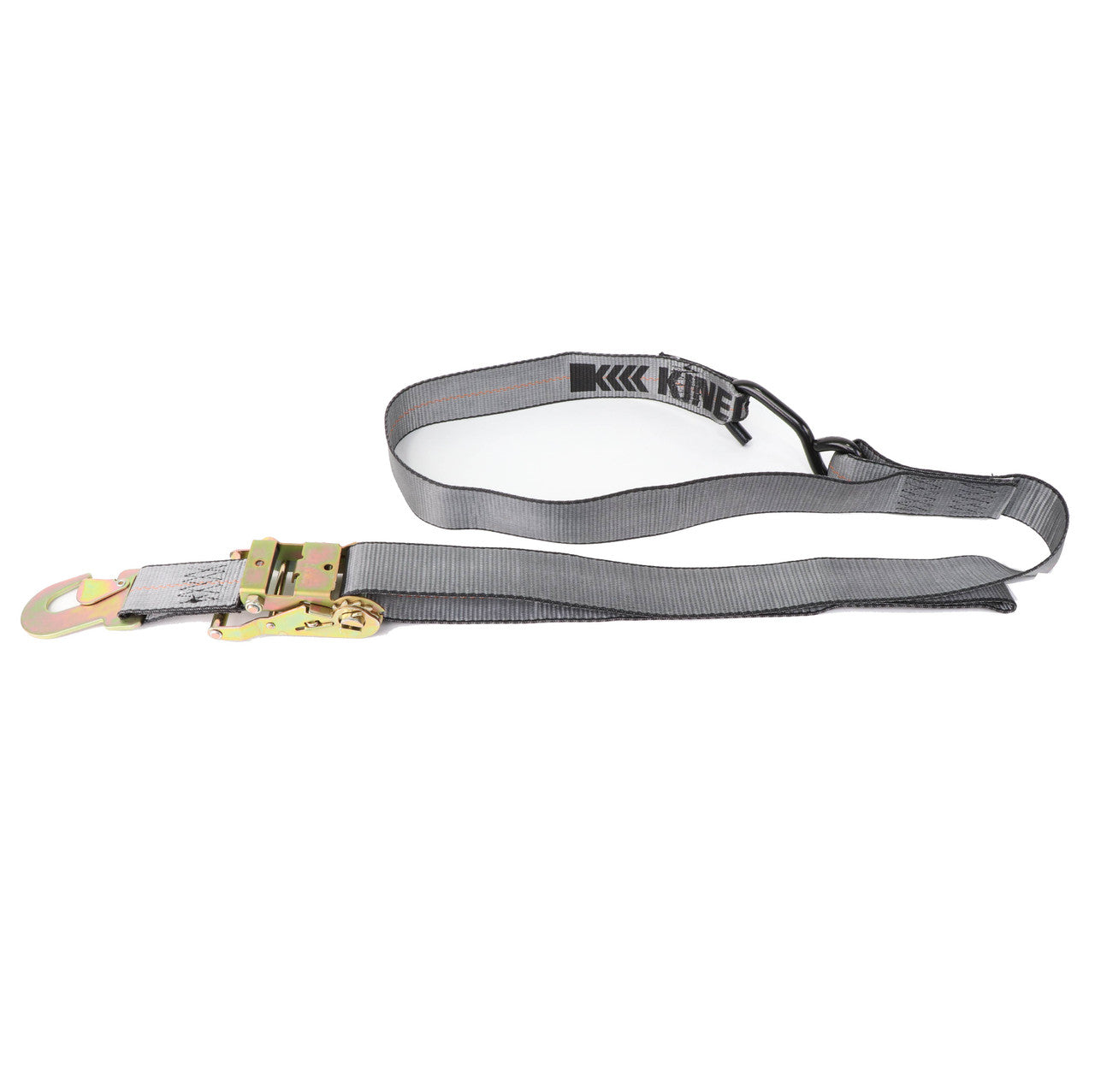
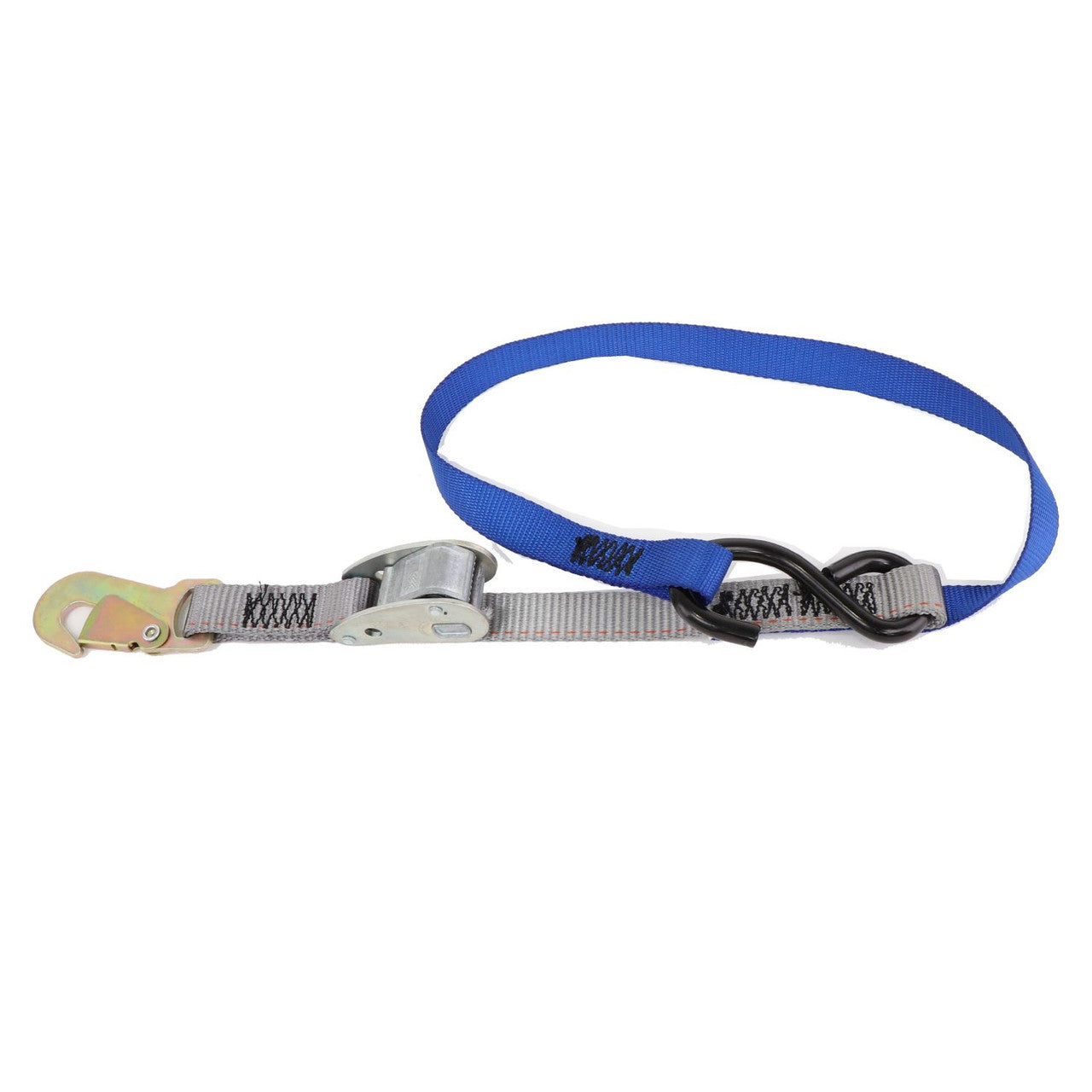
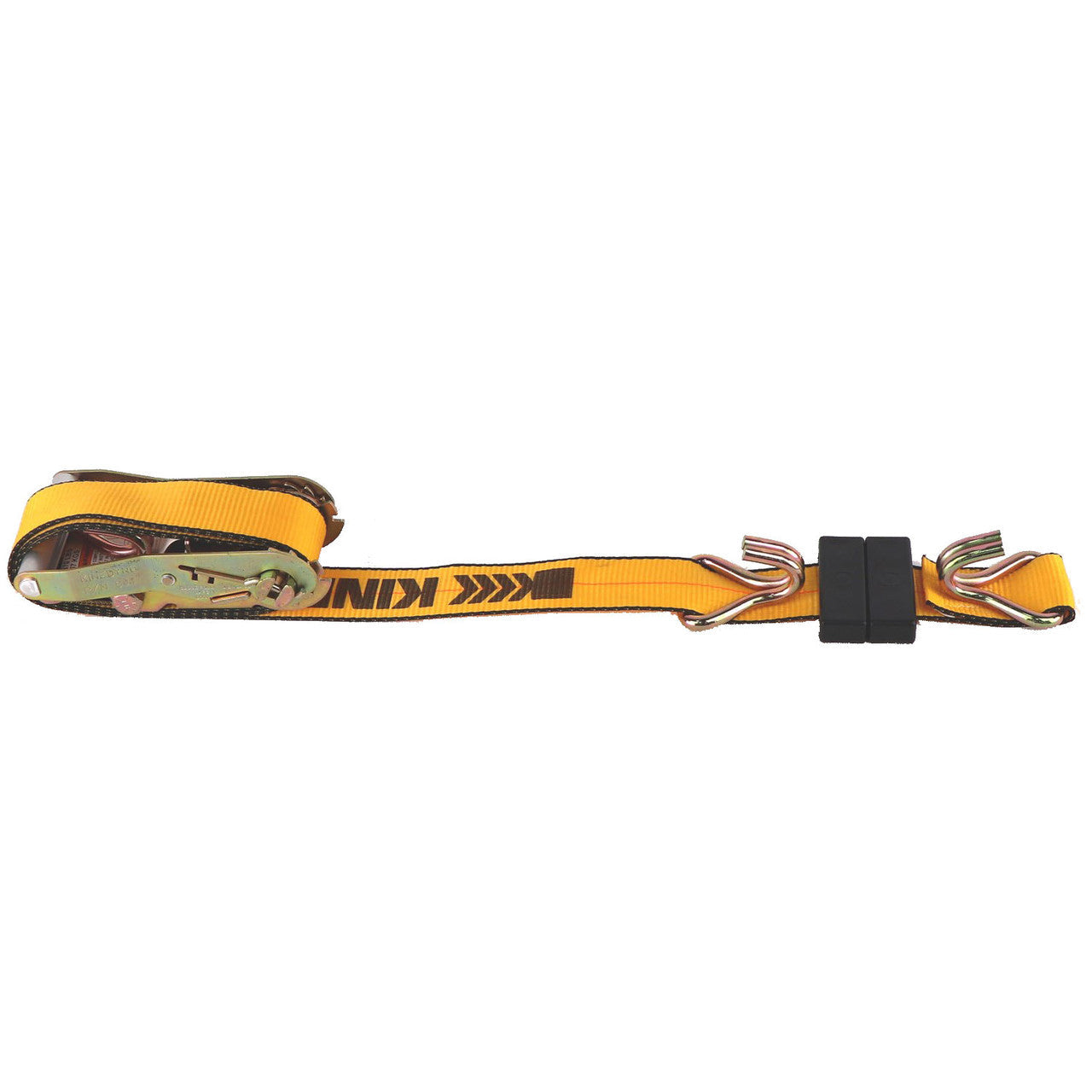
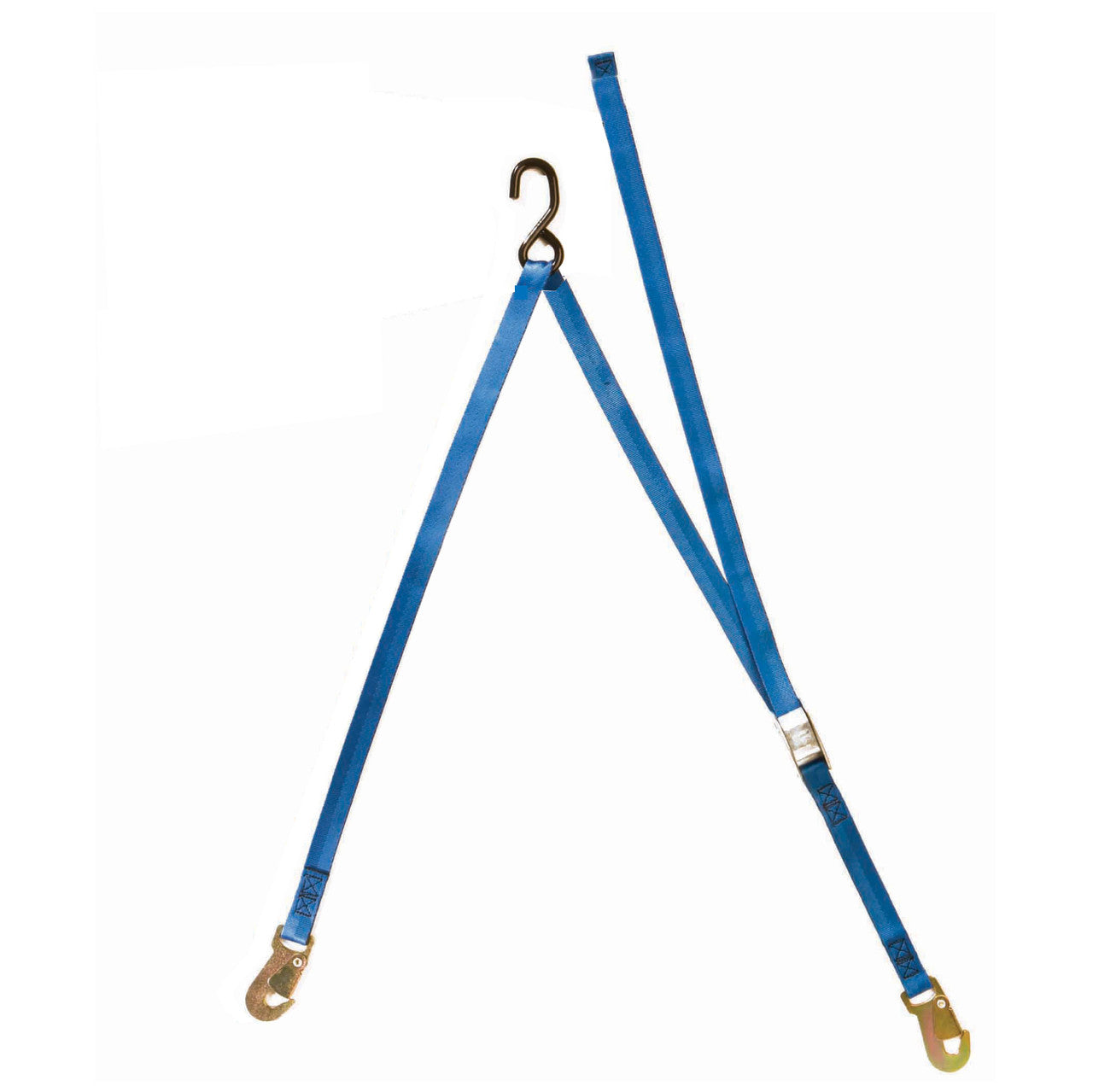
| Kinedyne Pair of 2" by 12' Snap Hook Ratchet Marine Transom Straps | $90 | 3,335 lb | View → |
| Kinedyne 3" Chain Anchor Ratchet Strap | $89 | 5,400 lb | View → |
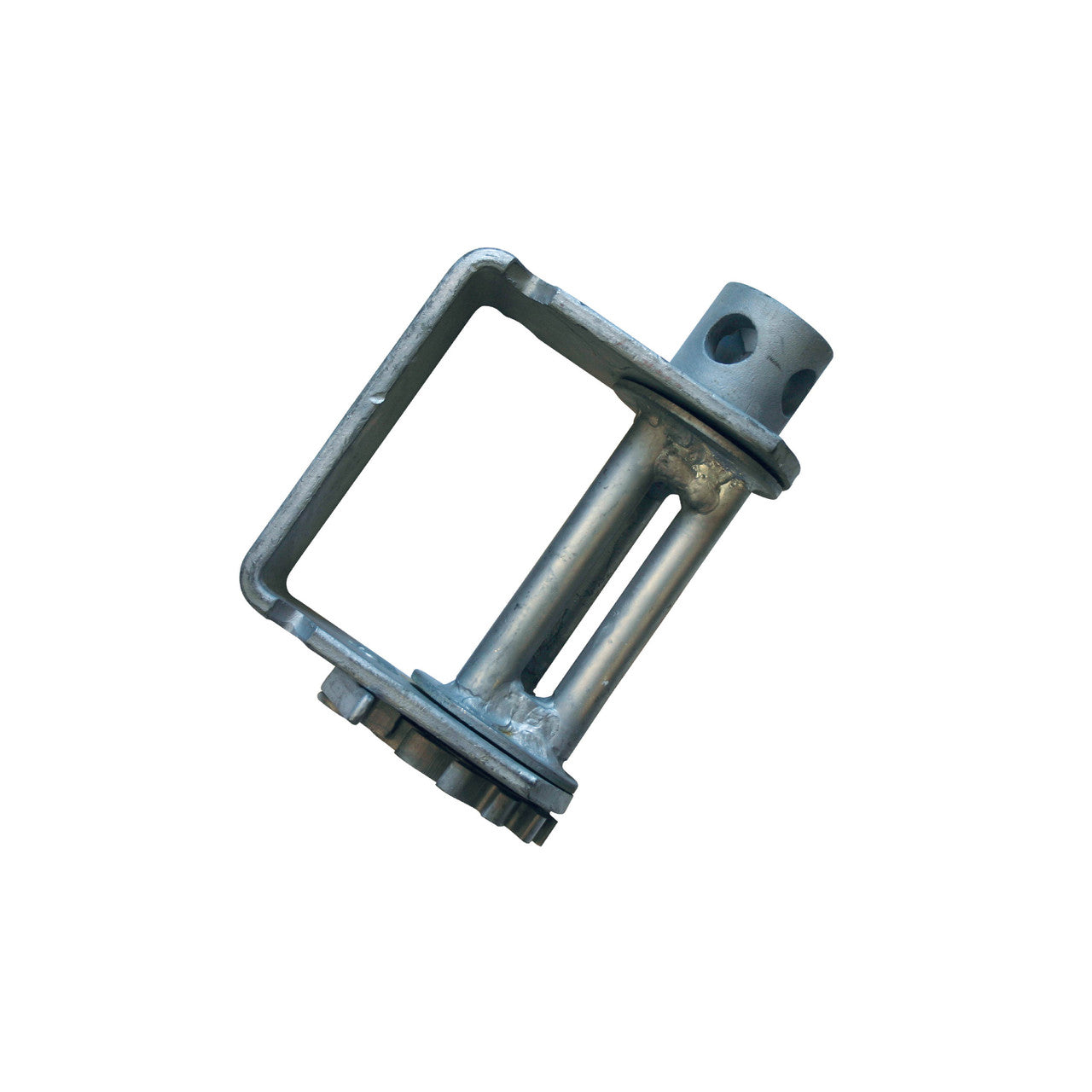
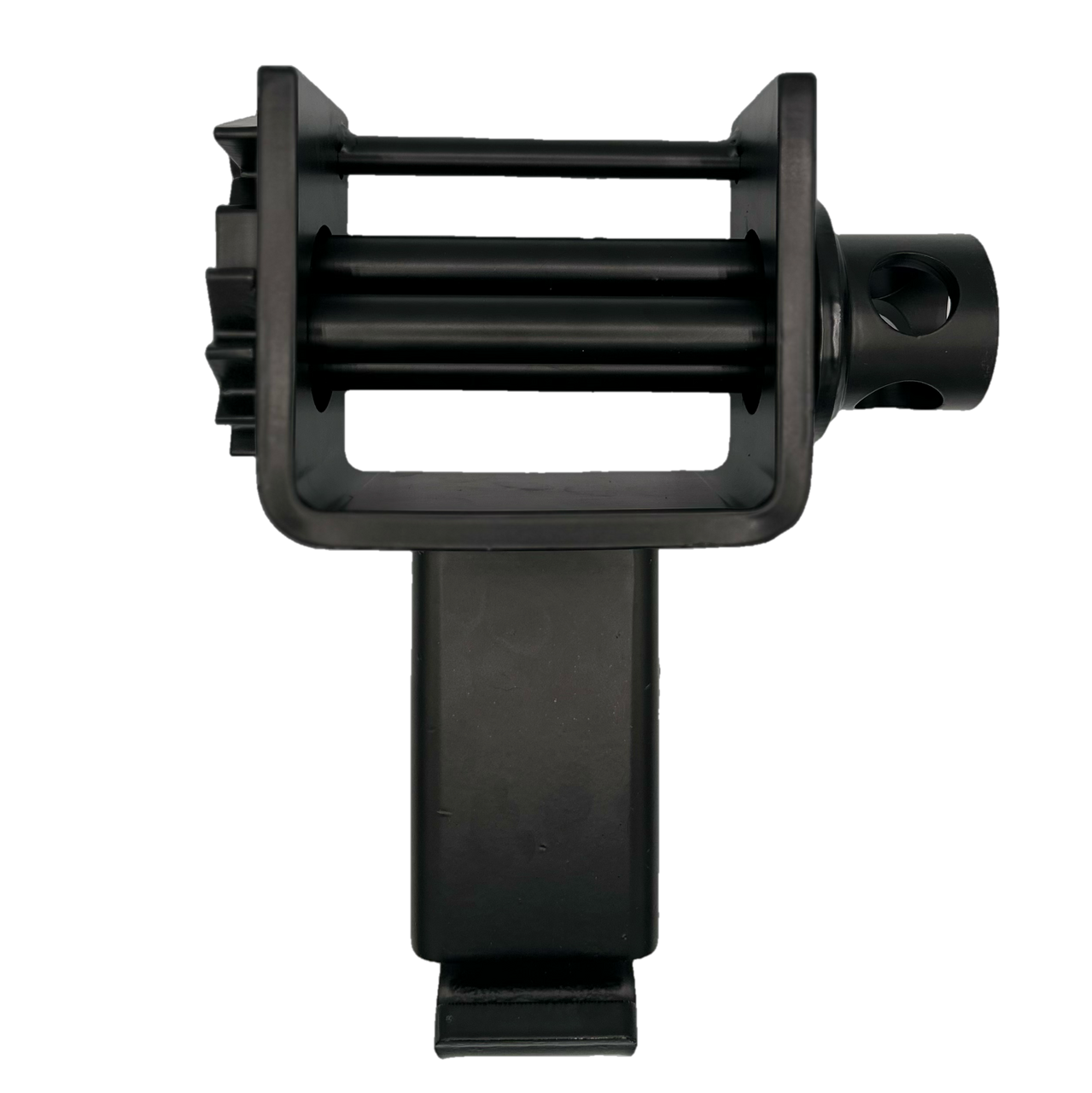
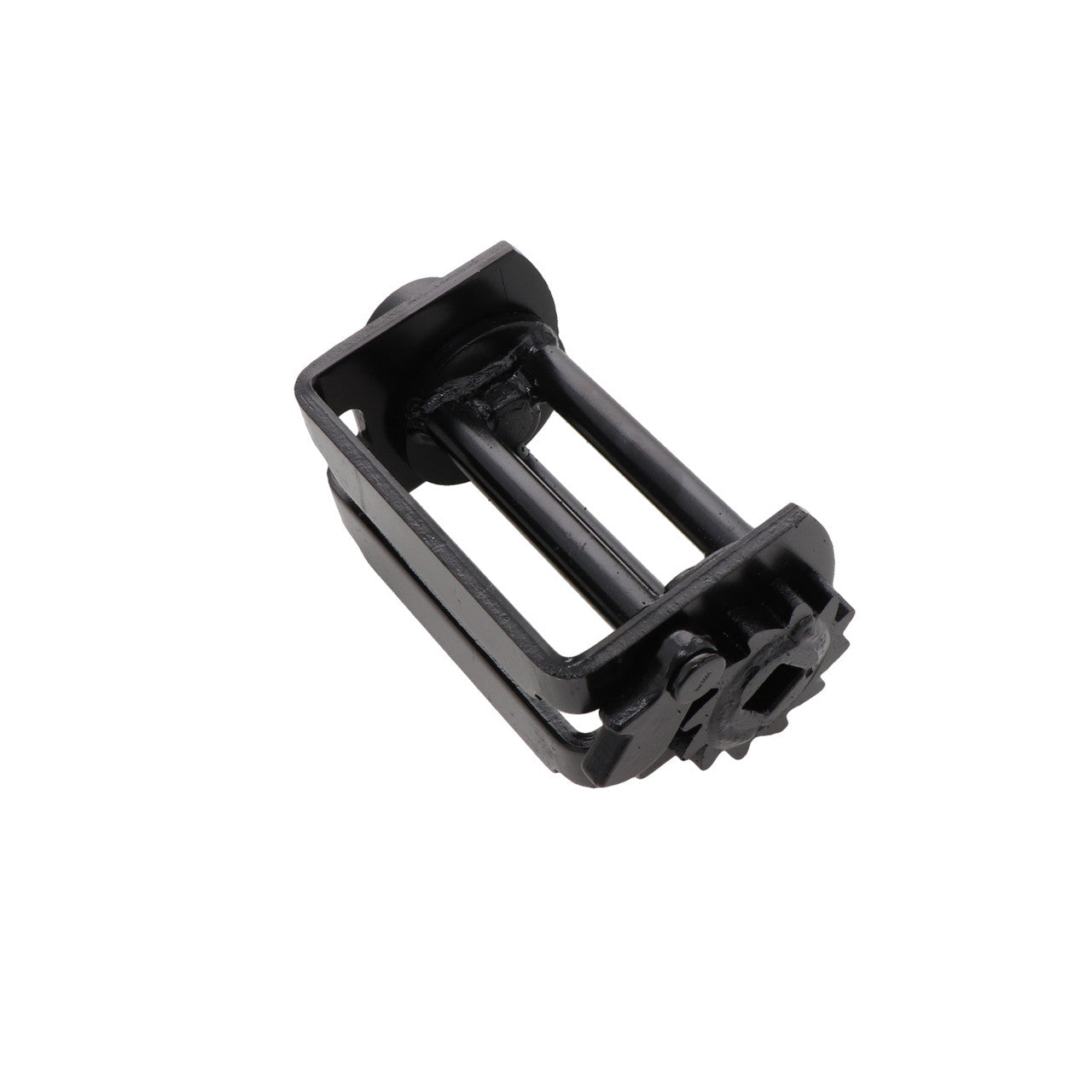
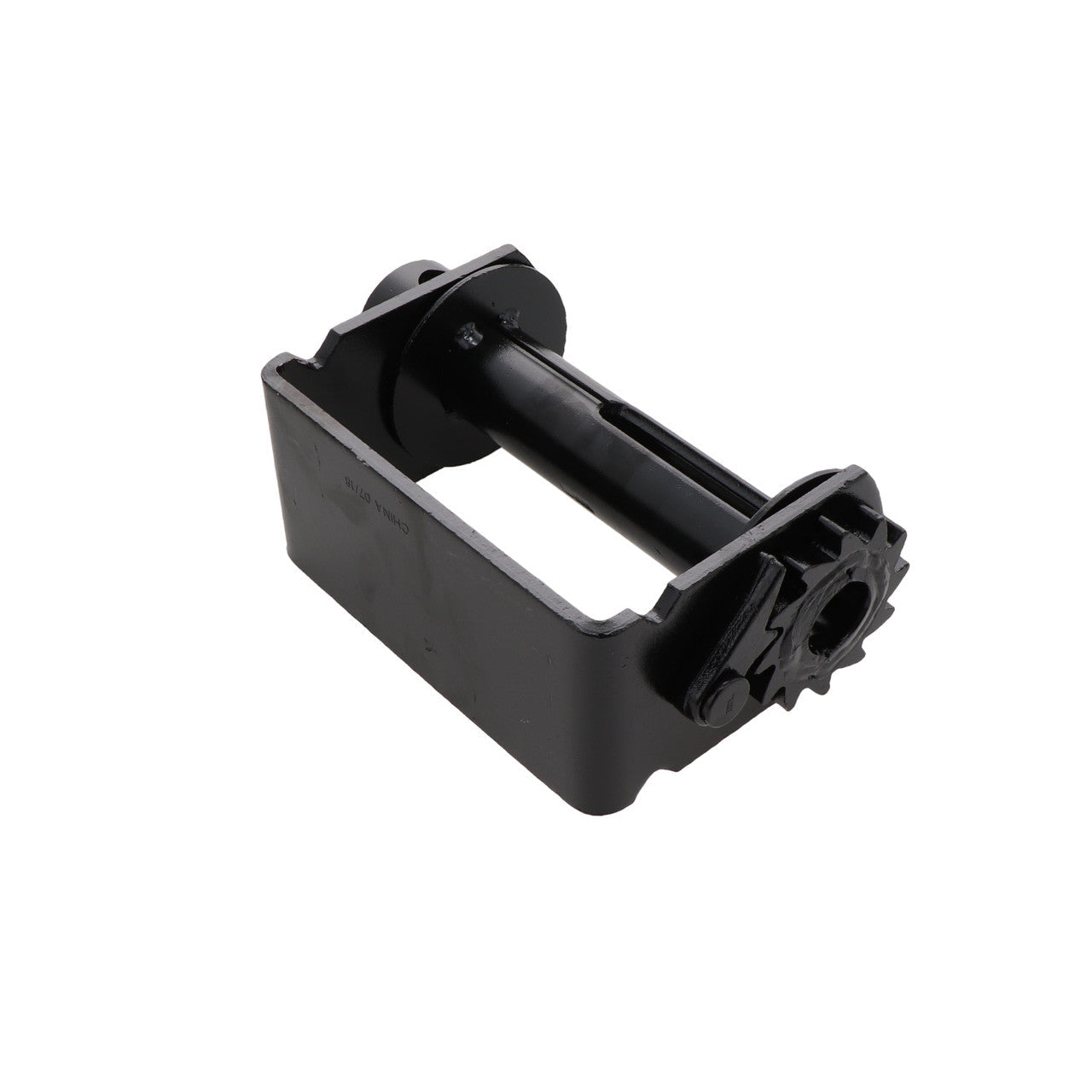
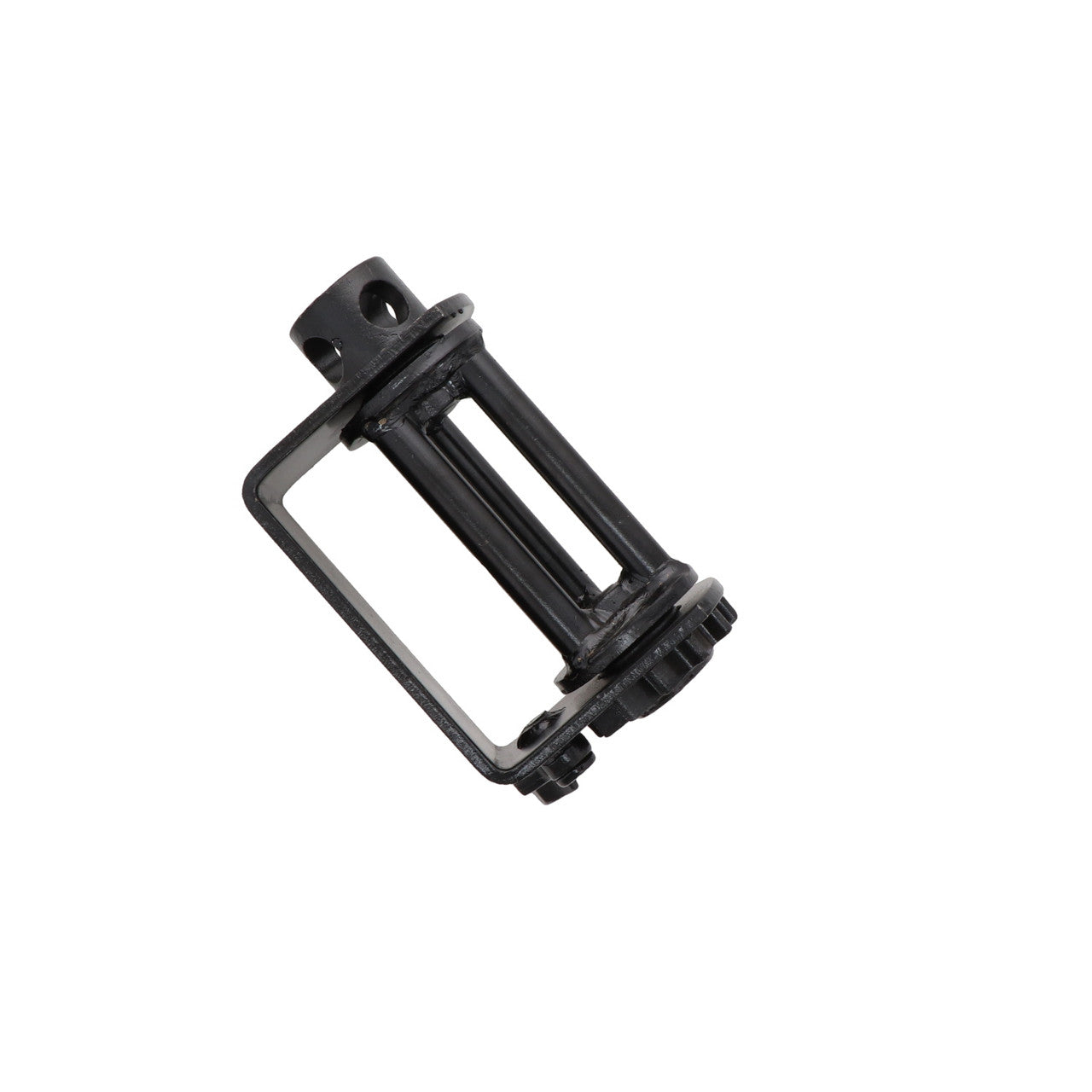
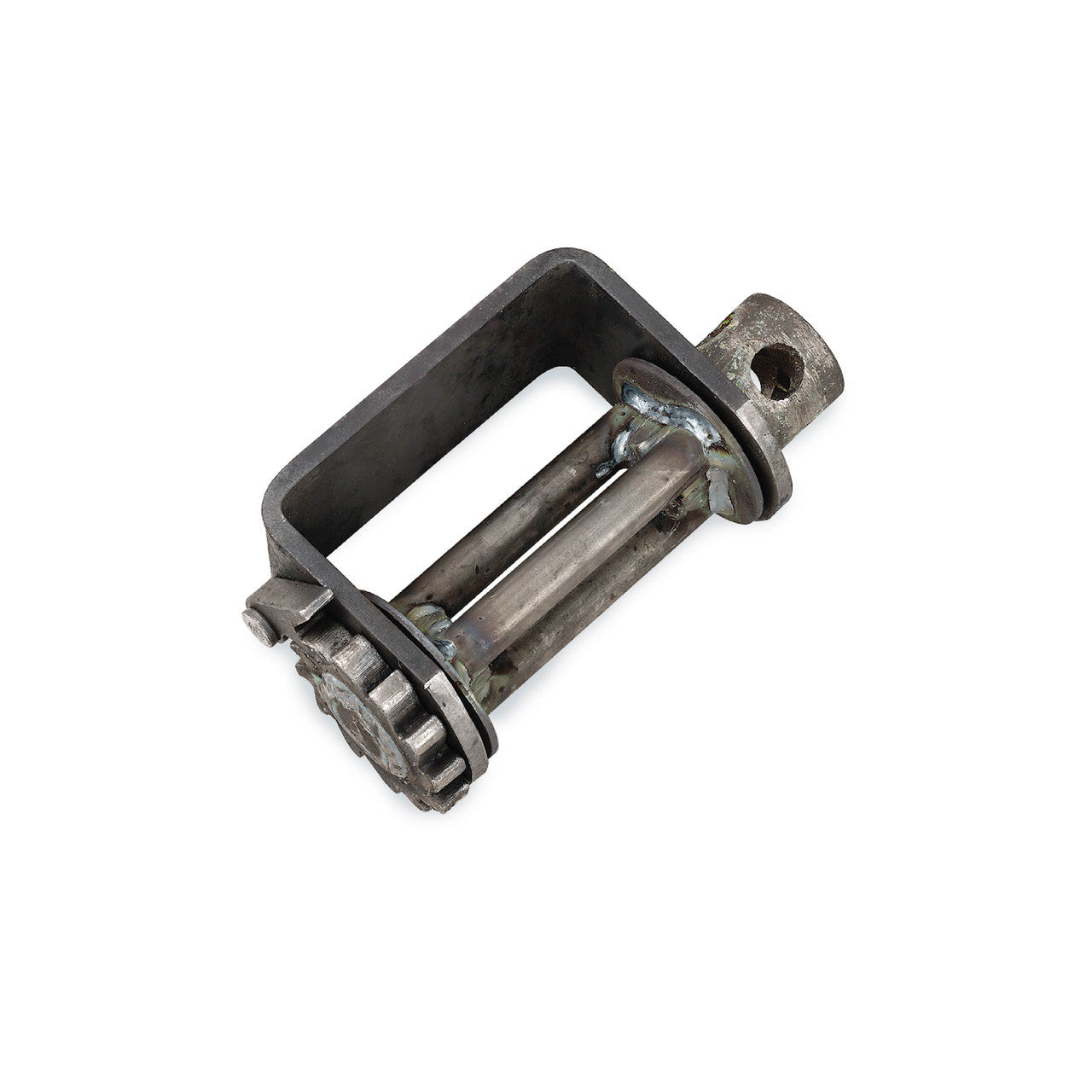
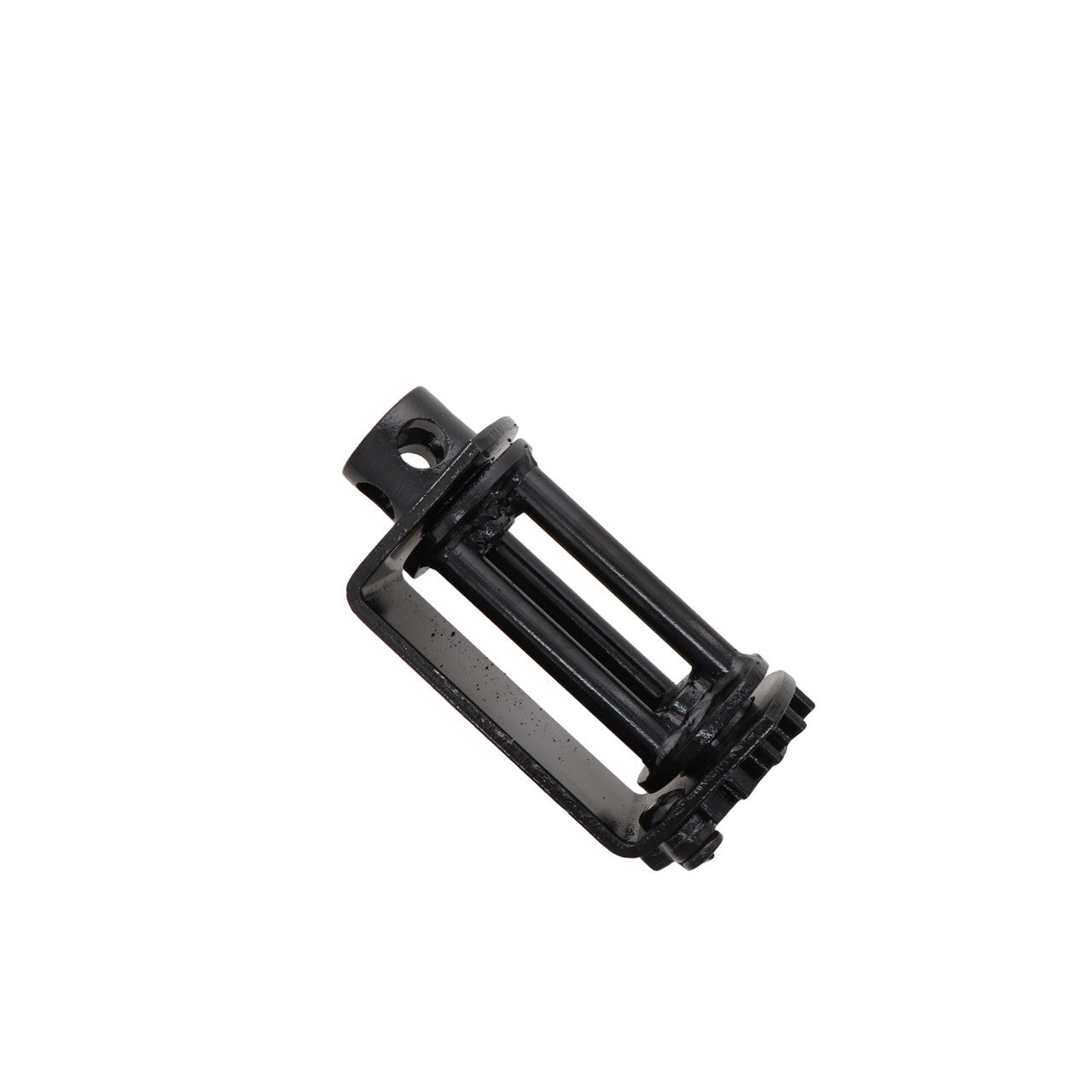
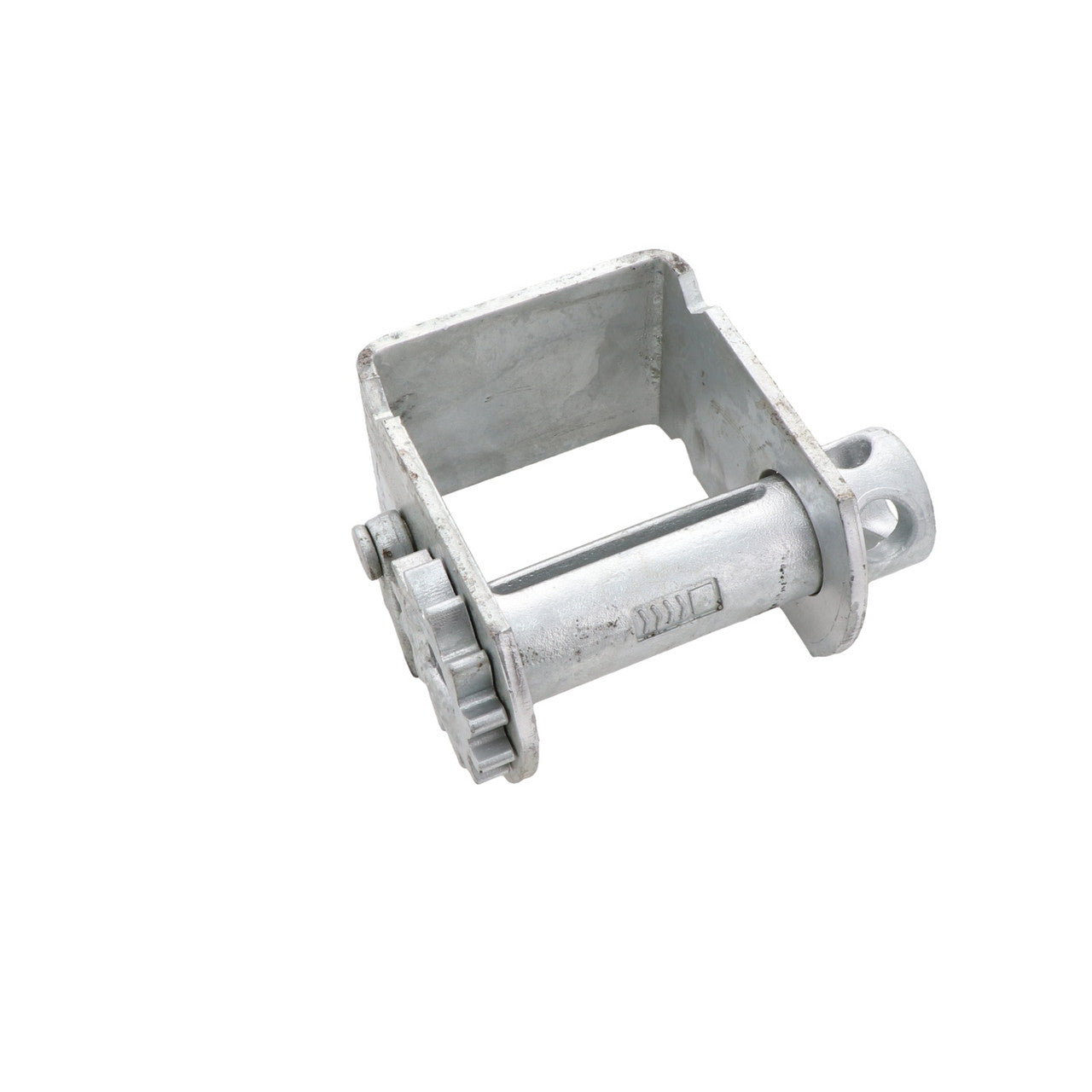
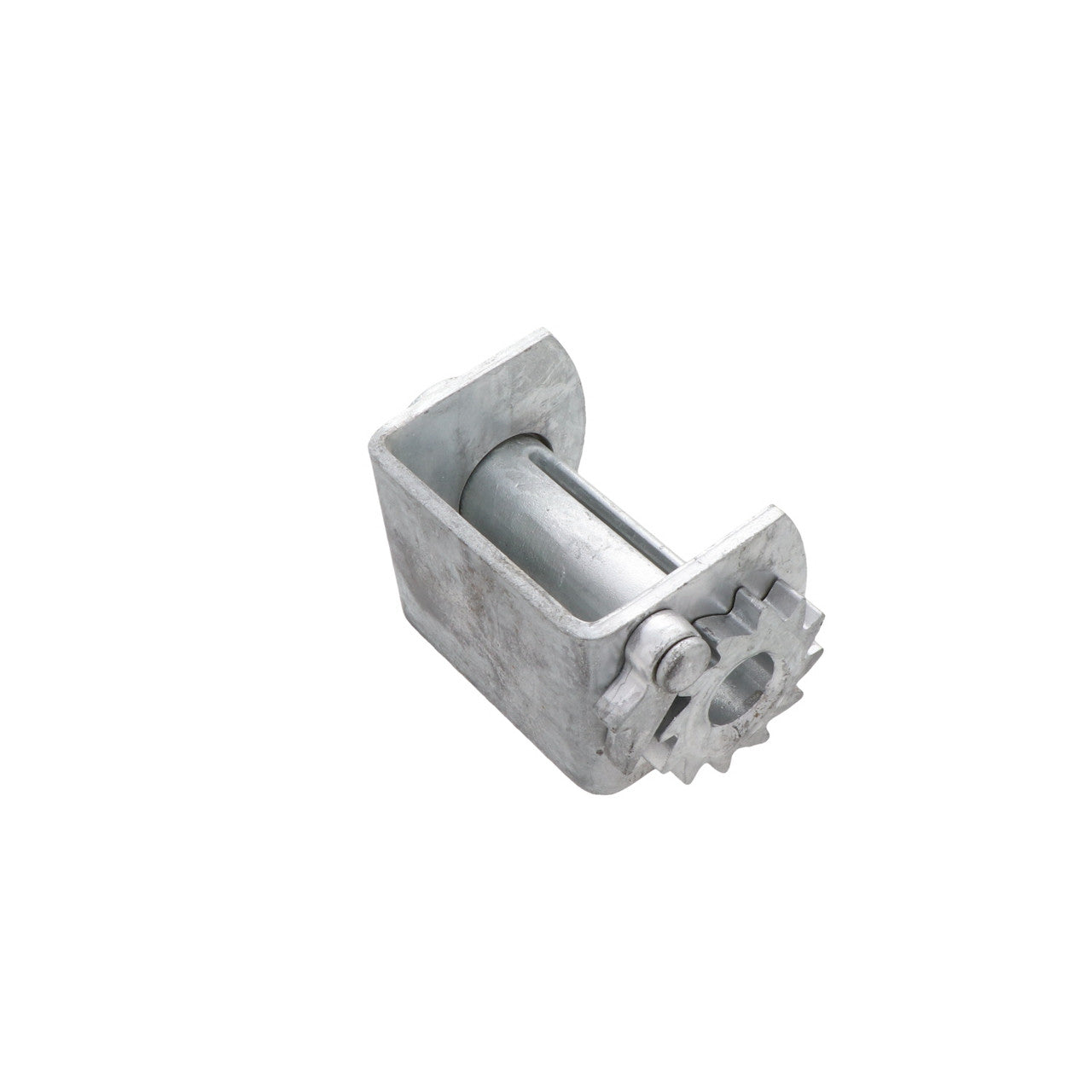
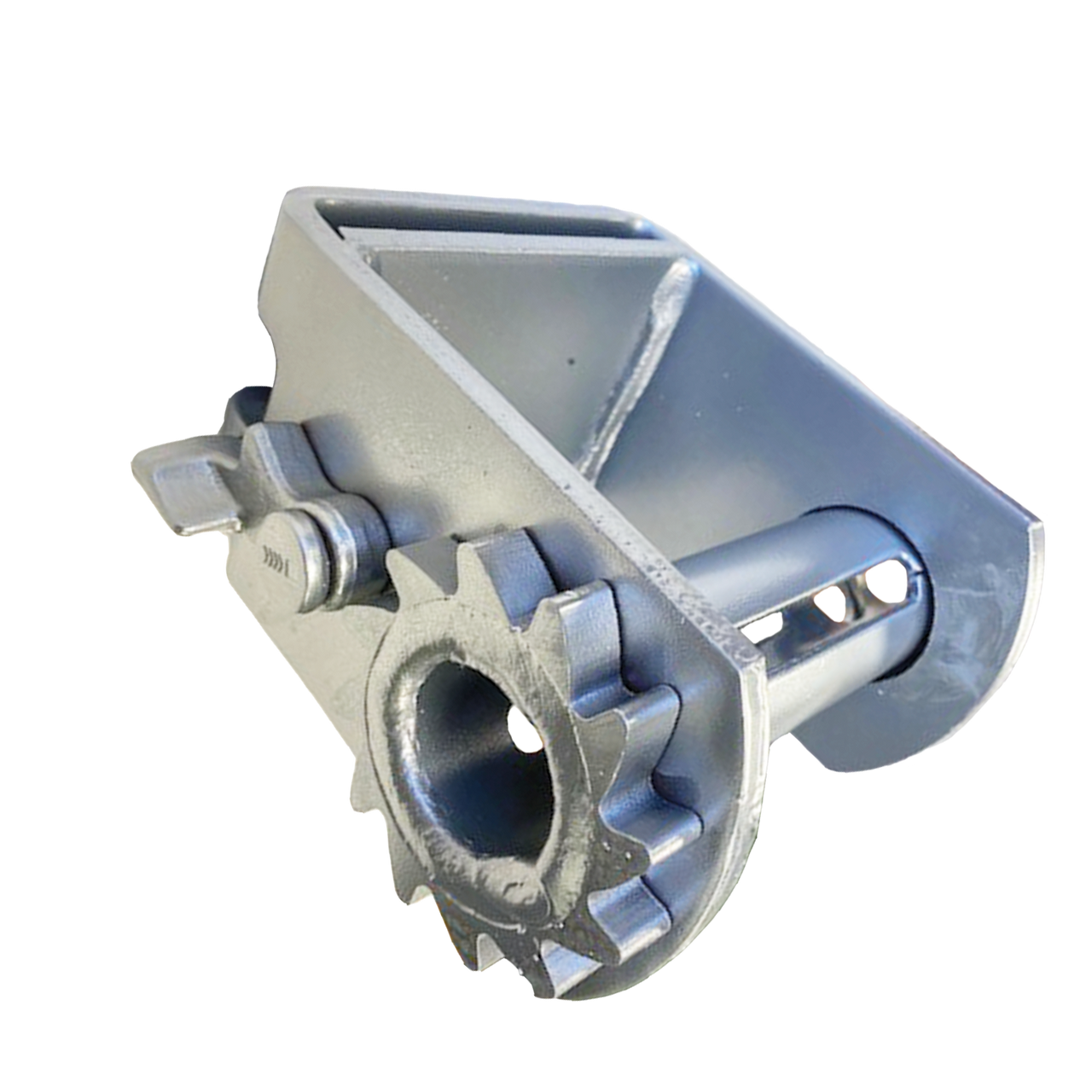
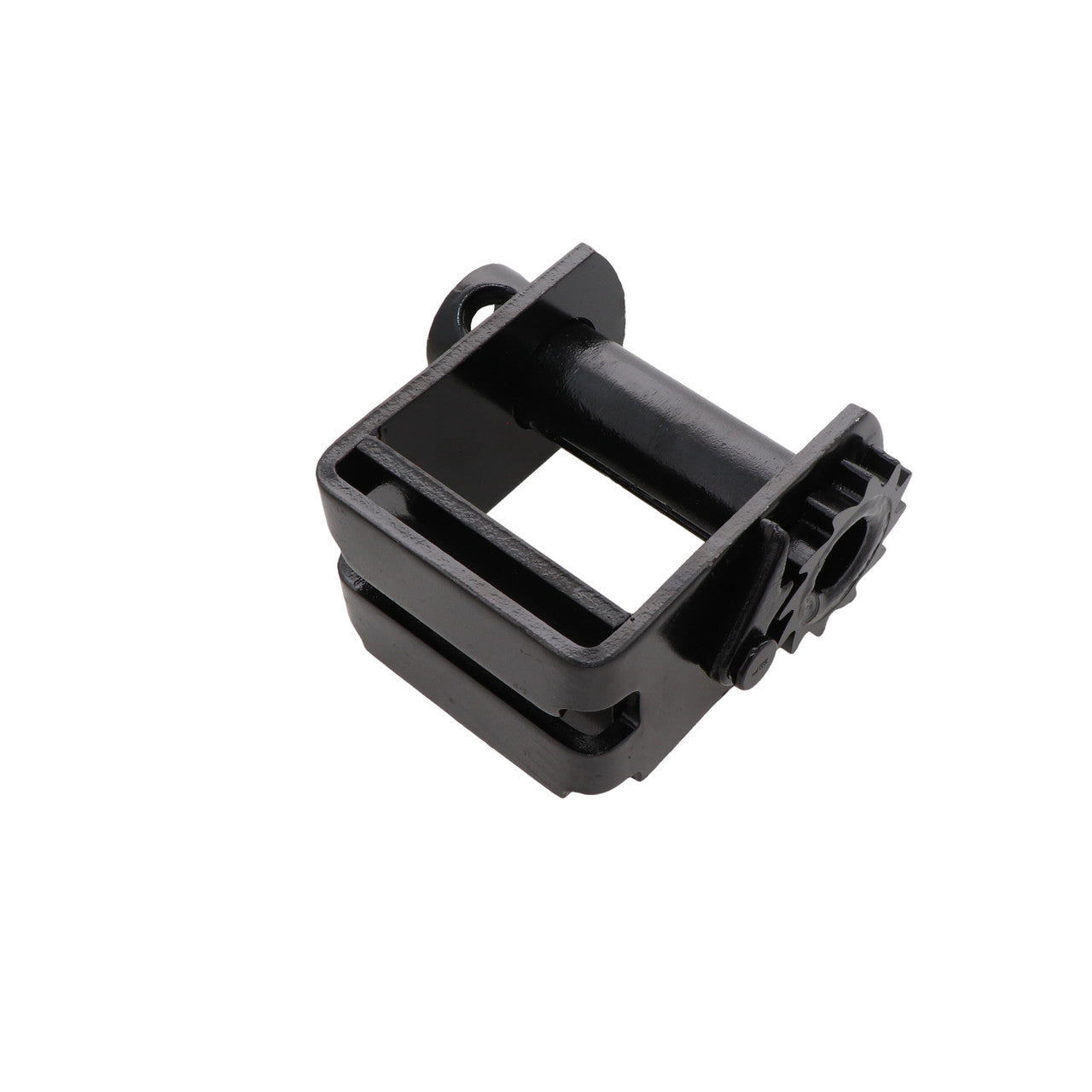
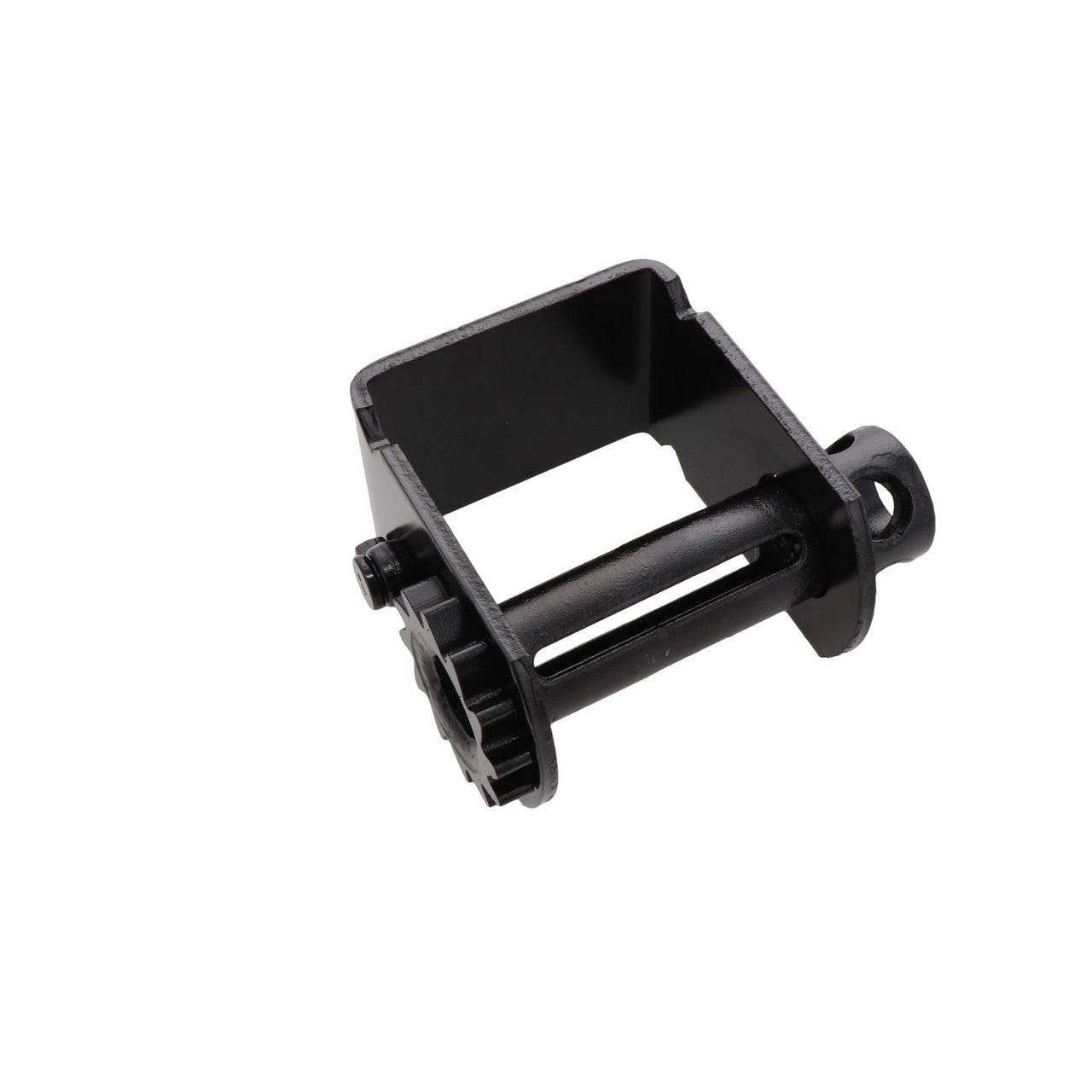
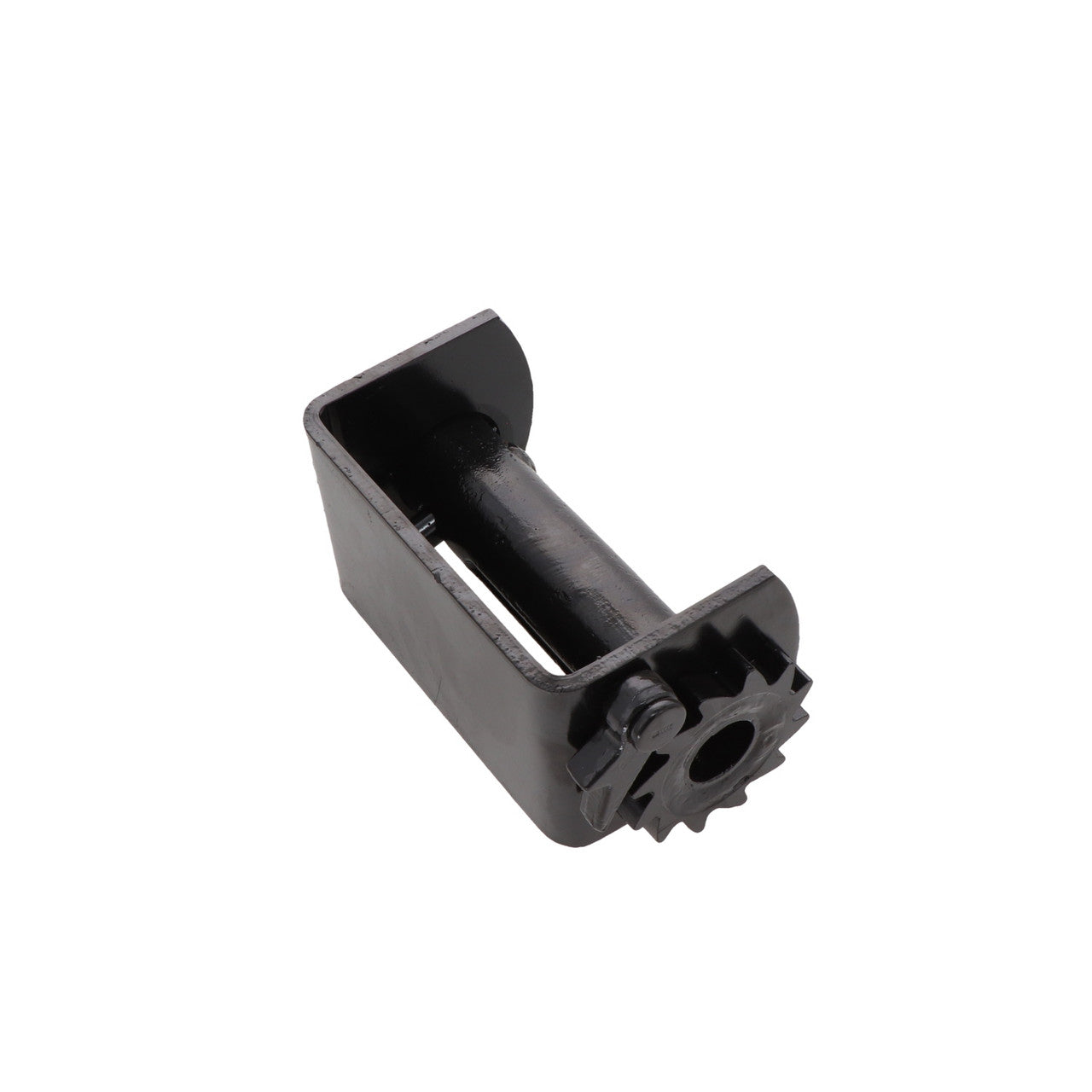
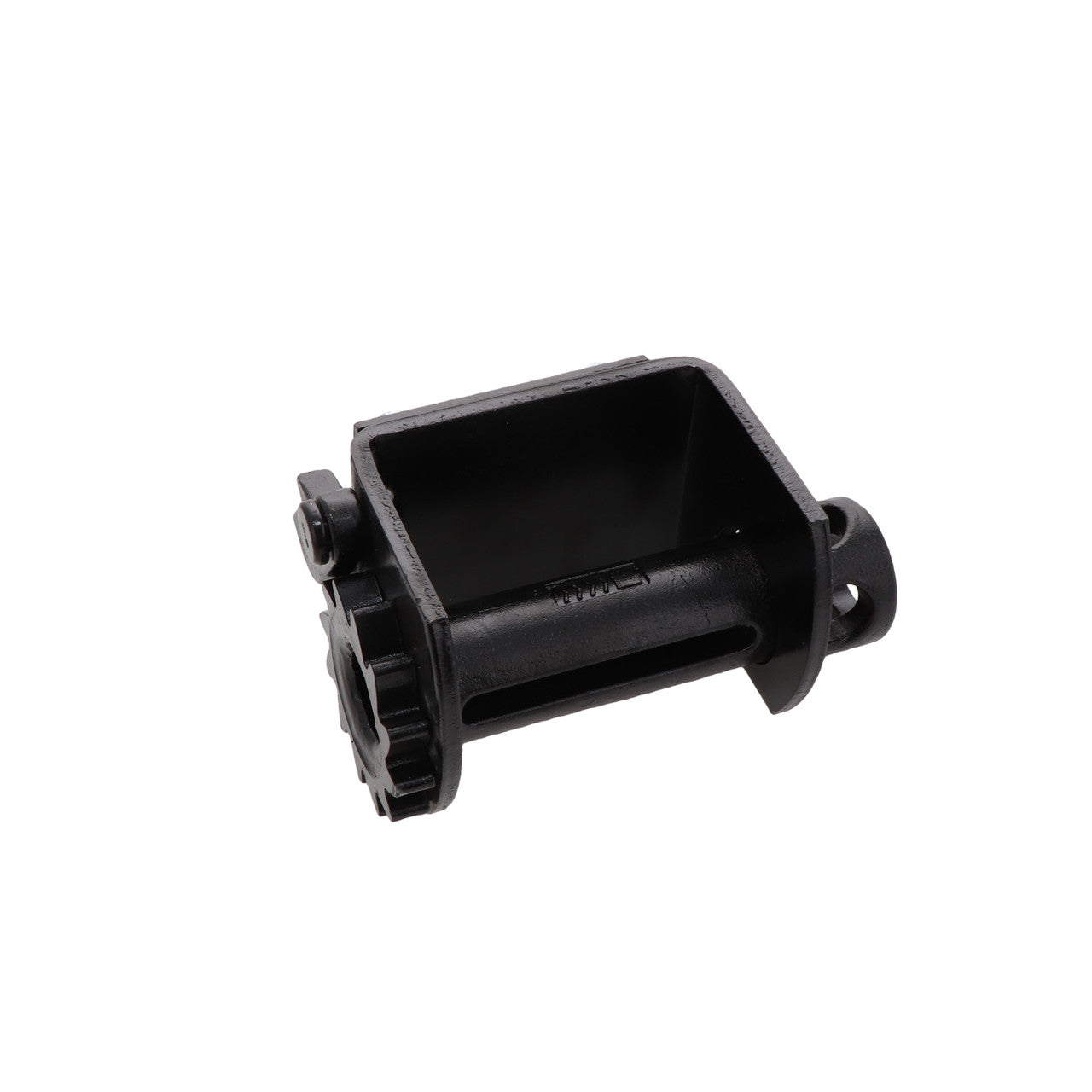
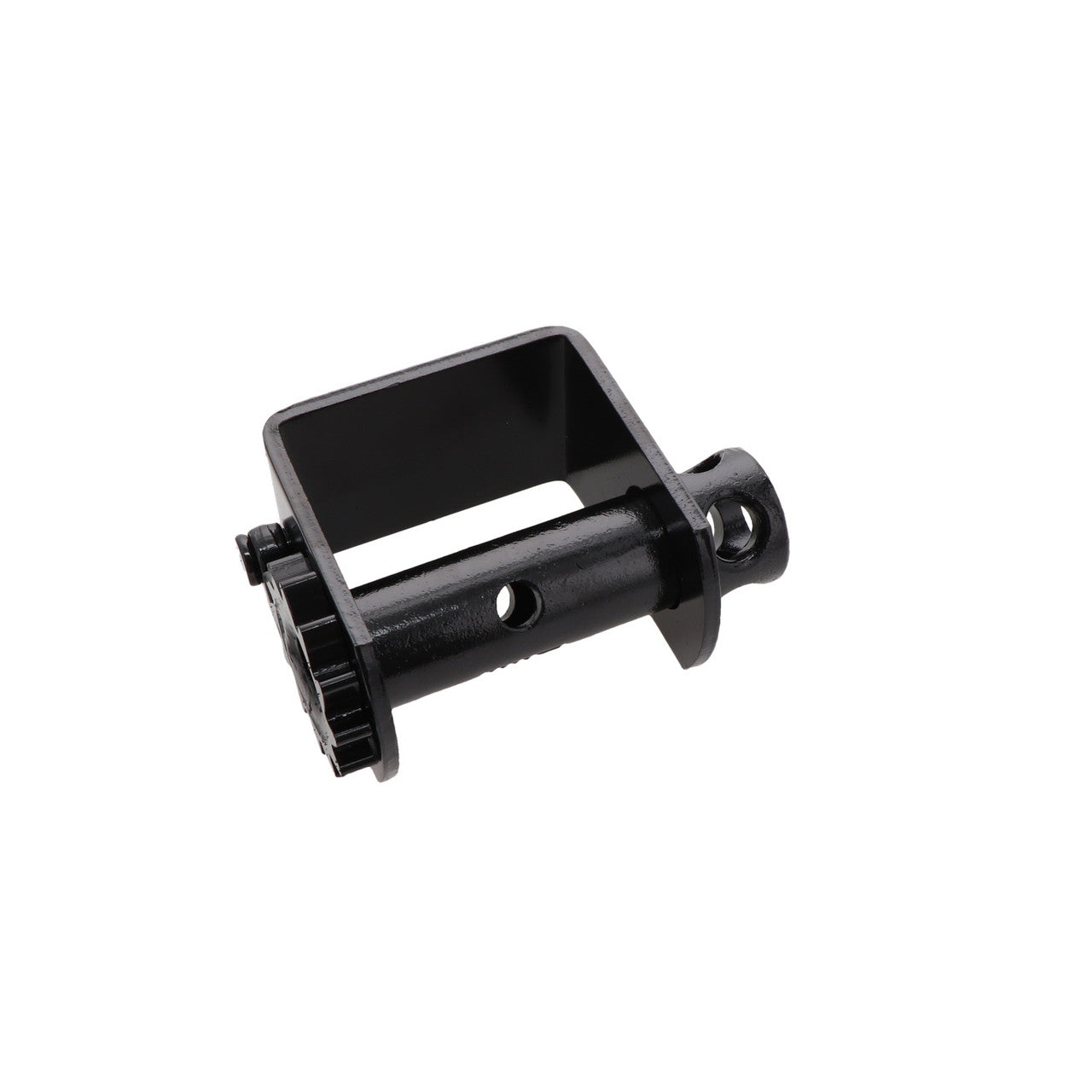
| Kinedyne Standard Galvanized Sliding C Channel 3-Bar Winch | $89 | 5,000 lb | View → |
| Kinedyne 13" - 20" Basket Style Snap Hook Ratchet Wheel Net | $75 | 1,670 lb | View → |
 In Stock
 In Stock
 In Stock
 In Stock
 In Stock
 In Stock
 In Stock
 In Stock
 In Stock
 In Stock
 In Stock
 In Stock
 In Stock
 In Stock
 In Stock
 In Stock
 In Stock
 In Stock
 In Stock
 In Stock
 In Stock
 In Stock
 In Stock
 In Stock
 In Stock
 In Stock
 In Stock
 In Stock
 In Stock
 In Stock
 In Stock
 In Stock
 In Stock
 In Stock
 In Stock
 In Stock
 In Stock
 In Stock
 In Stock
 In Stock
 In Stock
 In Stock
 In Stock
 In Stock
 In Stock
 In Stock
 In Stock
 In Stock
 In Stock
 In Stock
 In Stock
 In Stock
 In Stock
 In Stock
 In Stock
 In Stock
 In Stock
 In Stock
 In Stock
 In Stock
 In Stock
 In Stock
 In Stock
 In Stock
 In Stock
 In Stock
 In Stock
 In Stock
 In Stock
 In Stock
 In Stock
 In Stock
 In Stock
 In Stock
 In Stock
 In Stock
 In Stock
 In Stock
 In Stock
 In Stock
 In Stock
 In Stock
 In Stock
 In Stock
 In Stock
 In Stock
 In Stock
 In Stock
 In Stock
 In Stock
 In Stock
 In Stock
 In Stock
 In Stock
Heavy Duty Ratchet Straps Buying Guide
Where heavy duty starts. The line is drawn at 2 inch webbing. One inch straps handle powersports and utility loads and live elsewhere; from 2 inch up you are in freight territory, where the strap is expected to survive rub rails, chains, and steel edges for years. Every strap carries a working load limit assigned under the WSTDA synthetic web tie down standard, which caps the WLL at no more than one third of the assembly's break strength, so a 3,335 lb tag sits on 10,000 lb webbing. That reserve absorbs shock and wear and is not capacity to spend. The federal tie-down count and the half-weight math that decides how many straps a load needs live on the parent ratchet straps page; this collection is about picking the right heavy strap once you know how many you are buying.
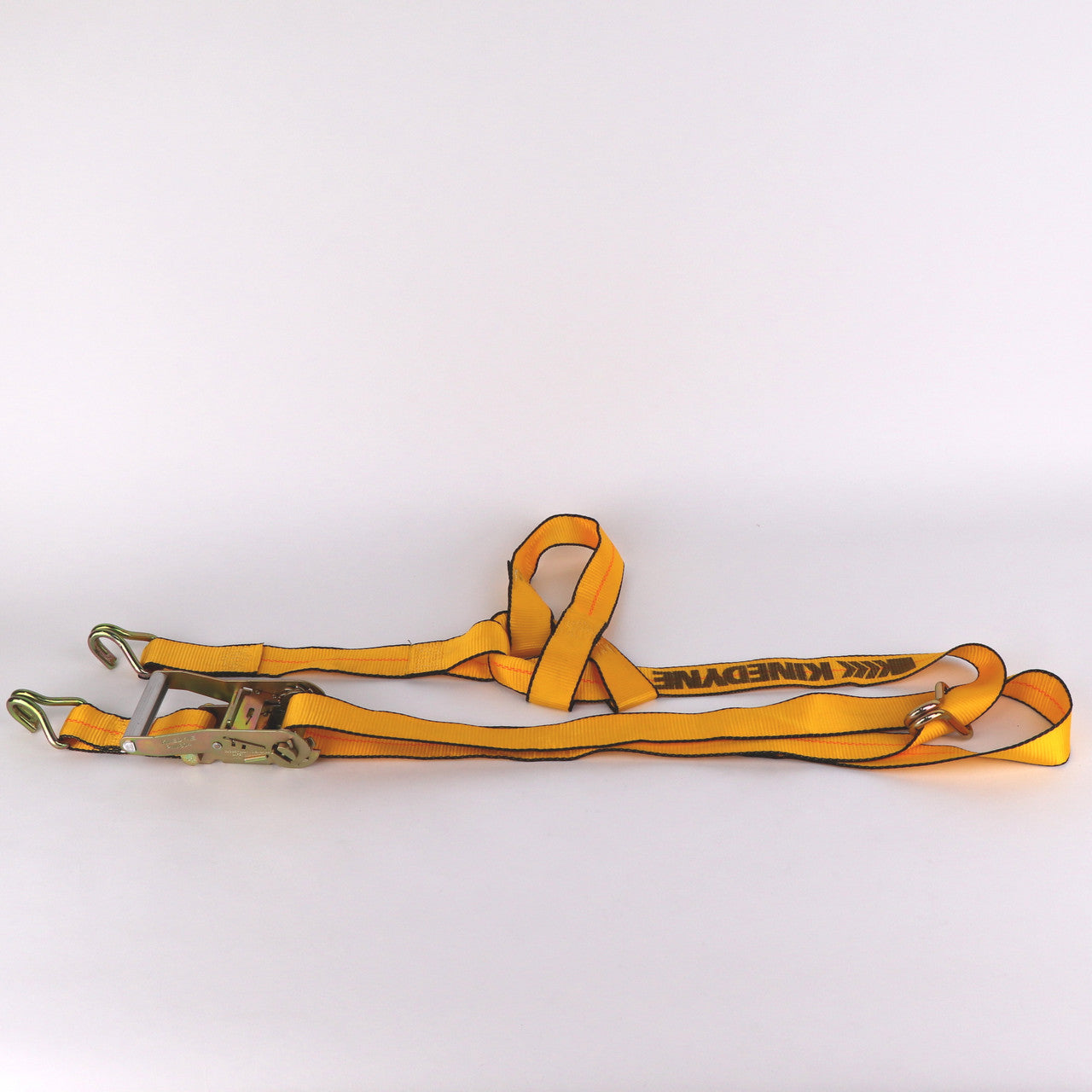
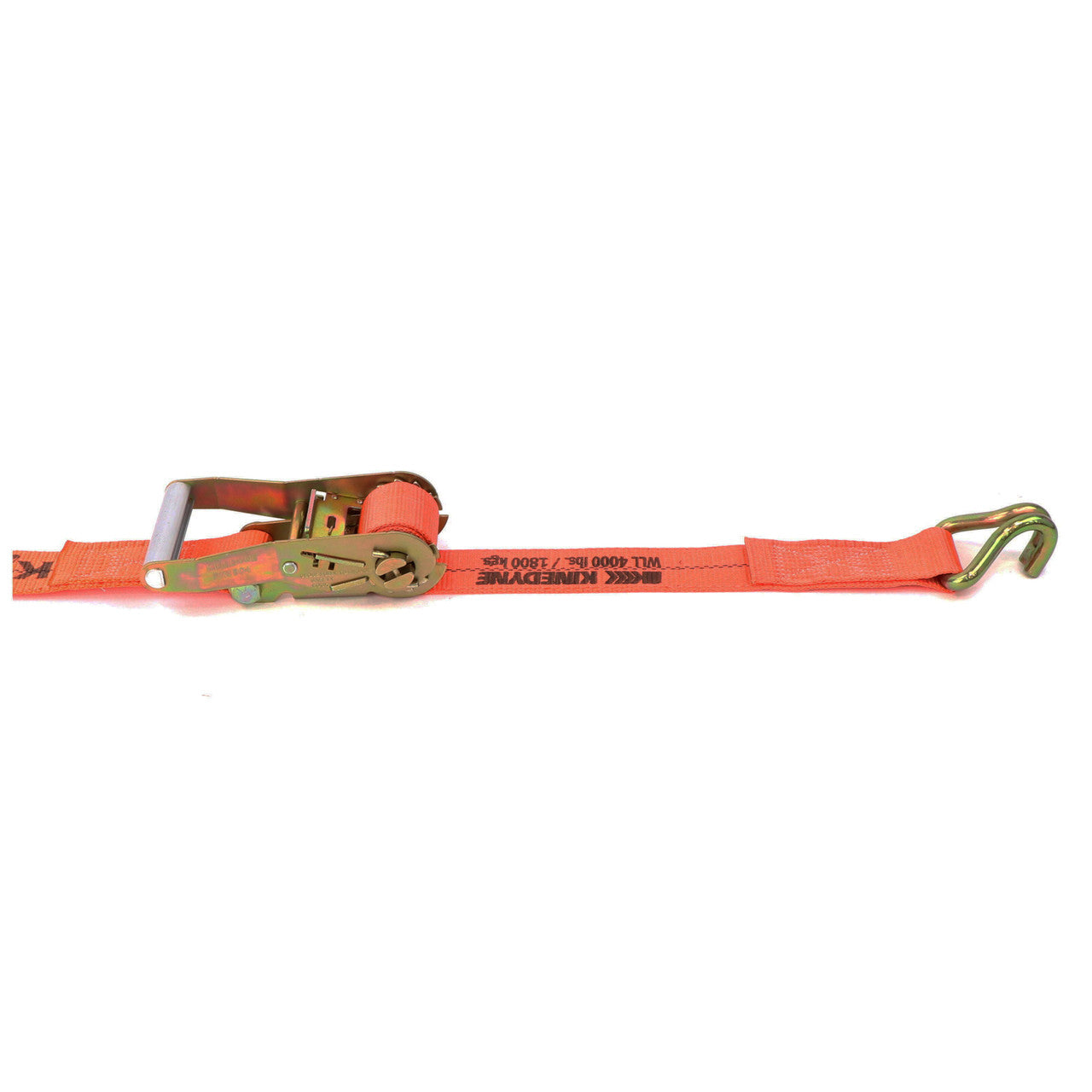
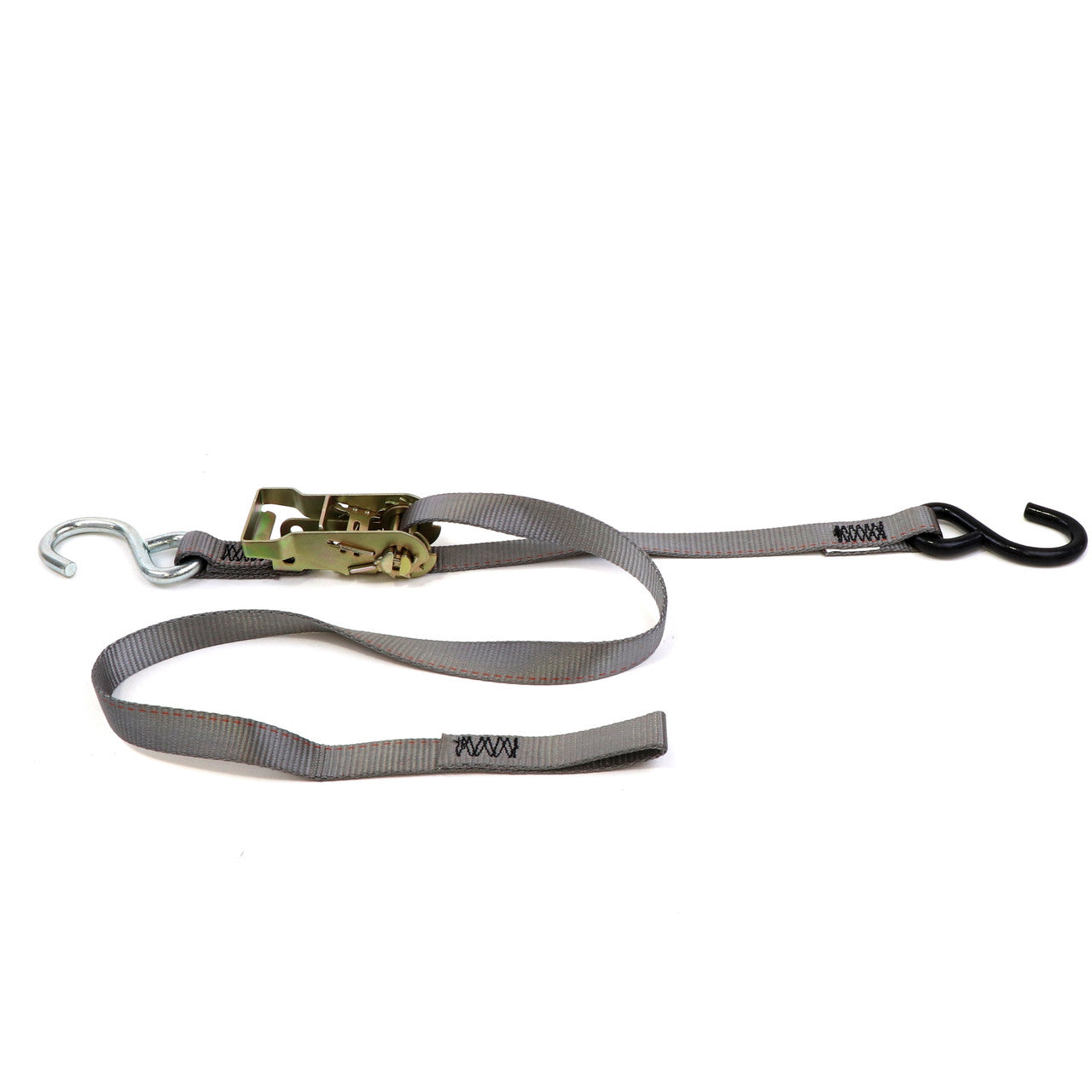
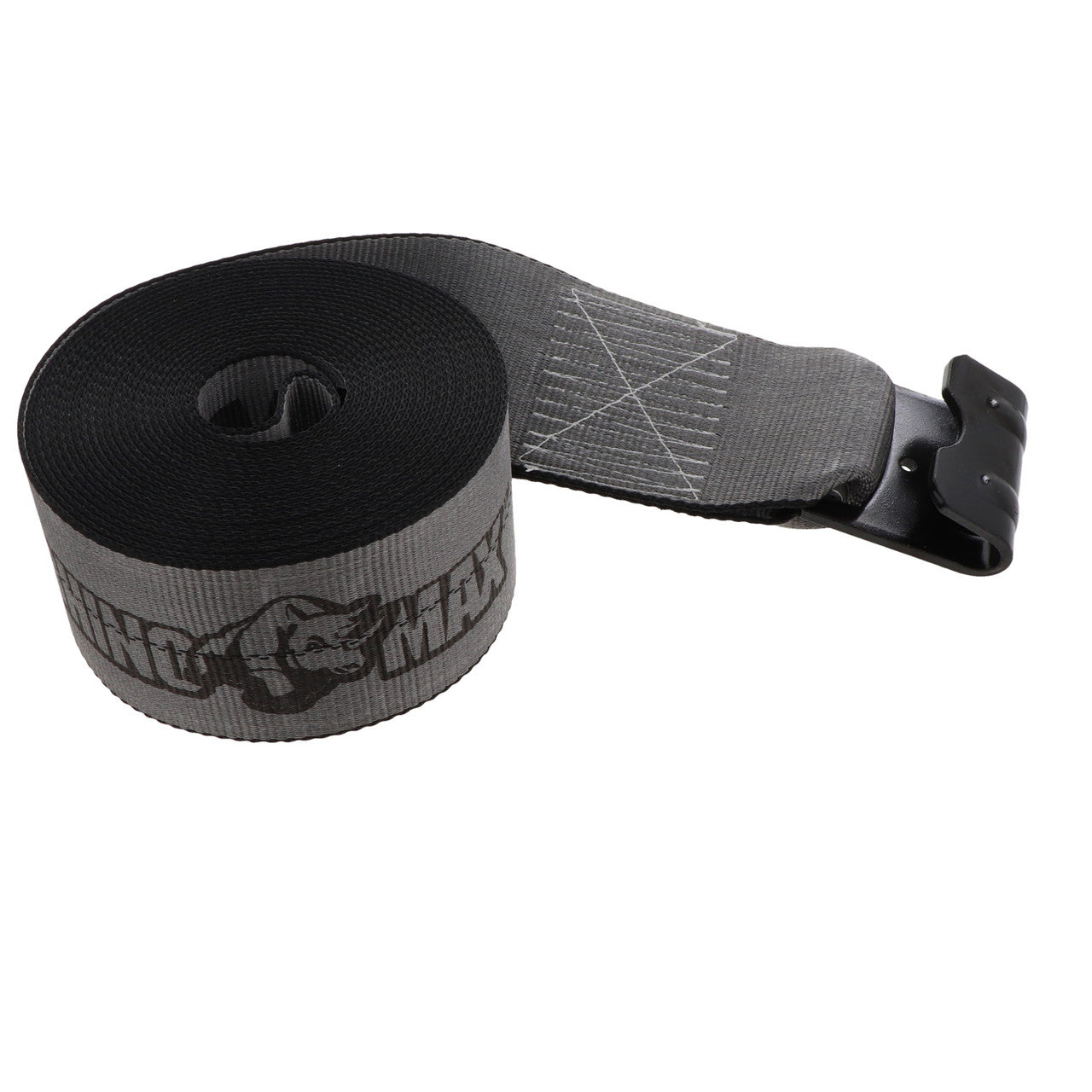
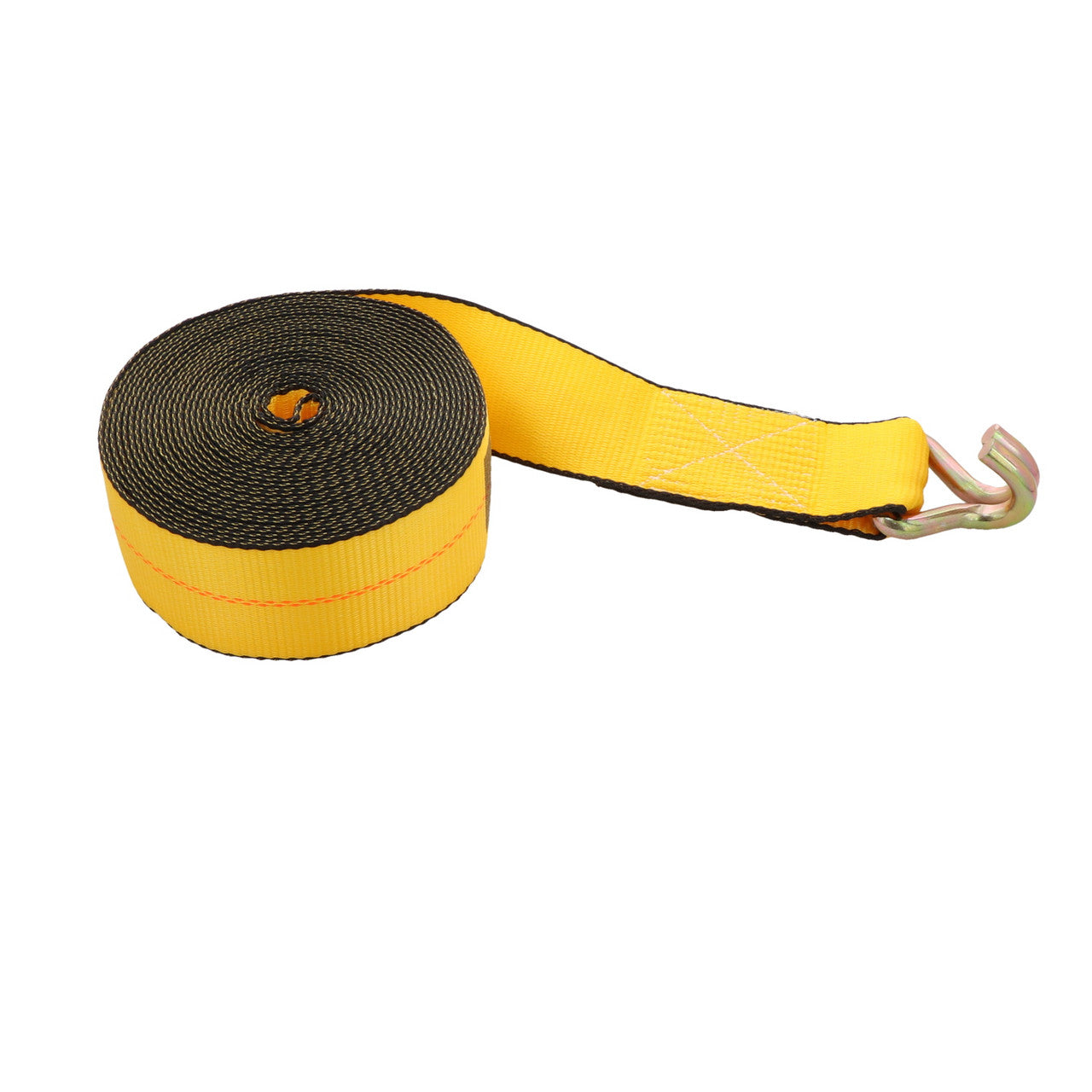
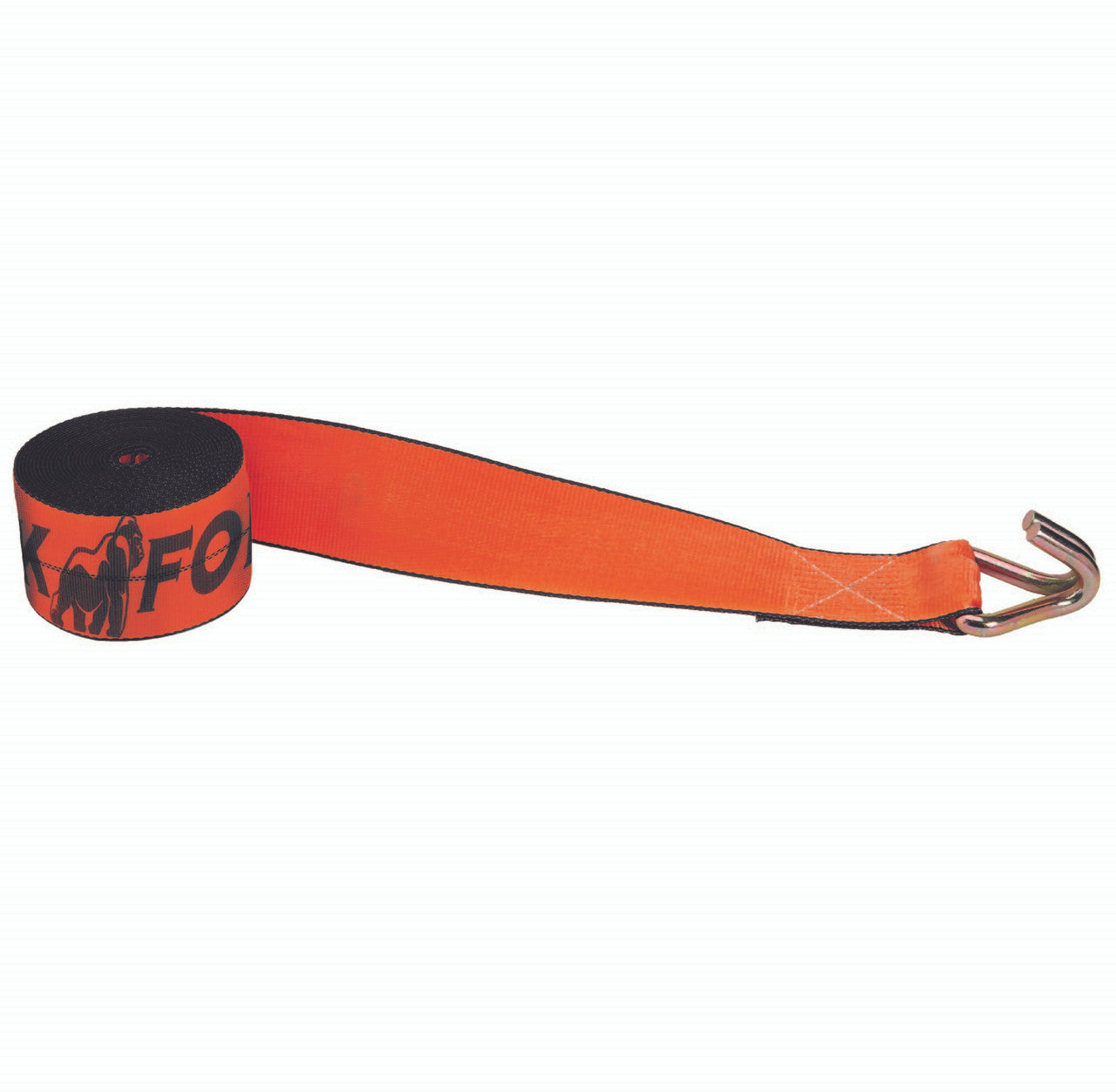
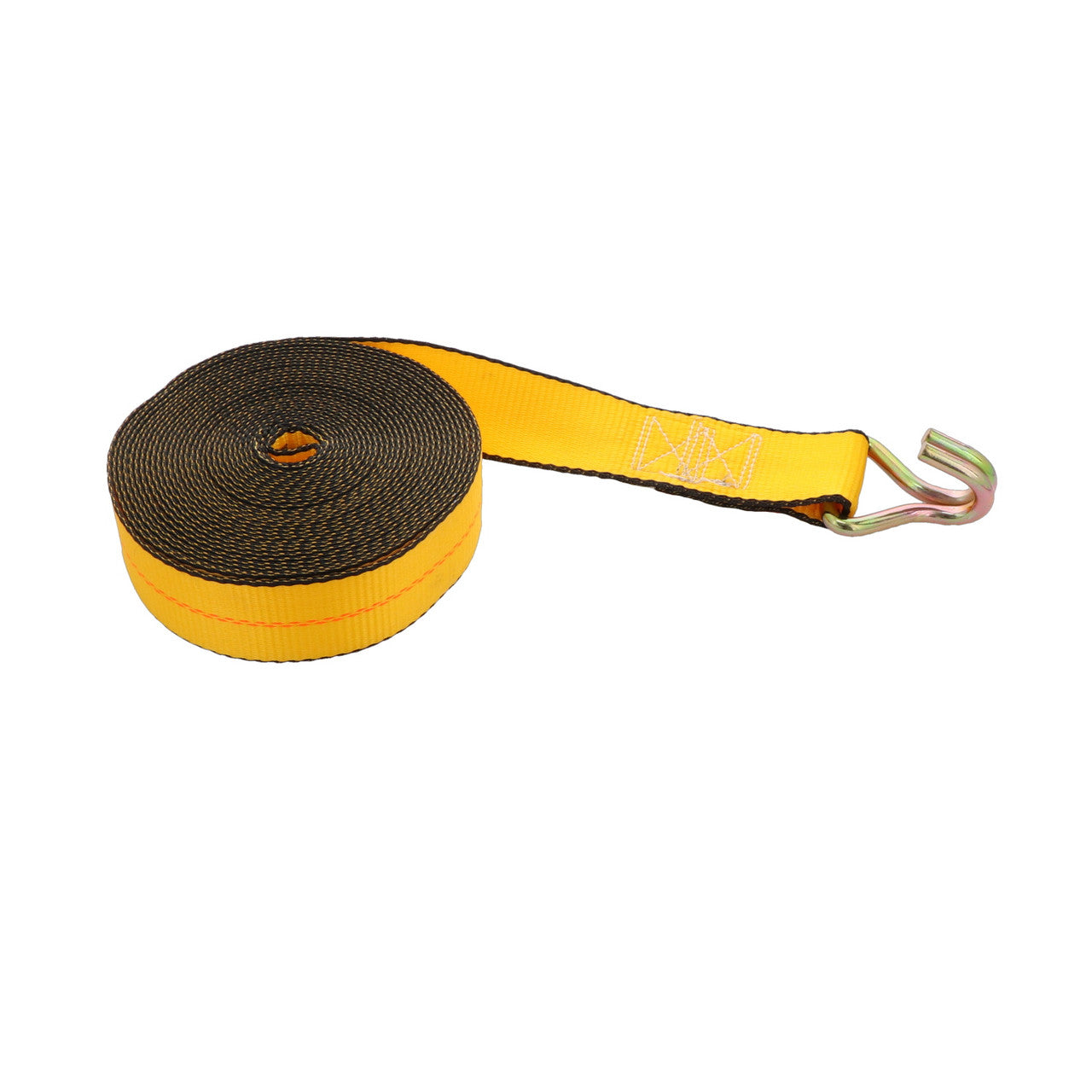
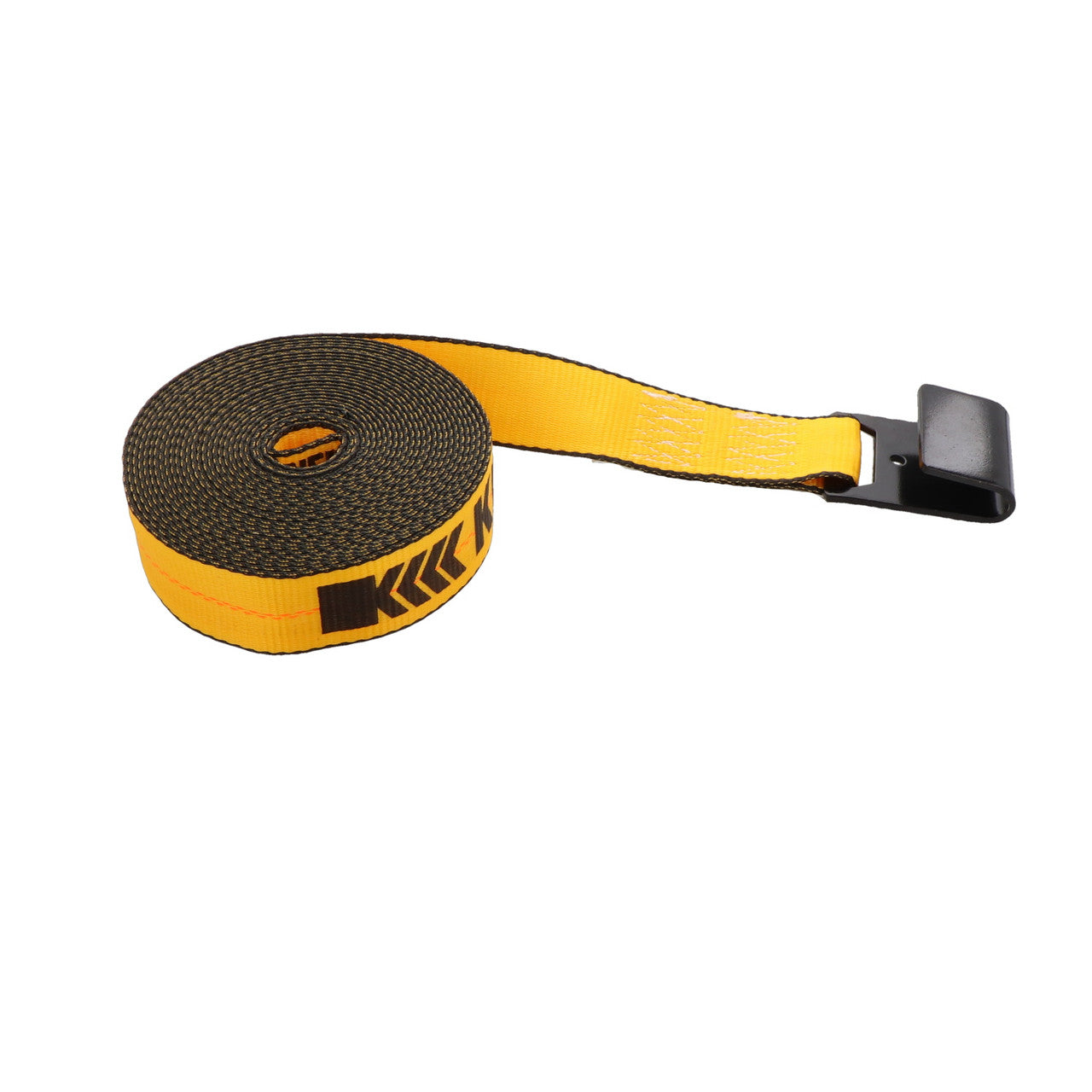
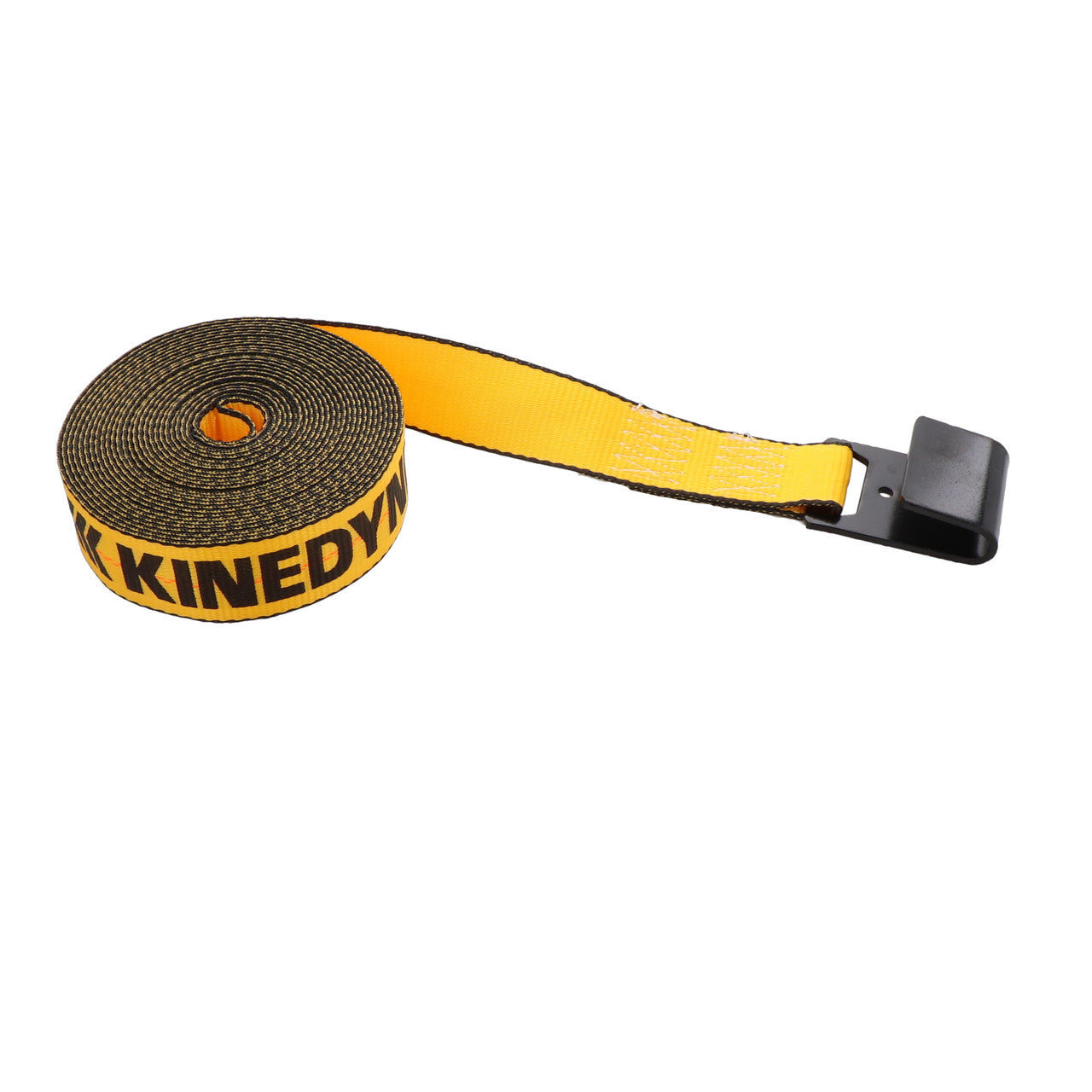
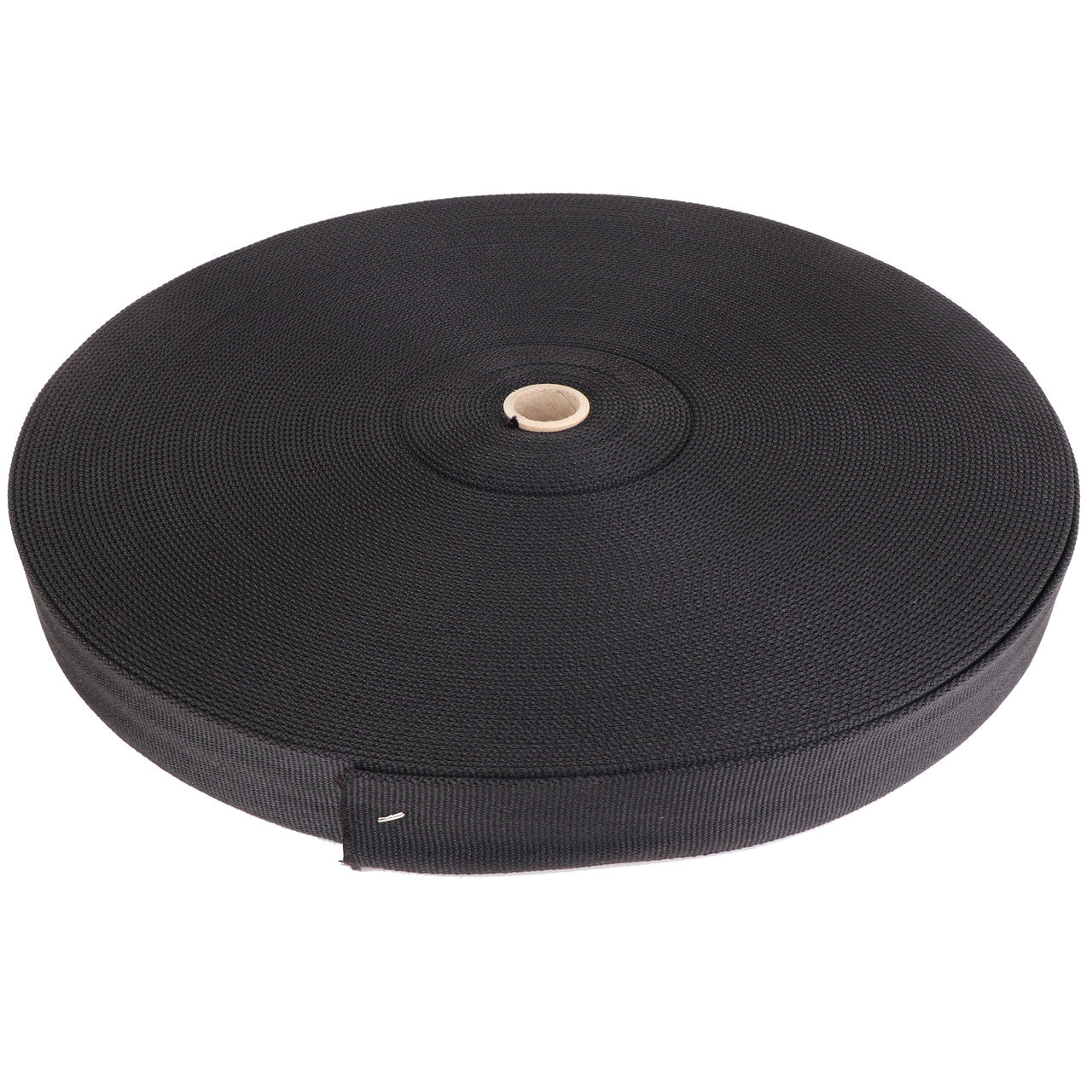
The webbing lines, from standard to Tuff-Edge. Kinedyne's standard 2 inch flat hook strap is the reference point at about $23 and 3,335 lb. Above it, the abrasion-resistant lines carry more rating and shrug off the friction that retires most straps early: Rhino MAX and K-FORCE webbing both push the 2 inch WLL to 4,000 lb, with the Rhino MAX flat hook long wide strap around $39 and the K-FORCE flat hook near $32. Lift-All's Load Hugger tiedowns sit at the top, built from high visibility Tuff-Edge polyester with woven-in edge protection, in 5,000, 10,000, and 15,000 lb ratings. A 2 inch Hi-Viz flat hook Load Hugger runs about $136 at 5,000 lb; the 3 and 4 inch 15,000 lb builds land between roughly $380 and $490 depending on fitting. Buy the abrasion line when the strap works outdoors year round.
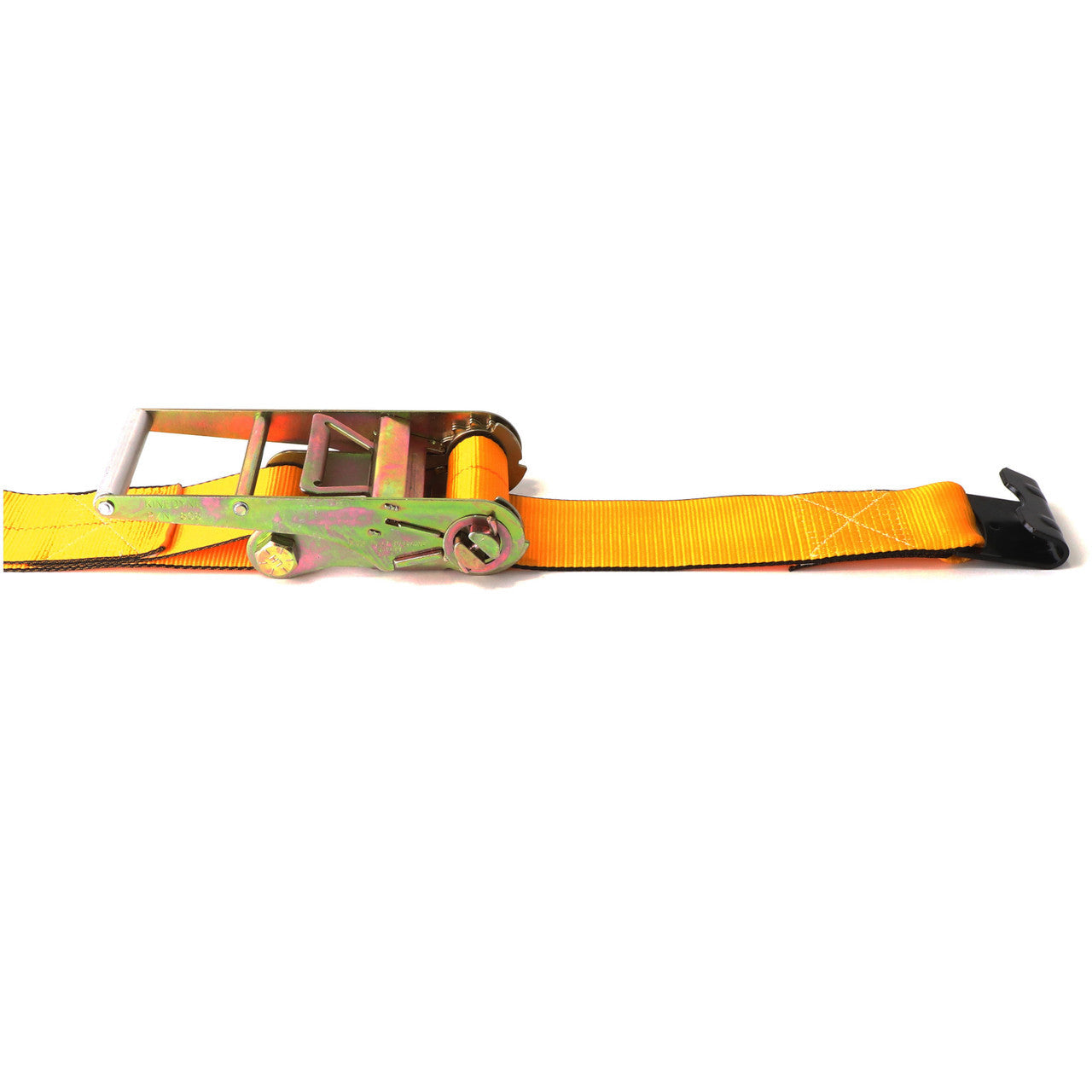
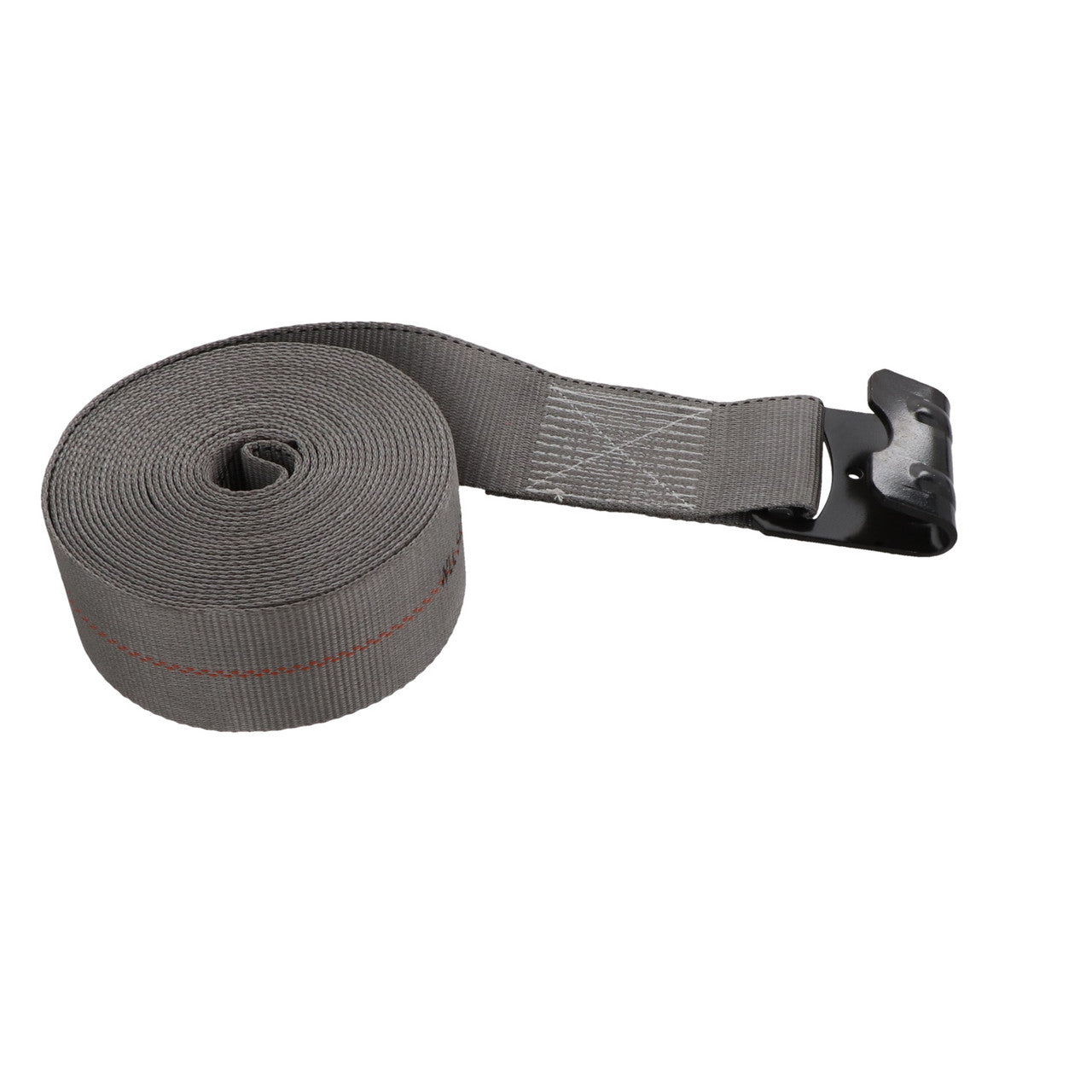
Width and rating, matched to the load. Rating climbs with width and webbing. Two inch straps cover general freight from 3,335 lb standard to 4,000 lb on the upgraded lines. Three inch straps step up to 5,400 lb for heavier machinery and coils, with the flat hook near $72, the wire hook by 30 ft around $100, and the chain anchor about $89. Four inch is steel and equipment territory: the standard flat hook runs 5,400 lb near $62, while the 4 inch K-FORCE flat and wire hook builds reach 6,670 lb, the flat hook around $104. Pick the width the securement math demands, then step up one size if the load has sharp edges, rides in weather, or the strap sees daily service.
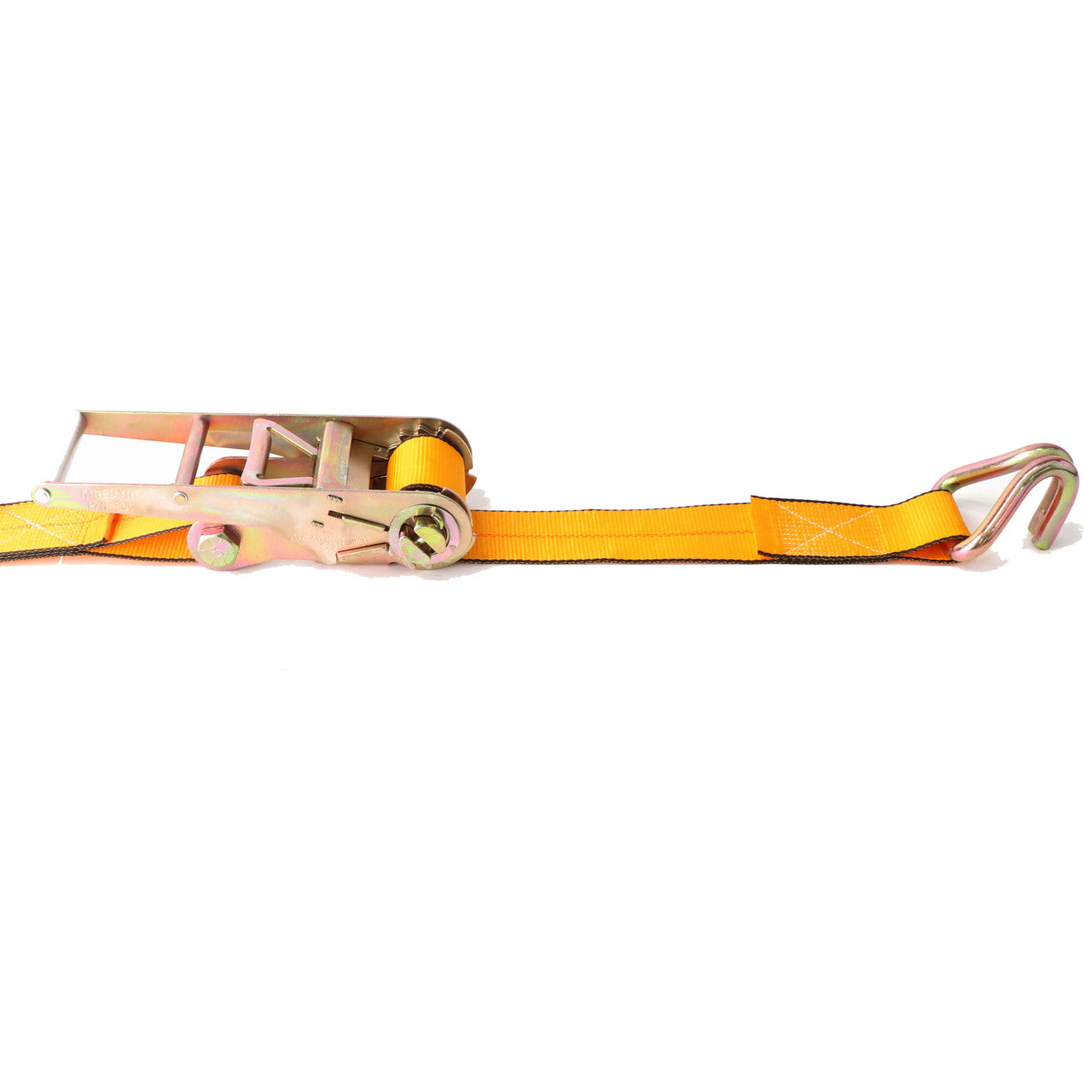
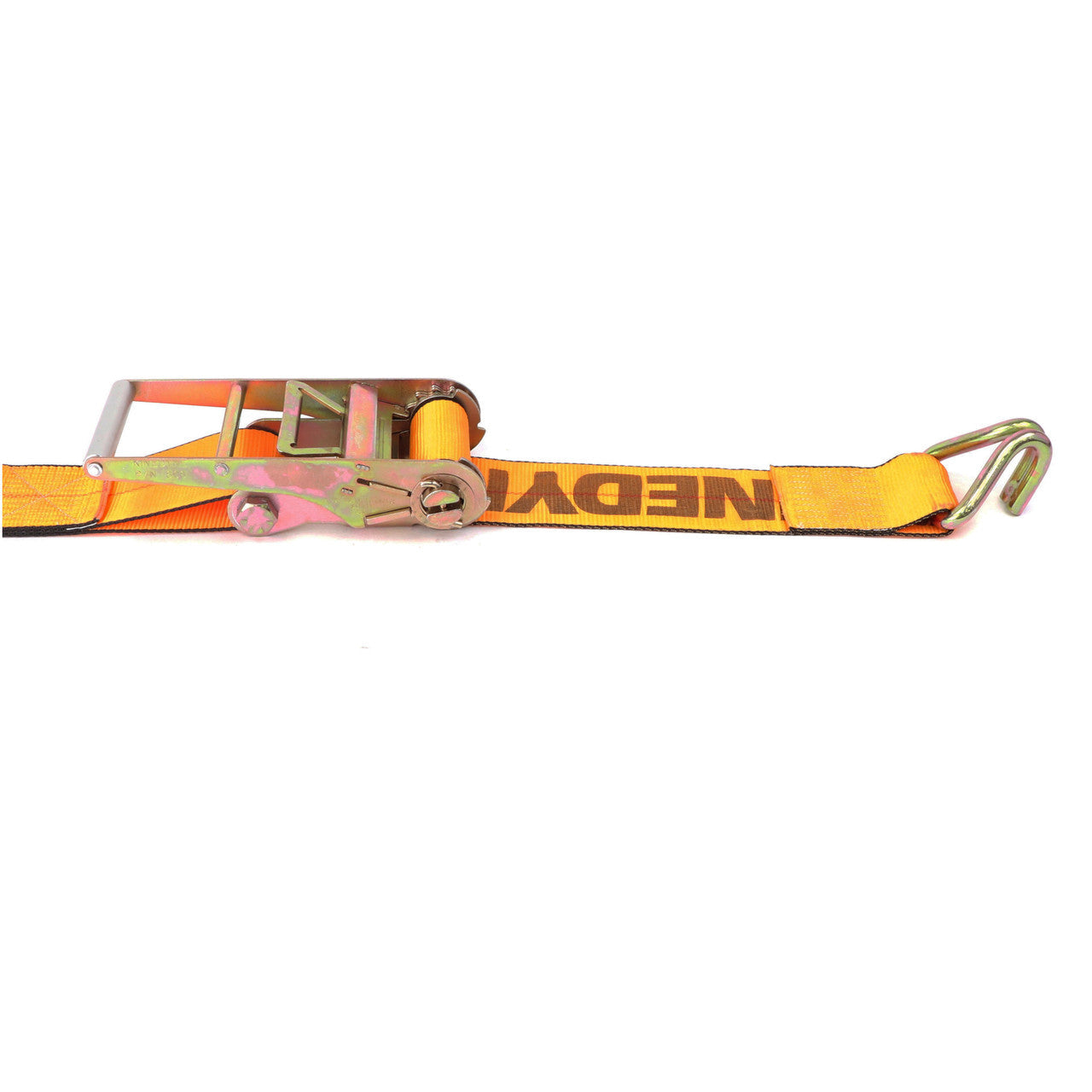
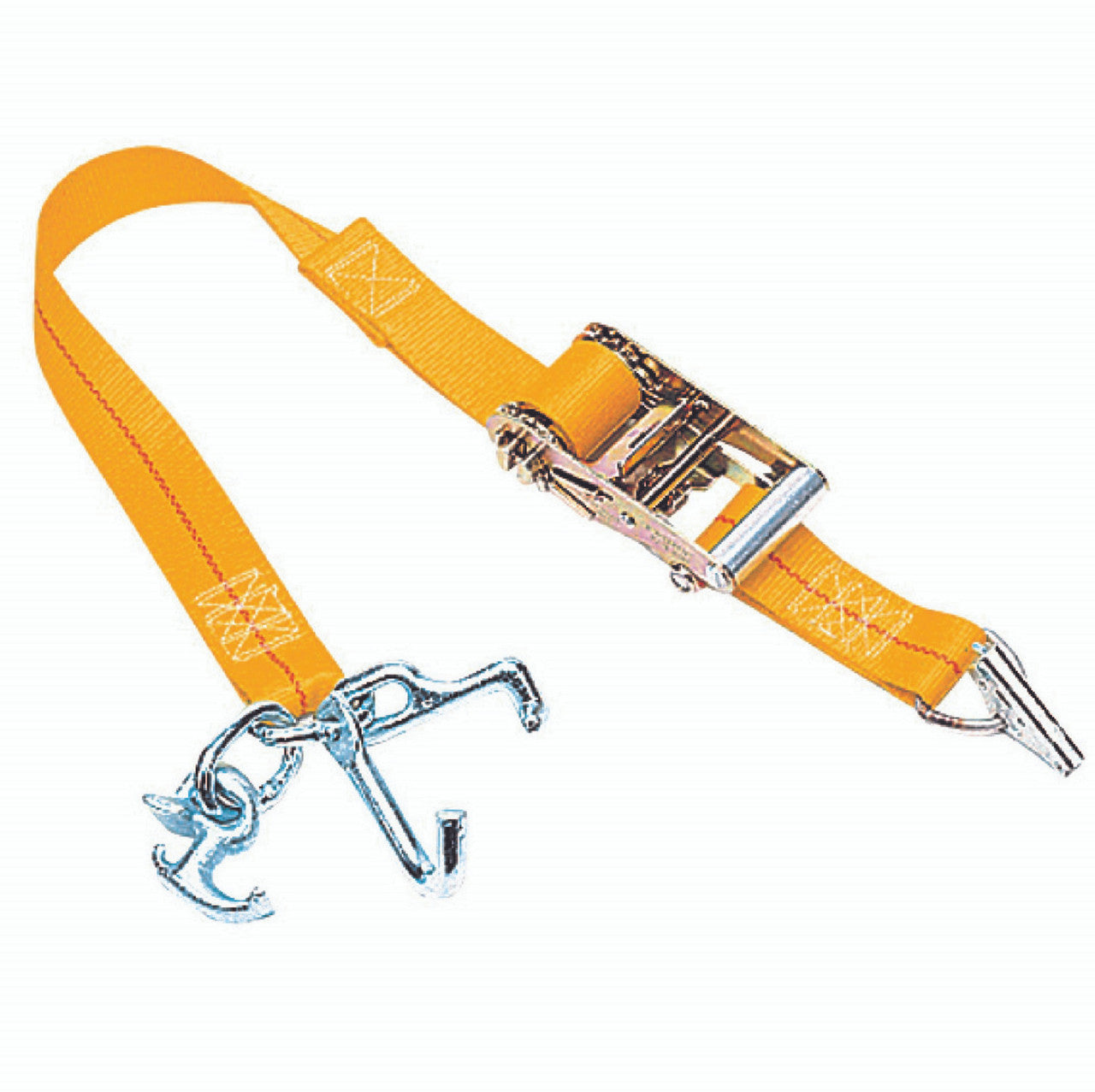
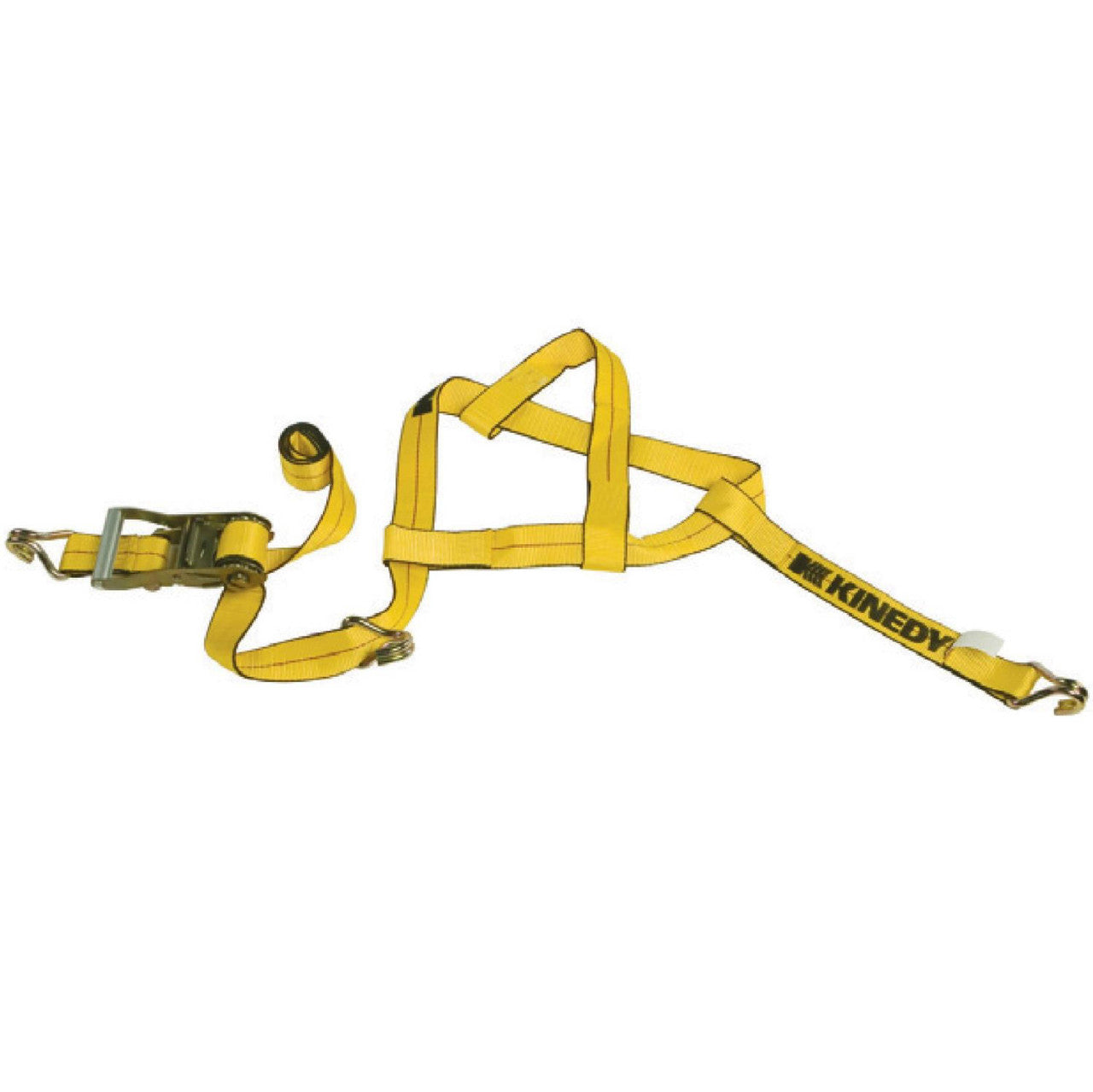
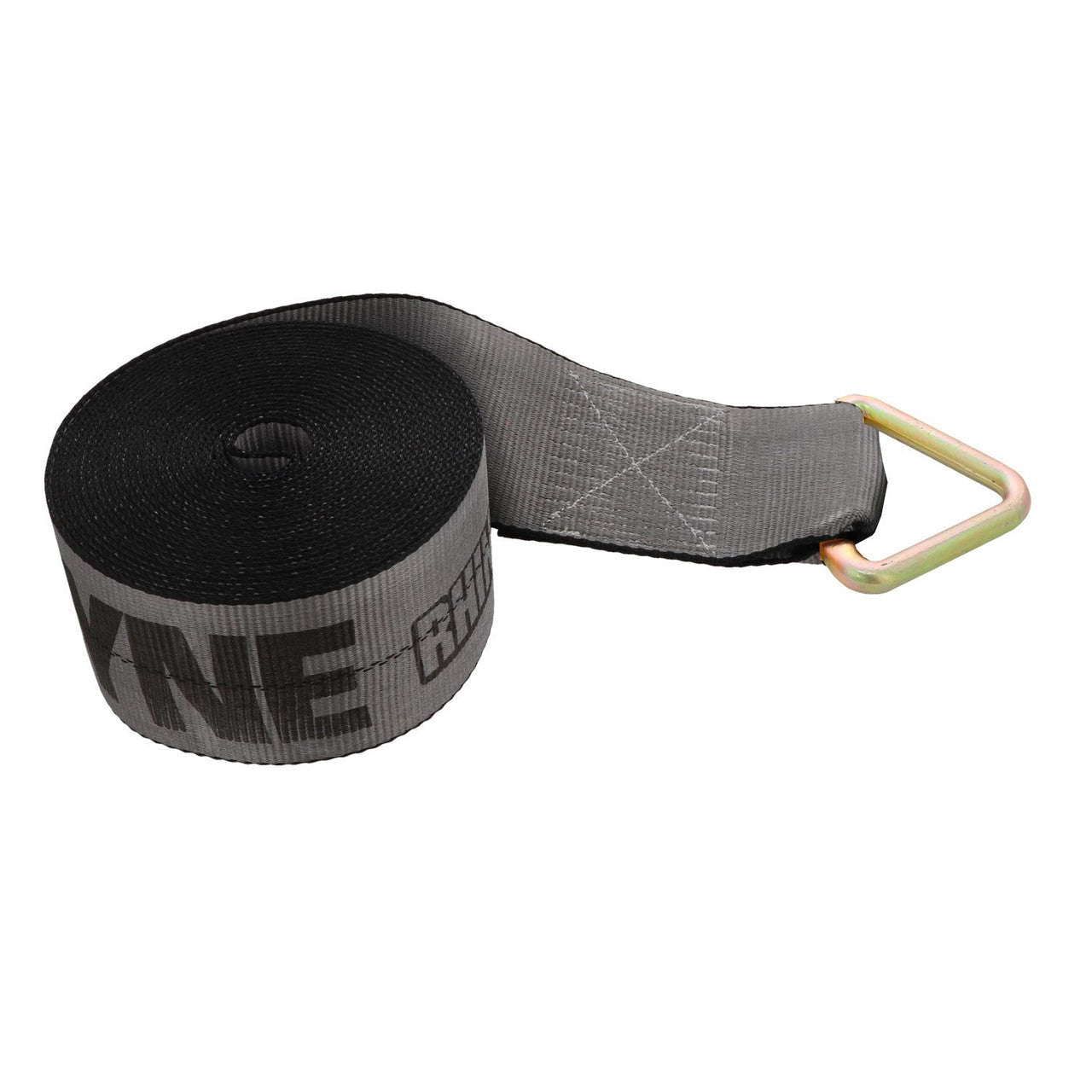
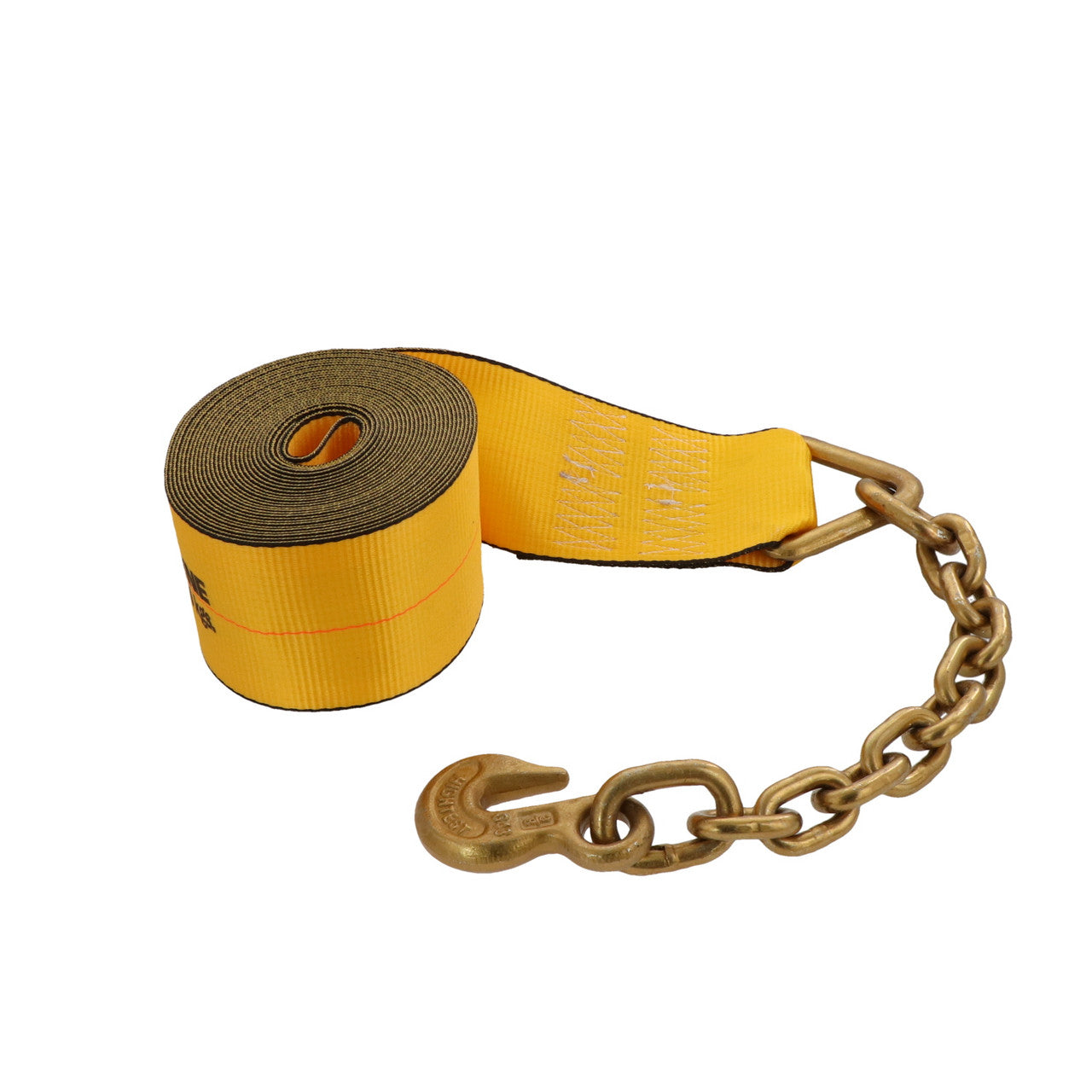
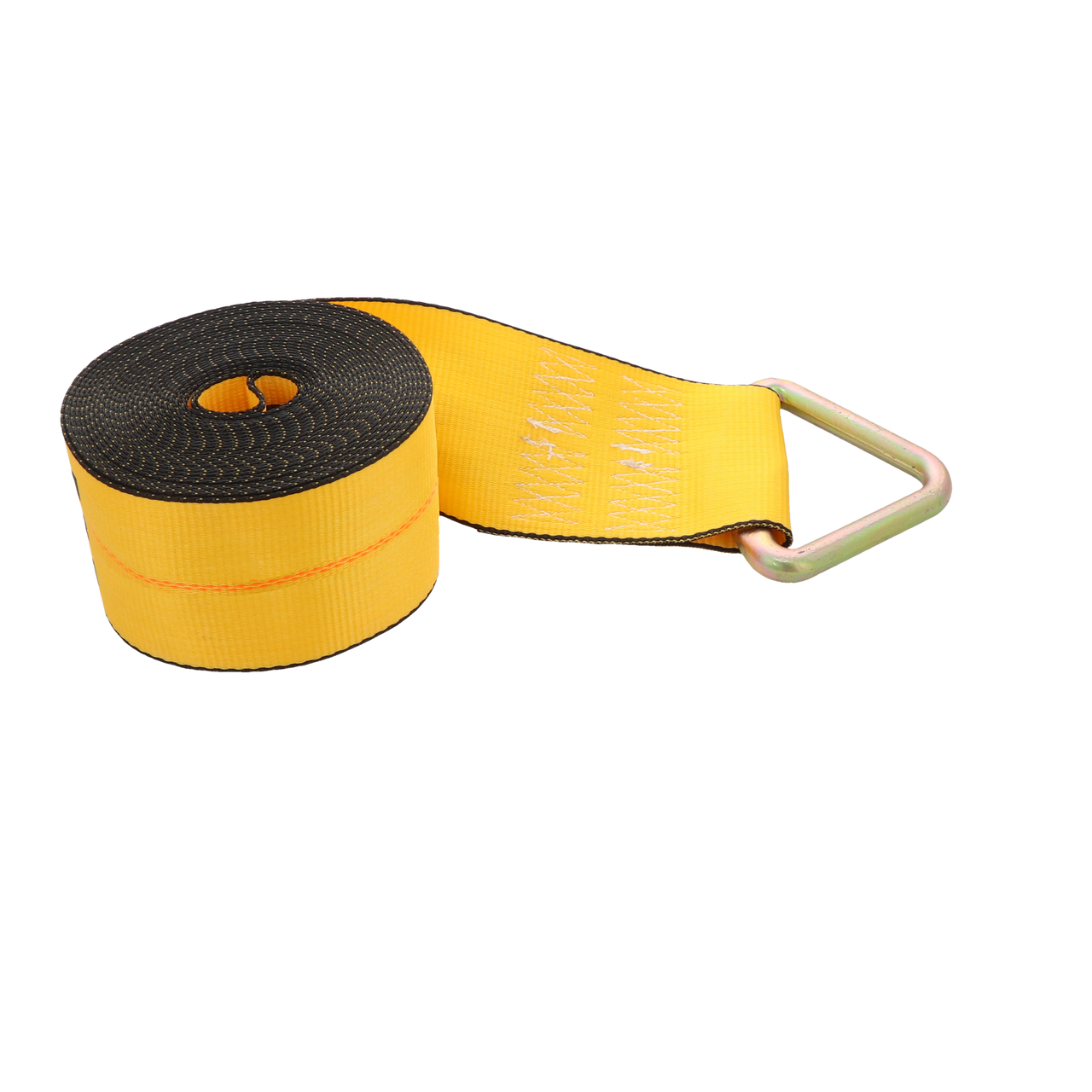
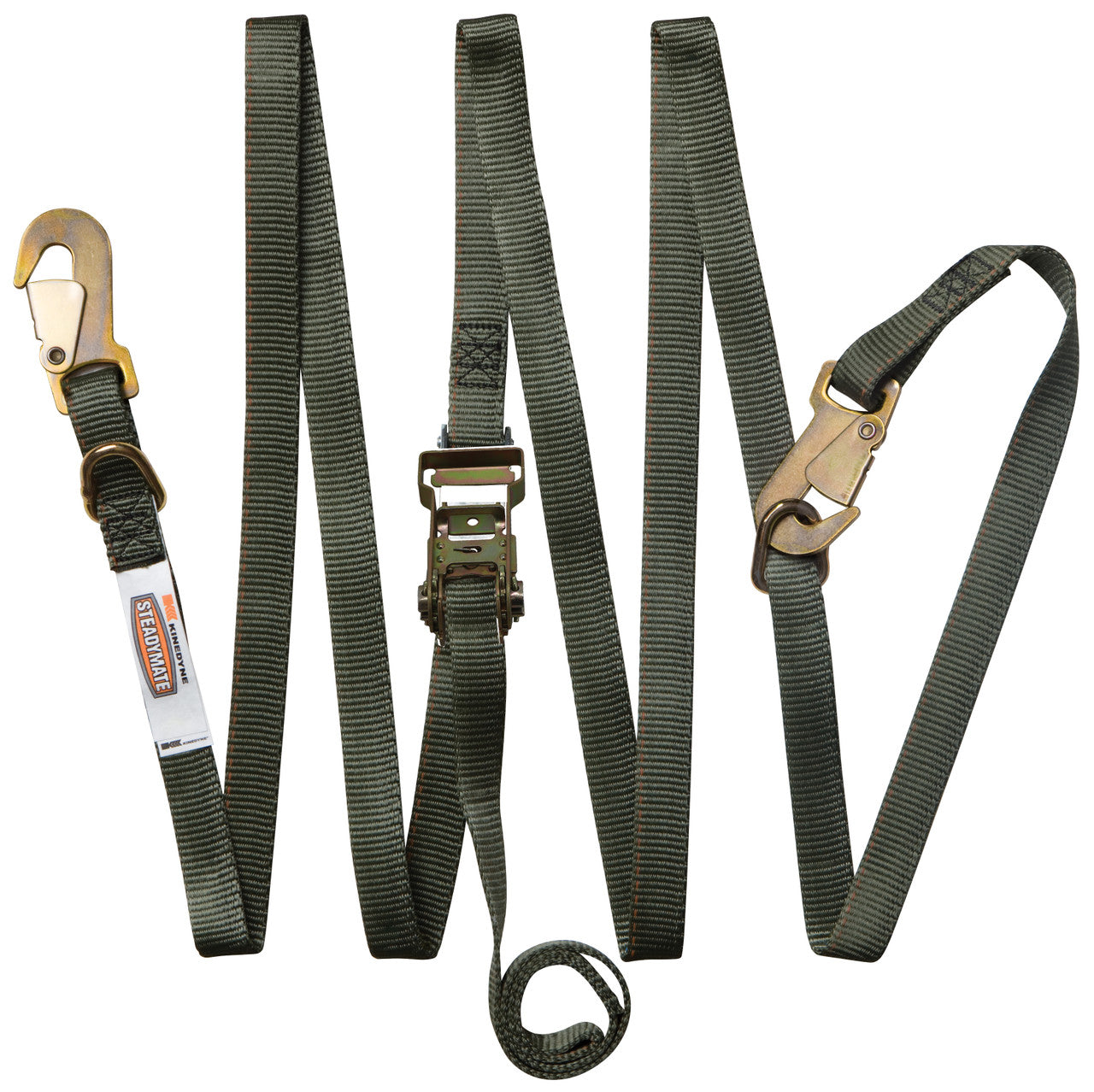
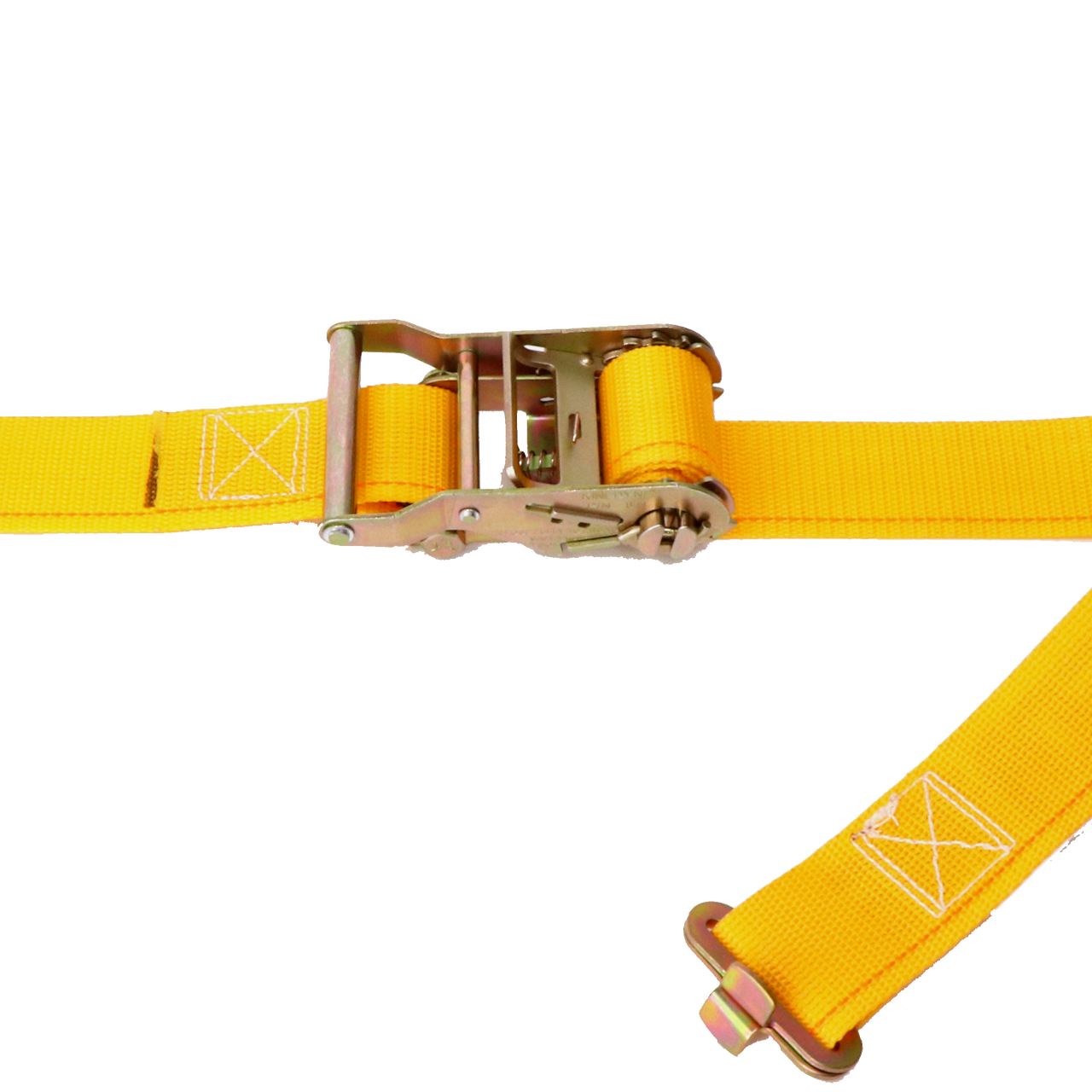
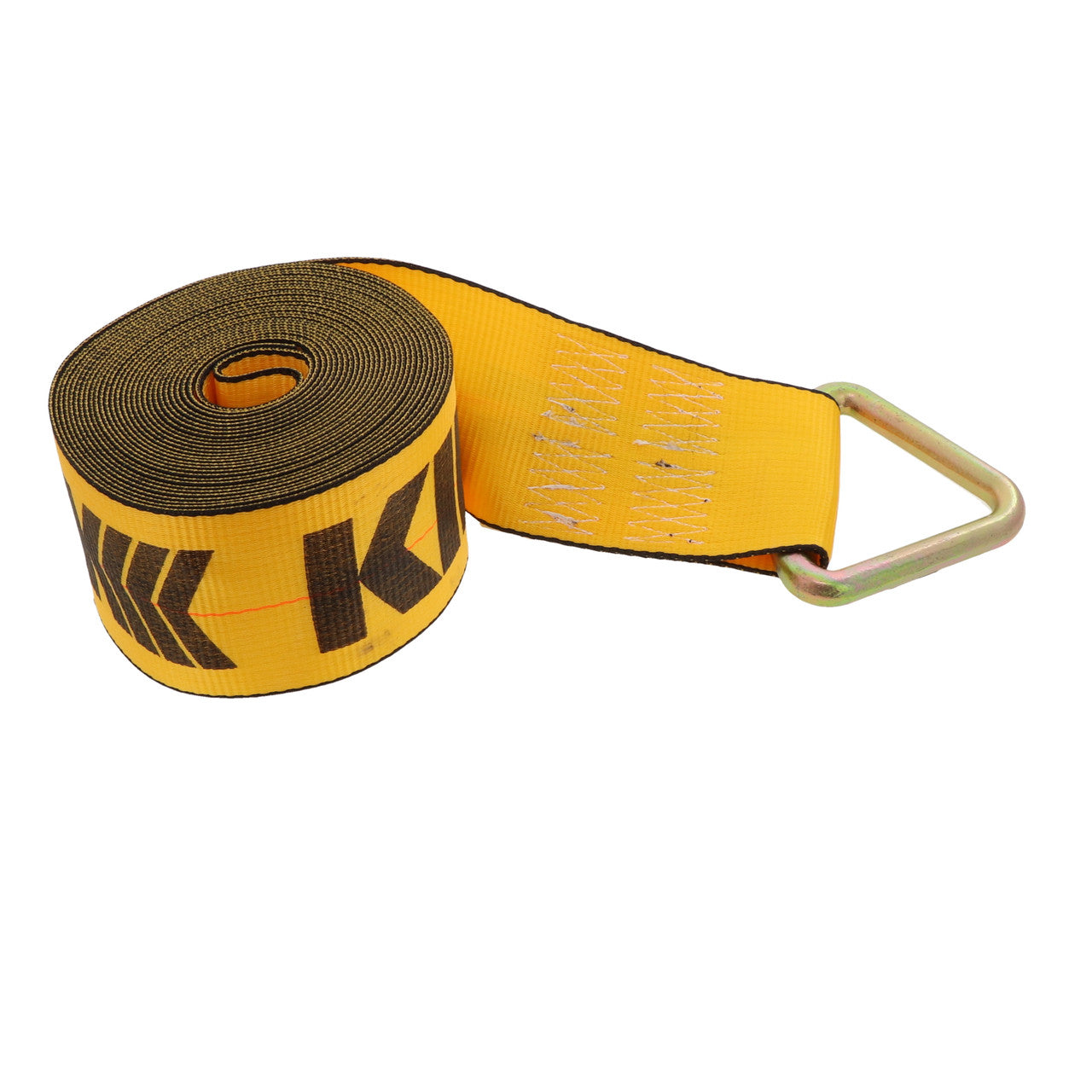
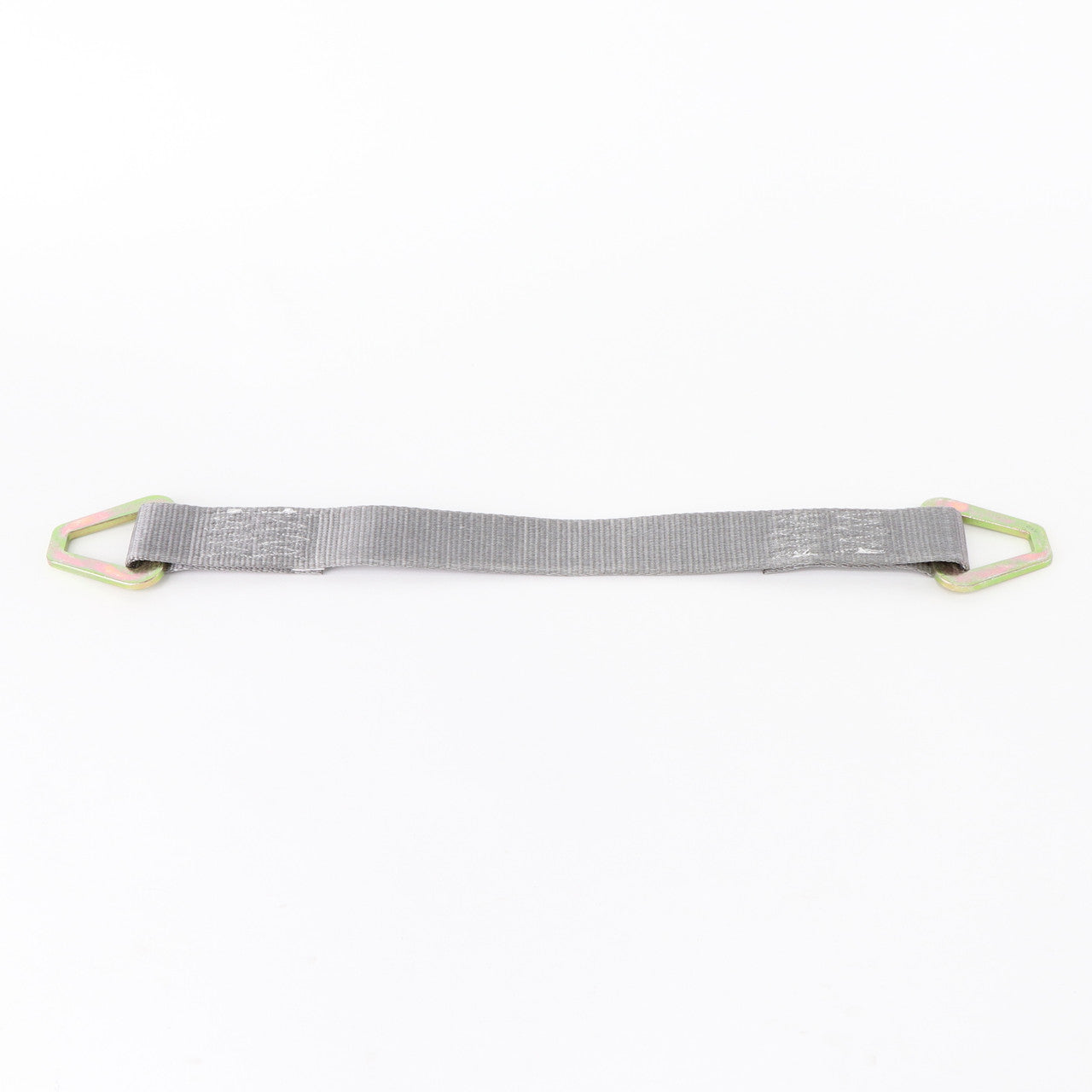
Hooks and end fittings on a heavy strap. The webbing is the same polyester; the fitting decides whether the strap works on your equipment. Flat hooks grab flatbed rub rails and are the freight default across 2, 3, and 4 inch. Wire hooks are slimmer for stake pockets and worn rails. Chain anchors end in a short length of chain for machinery and anchor points webbing cannot reach, and delta or D-ring ends build drop-deck and winch systems. On the K-FORCE and Rhino MAX lines you can get flat, wire, and chain anchor patterns at the same 4,000 to 6,670 lb ratings, so the choice is purely about the anchor, not the strength. Match the hook to the rail or pocket you actually have before you match anything else.
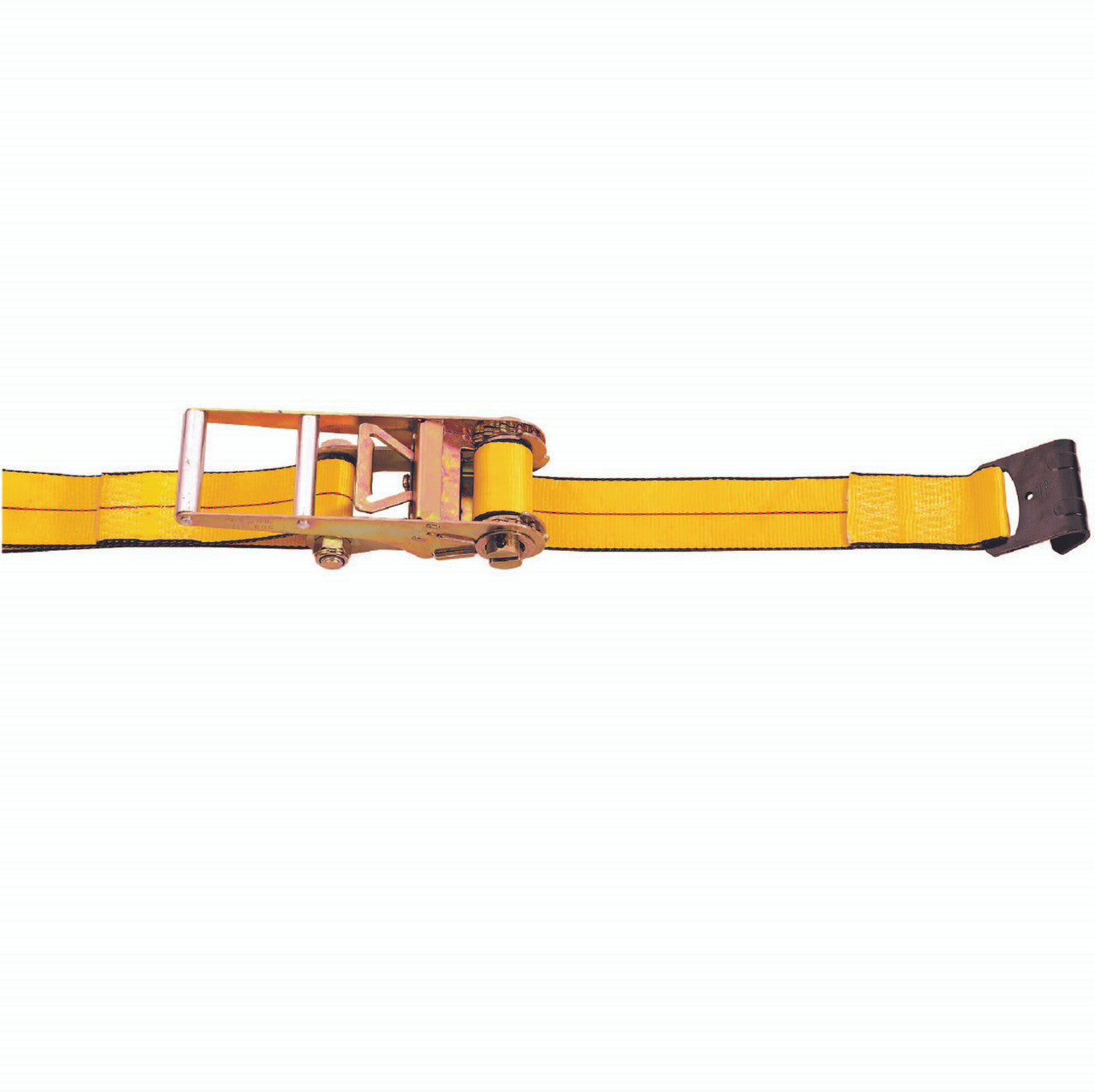
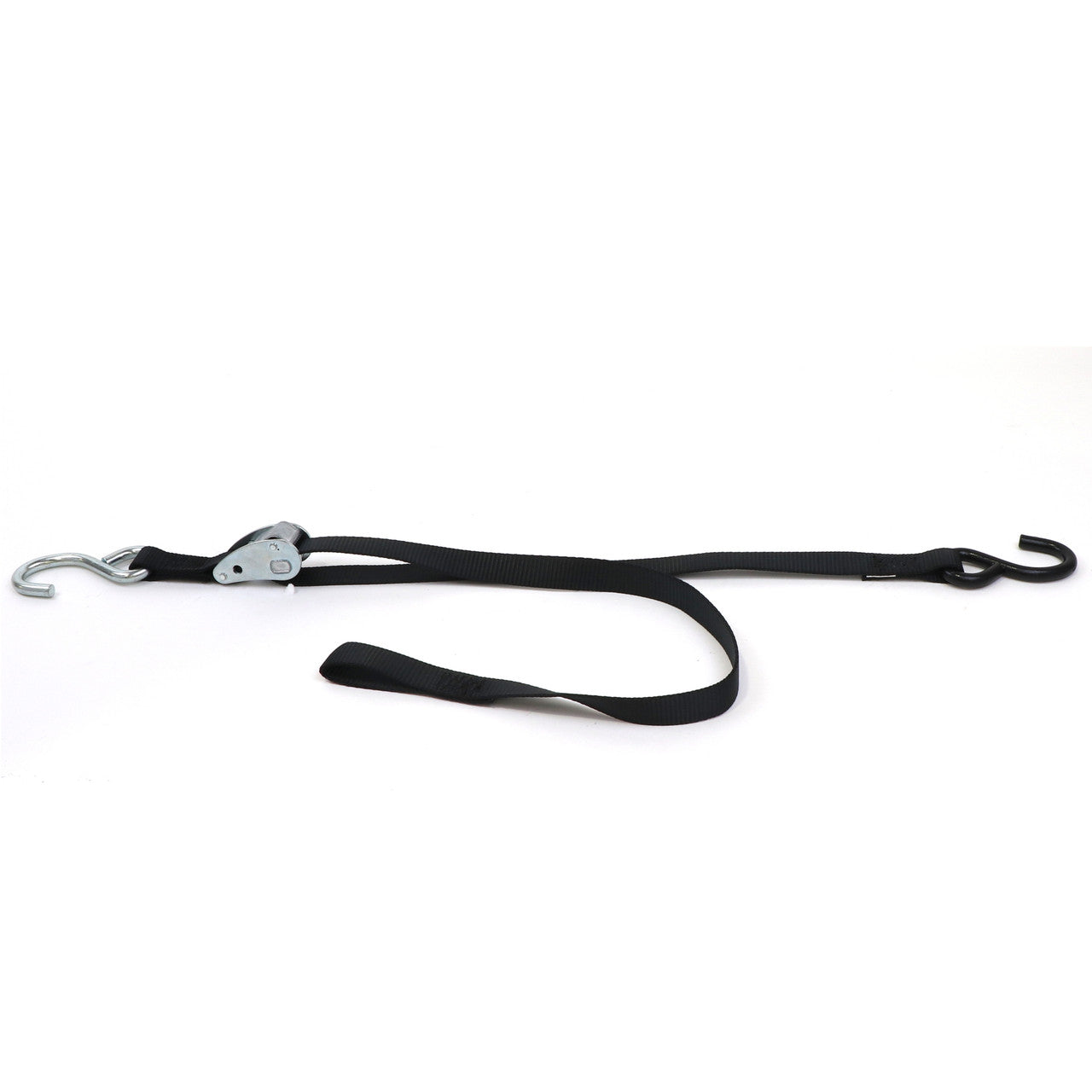
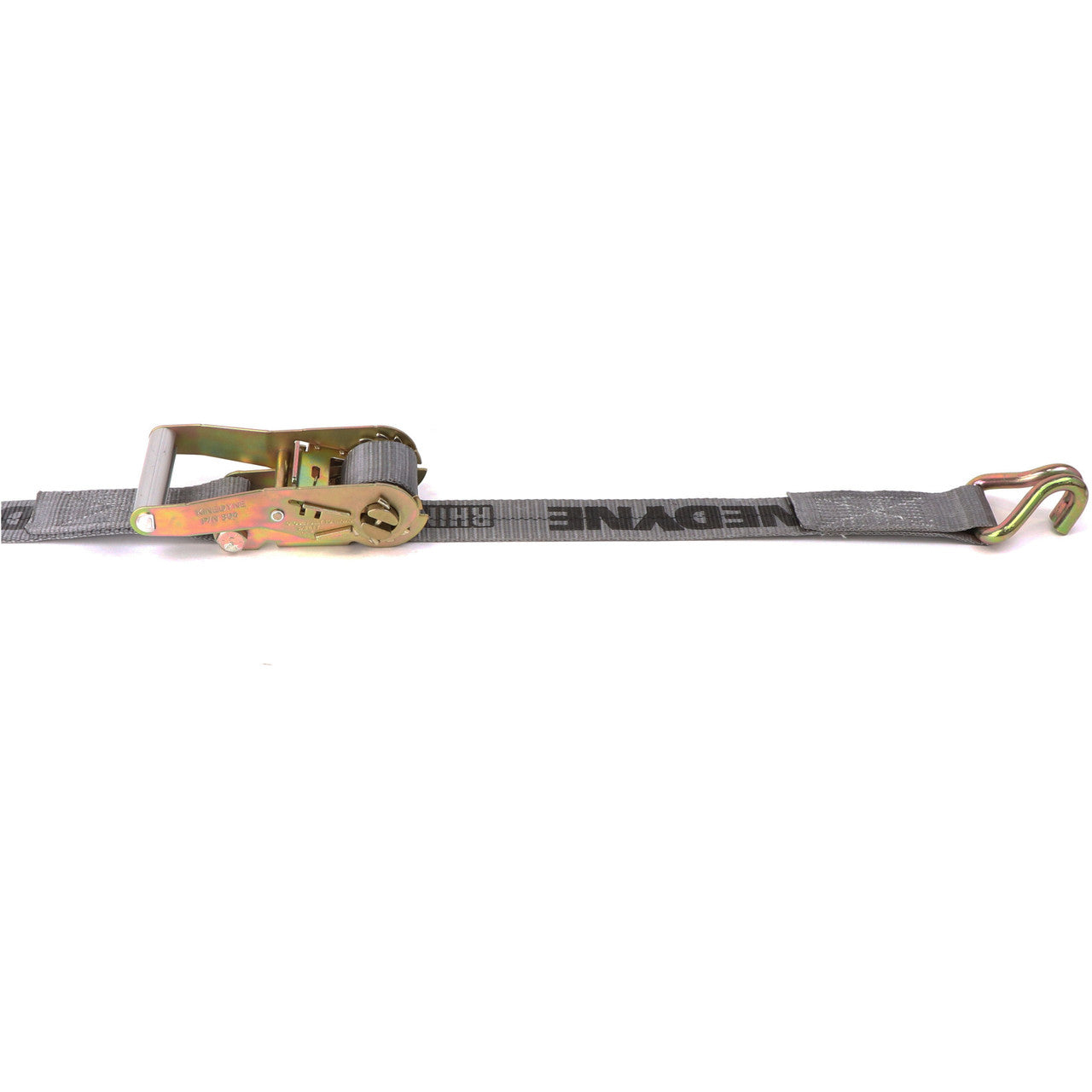
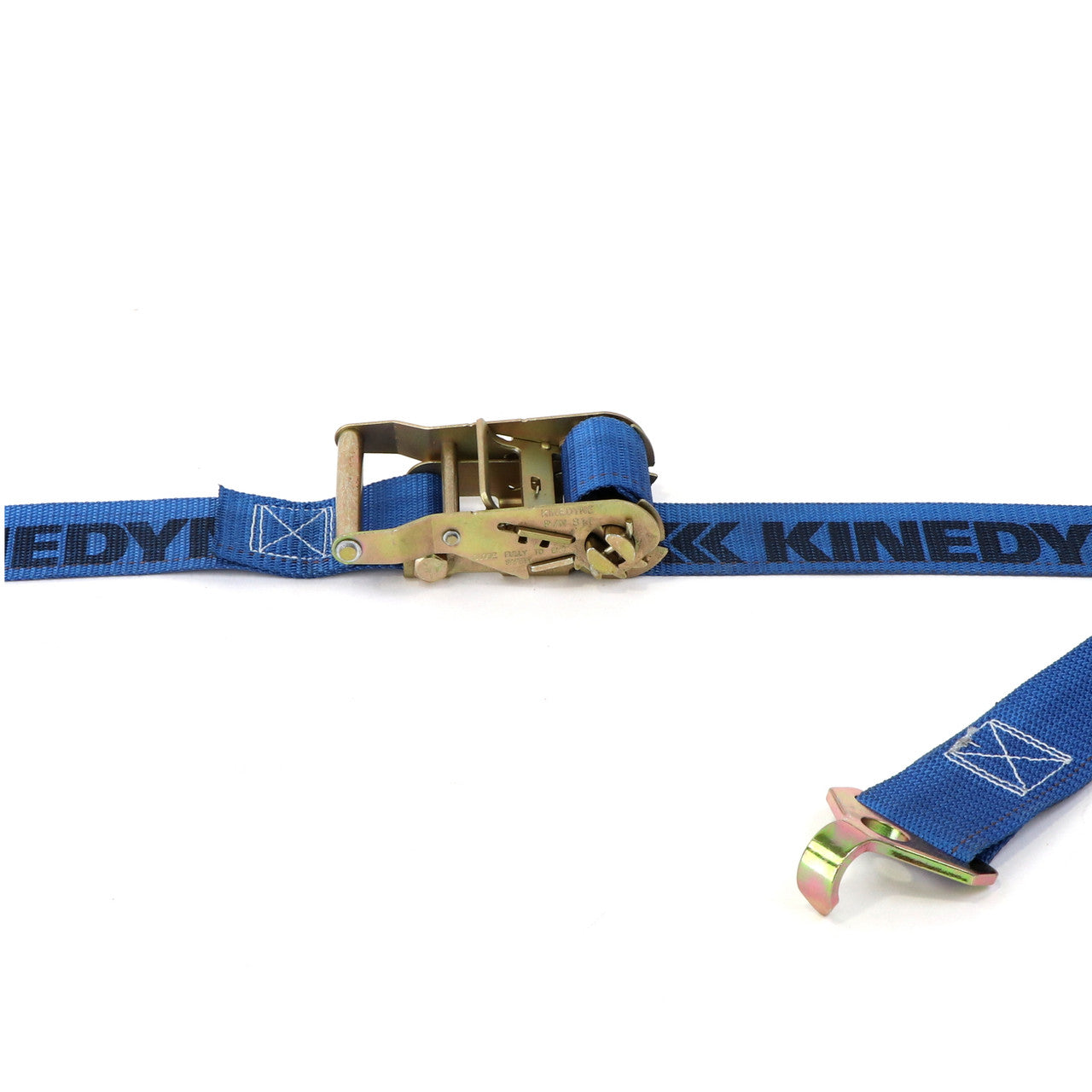
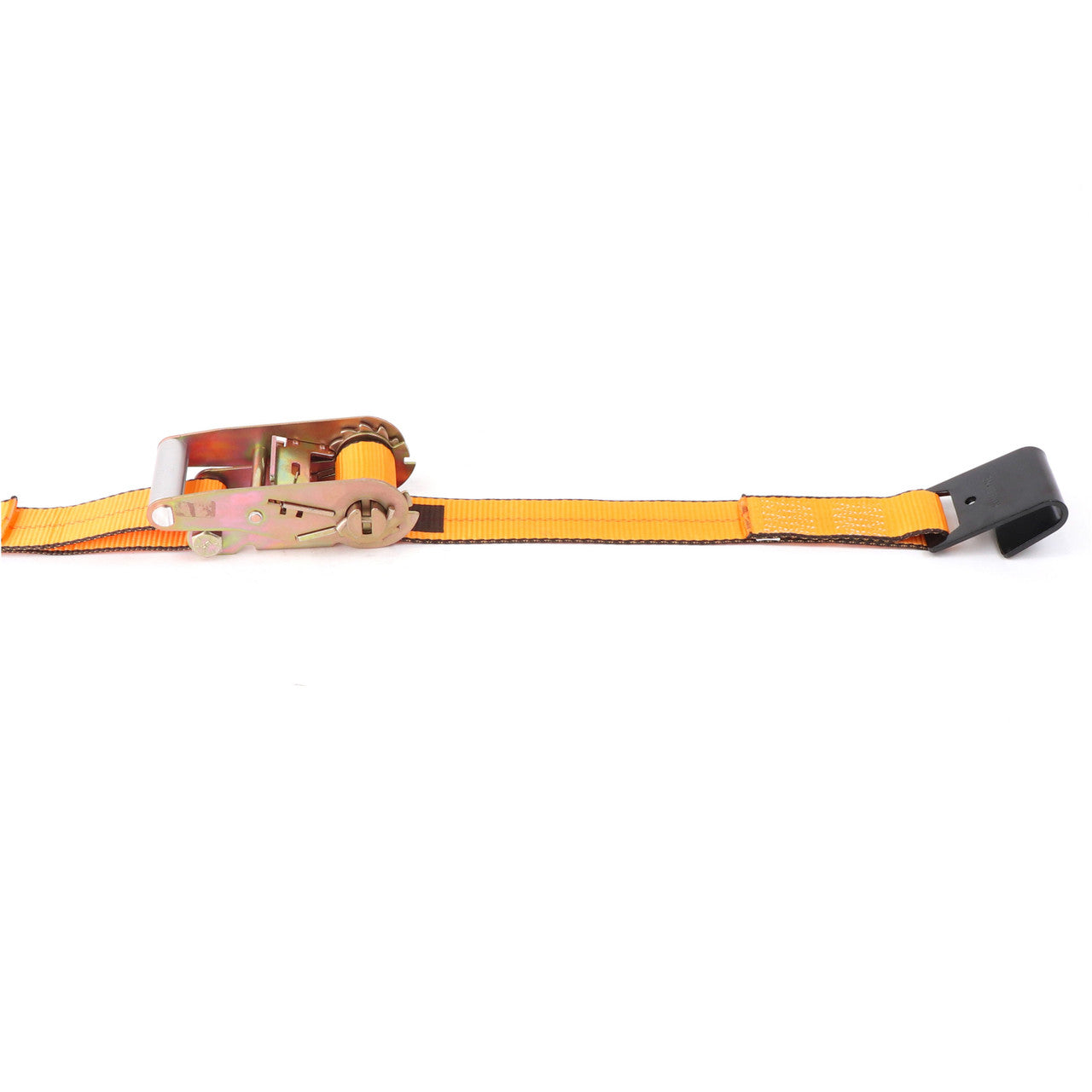
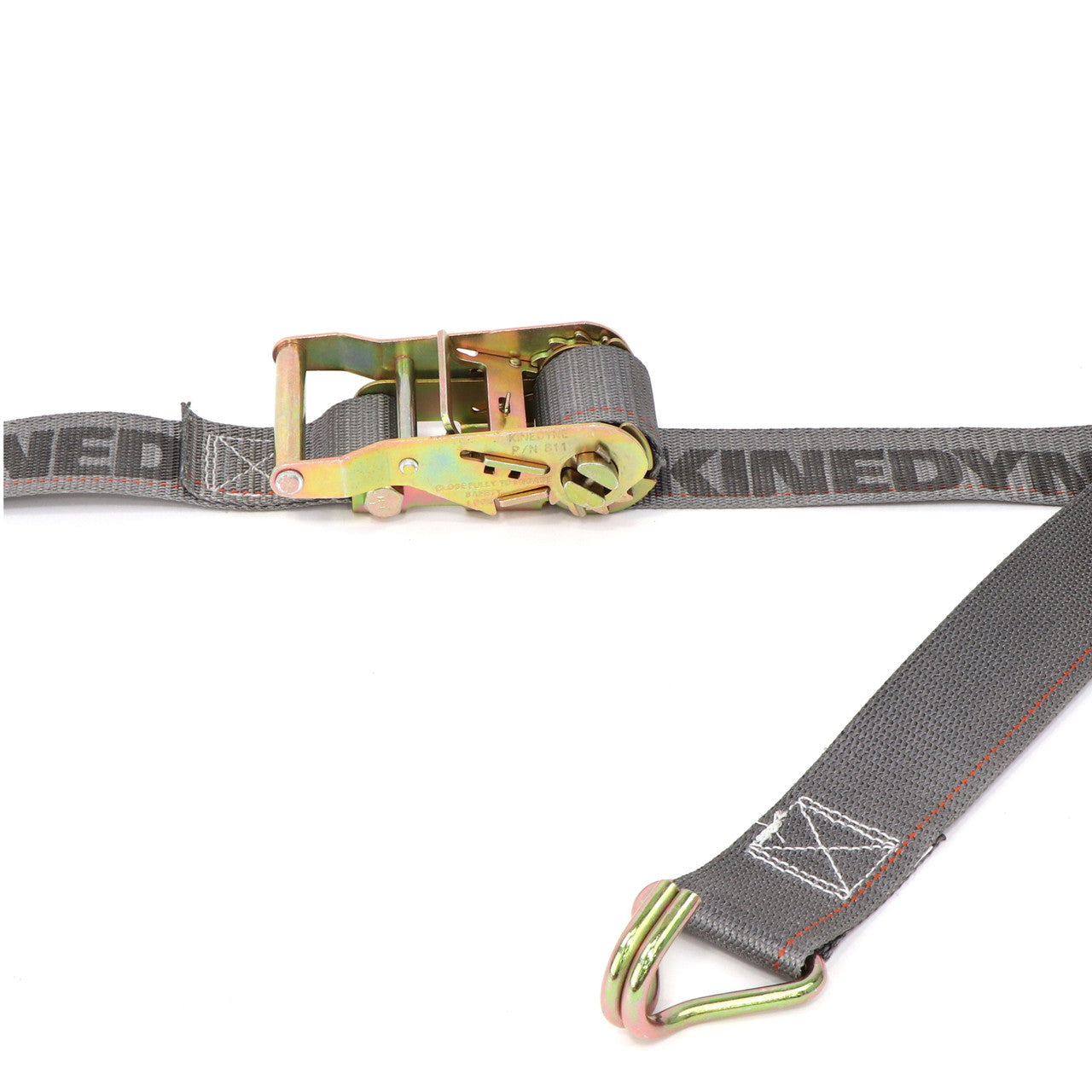
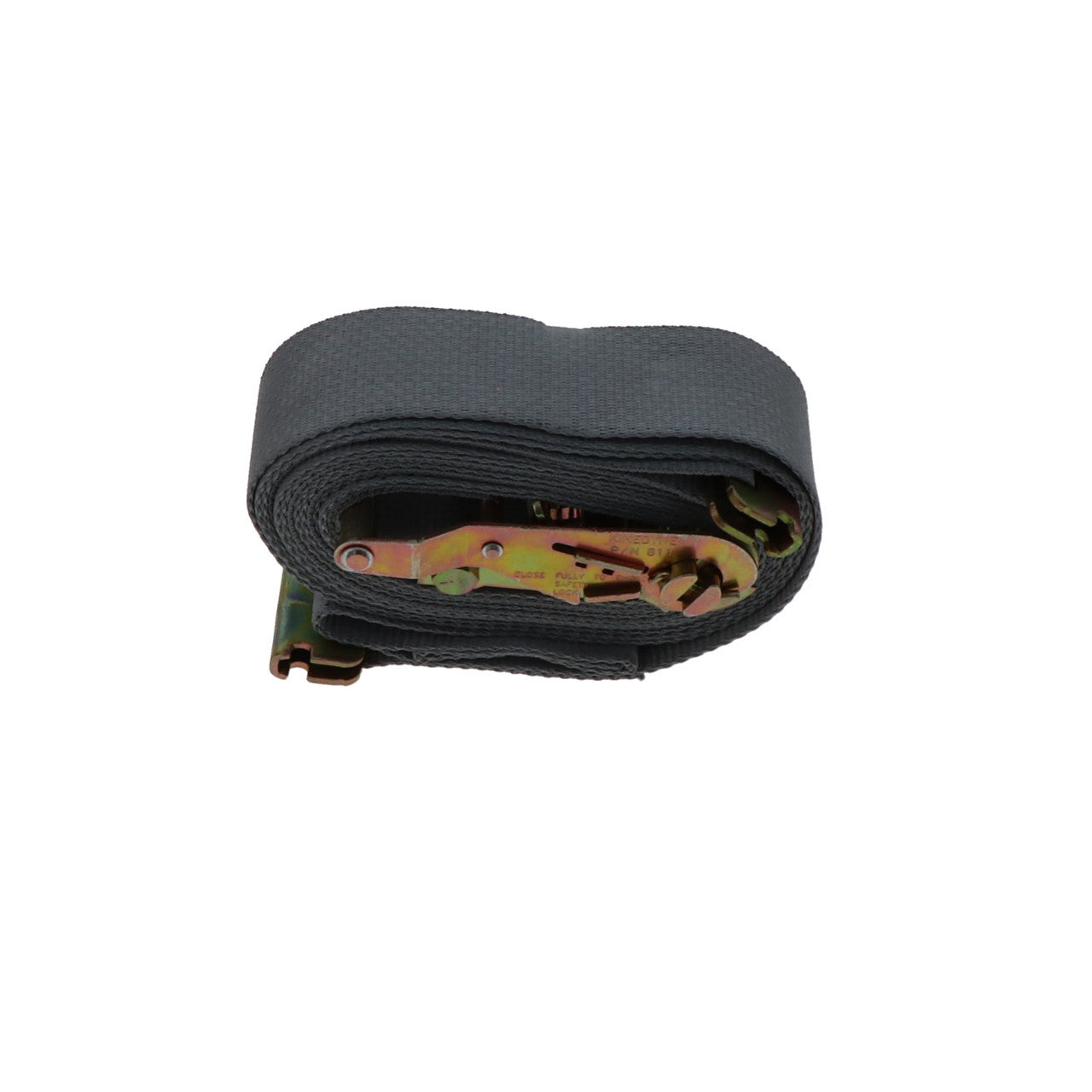
Handle leverage and the ratchet itself. The ratchet is a heat-treated carbon steel mechanism that multiplies hand force, and the handle length changes how much. Standard handles are compact for tight rail spacing; long wide handle ratchets, common on the Rhino MAX and 3 and 4 inch straps, give more leverage per stroke and are easier on the hands over a full trailer. Both take up and release the same way, and both are rated as an assembly, so the ratchet, stitching, webbing, and hooks share one WLL and the weakest sets the number. A ratchet that will not lock, a bent frame, or a sprung release pawl takes the whole strap out of service regardless of how good the webbing looks.
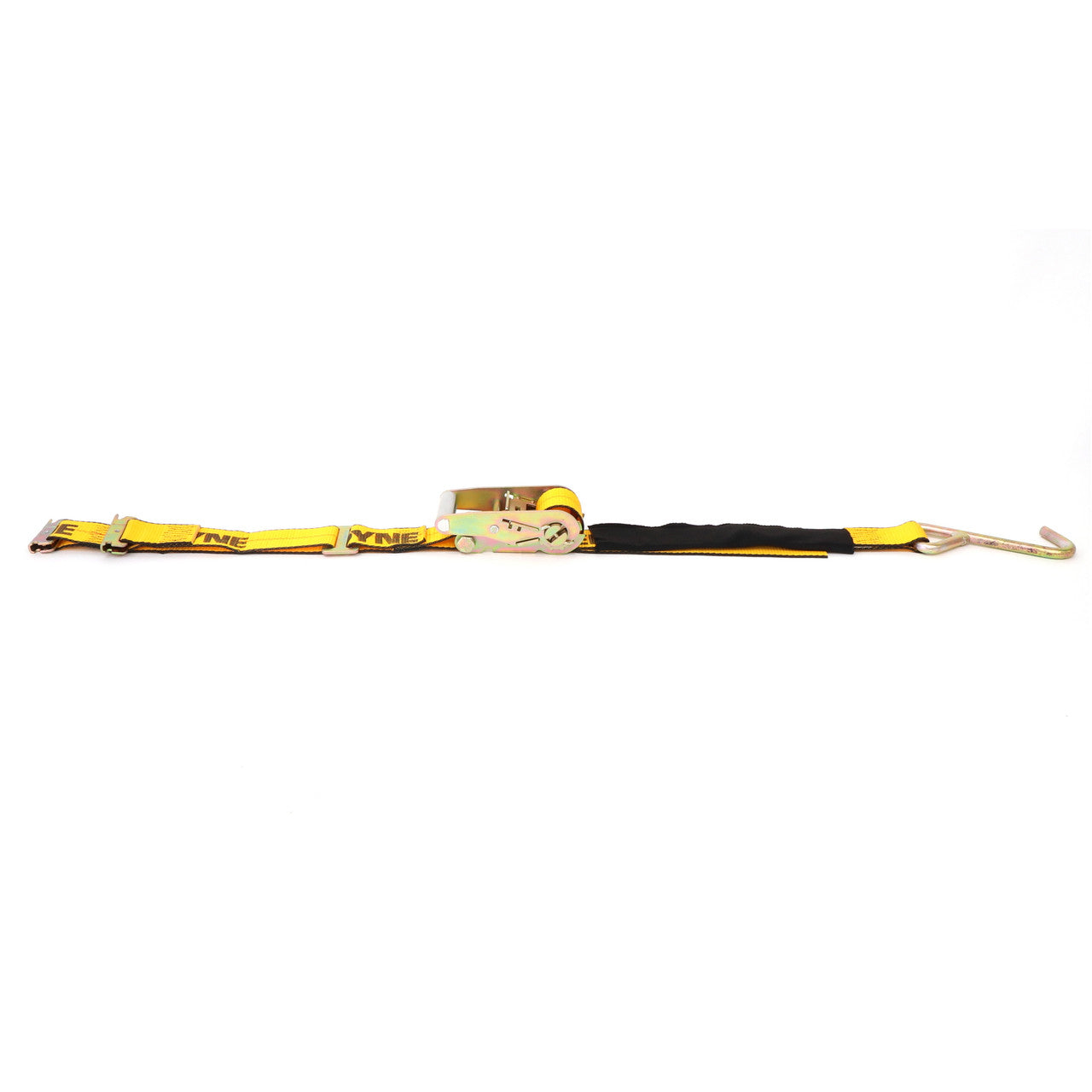
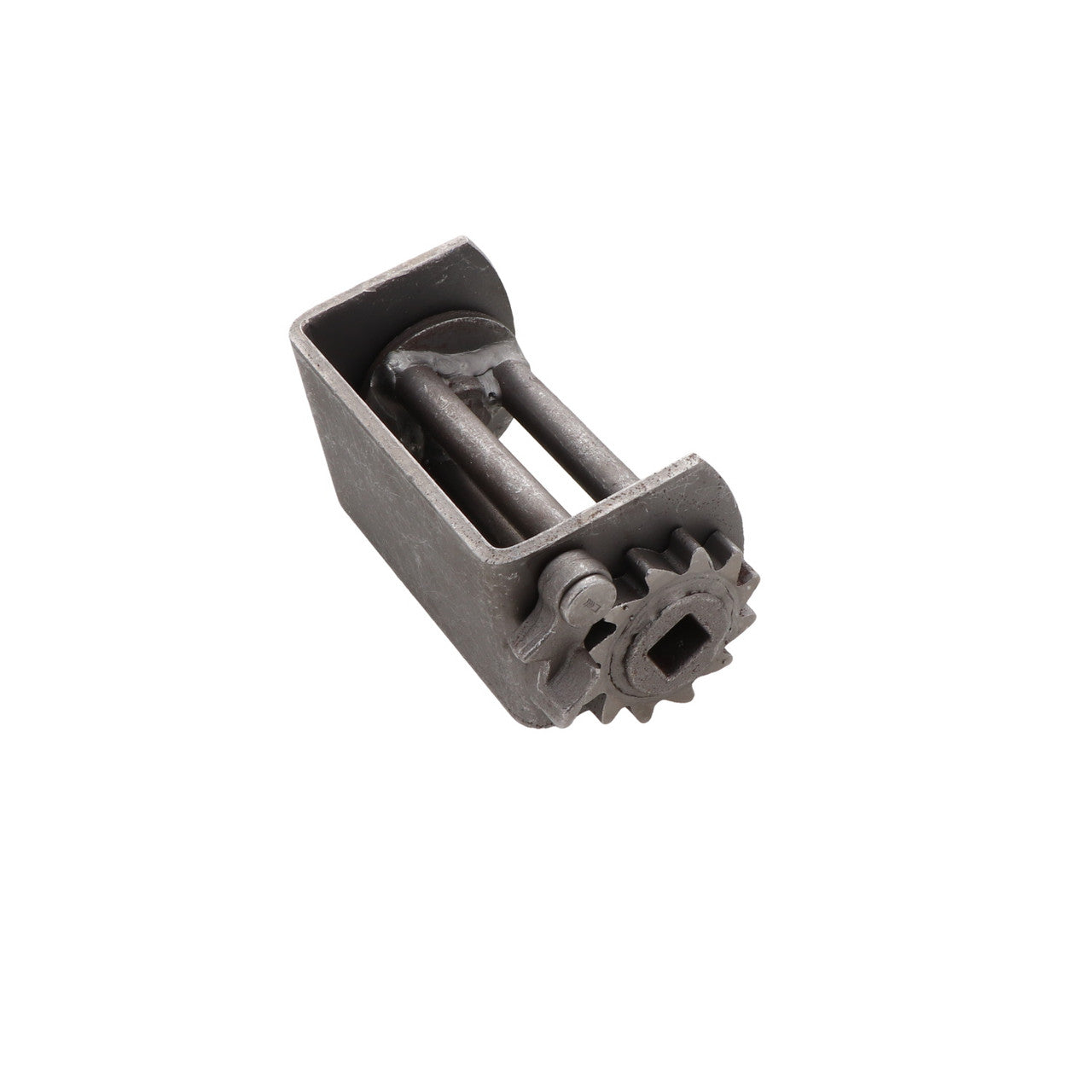
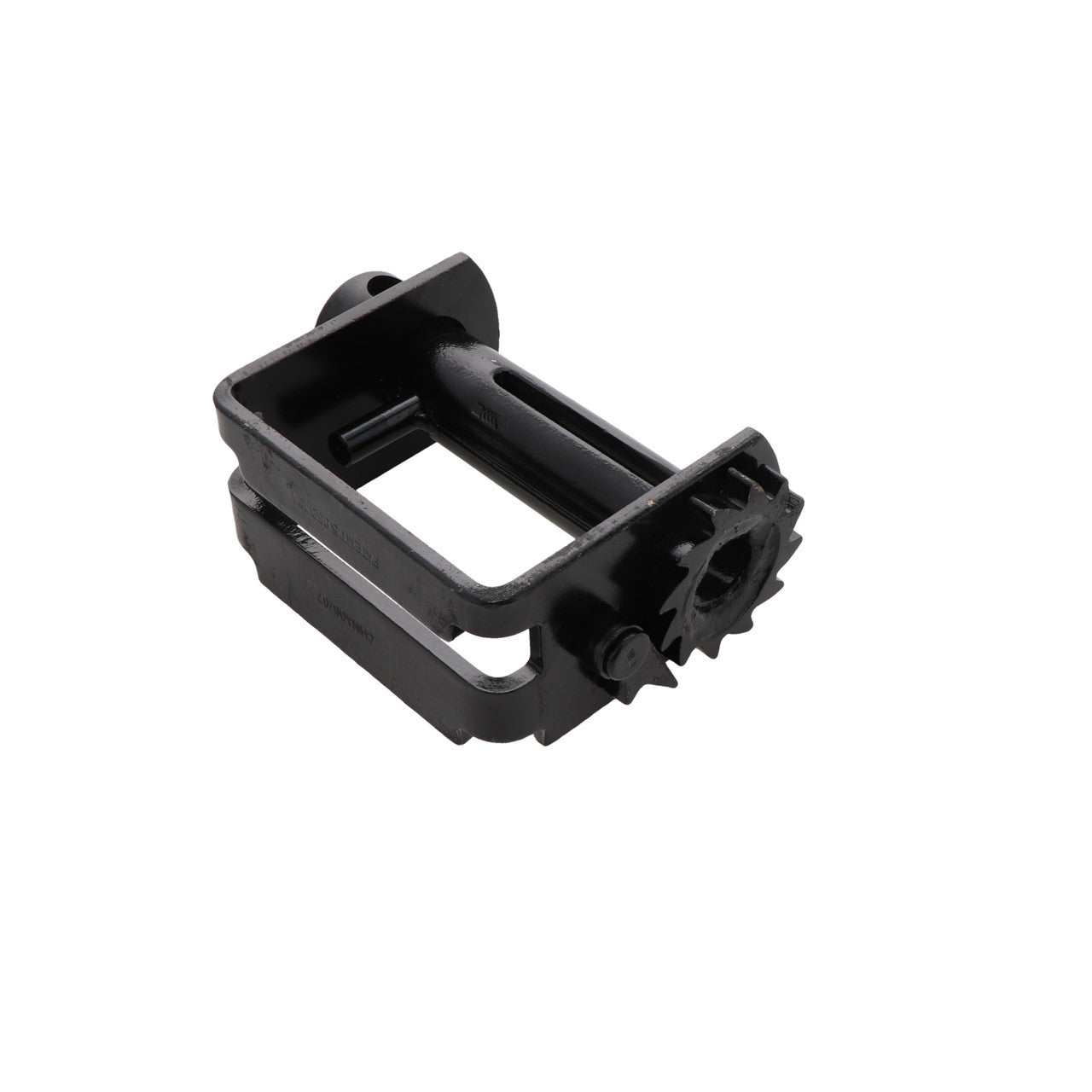
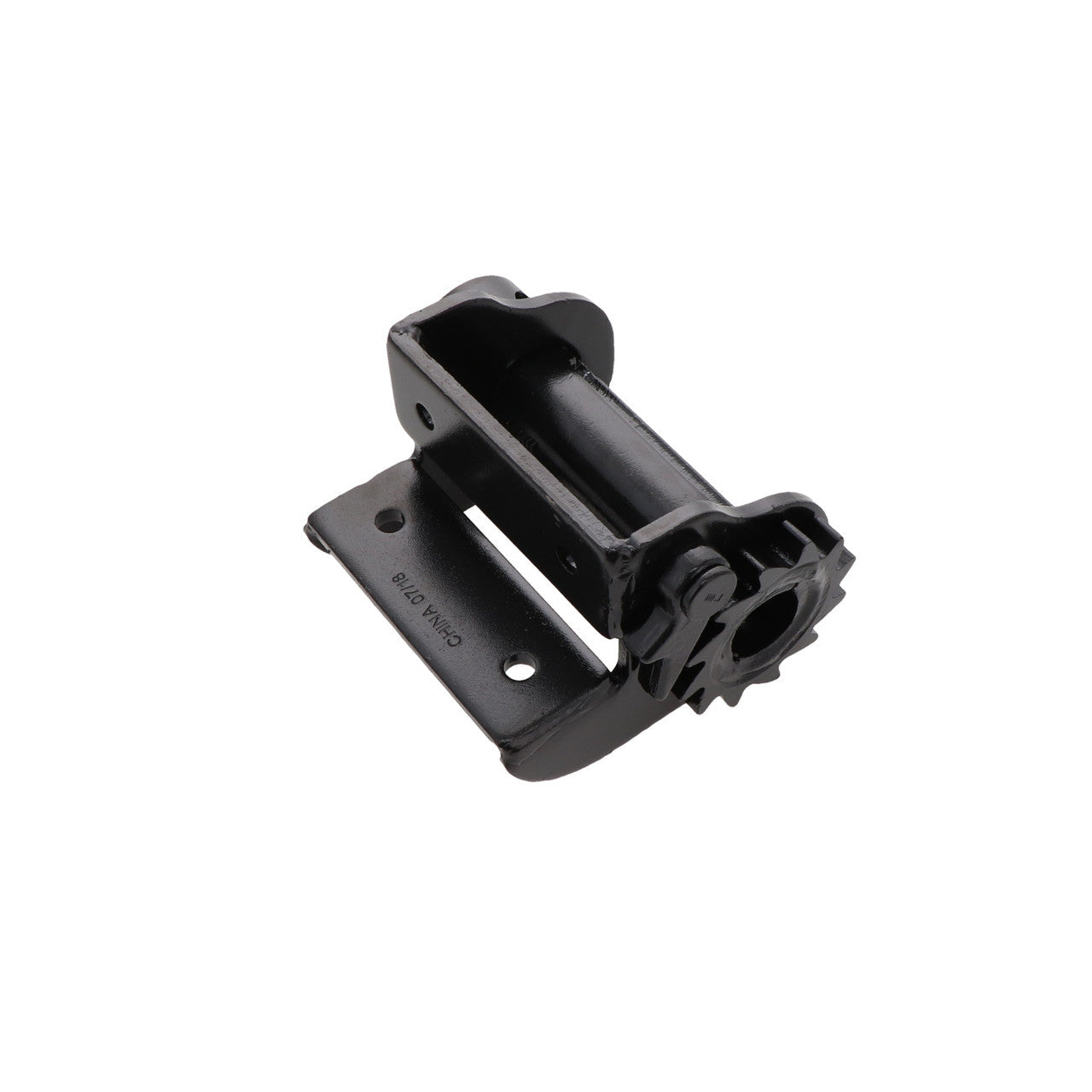
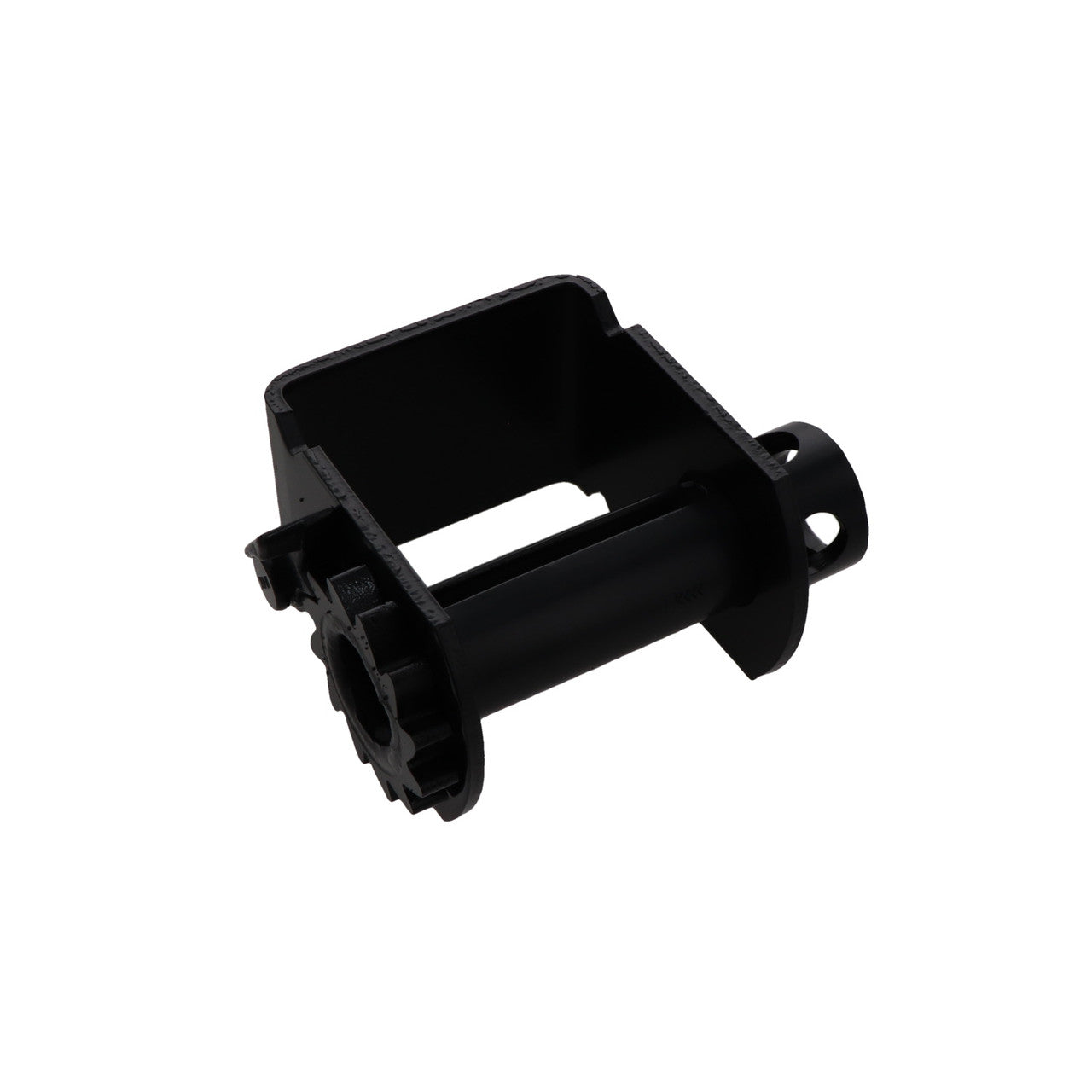
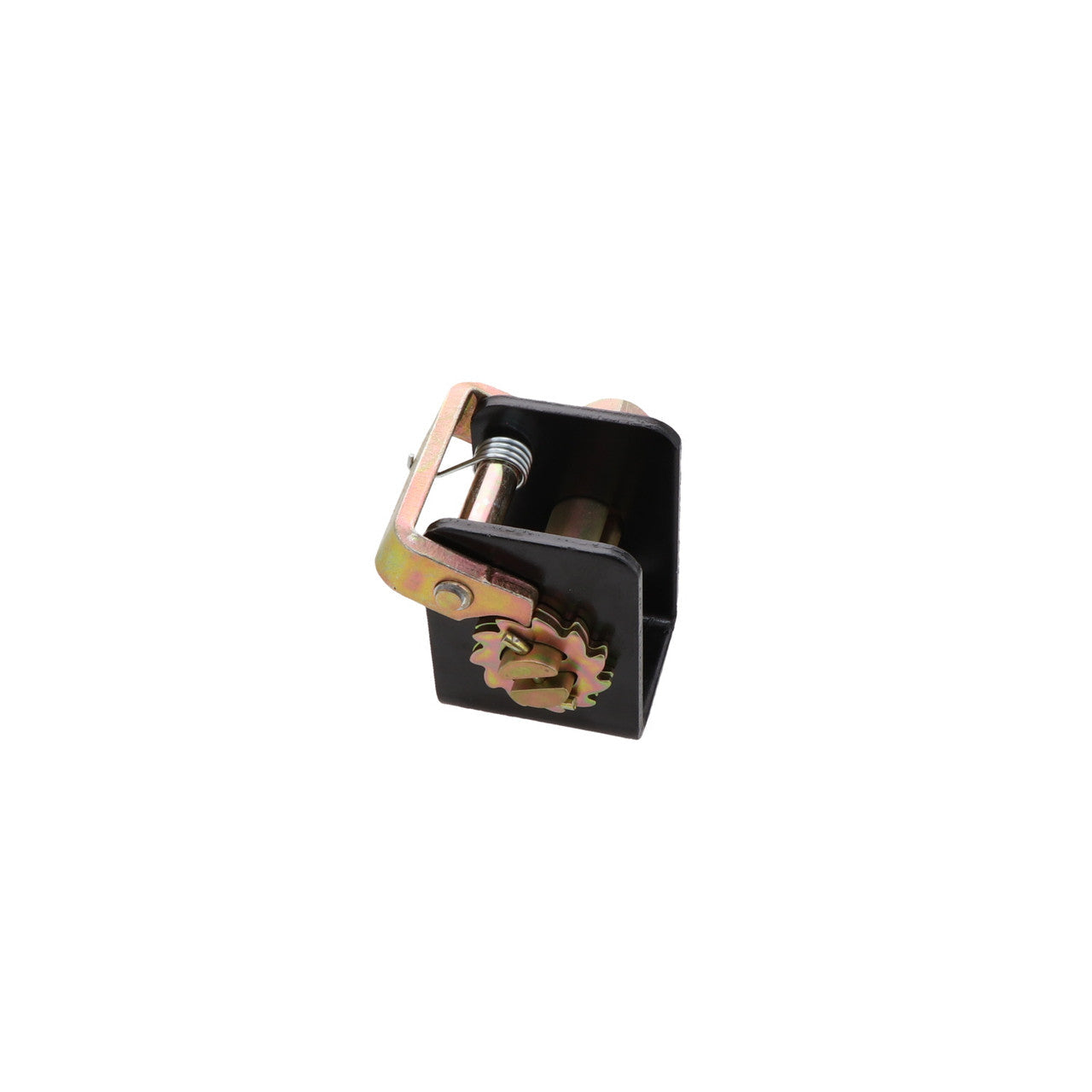
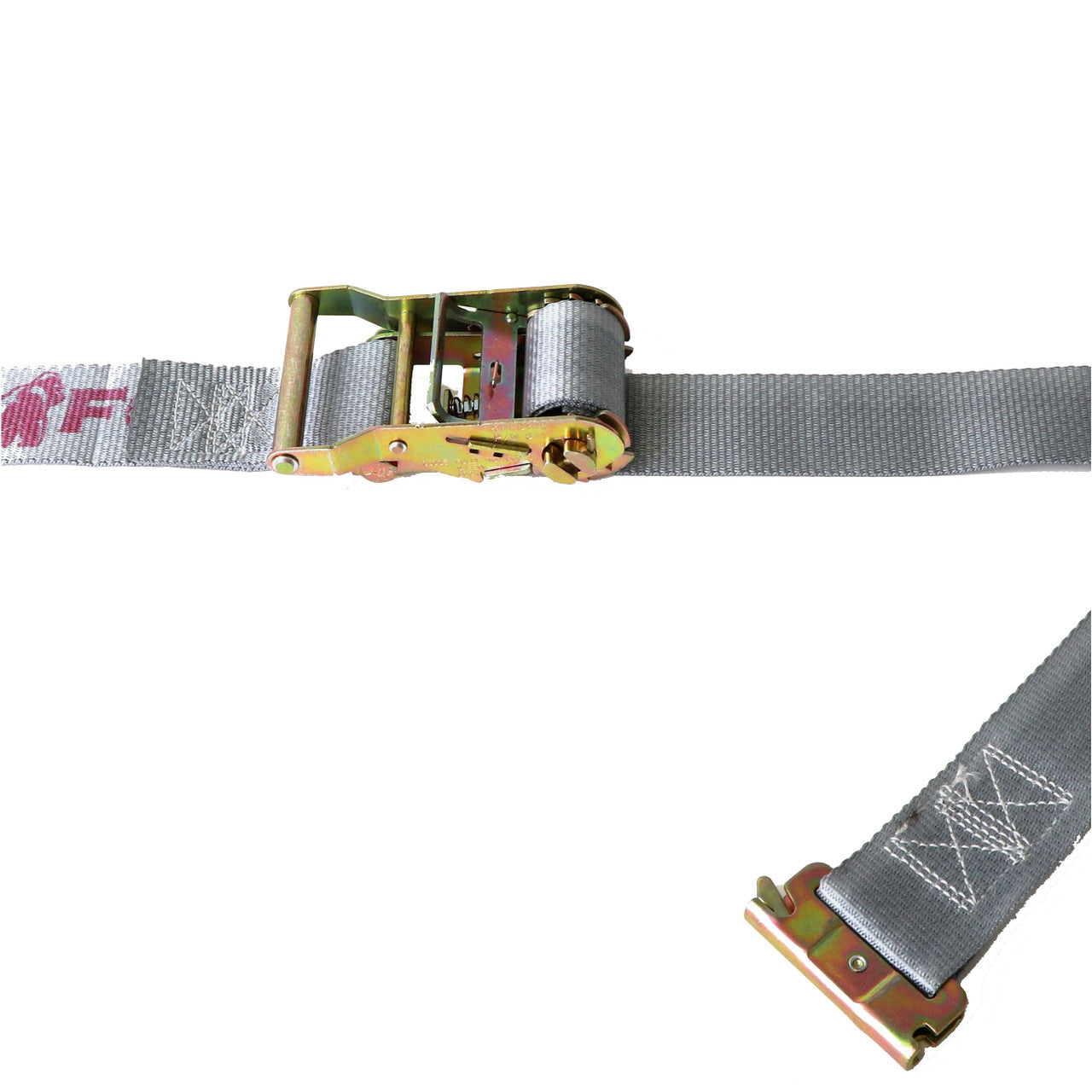
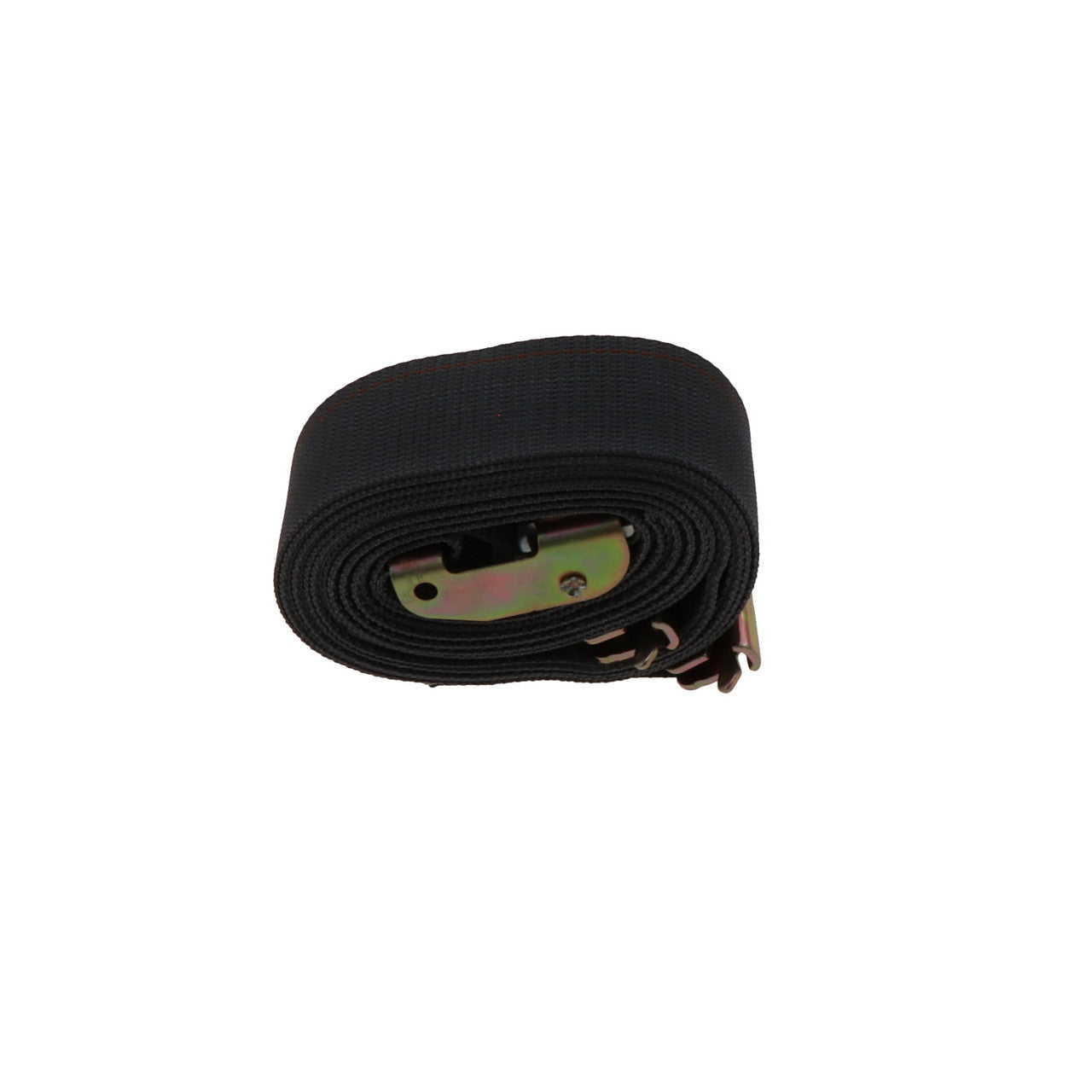
Logistic, winch, and endless variants. Some heavy straps trade the second hook for a different anchor. Spring loaded, butterfly, and plate trailer fittings click into the wall systems inside enclosed vans; a 2 inch spring loaded logistic ratchet strap starts near $10, or about $17 on the K-FORCE webbing, and pairs with the logistic tracks that receive it. When the tensioner should stay on the trailer instead of traveling with the strap, winch straps and their strap winches do the same job at lower per-strap cost. For bundling and anchorless wraps, endless ratchet straps form a continuous loop, and the StrapPak retractor models rewind their own slack before it drags.
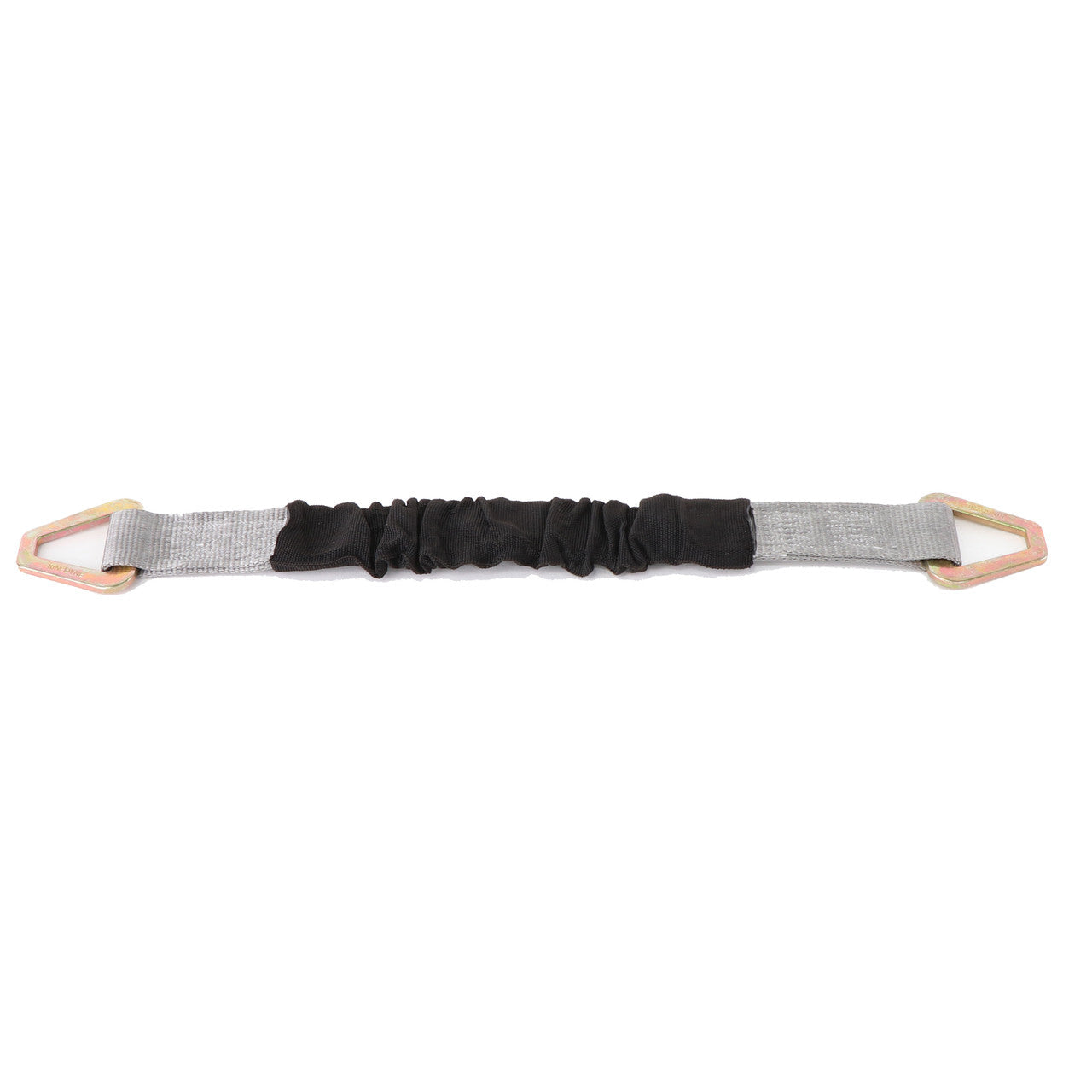
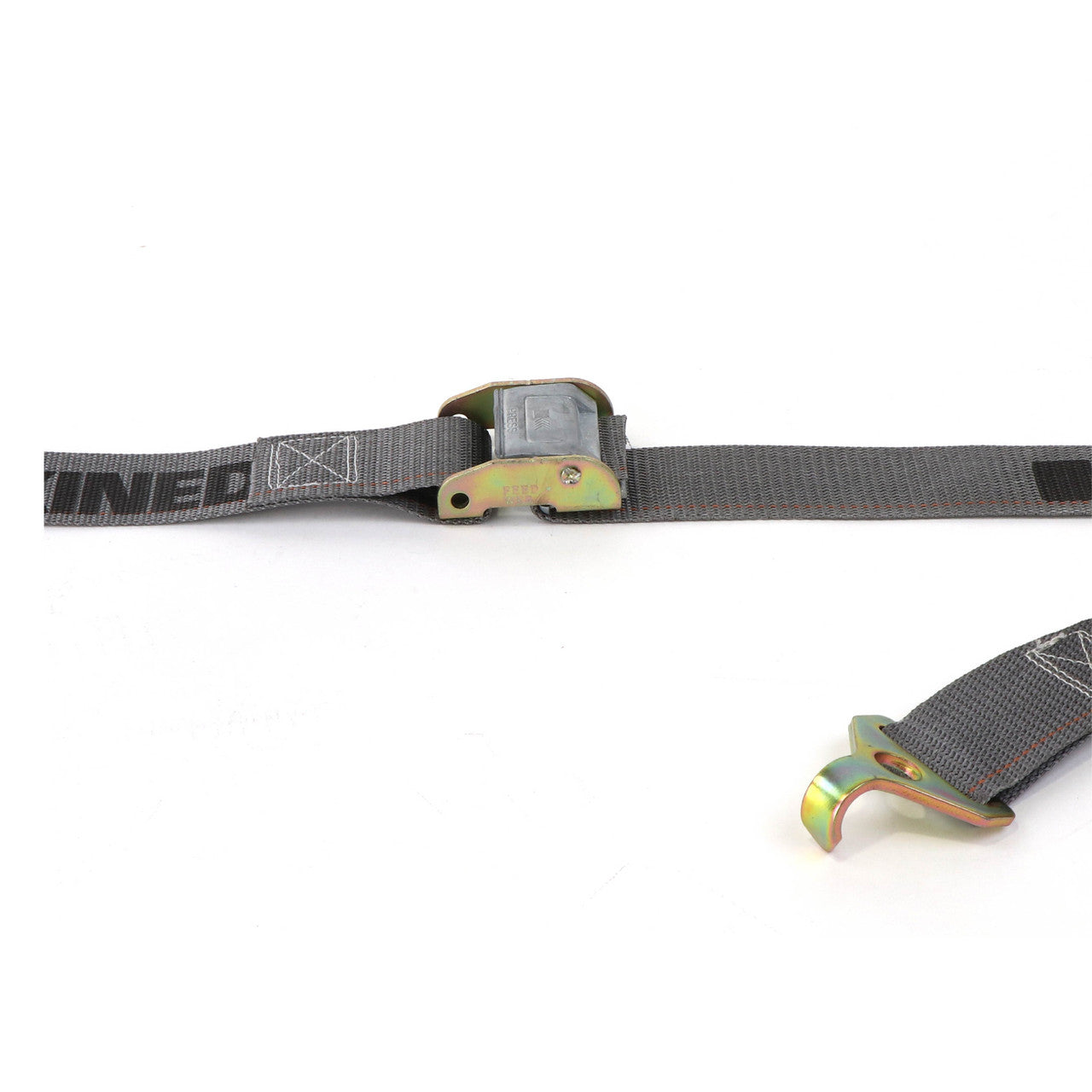
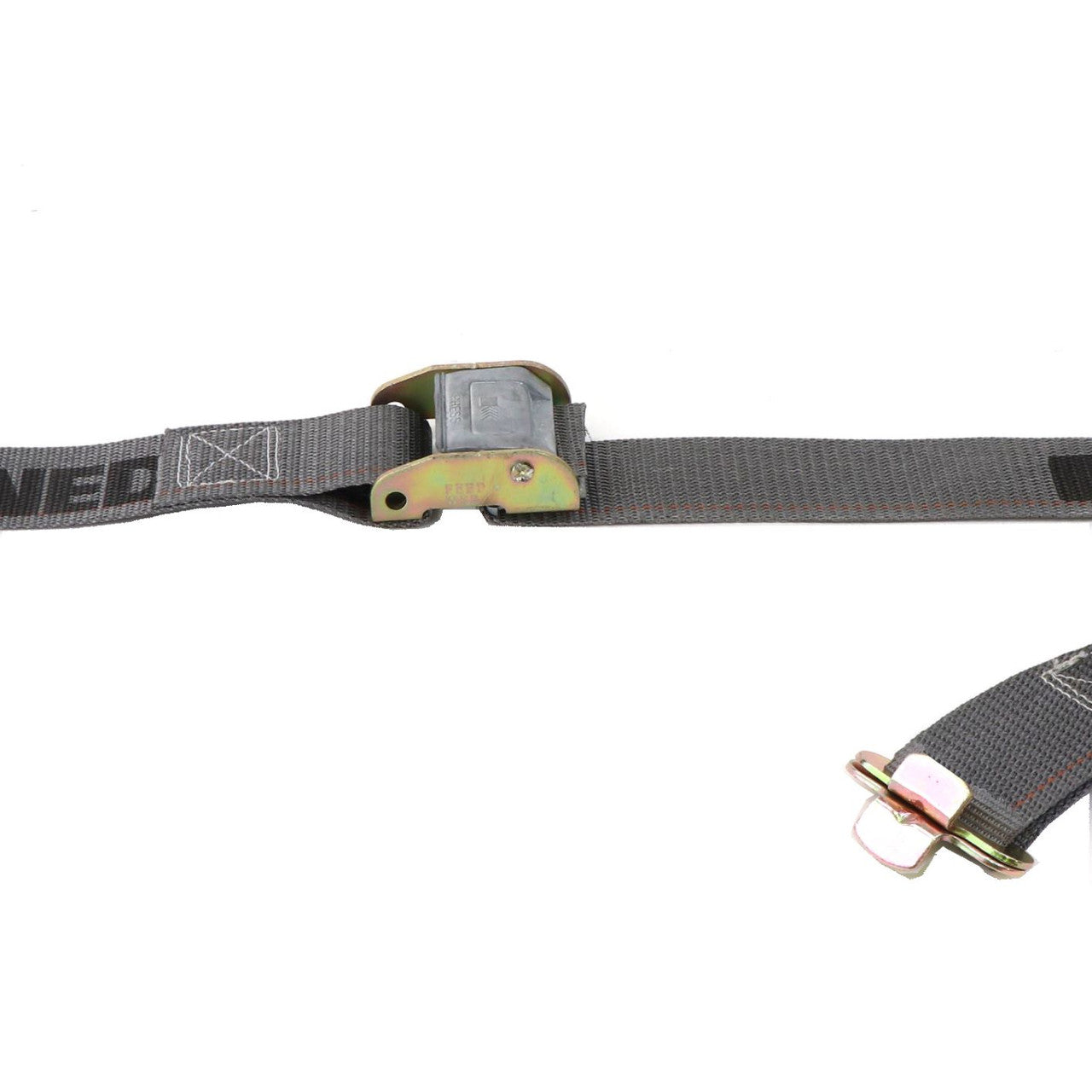
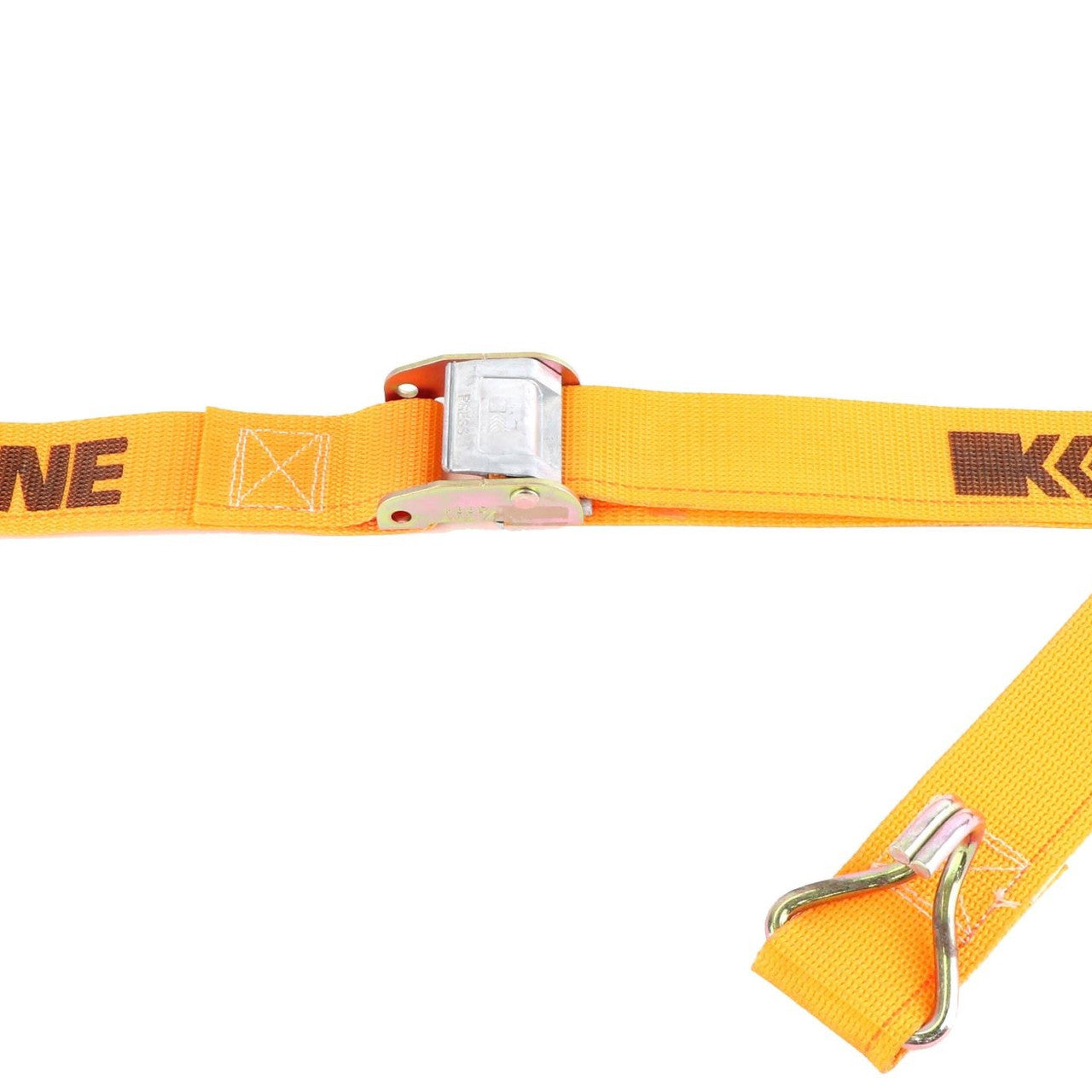
Protect the edge and retire on damage. Nearly every heavy strap failure starts where webbing crosses a corner, so edge guards are the highest-return add to any order: sleeves, rubber protectors, and VeeBoards live in corner and web protection. Inspect before every trip, because federal rule 49 CFR 393.104 prohibits any tiedown with damaged or weakened components, naming cuts and cracks specifically. Cuts, fraying, burns, UV bleaching, crushed hooks, and a ratchet that will not lock all retire the strap on the spot, and damaged webbing has no honest rating at any discount. For hulls, motorcycles, and finished surfaces a ratchet can crush, the hand-tensioned cam buckle straps are the right tool instead of a heavy ratchet.
Frequently Asked Questions
Width and rating. Heavy duty starts at 2 inch webbing and climbs from there: a standard 2 inch flat hook strap is rated 3,335 lb, the abrasion-resistant K-FORCE and Rhino MAX lines reach 4,000 lb in 2 inch, 3 and 4 inch straps run 5,400 lb, 4 inch K-FORCE builds hit 6,670 lb, and Lift-All Load Hugger tiedowns go to 15,000 lb. Anything below 2 inch is utility or powersports work, not freight.
They are different grades of the same polyester. Standard webbing is the baseline. Rhino MAX and K-FORCE are Kinedyne's abrasion-resistant lines that resist the friction damage from rails and chains and carry higher ratings, 4,000 lb in 2 inch. Lift-All Load Hugger uses high visibility Tuff-Edge webbing with woven-in edge protection at 5,000, 10,000, and 15,000 lb. Pay for the abrasion lines when straps work outdoors or see daily service.
Both 3 inch and 4 inch standard straps are rated 5,400 lb, and 4 inch K-FORCE builds reach 6,670 lb. Size the strap from the load, not the other way around: under FMCSA rules the aggregate WLL of your tiedowns must reach at least half the cargo weight, so a heavier machine either needs more straps or higher-rated ones. The full count and half-weight math are on the parent ratchet straps page.
Match the fitting to the anchor point; the webbing rating is identical across all three. Flat hooks grab flatbed rub rails and are the freight default. Wire hooks are slimmer for stake pockets and worn rails. Chain anchors end in a length of chain for machinery tie-downs and anchor points webbing cannot reach. Kinedyne offers all three patterns on the 3 and 4 inch and the K-FORCE lines, so the hook is a fit decision, not a strength one.
Both tension the same webbing to the same rating; the long wide handle gives more leverage per stroke and is easier on the hands over a full load, which is why it is common on Rhino MAX and on 3 and 4 inch straps. Standard handles are more compact for tight rail spacing. Choose the long handle for daily flatbed work and the standard for close-quarters anchor points.
As soon as it shows damage. Federal rule 49 CFR 393.104 prohibits any tiedown with damaged or weakened components, listing cuts and cracks by name. Cuts, fraying, burns, heavy UV bleaching, crushed or bent hooks, and a ratchet that will not lock all take the strap out of service. Damaged webbing has no reliable rating, so replace it and keep an edge sleeve on the next one.