Trailer Mover
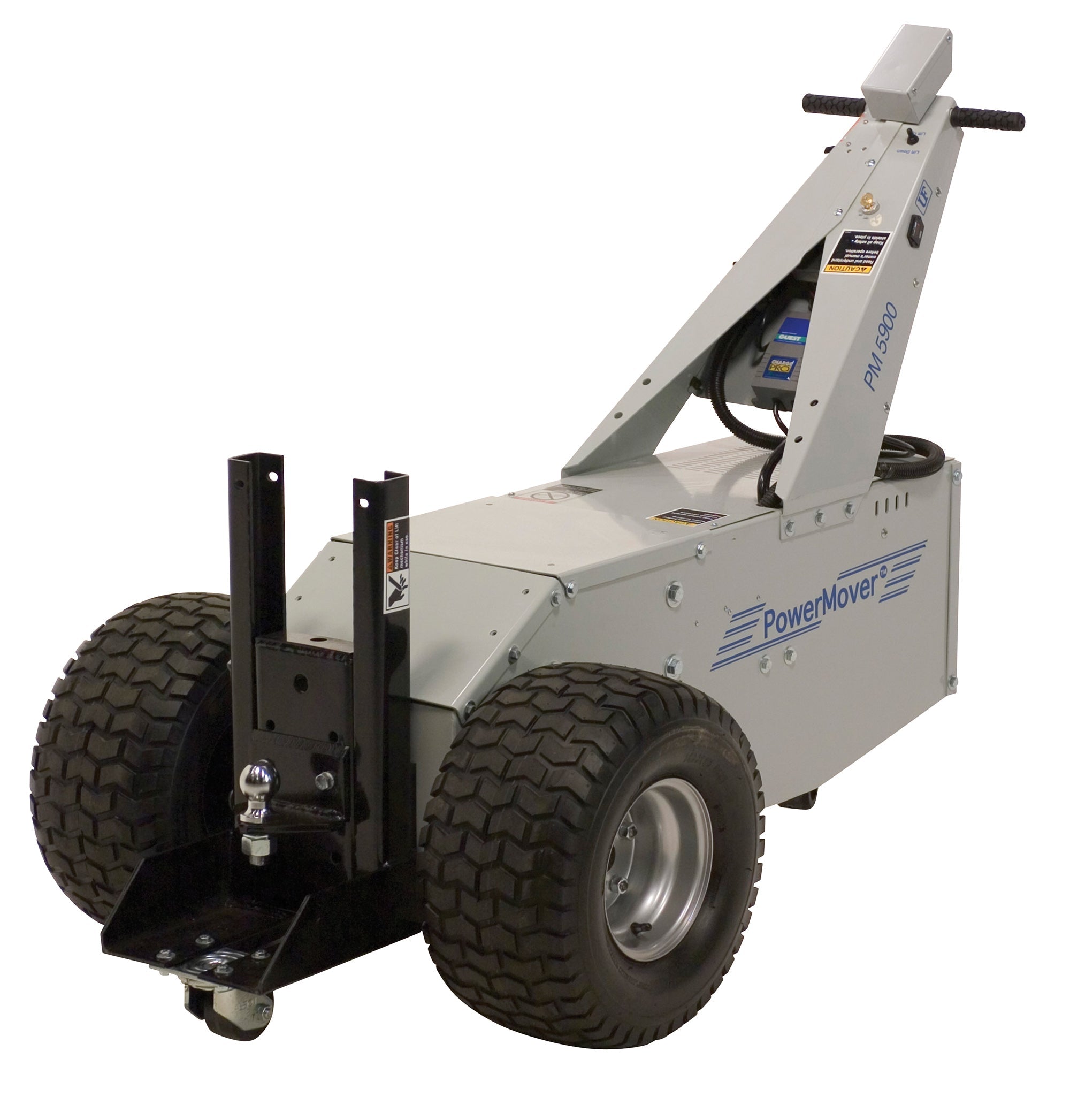
A trailer mover repositions a trailer that has no truck hooked to it, replacing the yard tractor, the forklift, or the four people you would otherwise put on the tongue. This collection covers the full range for that one job, from a hand-powered hitch adapter that lets one person nudge a light trailer around a flat yard, up through walk-behind electric tuggers, a gas-powered mover for outdoor grades, and the Power Move Masters that shunt loaded over-the-road trailers weighing tens of thousands of pounds. The towable Valley Craft Quad-Steer trailers that pair with a tugger to build a tow train live here too. Prices run from around two hundred dollars for the manual hitch mover into five figures for the heavy shunt units, so the spread is wide and the wrong end of it is expensive to guess at. Start by naming the heaviest trailer you actually move and the surface you move it on, then read down to the tier that matches.
Compare Trailer Movers
| Model | Price | Capacity | |
|---|---|---|---|
| Vestil Power Move Masters | $8,195 | 1,000-3,000 lb | View → |
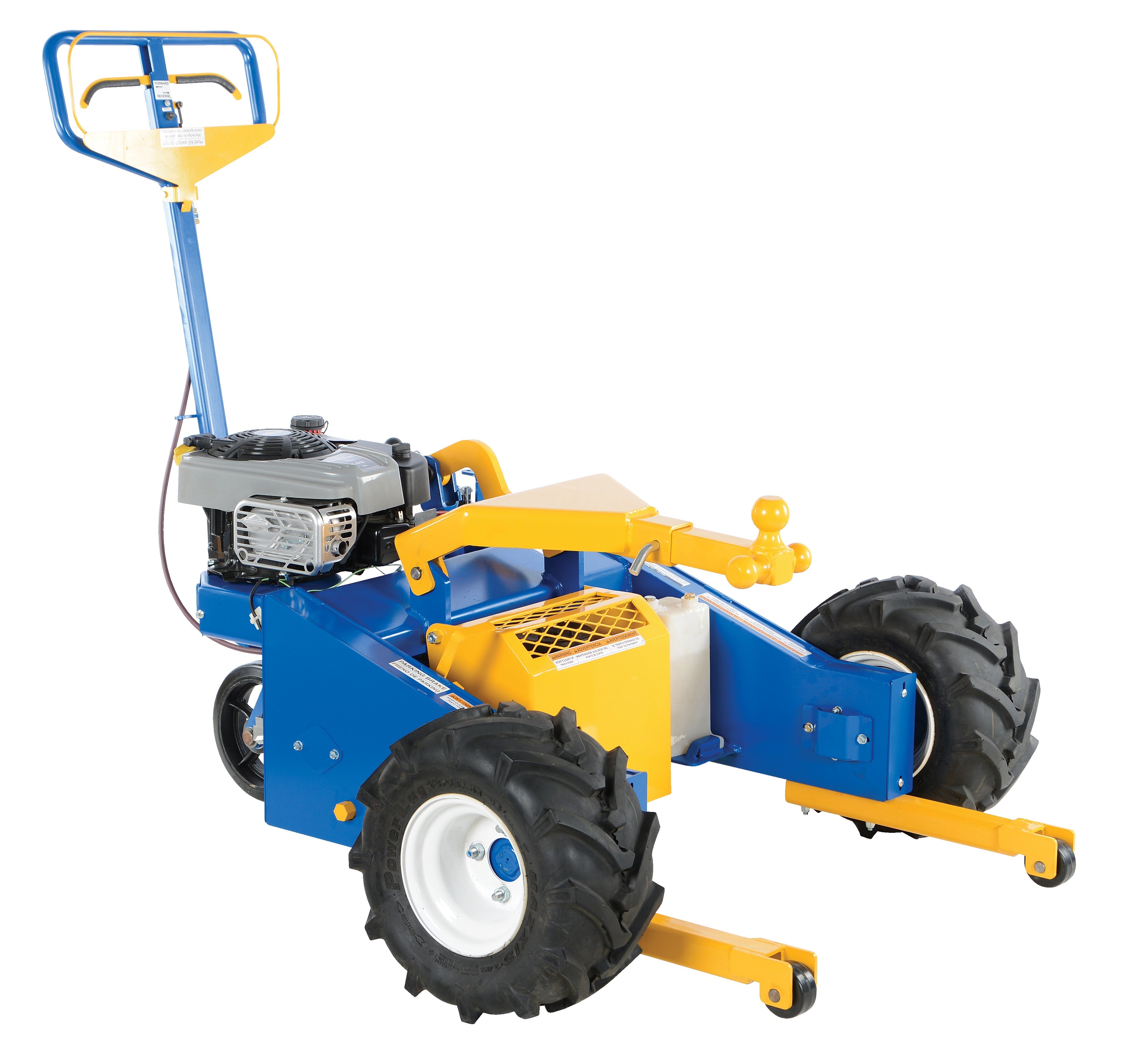
| Vestil Gas Powered Trailer Mover | $7,043 | 12,000 lb | View → |
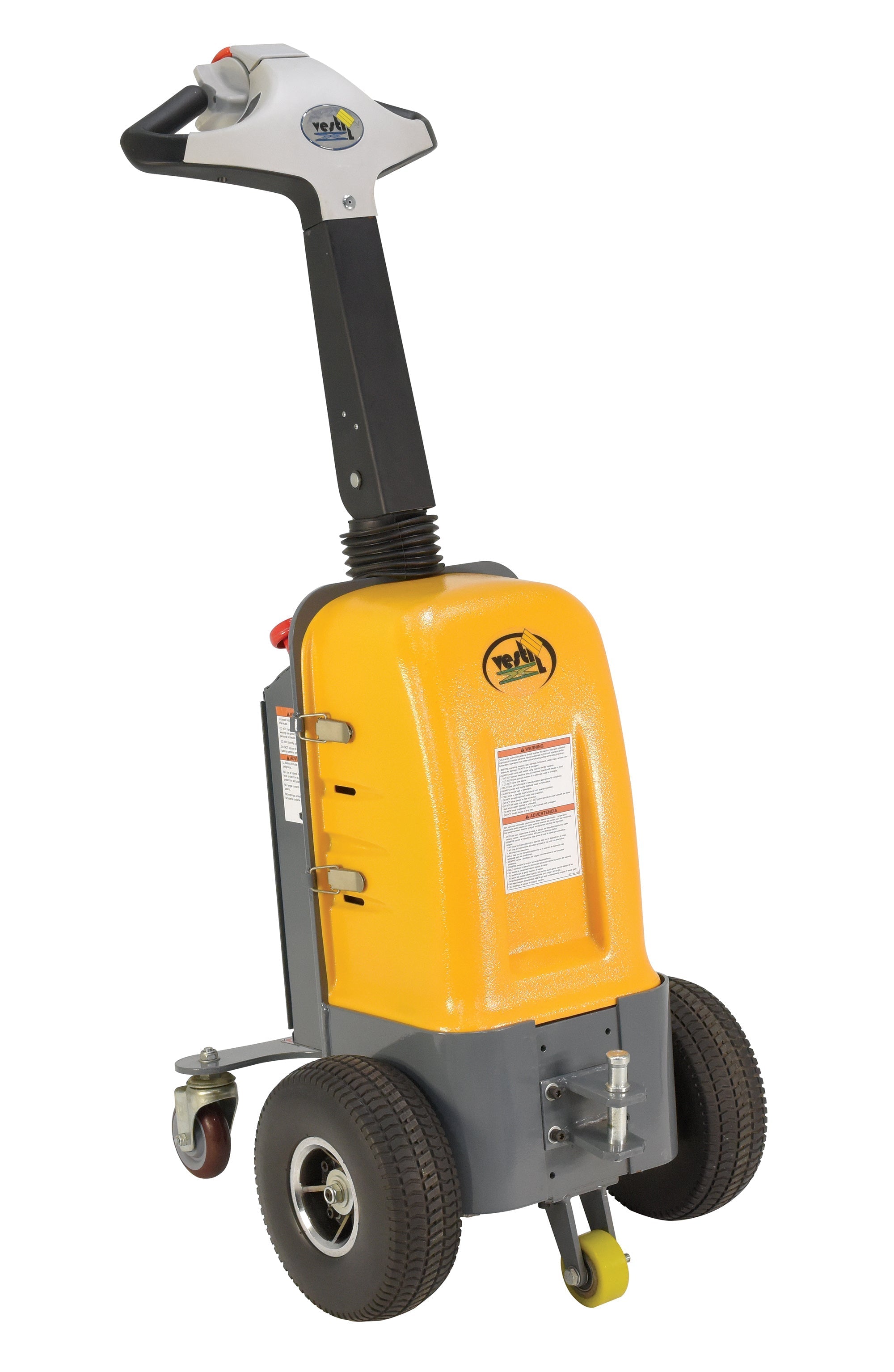
| Vestil Electric Powered Tuggers | $3,309 | 1,000-10,000 lb | View → |
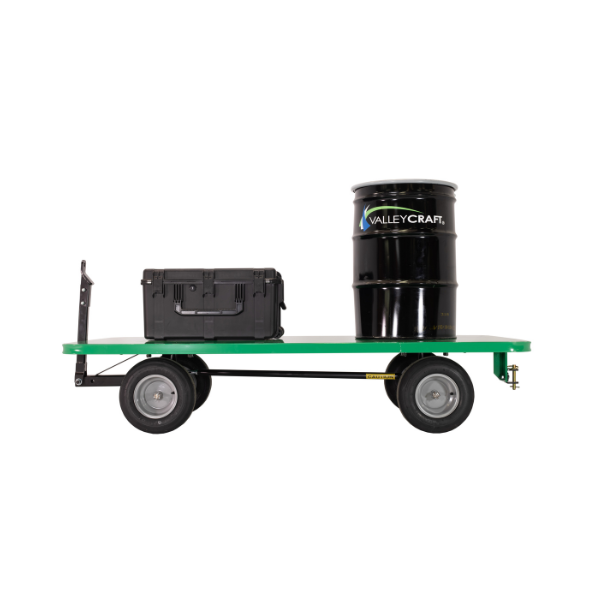
| Valley Craft Quad-Steer Trailers | $1,795 | 1,000-6,000 lb | View → |
| Vestil Hitch Trailer Mover | $206 | 1,000 lb | View → |
 In Stock
 In Stock
 In Stock
 In Stock
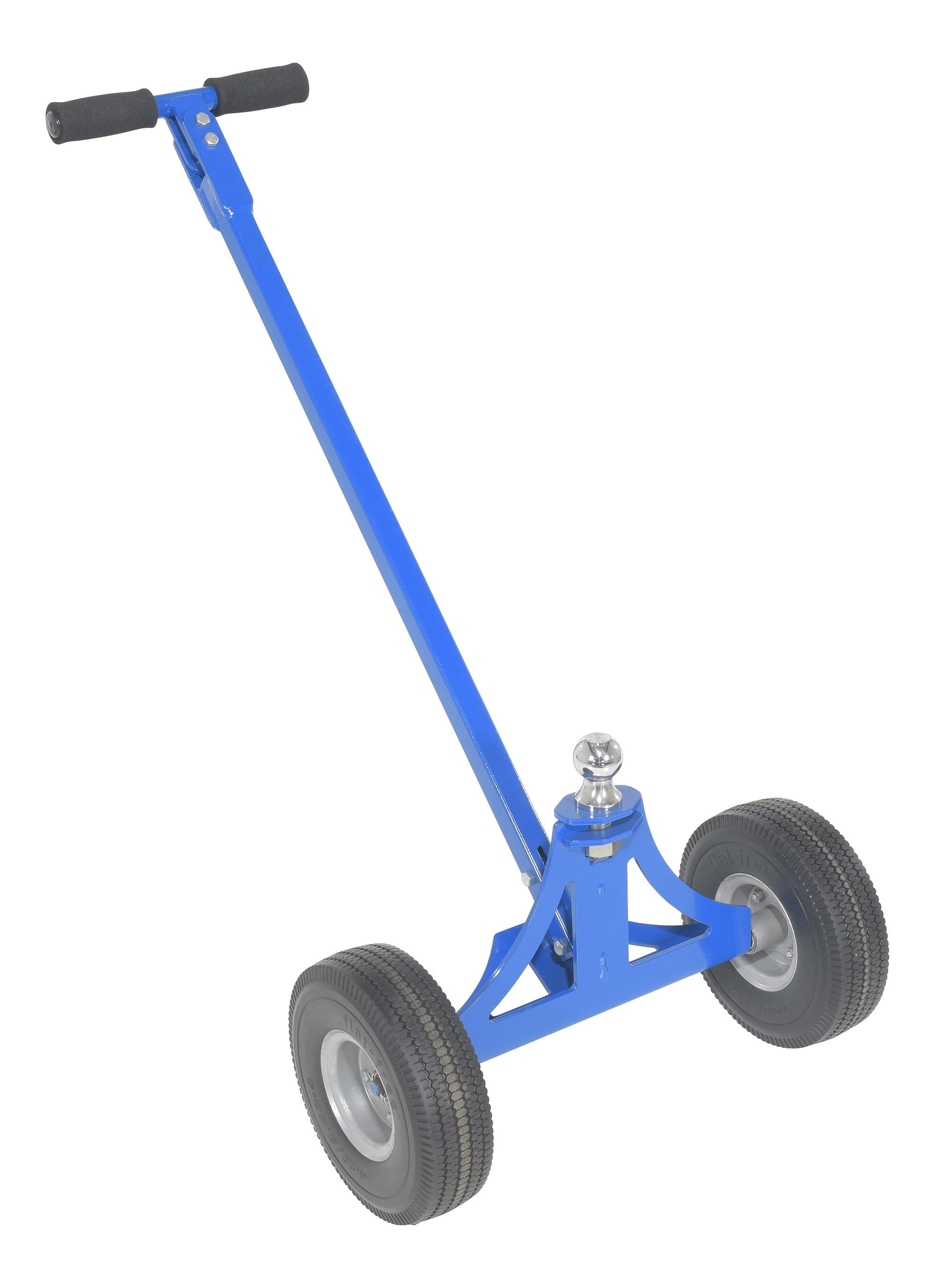 In Stock
Trailer Movers Buying Guide
Three tiers, set by pull weight. Movers split into three tiers, and pull weight sorts them. At the bottom, the Vestil hitch trailer mover is a hand tool near $204: a hitch-ball handle that converts a trailer coupler into something one person can steer and roll by hand, which works on flat smooth ground with a light single-axle trailer and stops working the moment there is a grade or real tongue weight. The middle tier is walk-behind powered, where the Vestil electric powered tuggers run roughly $3,200 to $9,500 on a 24V drive with rated capacities from 1,000 up to 10,000 lb in standard and heavy-duty builds, and the Vestil gas powered trailer mover sits near $7,000 for the yard where there is no charging or the distance punishes a battery. The top tier is the Vestil Power Move Masters, about $8,200 to $22,000, rated to pull 40,000 or 70,000 lb with a front lift that raises the trailer nose so you carry the tongue weight instead of dragging it. For the deck-and-load cousins of these machines, see the powered carts collection.
Rated pull is not the trailer's weight. The spec that decides the buy is drawbar pull, not the number stamped on a deck. Rolling resistance on smooth concrete runs roughly 3 to 5 percent of the load for rubber wheels, and less on hard polyurethane, so a 20,000 lb trailer needs on the order of 600 to 1,000 lb of steady pull just to roll on the flat, before you add a single degree of slope or a patch of gravel. A person tops out well below that, which is the entire reason the powered tiers exist and why the manual hitch mover is honest only on light trailers. Buy pull weight with margin over your heaviest loaded trailer, then add for grade, cold, and a rough yard surface. Underbuying a mover means it stalls on the one ramp you own, and a stalled trailer in a dock lane is worse than no mover at all.
The hitch: ball size and attachment. Match the mover to the coupler before anything else. The manual hitch mover ships in 1-7/8, 2, and 2-5/16 inch ball diameters, the three standard trailer coupler sizes, where 1-7/8 covers light trailers to about 2,000 lb gross, the 2 inch ball spans the broad 3,500 to 12,000 lb middle, and 2-5/16 handles the heavy 14,000 lb-plus couplers. Read the size stamped on your coupler and match it exactly, because a ball too small for the coupler can pop loose under load. The electric tuggers take either an adjustable ball mount hitch for coupler trailers or an adjustable double side hook for carts and non-coupler loads, so one tugger pulls both a trailer and a train of shop carts without a swap. Holding the trailer nose up while it sits parked or gets hitched is a separate job that belongs to a trailer jack, not to the mover.
The trailers that ride behind it. The Valley Craft Quad-Steer trailers are the towable half of the system, four-wheel steer industrial trailers rated 1,000, 2,000, 4,000, and 6,000 lb that track a tugger cleanly through tight turns instead of scrubbing their tires the way a rigid cart does. They run about $1,795 to $3,695 by capacity. String several into a tow train behind one electric tugger and a single operator moves in one pass what used to take a forklift several trips. They pair naturally with the platform trucks and hand trucks that handle the smaller one-off loads, and with the broader industrial carts and dollies range for everything a tow train does not cover. If the floor work is really about moving pallets rather than trailers, that job belongs to a walkie stacker or a forklift instead.
Powered movers bring OSHA training with them. A powered trailer mover, electric or gas, is a powered industrial truck under OSHA 29 CFR 1910.178, which defines the category as a mobile, power-propelled truck used to carry, push, pull, lift, stack, or tier materials and names tractors and motorized hand trucks in the same sentence. Section 1910.178(l) requires every operator to be trained and evaluated before running one, with a re-evaluation at least every three years, and that applies to a walk-behind tugger exactly as it applies to a sit-down lift truck. The manual hitch mover carries no such requirement, because nothing about it is powered. Budget the operator training alongside the machine and keep the records, since certification is one of the first things an inspection asks to see. And once the trailer is loaded and rolling on a public road, you are back under cargo securement rules, which the cargo control collection covers end to end.
Frequently Asked Questions
Size to drawbar pull, not to the trailer's rated capacity. Rolling resistance on smooth concrete is roughly 3 to 5 percent of the loaded weight for rubber wheels, so a 20,000 lb trailer needs on the order of 600 to 1,000 lb of steady pull to roll on the flat, and grade, cold, and rough surfaces add to that. Take your heaviest loaded trailer, buy a mover rated above the pull that weight implies, then leave margin for any slope or gravel in the route. The manual hitch mover is honest only on light single-axle trailers on flat smooth ground.
Yes. A powered trailer mover or tugger, whether electric or gas, is a powered industrial truck under OSHA 29 CFR 1910.178, which covers power-propelled trucks used to push or pull materials. Section 1910.178(l) requires documented operator training and evaluation before use, plus a re-evaluation at least every three years, and it applies to walk-behind tuggers the same as to forklifts. The manual hitch trailer mover is not powered, so it carries no certification requirement.
Electric tuggers are the default indoors: no exhaust, quiet, and a 24V drive that handles smooth-floor duty across a wide capacity range, as long as you can charge between shifts. Choose the gas-powered mover for outdoor yards where charging is impractical, where distances are long, or where grades and rough ground would drain a battery fast. For the heaviest shunting of loaded over-the-road trailers, the Power Move Masters are the tier to look at regardless of fuel.
The manual hitch mover comes in 1-7/8, 2, and 2-5/16 inch ball diameters, the three standard trailer coupler sizes. 1-7/8 suits light trailers up to about 2,000 lb gross, the 2 inch ball covers the common 3,500 to 12,000 lb range, and 2-5/16 handles heavy couplers rated 14,000 lb and up. Match the ball to the size stamped on your trailer's coupler exactly, since a ball that is undersized for the coupler can disconnect under load.
Yes. The electric tuggers accept an adjustable double side hook in place of the ball mount hitch, which lets them pull carts and non-coupler loads, so you can build a tow train. Paired with the Valley Craft Quad-Steer trailers, whose four-wheel steer tracks the tugger through tight turns, one operator can move several linked trailers in a single pass instead of running a forklift back and forth.