Bulk Ratchet Straps
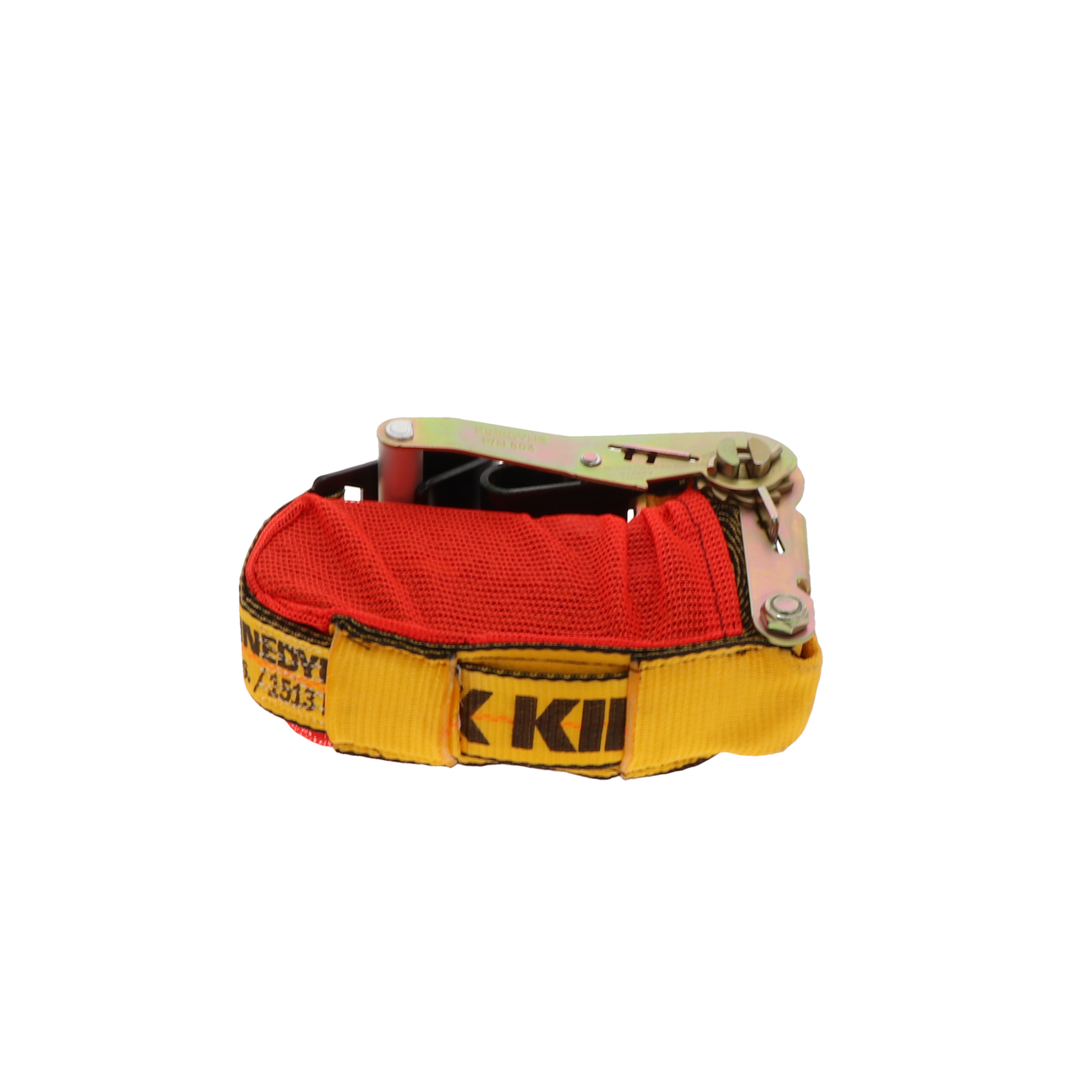
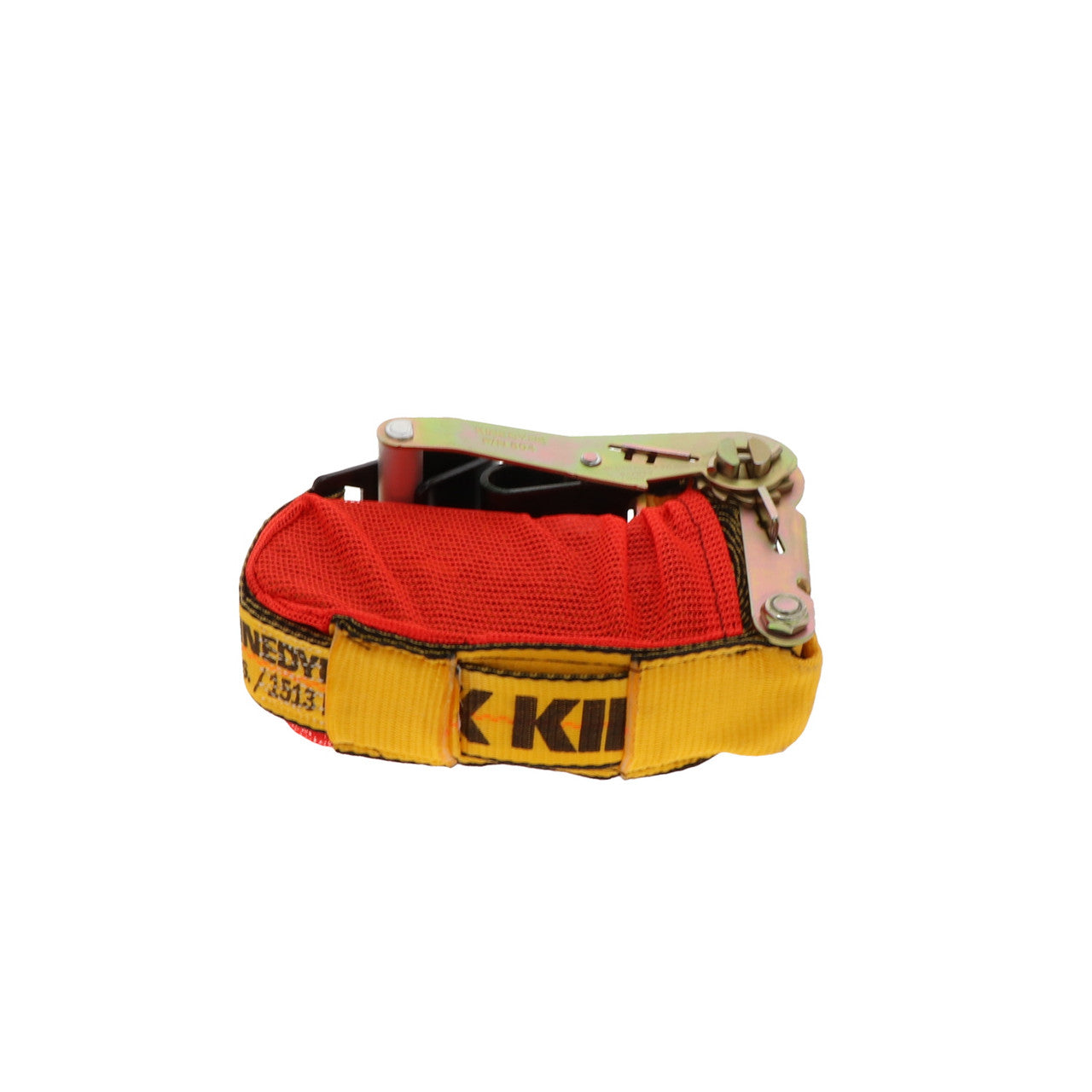
Buying bulk ratchet straps means buying the same strap many times over, so the small details that wear on you at scale are the ones worth getting right. This short line is Kinedyne's 2 inch flat hook ratchet strap paired with the StrapPak, a molded case that bags the loose end of webbing instead of letting it drag, whip, and fray on the road. Both straps here use industrial 2 inch polyester webbing rated to a 3,335 lb working load limit, come in 27 and 30 foot lengths, and carry a long wide ratchet handle that is easier on gloved hands than a standard bar. If you are standardizing a fleet or a shop on one repeatable strap, this is the flat hook workhorse to reorder by the case.
StrapPak Buying Guide
What the StrapPak adds to a plain ratchet strap. Every strap in this collection is a standard Kinedyne flat hook ratchet strap with one addition: a molded StrapPak case that clips onto the assembly. Its job is the loose tail of webbing left after you tension a strap. Kinedyne's own name for it is bag it, don't drag it, and that is the failure it prevents. Excess webbing that hangs off the trailer flaps at highway speed, drags on the pavement, and abrades until the strap is scrap well before its rated life is up. The StrapPak coils that tail into a case instead of a knot or a zip tie, and off the truck it doubles as a storage box that keeps the webbing out of grit, sunlight, and oil. If you do not need the case, the plain versions live in the parent ratchet straps collection.
Rate the assembly by its working load limit. Both straps here carry a 3,335 lb working load limit on 2 inch polyester webbing, with an assembly breaking strength near 10,000 lb. That 3 to 1 gap is deliberate: under the Web Sling and Tie Down Association standard, a web tie down's working load limit is set at one third of its minimum breaking strength, so you buy to the WLL and never to the breaking number. For over the road use, 49 CFR 393.108 goes further and rates the whole assembly at the lowest working load limit among its parts, the webbing, the flat hook, the ratchet, and the anchor point it clips to. A 3,335 lb strap hooked to a weaker D-ring is a weaker-D-ring tie down. Confirm the anchor first, then count straps to the load.
Flat hook, wide handle, and the two lengths. The flat hook is the broad, flat-throated fitting made to sit against a flatbed's rub rail, chain rail, or D-ring rather than seat in a narrow slot the way a wire hook does. Both straps use a long wide ratchet handle, which gives more leverage and more room for a gloved hand than a standard bar, a genuine difference over a day of tensioning in the cold. The two listings differ mainly in handle length and reach, and each is offered in 27 and 30 foot webbing. Pick the length by how far the strap has to travel from anchor to anchor over your typical load, and buy a little long rather than short, since the StrapPak swallows the extra tail anyway.
Buying a case of one strap. This is a narrow, honest line: two versions of the same yellow 2 inch flat hook strap, meant to be bought in quantity and run as a fleet standard rather than mixed with odd sizes. Standardizing on one working load limit and one fitting makes the DOT count math trivial and keeps every driver's kit interchangeable. If your loads call for a permanently mounted system instead of a portable strap, look at winch straps that thread a flatbed winch; if you need more than 3,335 lb per tie down, step up to wider webbing or transport chain. For general flatbed and material handling work at this rating, these are the straps to reorder without rethinking.
Frequently Asked Questions
It is a molded plastic case that clips to a Kinedyne ratchet strap and holds the loose tail of webbing left after you tension it. Kinedyne markets it as bag it, don't drag it: it stops the excess strap from flapping and dragging on the road, which is what abrades and shortens a strap early. Off the truck, the same case stores the coiled strap and keeps it out of dirt and sun.
3,335 lb, on 2 inch polyester webbing with an assembly breaking strength around 10,000 lb. The working load limit is one third of the breaking strength under the WSTDA web tie down standard, and it is the number you secure to. Never load a strap toward its breaking strength.
Both are Kinedyne 2 inch flat hook straps with a StrapPak and the same 3,335 lb working load limit; they differ mainly in ratchet handle length and reach, and each comes in 27 and 30 foot webbing. Choose the length by how far the strap must span your load, and the handle by feel.
Federal cargo securement rules (49 CFR 393.106) require the aggregate working load limit of your tie downs to be at least half the weight of the cargo, with additional minimum tie down counts set by the article's length and weight. At 3,335 lb each, two of these straps give 6,670 lb of aggregate WLL. Weigh the load, meet the half-weight number and the minimum count, and confirm every anchor point is rated to match.
Flat hook. The flat hook is broad and made to sit against a flatbed's rub rail, chain rail, or a D-ring. Wire hooks are narrower and seat in slots and pockets. If your anchor points are winch track or tight crevices, a wire hook strap suits them better; for standard rub rail flatbed work, the flat hook here is right.