Wheel Risers
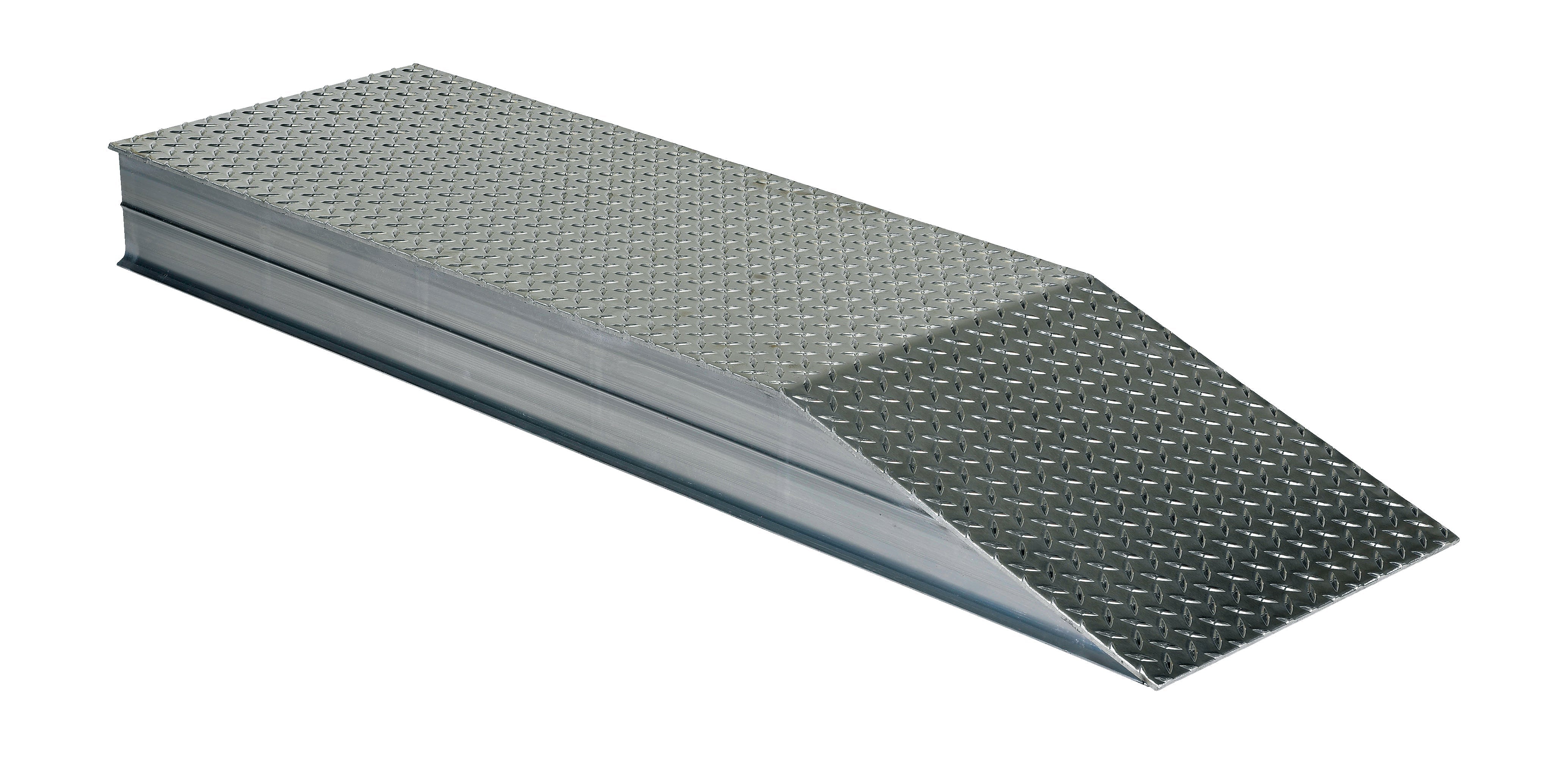
Wheel risers are the aluminum ramps that raise a low trailer the last few inches up to dock height so it can be loaded safely. They exist for one situation: a delivery truck or trailer that backs in sitting below the dock, where the leveler has to strain down to meet it and the ramp grade turns too steep for a forklift. This page carries the Vestil ATWR line, all-welded aluminum treadplate risers rated to 30,000 pounds per pair, in heights from roughly 6 to 12 inches, widths of 18 and 24 inches, and lengths that run past eight feet, with an optional roll-off guard. They are priced by size, from a few hundred dollars per unit into four figures. The guide below sizes them to your gap and covers the rules that still apply once the trailer is up.
Wheel Risers Buying Guide
What a riser fixes: the below-dock trailer. A truck that backs in below the dock is the problem this page solves. When a short delivery truck or a low trailer sits under the dock, the dock leveler has to reach down to meet it, and a standard pit leveler only serves about 12 inches above and below the installed dock height. Push past that and the ramp angle becomes a slope a loaded forklift should not climb, which is where product damage and tip-overs start. Wheel risers fix the height at the source: the driver backs the rear wheels up onto a pair of them and the trailer bed comes up the last several inches into the leveler's working range. The alternative, unloading a trailer that sits below the dock, is the condition every dock manual tells you to design out.
Sizing: height, length, and width to close the gap. Three dimensions decide the fit. Height is the lift you need, and the Vestil range steps from about 6 to 12 inches, so measure how far the trailer sits below dock and buy the step that lands it inside the leveler's range rather than over-lifting it. Length is the ramp the tires climb and the platform they rest on, offered from 48 up to 120 inches, and a longer riser gives a gentler approach and room for tandem axles to sit on the flat instead of bridging the incline. Width comes in 18 and 24 inch tread, with the wider deck the safer choice for wide-based or super-single tires. Match the height to the gap first, then give yourself length and width to spare.
Traction, capacity, and the roll-off guard. The Vestil ATWR risers are all-welded aluminum with a treadplate surface for positive traction wet or dry, rated at 30,000 pounds uniform capacity per pair. They are sold each, so a normal install is two units, one under each side's rear wheels, and the pair rating is the number to read against your loaded axle weight. Aluminum keeps a unit light enough for one person to reposition, which matters at a door that takes mixed trailer heights through the day. Order the roll-off guard option on the discharge end if drivers back onto them in low light or a hurry; it is a raised stop that keeps a tire from rolling off the far edge. Heavier 5/16 inch plate, in place of the standard 1/4 inch, is available on the larger sizes.
Chock first, then load. A riser sets the height; it does not hold the trailer. Once the wheels are up and the trailer is spotted, the same OSHA rules apply as any dock crossing: set the brakes and place wheel chocks under the rear wheels before a forklift boards, and use fixed jacks under an uncoupled trailer nose. For docks that never had the height to begin with, or trailers that vary too much to riser every time, price the portable dockboards and the rest of the loading dock hardware against a permanent leveler. Risers are the cheap, fast answer to a specific few-inch shortfall.
Frequently Asked Questions
Raising a low truck or trailer to dock height. When a delivery vehicle backs in below the dock, the driver runs the rear wheels up onto a pair of risers to bring the trailer bed into the dock leveler's working range, which is normally about 12 inches above or below dock height. That keeps the leveler ramp at a grade a forklift can safely cross and avoids the hazards of loading a trailer that sits below the dock.
30,000 pounds uniform capacity per pair. They are sold each, so a standard install is two units, one under each side's rear wheels. The 30,000 lb figure is the rating for the pair, read against your loaded axle weight, not a single unit.
Measure how far the trailer sits below the dock, then pick the height that lifts it back into the leveler's range without overshooting. The Vestil range steps from about 6 to 12 inches. If the gap is larger or varies a lot between trailers, an adjustable dock leveler or a dock lift is a better long-term fix than a fixed riser.
No. A riser sets height; it does nothing to stop the trailer rolling. You still set the truck's brakes and place wheel chocks under the rear wheels before a forklift boards, per OSHA 1910.178, and you still jack an uncoupled trailer nose. The riser and the chock do different jobs at the same wheel.
A raised stop on the discharge end of the riser that keeps a tire from rolling off the far edge if a driver backs on too far. It is worth adding where trailers are spotted in low light or under time pressure. The risers are aluminum treadplate for traction either way.