The Best Pallet Racking Types Compared
The best pallet racking depends on how you store and pick. Selective racking suits most warehouses: every pallet is directly accessible and it's the cheapest per position. Cantilever racking is the answer for long loads like pipe and lumber. Gravity-flow racking gives dense, first-in-first-out storage for high-turnover goods. Match the system to your inventory and rotation, not the other way around.
| Rank | Model | Price | Capacity | |
|---|---|---|---|---|
| #1 | Vestil Teardrop Pallet Rack Starter Bay | $1,149 | 5,000 lb/level | View → |
| #2 | Vestil Cantilever Rack Kits | $2,071 | 1,000-2,800 lb/level | View → |
| #3 | Vestil Pallet Rack Gravity Flow Shelves | $1,363 | 25 lb/sq ft | View → |
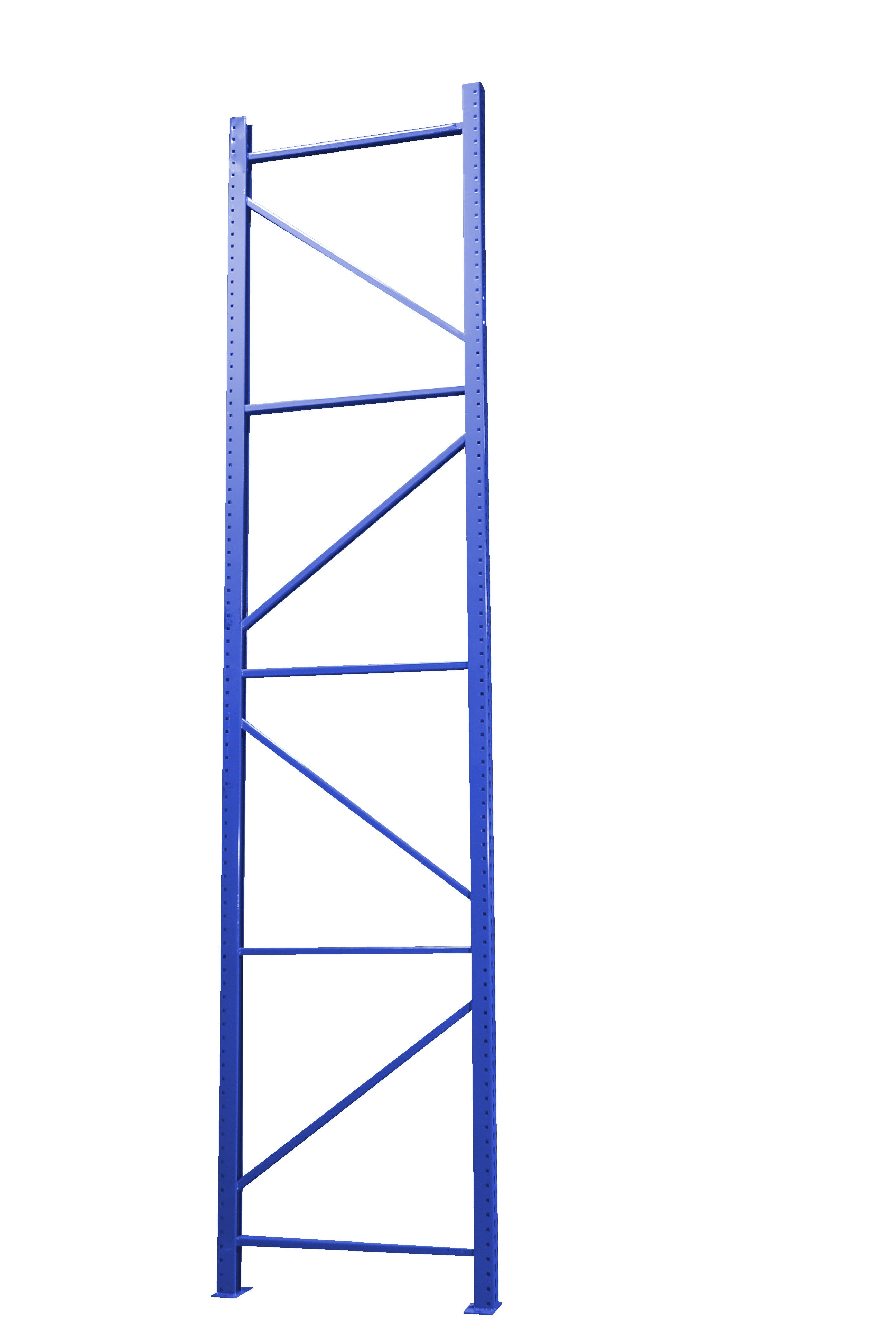
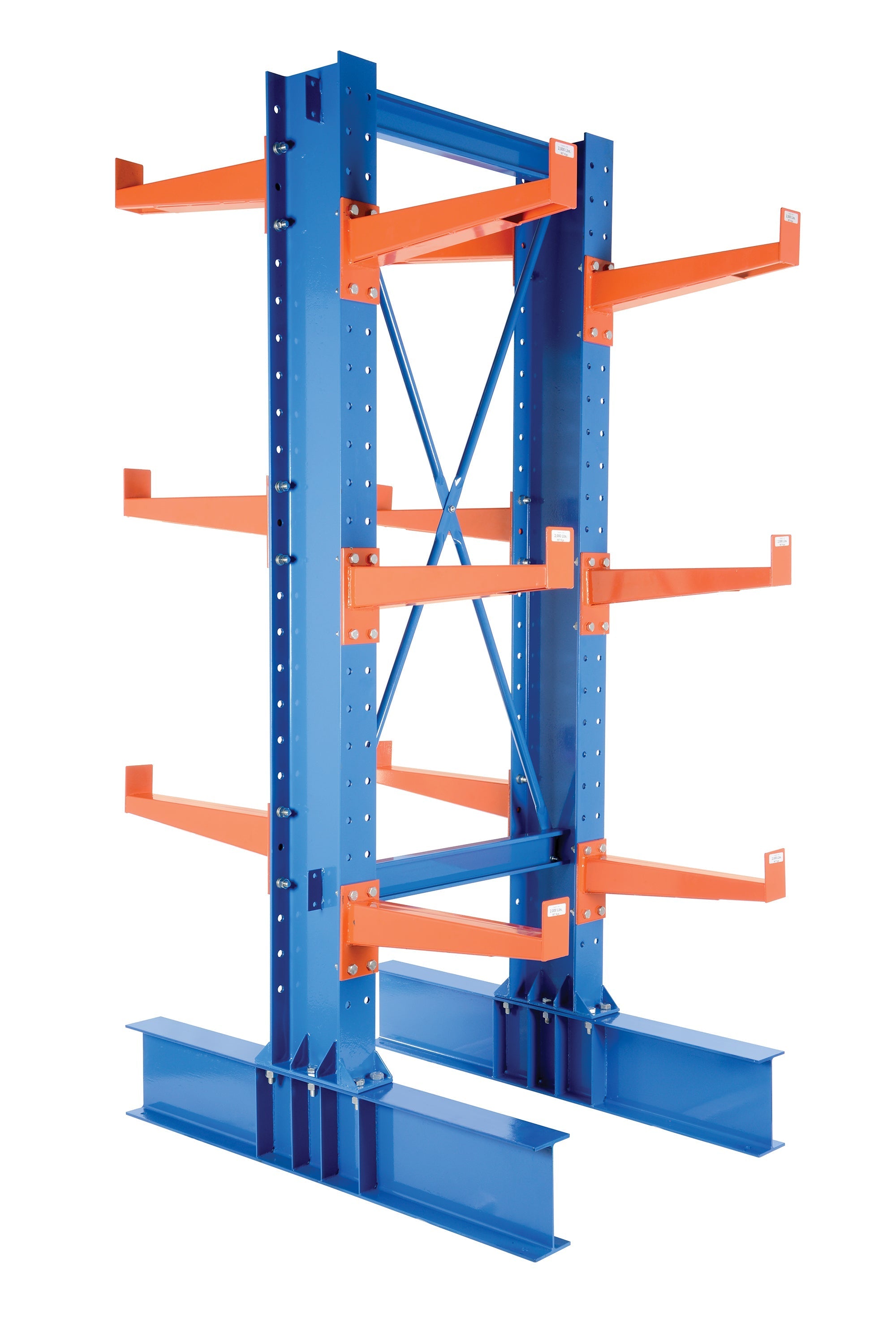
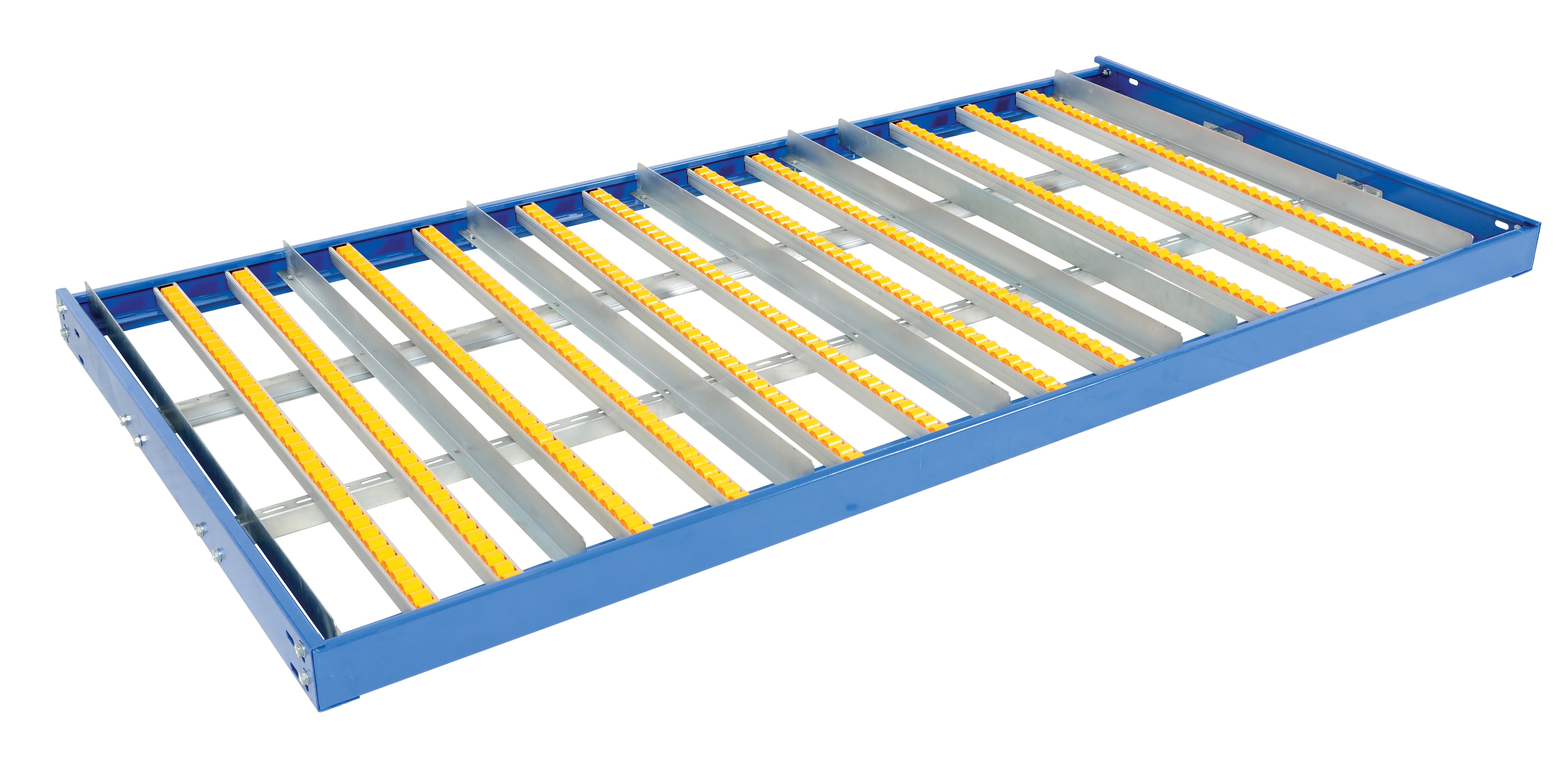
Best all-rounder: selective pallet racking
For most warehouses, selective pallet racking is the right default. Every pallet sits on a beam you can reach directly, so selectivity is complete, any pallet, any time, and it supports first-in-first-out rotation. It's also the most economical per position, typically around 50 to 80 dollars per pallet position installed. The tradeoff is density: selective needs an aisle for every rack face, so it stores fewer pallets per square foot than high-density systems. For the vast majority of operations, that flexibility is worth more than raw density, which is why selective is the most common system in use.
Best for long loads: cantilever racking
When you store long or awkward items, cantilever racking is the clear pick. Its arms extend from a central column with no upright blocking the front, so pipe, lumber, tube, and sheet material load straight on without fighting a front post. Standard pallet racking simply can't hold long loads well, which is what makes cantilever the specialist answer. See our cantilever racking guide for indoor-versus-outdoor finish and loading details. If long material is what you store, this is the system built for it.
Best for dense FIFO: gravity-flow racking
For high-turnover goods that need first-in-first-out rotation at density, gravity-flow racking earns its place. Loads go in one side and roll on inclined gravity rollers to the pick face on the other, so the oldest stock is always presented first and you get dense storage without a drive aisle for every face. It costs more than selective and suits specific high-throughput cases rather than general storage. Where FIFO and density both matter, food, dated stock, fast movers, it's the system that delivers both.
How to choose between them
The decision comes down to what you store and how it rotates. Standard pallets, mixed SKUs, and a need to reach any load: selective. Long or oversized material: cantilever. High-turnover stock that must rotate FIFO at density: gravity-flow. Many warehouses run more than one, selective for the bulk of pallets, cantilever in a corner for long stock, flow lanes for fast movers. Start from your inventory and your rotation rule, and the right system, or mix, falls out of it. Our pallet racking guide covers the load-plaque and safety basics that apply whichever you choose.
Other density options: push-back and double-deep
Between selective and gravity-flow sit a couple of density systems worth knowing. Push-back racking stores pallets two to six deep on nested carts; you load and pick from the same aisle, and it runs last-in-first-out. Double-deep racking parks pallets two deep, cutting aisles roughly in half, but it needs a reach truck with a deep-reach attachment. Both trade some selectivity for density without the drive-in structure. They suit operations with several pallets of the same SKU that can tolerate LIFO rotation. For most warehouses they're a step past what selective racking covers, but they're the answer when density matters and you have SKU depth to fill the lanes.
Match the aisle and forklift to the rack
Whatever system you pick, it only works with the right aisle width and forklift. Selective racking with a standard counterbalance forklift needs wide aisles, which is part of why it stores fewer pallets per square foot. Narrow-aisle and very-narrow-aisle setups pack racking tighter but require specific trucks (reach trucks or turret trucks) to work in the space. Denser systems like push-back or drive-in change how the forklift enters the lane entirely. So the rack, the aisle, and the truck are one decision, not three. Plan them together, and factor in rack protection for wherever those forklifts turn near uprights.
New versus used racking
Used racking is tempting on price, but it comes with real caveats. Second-hand racking often arrives with unknown history: you can't be sure it wasn't damaged, overloaded, or repaired badly, and it frequently lacks the load-capacity plaques that tell you what it can safely hold. Mixing components from different makers is another trap, since beams and uprights aren't universally compatible and a mismatched connection can be unsafe. New racking comes with known capacities, matched components, and current-standard connectors. If you do buy used, buy a complete matched system from a reputable dealer with capacity documentation, and inspect every piece before you load it. The savings aren't worth it if the rack can't safely carry what you put on it.
The verdict
For most warehouses, selective pallet racking is the best choice: full access to every pallet, the lowest cost per position, and FIFO-capable. Choose cantilever when you store long loads, and gravity-flow when you need dense first-in-first-out storage for high-turnover goods. Whatever you pick, respect the load plaque and protect the uprights.
FAQ
For most operations, selective pallet racking is best: every pallet is directly accessible and it has the lowest cost per position, around 50 to 80 dollars installed. Choose a high-density system only when you specifically need density over access.
Use cantilever racking for long or awkward loads, pipe, lumber, tube, sheet, that standard pallet racking can't hold well. Its open front, with no upright blocking the load, is what makes long material easy to store and retrieve.
Selective racking gives direct access to every pallet at the lowest cost but lower density. Gravity-flow racking stores loads on inclined rollers so they feed FIFO to a pick face, giving dense first-in-first-out storage for high-turnover goods at higher cost.
Related Guides
Sources: Richmond Rack and Hammerhead pallet-racking cost/selectivity data (selective ~$50-80/position), ANSI MH16.1/RMI, verified 2026-07. · Updated 2026-07-22