What a safety bollard is
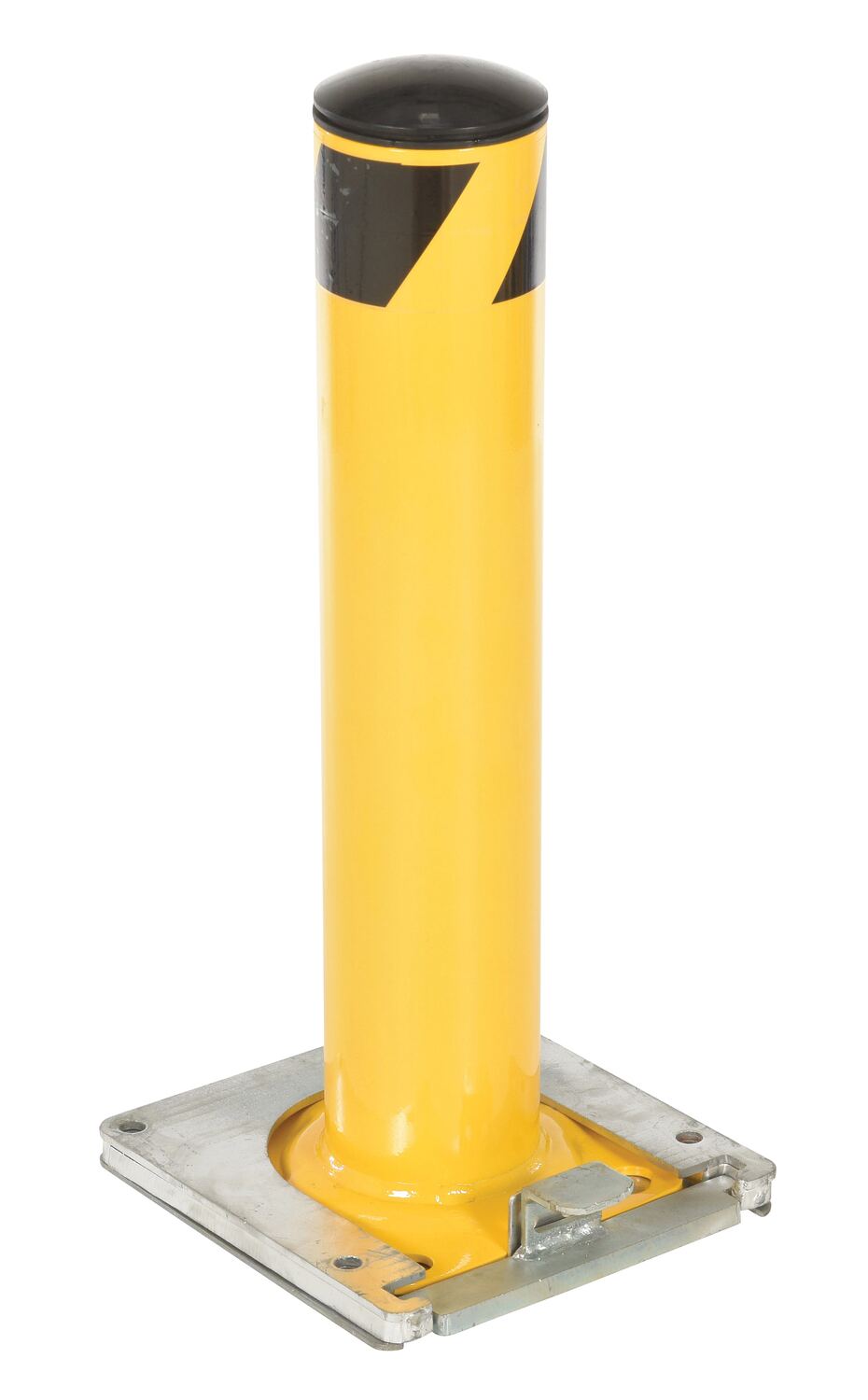
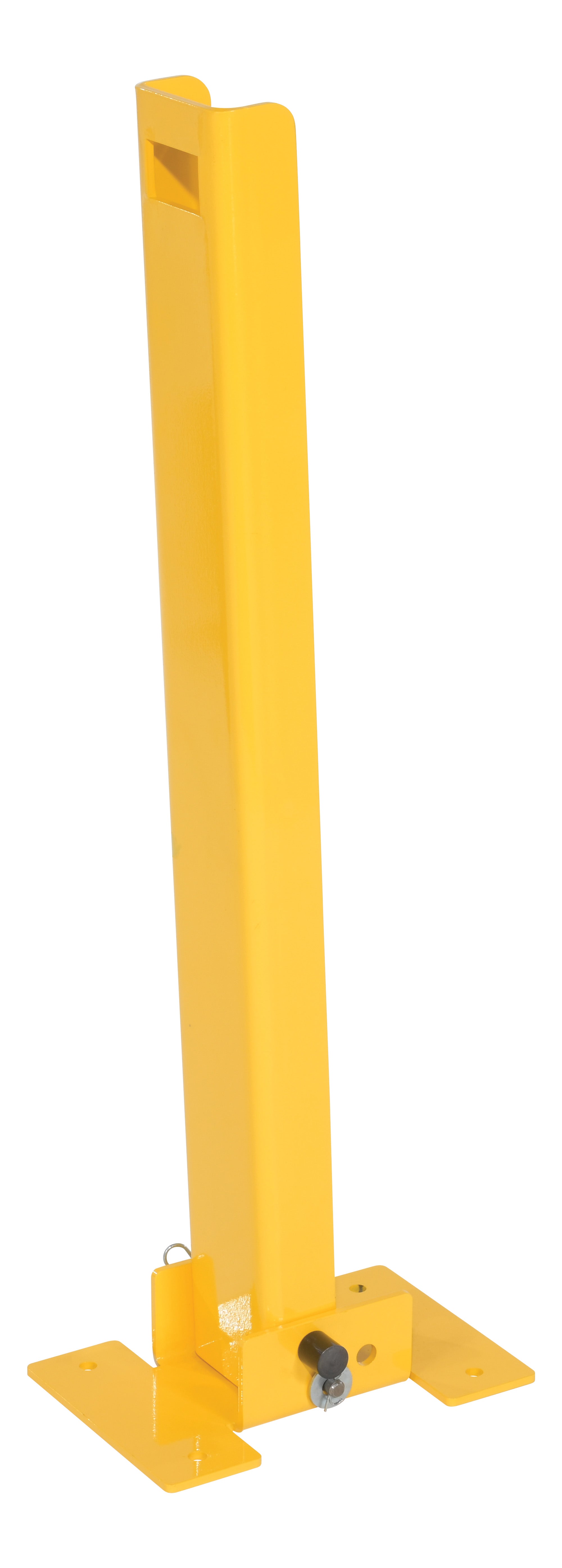
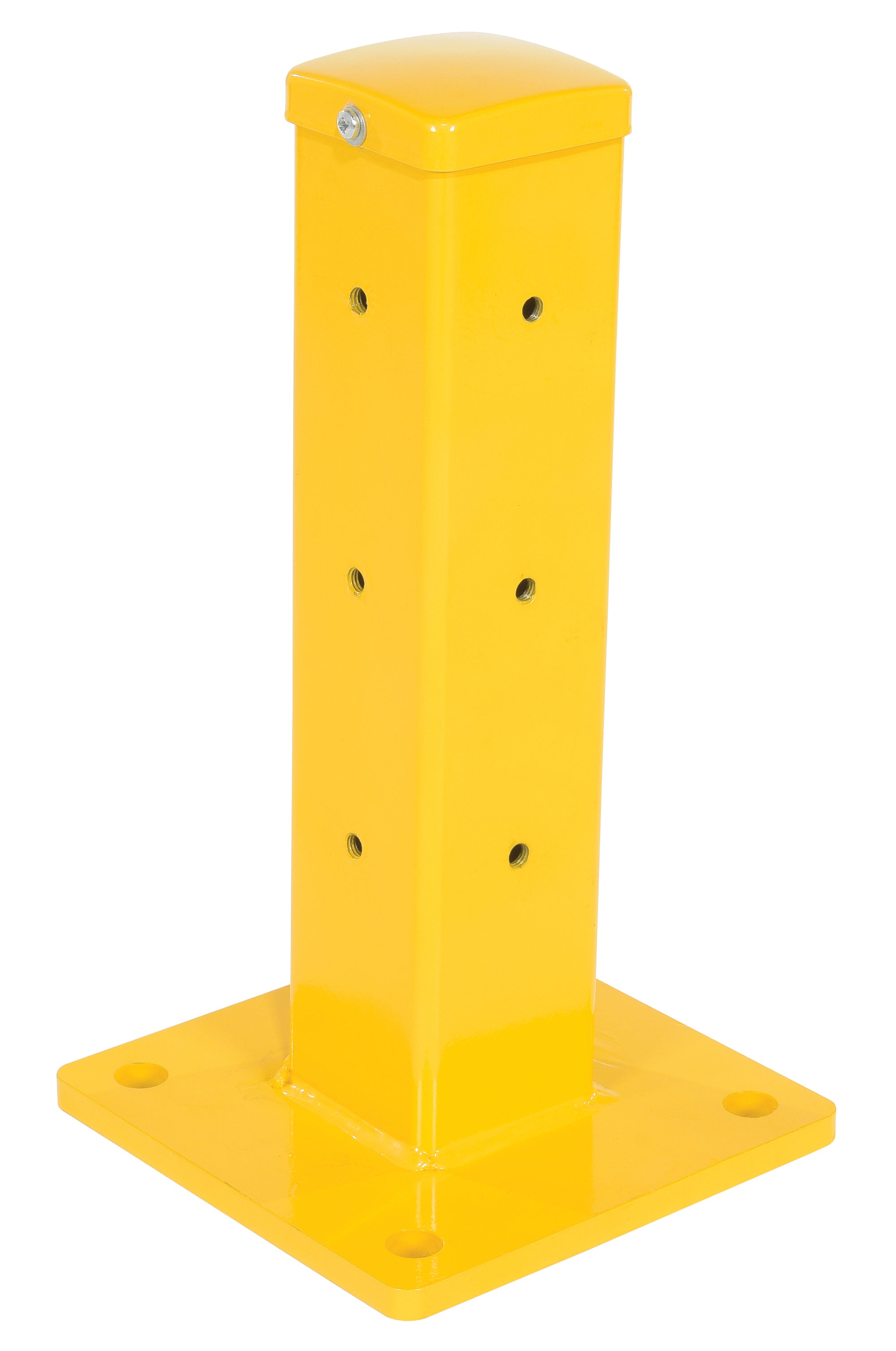
A safety bollard is a short, sturdy vertical post, usually steel or polymer, installed to protect something from vehicle impact and to guide traffic. Where a guardrail provides a linear run of protection, a bollard provides point protection: it stands guard at a corner, a doorway, a piece of equipment, or the end of a rack, taking a forklift's hit before it reaches what's behind. Bollards are a simple, effective, and common piece of facility safety equipment, and they're everywhere forklifts operate. Our safety bollards include removable and fold-down steel designs for different access needs.
What bollards protect
Bollards shield the specific points most exposed to vehicle strikes. They guard building corners and wall sections at risk from turning forklifts, protect doorways and overhead-door tracks from being hit, defend equipment, machinery, control panels, and utilities, and cover the ends of racking aisles where trucks maneuver. They also channel traffic, keeping vehicles in intended paths and out of pedestrian or restricted zones. Essentially, wherever a single vulnerable point needs protection from a forklift, a bollardis the tool, cheaper and less obtrusive than a full guardrail run, and purpose-built for point defense.
Fixed and embedded bollards
The most protective bollard is the fixed, embedded type: a steel post set permanently into the floor, often concrete-filled, for maximum stability and impact resistance. Embedded bollards are anchored deep enough to withstand serious strikes and stay put, making them the choice for critical protection points, guarding key equipment, structural columns, or high-risk corners where a forklift hit must be stopped. They're not meant to move, so you use them where permanent protection is needed and vehicle access through that point isn't required. For the toughest point protection, a steel embedded bollard is the standard.
Removable and fold-down bollards
Where you need protection most of the time but occasional vehicle access, a removable or fold-down bollard is the answer. A removable bollard lifts out of a floor socket to open a path, then drops back in to restore protection. A fold-down bollard hinges flat to the floor and stands back up. Both let you block a route to forklift or general traffic normally, then open it for deliveries, maintenance, or authorized vehicles. They trade a little ultimate strength for that flexibility, which is exactly right for entrances, controlled access points, and areas that must sometimes open up.
Flexible polymer bollards
The third type is the flexible, high-strength polymer bollard, designed to bend and rebound on impact rather than resist rigidly. When a forklift clips a polymer bollard, it flexes and returns to shape, absorbing some energy and, importantly, reducing damage to the vehicle and the floor slab compared to an unyielding steel post. Polymer bollards are primarily for visual traffic guidance plus some impact cushioning, marking lanes, corners, and pedestrian zones, rather than stopping a full-speed heavy strike. Where the goal is guidance and minor-impact protection with low maintenance, flexible bollards excel; where you must stop a serious hit, steel is stronger.
Steel-core versus polymer: which to choose
The choice mirrors the wider barrier decision. Steel-core bollards give top-tier protection for critical points that must stop a real impact, at the cost of transferring force to the floor and potentially needing repair after a hard hit. Polymer bollards flex, rebound, and protect the slab and vehicles, with lower maintenance, but they're for guidance and lighter impacts rather than stopping a heavy strike. Match the bollard to the job: steel where you must stop a forklift and protect something critical, polymer where you're guiding traffic and cushioning minor contact. Many facilities use both, matched to each location's risk.
Installing bollards correctly
A bollard only protects if it's installed to do its job. Embedded bollards must be set deep enough and, where specified, concrete-filled to resist the impacts they'll face, an under-installed bollard can be knocked over by the very hit it's meant to stop. Removable and fold-down bollards need properly installed floor sockets or bases. Position bollards close enough to what they protect to intercept a vehicle, but with clearance for legitimate traffic. Follow the manufacturer's installation specs, since a bollard's protective value depends on being anchored correctly. A well-chosen bollard installed wrong offers false security.
The bottom line
A safety bollard is a short vertical post that protects a specific point, a corner, doorway, equipment, or rack end, from vehicle impact and guides traffic. Fixed embedded bollards give maximum protection, removable and fold-down types allow occasional access, and flexible polymer bollards bend and rebound for guidance and lighter impacts. Choose steel where you must stop a real strike and polymer where you're guiding traffic, and install each per spec. See our what are warehouse safety barriers and steel vs flexible barriers guides, and compare options in best safety barriers.
Bollards versus guardrails
Bollards and guardrails are complementary, and knowing when to use each helps. A bollard protects a single point, a corner, a door, a machine, a rack end, standing guard right there, and it's less obtrusive than a rail. A guardrail protects a linear run, lining a walkway or a length of racking. So use bollards for discrete point hazards and guardrails for continuous separation. Often they work together: a guardrail run along a walkway, with bollards guarding the corners and access points. Choose bollards where the risk is a specific spot and guardrails where you need to protect a whole edge or lane.