What cantilever racking is
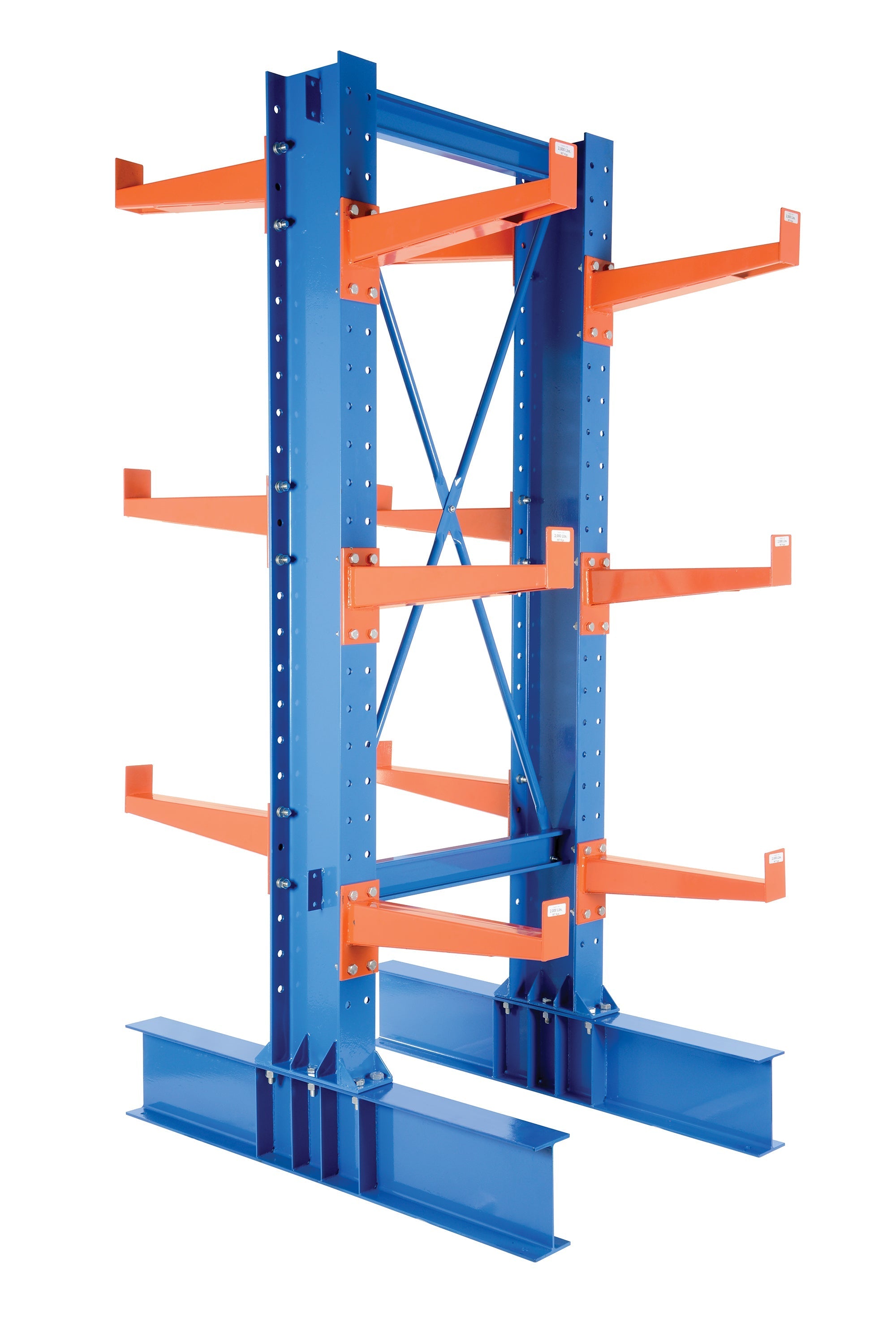
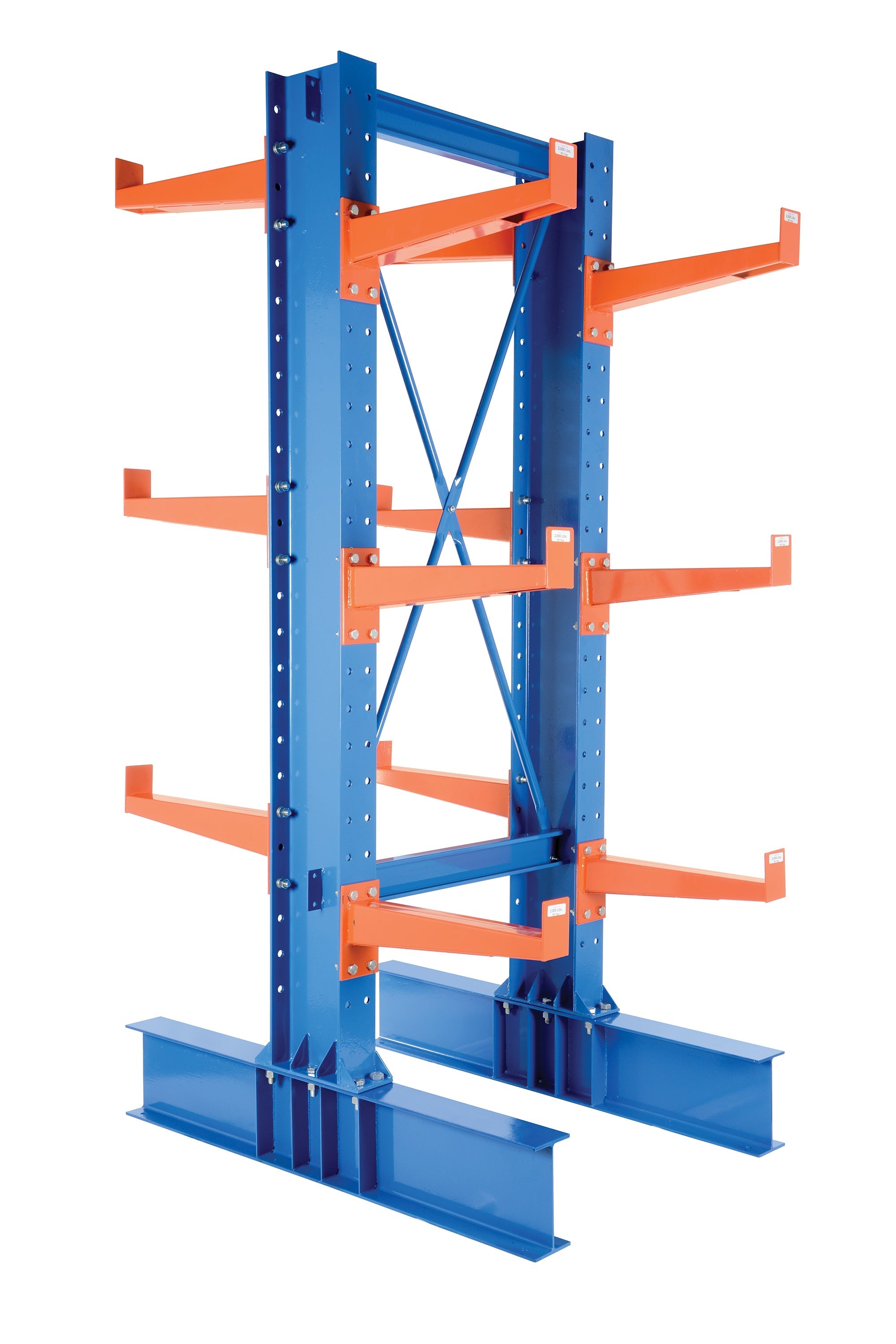
Cantilever racking is a storage system built for long loads. Instead of the beams-between-uprights design of standard pallet racking, it uses vertical columns with horizontal arms cantilevered out from them, and, crucially, no upright at the front to obstruct loading. That open front lets you slide long items straight onto the arms from a forklift or by hand, with nothing in the way. The result is a rack purpose-built for anything too long or awkward for a pallet position. Our cantilever rack kits provide this open-arm storage for the long and bulky loads standard racking can't handle.
What it's used for
Cantilever racking stores long, bulky, or awkwardly shaped goods. Classic applications include lumber and timber, pipe and tubing, steel bar and sheet, furniture, and rolled goods like carpet and fabric. Anything that's long relative to its width, and would overhang or not fit a standard pallet bay, is a candidate. Building-supply yards, steel service centers, furniture warehouses, and manufacturers all rely on cantilever racking for these loads. If you're trying to store long items on standard pallet racking and they overhang, don't fit, or are hard to load, that's the signal you need cantilever racking instead.
Single- versus double-sided
Cantilever racking comes in single- and double-sided configurations. Single-sided racking has arms on one side of the columns, so it stands against a wall and stores loads on one face, efficient along a perimeter. Double-sided racking has arms on both sides of the columns, storing loads on both faces from aisles on either side, which maximizes storage per column line in open floor space. Choose single-sided to line a wall and double-sided to create free-standing storage rows accessible from both sides. Your floor plan and how you'll access the loads determine which configuration fits.
Arms, decking, and capacity
The arms are the load-bearing element, and they're sized and spaced for your loads. Arm length must support the depth of your items, arm capacity must exceed the load weight, and arm spacing (vertical levels) is set to your item sizes. For bulky or non-linear loads that would sag or fall between arms, decking can be added across the arms to create a shelf-like surface. As with all racking, you match the cantilever rack capacity to your heaviest loads with margin and confirm the structure and any anchoring suit the weight. Spec the arm length, capacity, spacing, and decking to what you'll actually store.
Cantilever versus standard pallet racking
The two solve different problems. Standard pallet racking stores palletized, roughly cube-shaped loads efficiently in bays, ideal for boxed and palletized inventory. Cantilever racking stores long, linear, or bulky loads that a pallet bay can't accommodate, with its open, upright-free front for easy loading. You wouldn't store pallets of boxes on cantilever racking (it's less efficient for that), and you can't store long pipe well on standard pallet racking. So they're complements, not competitors: use pallet racking for palletized goods and cantilever racking for the long and awkward items. Many facilities run both for their different inventory.
Choosing cantilever racking
Spec cantilever racking around your loads and space. Measure your longest and heaviest items to set arm length and capacity, and their sizes to set arm spacing. Decide single- or double-sided based on whether it goes against a wall or free-standing. Add decking if loads are bulky or would fall between arms. Choose a finish suited to the environment, galvanized like our galvanized kits for outdoor or corrosive settings, powder-coated for indoors. And confirm the capacity exceeds your loads with margin and the structure is anchored appropriately. Sized to your long loads and space, cantilever racking makes storing awkward items simple and safe.
The bottom line
Cantilever racking uses open, upright-free arms projecting from columns to store long, bulky, or awkward loads, lumber, pipe, tubing, steel, furniture, and rolled goods, that don't fit standard pallet racking. Choose single-sided against a wall or double-sided free-standing, size the arms and spacing to your loads, add decking for bulky items, and match the capacity and finish to your needs. It complements pallet racking rather than replacing it. See our what is pallet racking guide, and browse our cantilever rack kits.
Indoor versus outdoor and finishes
Cantilever racking is used both indoors and outdoors, and the finish should match. Indoor racking typically uses a powder-coated finish, which is durable and clean for warehouse conditions. Outdoor racking, common at lumberyards and building-supply yards storing materials in the open, needs corrosion protection, so a galvanized finish resists rust and weathering far better. Choosing the wrong finish for the environment shortens the rack's life, galvanized outdoors, powder-coated indoors. If your long-load storage is exposed to weather, specify galvanized cantilever racking; for a covered warehouse, powder-coated is fine and economical.
Loading and access
Part of cantilever racking's appeal is easy loading, and it shapes how you use it. The open, upright-free front lets a forklift place long loads straight onto the arms without maneuvering around a front post, which speeds handling of unwieldy items. Plan the aisle in front of the rack for your forklift and the length of your loads, since long items need room to position. Double-sided racking needs aisle access on both faces. Thinking through how you'll load and retrieve, and giving the forklift room for long items, ensures the cantilever system actually delivers the easy handling it's designed for.