The core difference
Both protect people and equipment from forklifts, but they handle an impact very differently. A steel barrier is rigid: it resists by not moving much, and when hit hard it bends and passes the collision force down into the floor slab and its anchors. A flexible polymer barrier is engineered to give: it flexes on impact, absorbs and dissipates the energy, and springs back to its original shape. That fundamental difference, resist-and-transfer versus flex-and-rebound, drives every trade-off between them, in cost, floor protection, maintenance, and how they behave after a strike.
How steel barriers perform
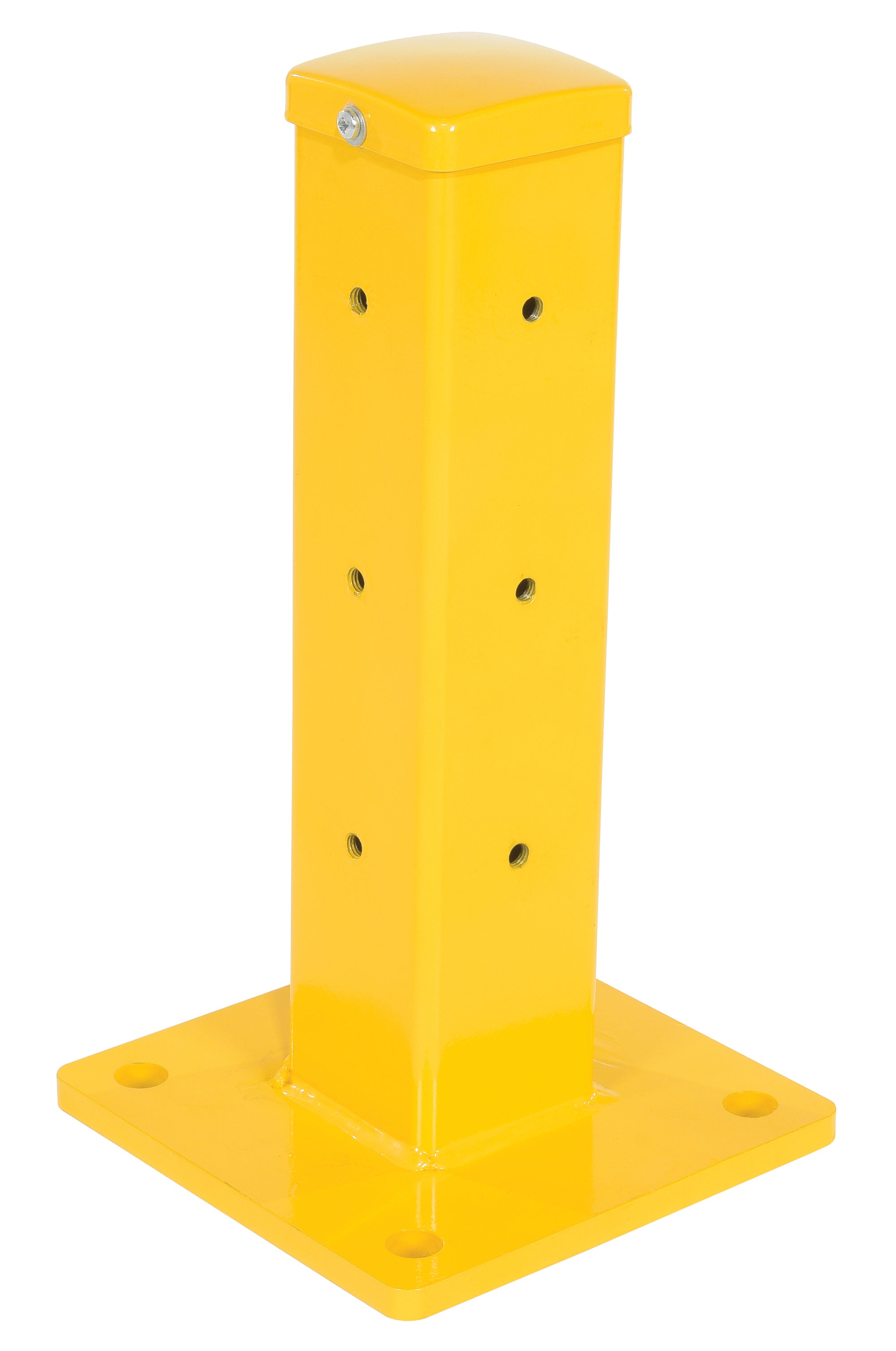
Steel barriers are the traditional, proven choice, and they're rigid and strong. They protect walkways and equipment well and are lower in unit cost than polymer. The downside shows up on impact: because steel doesn't flex much, a hard hit bends the barrier and drives the force into the floor slab and anchor bolts, which can crack or damage the concrete and the mounting, and the bent barrier often needs repair or replacement afterward. So steel offers dependable, affordable protection, but each significant impact tends to cost you in floor damage and barrier repair. It stops the truck, but not without consequences to the barrier and floor.
How flexible polymer barriers perform
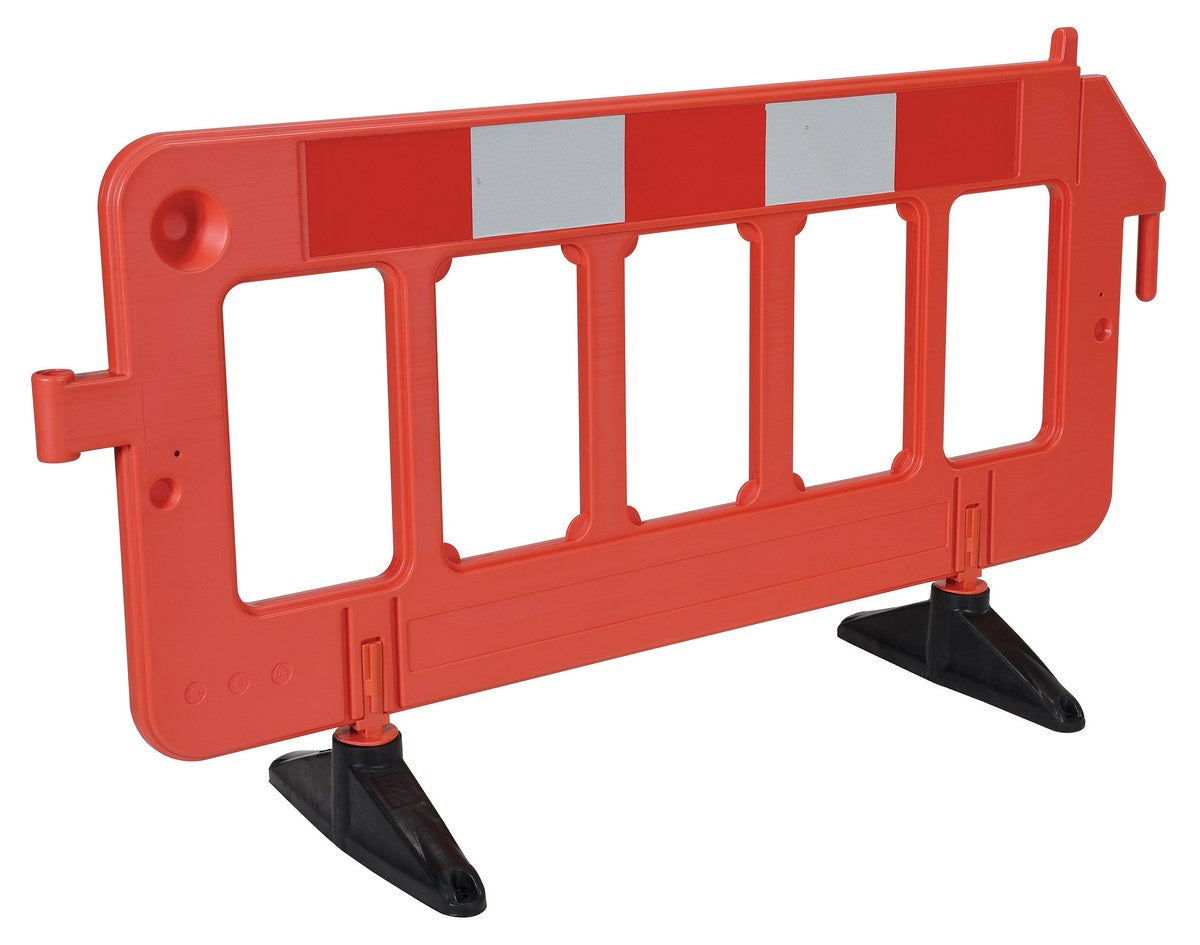
Flexible polymer barriers take the opposite approach. Made from high-strength engineered plastic, they flex on impact, absorbing and dissipating the energy, then rebound to their original shape, so the barrier survives hits that would bend steel, and the floor slab and anchors see far less force. That means less concrete damage, less frequent repair, and lower long-run maintenance. Independent analysis confirms the directional trade-off: flexible barriers deflect more and absorb impact where steel transfers it. The cost is a higher upfront price. For facilities with frequent impacts or where protecting the floor matters, polymer's absorb-and-rebound behavior pays back over time.
A note on vendor claims
One caution when comparing: some polymer-barrier makers advertise striking figures, such as being several times stronger than steel or absorbing a high percentage of impact energy. Treat specific performance percentages as marketing rather than independently verified numbers, they vary by product and test. What is well-supported is the directional trade-off: polymer flexes, absorbs, and rebounds while protecting the slab, and steel is rigid, cheaper, and transfers force to the floor. So weigh the concrete trade-offs, cost, floor protection, maintenance, repair, rather than headline claims. The right choice comes from your priorities and impact frequency, not from a vendor's biggest number.
Cost over the life of the barrier
The honest cost comparison isn't just the purchase price. Steel barriers cost less to buy, but each significant impact can bring floor repair and barrier replacement costs. Polymer barriers cost more upfront but tend to survive impacts and spare the floor, lowering maintenance and replacement over time. So in a low-impact area, steel's lower price may simply be cheaper overall; in a high-impact area with frequent strikes, polymer's durability can win on total cost despite the higher sticker. Think about how often the barrier will actually be hit, that, more than the purchase price alone, determines which is cheaper across its life.
Which should you choose?
Choose steel barriers when upfront cost is the priority, impacts are infrequent, or you need rigid, hard protection at a specific point, they're proven, strong, and affordable. Choose flexible polymer barriers when impacts are frequent, protecting the floor slab matters, or you want to minimize long-term maintenance, their flex-and-rebound design pays back in high-traffic areas. Many facilities use both: steel where it fits, polymer in the high-impact zones. Match the material to each location's impact frequency and your budget priorities, and confirm whichever you choose is rated for your forklift's weight and speed.
Don't forget the impact rating
Whichever material you choose, the barrier must be rated to stop your vehicles. Both steel and polymer barriers come in different impact ratings (a common figure is around 10,000 lb at 4 mph), and the barrier's rating must match or exceed your forklift's weight and typical speed, or it can be overwhelmed regardless of material. So material is one decision and impact rating is another: pick steel or polymer for your priorities, then confirm the specific barrier is rated for your equipment. A polymer barrier under-rated for a heavy truck, or a steel one, offers false protection. Rating and material both matter.
The bottom line
Steel barriers are rigid, cheaper to buy, and hard-protecting, but they bend and transfer impact force to the floor, needing repair after strikes. Flexible polymer barriers flex, absorb, and rebound, protecting the slab and lowering maintenance, at a higher upfront cost. Choose steel for low cost and infrequent impacts, polymer for frequent impacts and floor protection, treating vendor performance percentages as marketing. Whichever you pick, match its impact rating to your forklift. See our what are warehouse safety barriers guide, and compare options in best safety barriers.
Maintenance and downtime
Consider the aftermath of an impact, since that's where the two materials diverge most. When a steel barrier is hit hard, it may bend and the floor anchors may pull or crack, meaning repair work, replacing the barrier, patching the slab, that takes the barrier out of service and costs labor and downtime. A polymer barrier that flexes and rebounds is often back to protecting immediately, with no floor repair, so it minimizes both maintenance and the gap in protection. For a busy facility where a damaged barrier means an unprotected hazard until it's fixed, polymer's quick recovery is a real, if less obvious, advantage beyond the raw cost comparison.