Why rack protection matters
Forklift impact is the leading cause of pallet racking failure. An upright post carries the full load above it, so a forklift clipping the base can bend or weaken it enough to threaten a collapse, and a rack collapse is one of the more dangerous events in a warehouse. Protection works on a simple idea: absorb or deflect the impact before it reaches the structural steel. That's cheaper than replacing bent uprights, and far cheaper than the alternative. If forklifts operate near your racking, and they almost always do, protection is a basic safety investment, not an optional extra.
Column guards for the uprights
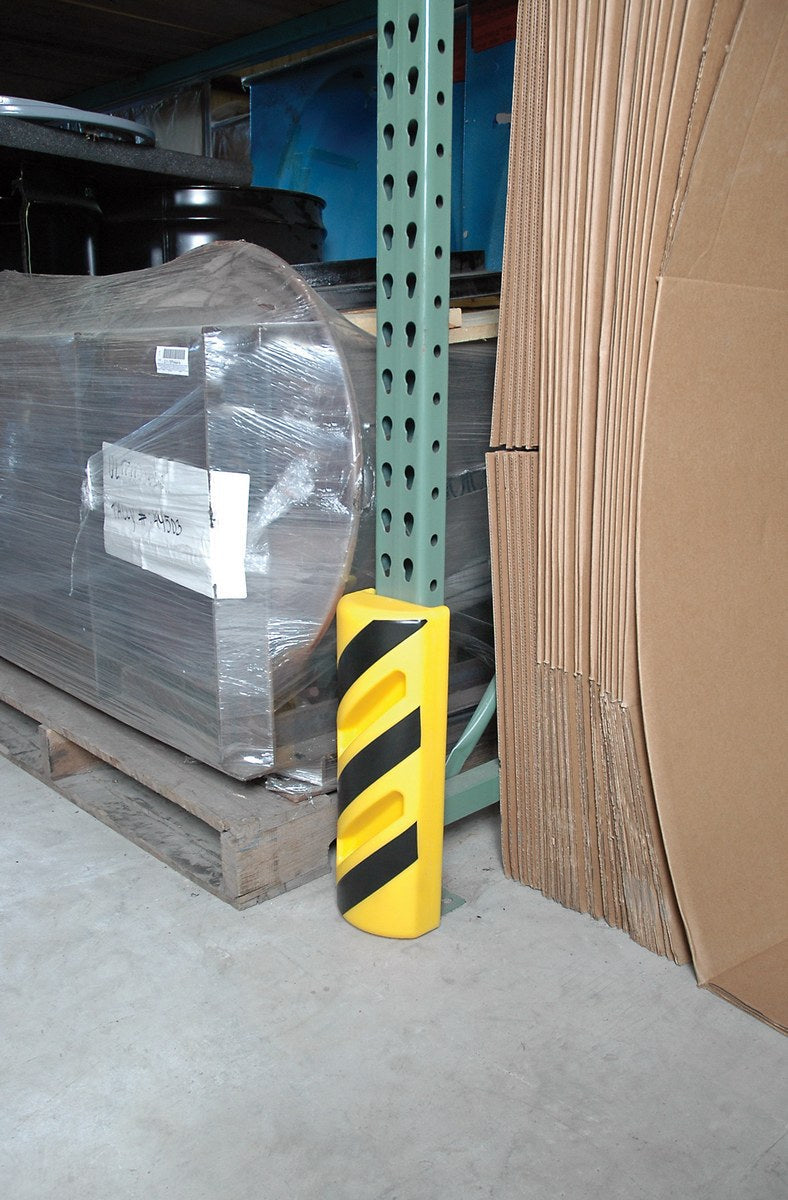
The most exposed part of a rack is the upright post at floor level, right where a turning forklift can catch it. A column guard is a steel or heavy polymer shield that bolts to the floor around the post and takes the hit so the upright doesn't. Steel guards deflect impacts; heavy polymer guards flex and rebound, absorbing the energy and often springing back after a hit. Either way, the point is to keep the forklift from contacting the structural post. Guarding the uprights along drive aisles and at every spot forklifts maneuver is the highest-value rack protection you can add.
End-of-aisle and row-end guards
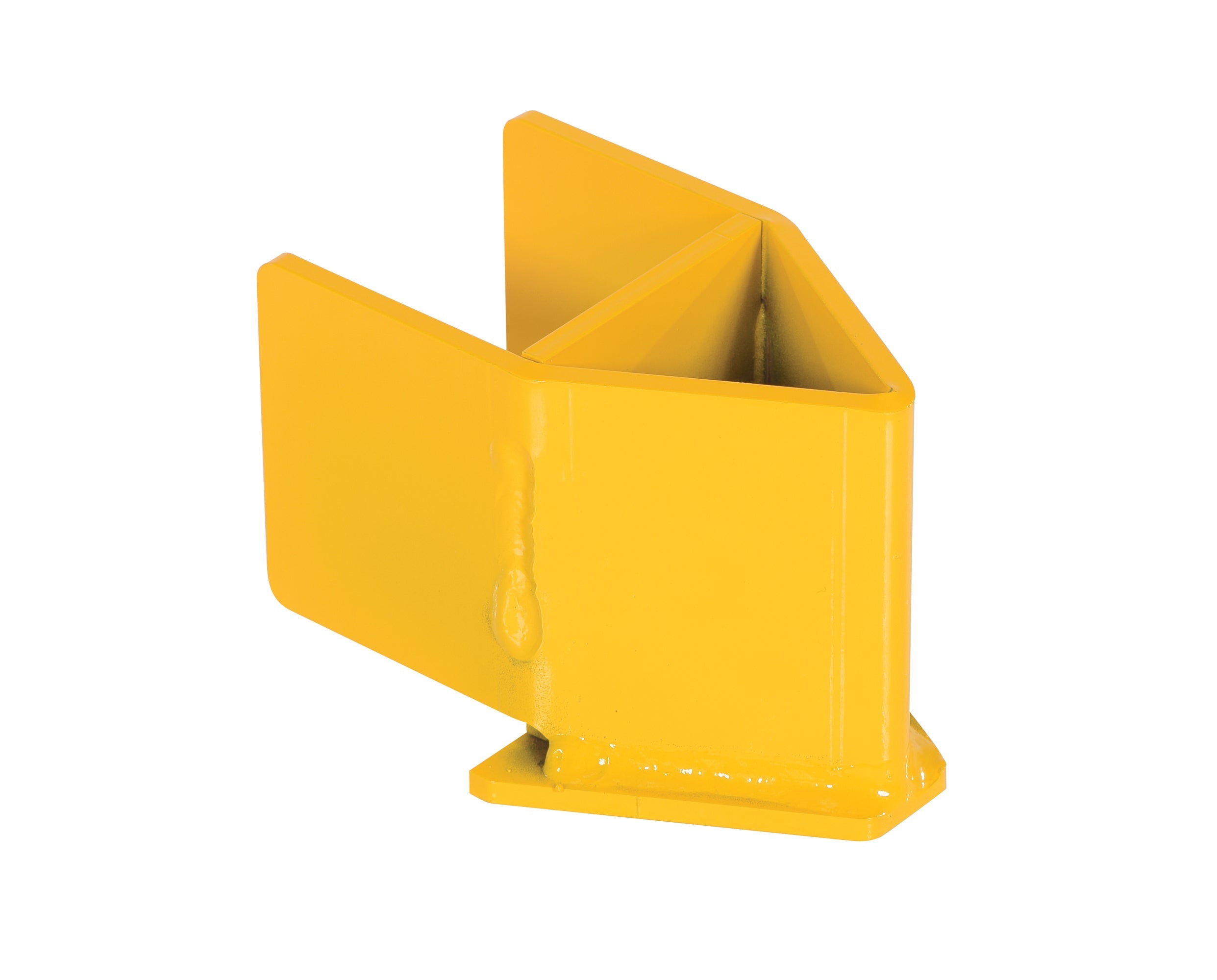
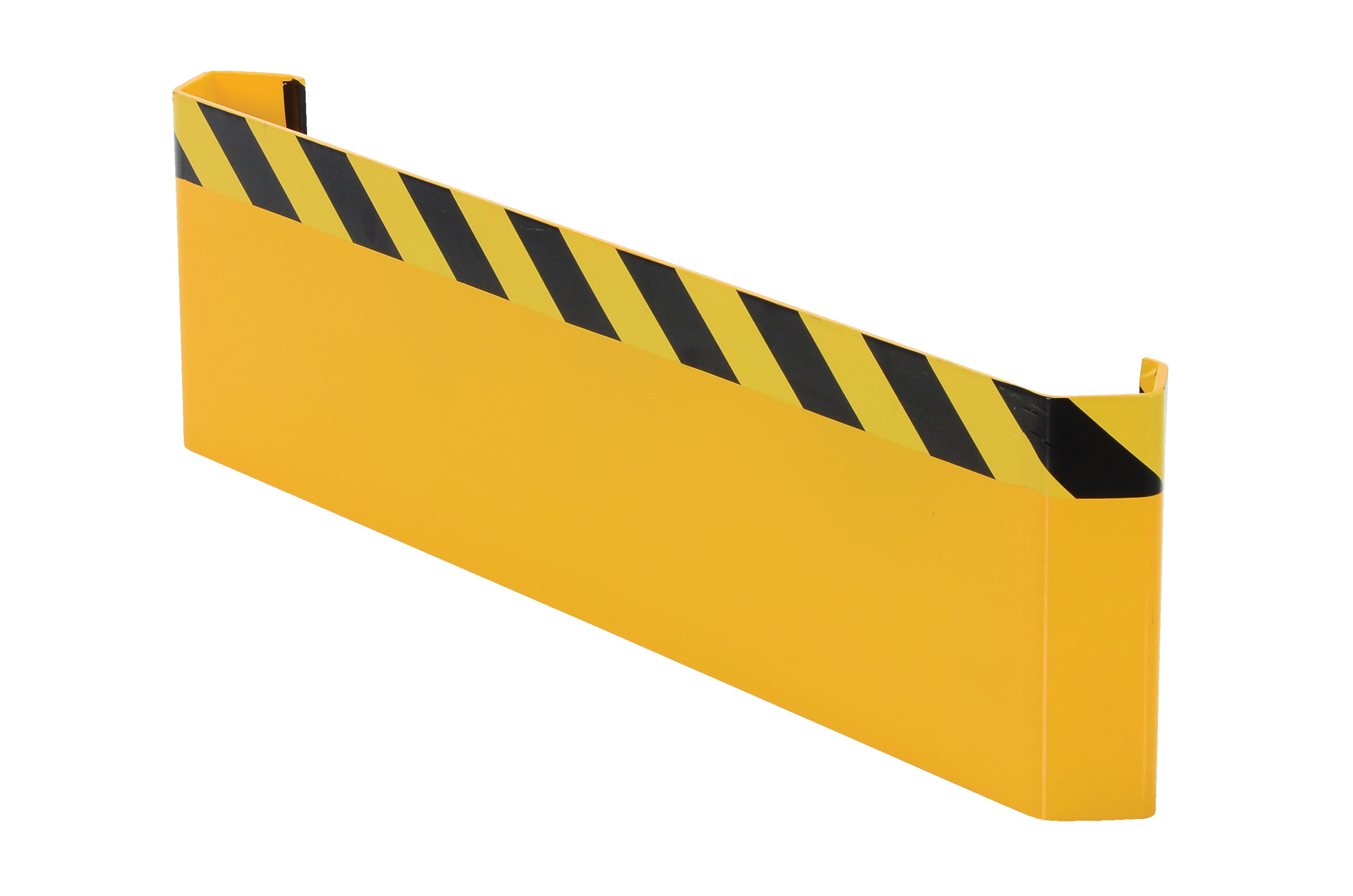
The ends of rack rows, out where aisles meet cross-traffic, take a disproportionate share of impacts. An end-of-aisle guard is a low steel barrier anchored in front of the row end to intercept forklifts and pallet trucks before they reach the rack. It's the same logic as a safety barrier protecting a walkway, applied to the most exposed corner of your racking. Because row ends are both high-traffic and structurally important, guarding them is a cheap way to prevent an expensive, and potentially dangerous, failure.
Back guards and netting
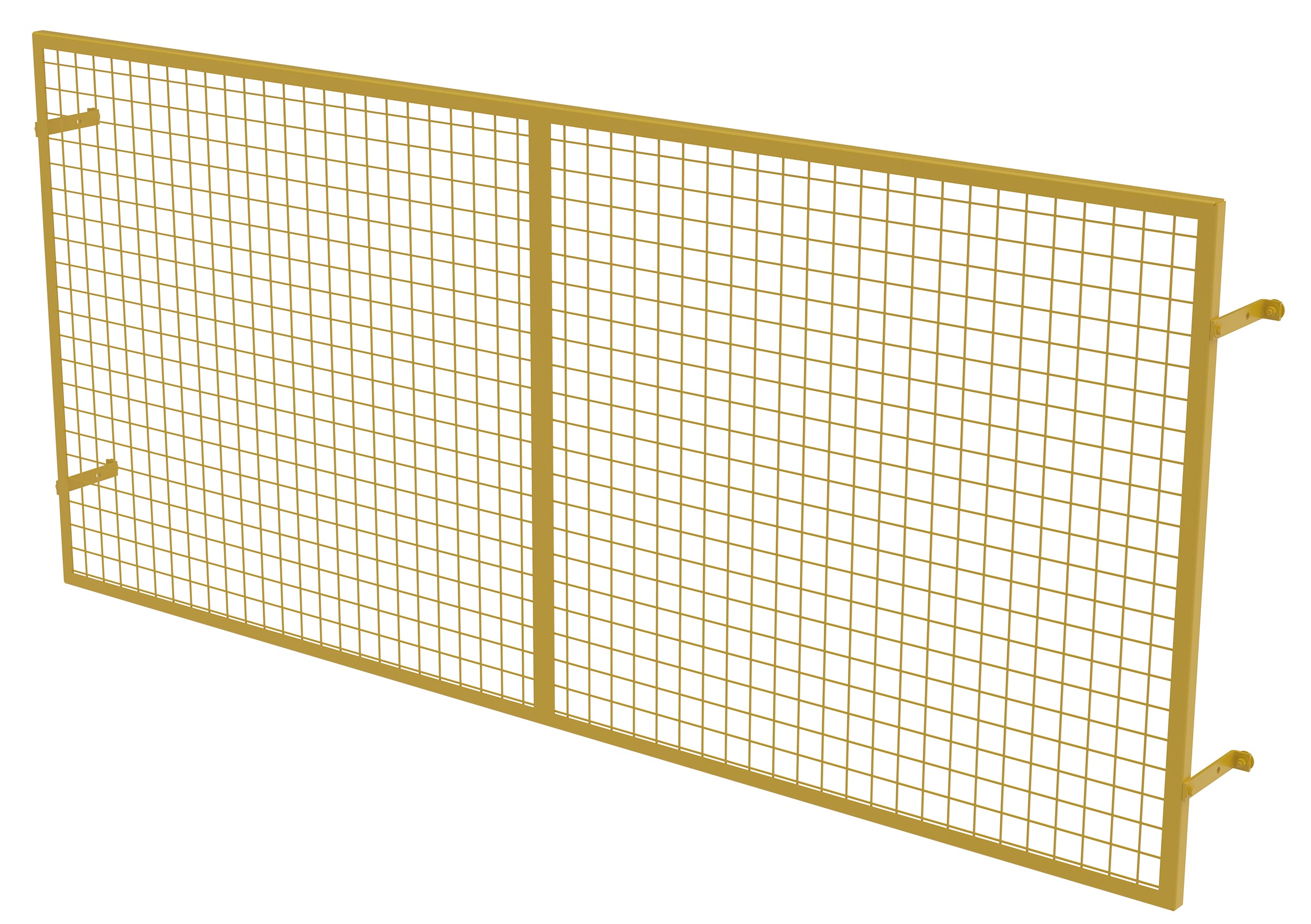
Where racking backs onto an aisle, a walkway, or another work area, product pushed too far or knocked off the far side can fall into that space. Rack back guards or safety netting mounted on the back of the rack stop cartons and loads from falling through into the area behind. This protects people and equipment on the other side, which matters most above pick faces and anywhere pedestrians pass behind racking. It's a straightforward add that closes off a hazard many facilities overlook until something falls.
Inspect and repair, don't ignore damage
Guarding reduces impacts; it doesn't eliminate them, so inspection matters. Under ANSI MH16.1 and the Rack Manufacturers Institute (RMI) guidance, damaged racking must be taken out of service, unloaded, and repaired or replaced before it's loaded again. A visibly bent or dented upright has lost capacity it may never regain, and continuing to load it is a real risk. Walk your racking on a schedule, flag damage, and offload anything questionable until it's fixed. The combination of guarding the impact points and acting on damage when you find it is what keeps a rack system safe over years of forklift traffic.
Build protection into the layout
The best time to plan rack protection is when you lay out the racking, because that's when you know where forklifts will turn, where aisles cross, and where people walk behind rows. Guard the uprights along drive aisles, put end guards on exposed row ends, and add back guards or netting anywhere racking faces a walkway or work area. Tie it into the wider facility safety plan alongside barriers and bollards, so protection is coherent rather than patched on after the first hit. Racking is an engineered structure; protecting it is part of running it safely.
Steel guards versus polymer guards
Rack guards come in two broad styles, and they protect differently. Steel guards are rigid: they bolt to the floor and deflect a forklift away from the upright, taking the hit through the anchor. Heavy polymer guards flex on impact and spring back, absorbing the energy rather than transferring it to the floor. Steel is tough and cheap but a hard hit can crack the slab anchors and need repair; polymer costs a bit more but often shrugs off a hit and keeps working with no floor damage. For high-traffic drive aisles where impacts are frequent, polymer's rebound is worth the premium; for lighter-traffic spots, steel does the job.
What a rack inspection looks for
Routine inspection is the other half of protection, and it helps to know what you're looking for. Check uprights for bends, dents, and out-of-plumb lean, especially at the base where forklifts strike. Look at the beams for deflection and at the beam-to-upright connectors for cracked welds or popped safety clips. Confirm baseplates are flat to the floor and anchors are tight. Any upright with visible damage should be flagged and the bay unloaded until it's repaired, because a compromised post can fail under a load it once carried fine. A quick walk on a set schedule, monthly is common, catches damage before it becomes a collapse.
Protection is cheap next to a collapse
It's worth putting rack protection in perspective on cost. A column guard or an end-of-aisle guard is a modest purchase, tens of dollars per guarded post. A bent upright means offloading a bay, buying replacement steel, and the downtime to swap it. A full rack collapse means destroyed inventory, damaged product below, halted operations, and, in the worst case, injury. Set against those outcomes, guarding the impact points is one of the cheapest safety investments in the building. Add it alongside the barriers and bollards in your facility safety plan, and it quietly prevents the failures that are far more expensive to clean up than to avoid.