What a stretch wrapper is
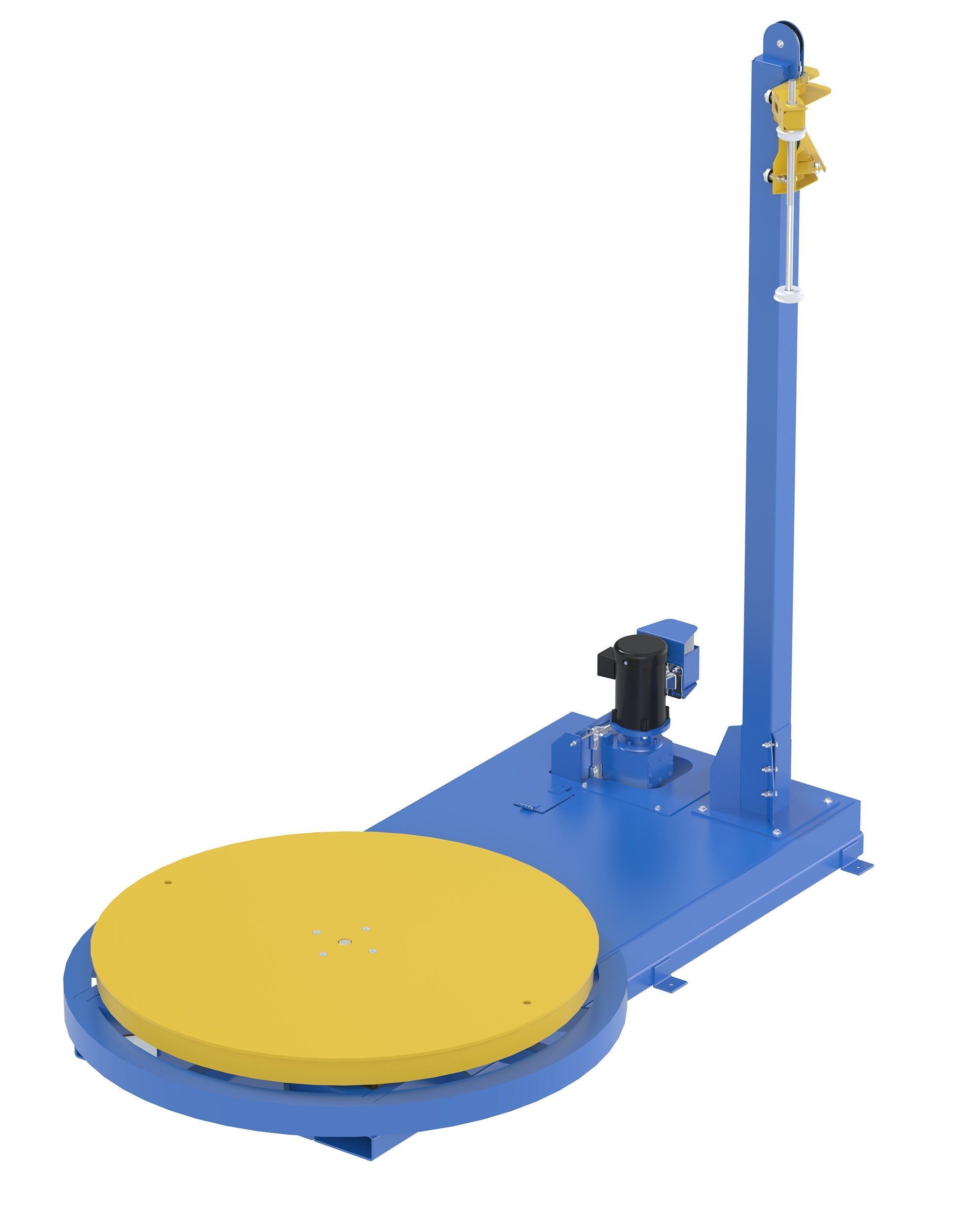
A stretch wrapper, or pallet wrapper, is a machine that wraps stretch film tightly around a loaded pallet to bind it into a single stable unit. As the film stretches and clings, it holds the boxes or products together, keeping the stack from shifting, leaning, or toppling during handling and transport, and it adds a layer of protection against dust and moisture. Unitizing loads this way is standard practice for shipping palletized goods, and doing it by machine is faster, more consistent, and uses film more efficiently than hand wrapping. Our stretch wrap machines automate this for warehouses shipping regular pallet volumes.
Why unitize a load
Wrapping a pallet isn't just tidiness, it's load stability and protection. An unwrapped pallet of boxes can shift as it's moved, tilt on a turn, or topple off a forklift or in a truck, damaging product and creating a hazard. Stretch film binds the load to the pallet and to itself, so it moves as one stable unit and resists the forces of handling and transport. It also shields the goods from dust, dirt, and moisture. For anything shipped or stored on a pallet, unitizing with stretch film is how you keep the load intact and protected from the warehouse to the destination.
Manual (hand) wrapping
The simplest method is manual wrapping: an operator walks around the pallet applying stretch film by hand from a roll. It needs no machine, just film and labor, so it's the lowest-cost option for very low volumes. The drawbacks are real, though: it's slow (roughly three to five minutes per pallet), physically tiring, inconsistent in tension and coverage, and limited in wrap height by the operator's reach. Manual wrapping suits an operation shipping only a handful of pallets now and then. Once volume rises, the labor cost and inconsistency make a machine worthwhile, which is why most shipping operations move beyond hand wrapping.
Semi-automatic stretch wrappers
The semi-automatic turntable wrapper is the workhorse for moderate volumes. The operator places the pallet on a turntable and attaches the film tail, then the machine spins the pallet and applies the film automatically, up and down the load, in roughly 60 to 90 seconds, far faster and more consistent than by hand. It handles varying pallet sizes and irregular loads flexibly, and it suits operations shipping up to a few hundred loads a day. For most warehouses with regular but not massive pallet volume, a semi-automatic wrapper hits the sweet spot of speed, consistency, and cost, which is why it's the most common powered type.
Automatic stretch wrappers
For high volumes of uniform pallets, automatic stretch wrappers remove the operator from the wrapping step entirely. Pallets feed in on a conveyor, and the machine wraps each one, attaching and cutting the film automatically, with no one attaching the tail. This delivers the highest throughput and lowest labor per pallet, built for operations shipping large, steady volumes of similar loads. The trade-off is cost and the need for consistent, conveyable pallets, an automatic system is a significant investment justified by high volume. Where you're wrapping many uniform pallets continuously, an automatic wrapper's throughput and labor savings pay back; for lower or varied volume, semi-automatic is more sensible.
Which stretch wrapper to choose
Match the wrapper to your shipping volume. Very low volume, a few pallets occasionally, may not justify a machine at all; hand wrapping suffices. Regular, moderate volume, up to a few hundred loads a day, points to a semi-automatic turntable wrapper, the flexible, cost-effective choice for most warehouses. High, steady volume of uniform pallets justifies an automatic conveyor system for maximum throughput. Also consider your load consistency (automatics need uniform, conveyable pallets) and your labor costs. Estimate your pallets-per-day honestly, and choose the level of automation that pays back, most operations land on semi-automatic.
A note on strapping
Stretch wrapping isn't the only way to secure a load; strapping (banding) complements it for heavier or rigid goods. A tensioned band, sealed with a buckle, seal, or weld, holds loads together, and the material matters: steel strapping is strongest for heavy, rigid, or sharp-edged loads like coils and crates; polyester (PET) strapping elongates and retains tension well for palletized loads that settle; and polypropylene is the light-duty, low-cost option for bundling. For loads too heavy or rigid for film alone, or that need extra securement, strapping works alongside or instead of stretch wrap. Choose steel for maximum strength, polyester for palletized loads, and polypropylene for light bundling.
The bottom line
A stretch wrapper wraps stretch film around a pallet to unitize the load, keeping it stable in transit and protecting it from dust and moisture. Manual hand wrapping suits very low volumes; a semi-automatic turntable wrapper (~60-90 seconds per pallet) is the flexible choice for most warehouses; and automatic conveyor systems suit high volumes of uniform pallets. Choose by your pallets-per-day and load consistency, and consider strapping for heavy or rigid loads. Browse our stretch wrap machines and the full facilities range, or see our facilities maintenance guide.
Film and wrap quality
Getting good results from any wrapper depends on the film and how it's applied. Stretch film is designed to be pre-stretched (elongated) as it's applied, which makes it cling and hold tension while using less film, and machines control this far more consistently than hand wrapping. Applying enough wraps, especially anchoring the load to the pallet at the base and reinforcing the top, keeps the load stable. Too little film or poor coverage lets loads shift; too much wastes material. A powered wrapper delivers consistent tension and coverage automatically, which is a big part of why machine wrapping protects loads better and cheaper than wrapping by hand once volume justifies it.