Air Tuggers
An air tugger is a drum winch driven by a pneumatic motor instead of an electric one, and that single swap changes both where the machine can work and how long it can run. Compressed air produces no spark and no heat buildup, so an air winch is at home in the refineries, mines, marine decks, and paint lines where an electric motor is a liability. Everything here is Thern piston-drive equipment, from the Mini Series at 1,000 and 2,000 lb up to the Utility Rated class that reaches 15,700 lb of line pull, priced from around $14,940 and climbing into six figures for the largest drums. The guide below covers what plant air actually buys you, how the two ratings differ, and the brake and standards rules that govern lifting with one.
Compare Air Tugger Winches
| Model | Price | Capacity | |
|---|---|---|---|
| Thern Utility Rated Air Winches | $39,750 | 15,700 lb | View → |
| Thern Mini Series Radical Piston Air Winches | $14,940 | 1,000-2,000 lb | View → |
Air Tugger Winches Buying Guide
What plant air buys you. A pneumatic motor turns compressed air into torque with no electrical circuit, and three properties follow from that. It is spark-resistant, so the winch can run in explosive or hazardous atmospheres where an electric drive is ruled out. It shrugs off duty cycle: an air motor does not overheat the way an electric one does, so it can pull all shift without a cool-down period. And it fails safe under overload, stalling instead of burning out, then picking back up once the load eases. The throttle gives infinitely variable speed and the fine control you need to inch a load into place. The trade is your air supply, which has to deliver the volume and pressure the motor was built for or the winch will feel gutless.
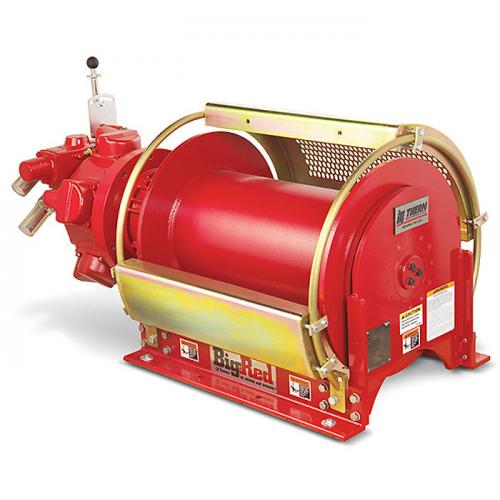
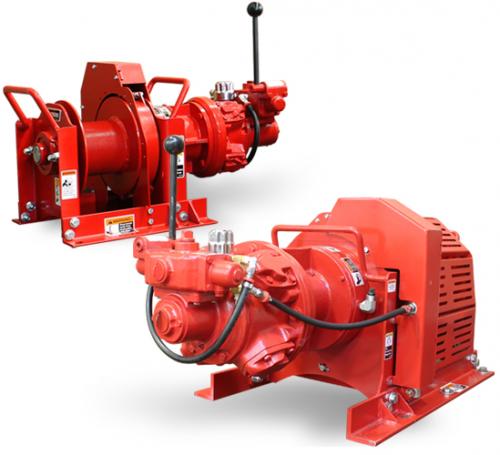
Two ratings, mini to utility. The catalog carries two Thern lines. The Mini Series Radical Piston Air Winches pack the pulling power of Thern's larger air winches into a compact frame, rated at 1,000 lb on a 1.3 hp motor and 2,000 lb on a 3.5 hp motor, with drum sizes from 4.5 to 13 inches and prices starting near $14,940. When the pulls get heavier, the Utility Rated Air Winches step up to 7.1, 14.4, 18.3, and 27 hp motors on drums from 16 to 60 inches, reaching 15,700 lb of line pull, with prices that climb into six figures for the biggest drums. Both are quote-and-freight items rather than off-the-shelf stock.
Pulling or lifting, and the brake that decides it. An air tugger's job splits the same way the rest of the winches range does: pulling a load along a surface is a lighter duty than lifting and holding it in the air. Every configuration here offers a manual or automatic band brake. The automatic brake sets itself when the operator releases the control, holding a suspended load exactly where it is, which is what you want the moment the rope leaves the ground. Order the automatic brake for any lifting work and confirm the model's lifting rating before you trust it overhead. The 20 ft pendant control with E-stop, available on the Mini Series, moves the operator away from the load and adds an instant shutoff.
Match the air supply before you buy. An air winch is only as strong as the compressor feeding it. Check the manufacturer's rated air consumption in CFM and its working pressure, usually around 90 psi, and make sure your plant air or portable compressor holds both under load, not merely at idle. Undersized lines and long hose runs drop pressure and steal capacity, so size the supply line to the winch and keep the run short. Wet or dirty air shortens motor life, which is why an inline filter, regulator, and lubricator earns its place ahead of the machine.
Standards and inspection. A base-mounted drum winch like these falls under ASME B30.7, the standard covering the construction, installation, operation, inspection, testing, and maintenance of winches mounted to a foundation or supporting structure. Bolt it to a base rated for the line pull, inspect the wire rope and brake on the schedule the standard sets, and keep the load within the rated capacity at the drum layer you are actually pulling on. As with any hoisting gear, the headline pull assumes the rope on the first drum layer; capacity drops as the drum fills.
Frequently Asked Questions
It is a drum winch driven by a compressed-air (pneumatic) motor rather than an electric one. Plant or compressor air spins the motor, which turns the drum through gearing to pull or lift a load on wire rope. The air drive is what makes it spark-resistant and suited to continuous, shift-long duty.
Three reasons. Air motors produce no spark or heat, so they can work in explosive or hazardous atmospheres like refineries, mines, and marine decks. They run at a full duty cycle without overheating. And they stall under overload instead of burning out, then resume once the load lightens. The cost is that you need adequate compressed air on site.
Both, but the brake decides it. Order the automatic band brake for lifting work, since it holds a suspended load in place when the operator lets go of the control. Always confirm the specific model and configuration is rated for lifting before you take a load overhead; a pulling-only setup has nothing designed to hold a load in the air.
Check each model's rated air consumption in CFM and its working pressure, typically near 90 psi, and confirm your compressor or plant air can sustain both under load. Long or undersized hose runs drop pressure and cut capacity, and an inline filter, regulator, and lubricator protects the motor from wet or dirty air.
The Thern Mini Series Radical Piston Air Winches cover 1,000 lb and 2,000 lb on compact frames from around $14,940. The Utility Rated Air Winches step up through 7.1 to 27 hp motors and 16 to 60 inch drums, reaching 15,700 lb of line pull, with pricing that runs into six figures for the largest drums. Both ship by freight and are quoted per configuration.