Hand Winches
A hand winch is the simplest machine in the winch family: a drum, a set of gears, and a crank handle that a person turns to pull or raise a load without a motor, a battery, or a compressor. This collection gathers the manual side of the range, from OZ Lifting carbon steel brake winches starting near $85 through Thern worm and spur gear lines up to a 4,600 lb model, with the REID 1,100 lb PLUSWINCH covering goods lifting on davit and gantry columns. Price climbs with capacity, gearing, and whether the winch is rated to hold a suspended load, and choosing among those features is the whole exercise. Two questions settle most of it: will the winch pull a load along a surface or lift and hold it in the air, and how often will someone stand there and crank. The guide below works through drive type, gearing, material, rope, and the ASME B30.7 rules that govern all of them.
Compare Hand Winches
| Model | Price | Overall Length | Capacity | |
|---|---|---|---|---|
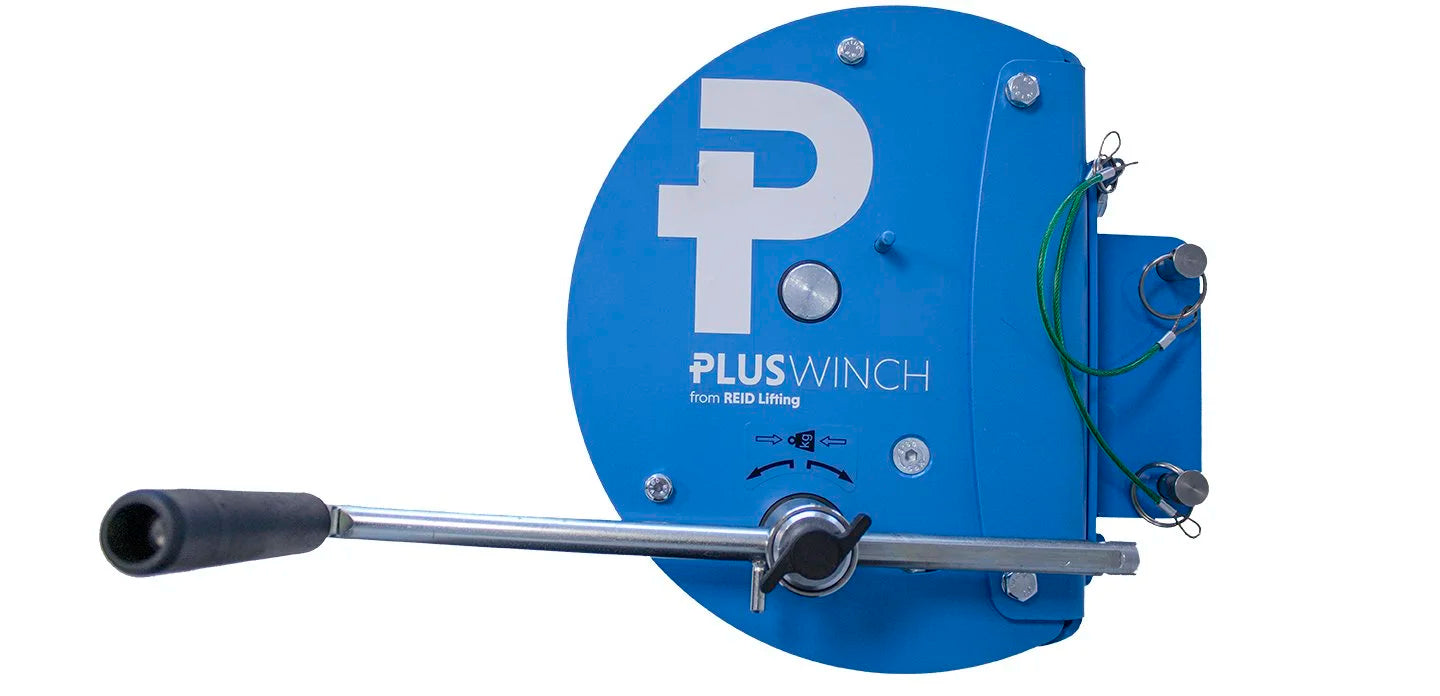
| REID Lifting PLUSWINCH 1100lbs Manual Goods Winch | $1,503 | 32-65 ft | 880-1,100 lb | View → |
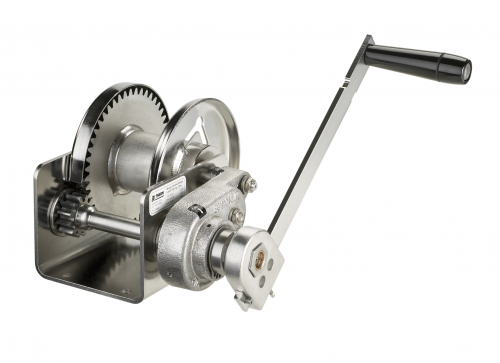
| Thern Spur Gear Hand Winches - Stainless Steel | $1,265 | — | 1,000-2,000 lb | View → |
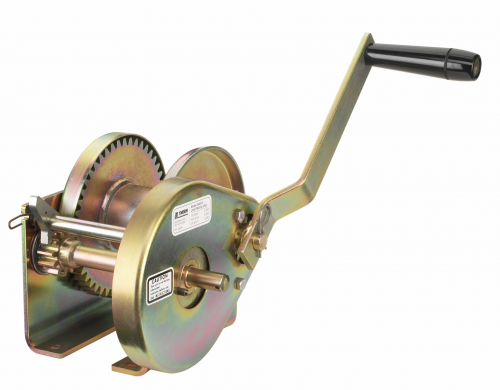
| Thern Spur Gear Hand Winches - Double Reduction | $675 | — | 2,000-10,000 lb | View → |
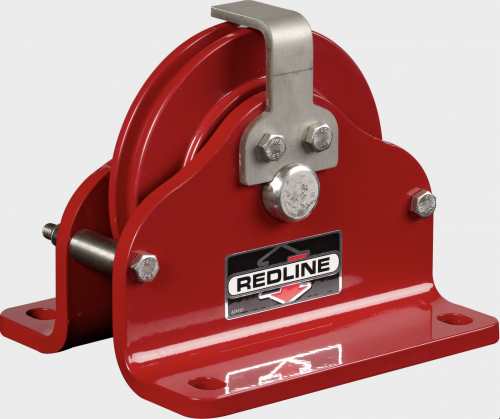
| Thern Vertical Lead Block | $552 | — | 2,000-7,000 lb | View → |
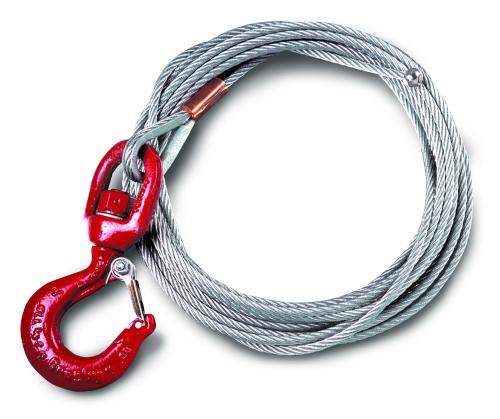
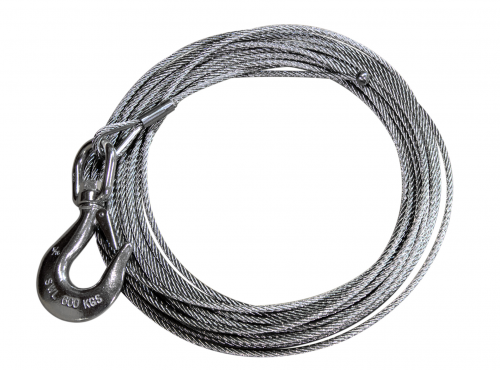
| Thern 3/8" Stainless Steel Wire Rope Assemblies | $547 | 28-75 ft | — | View → |
| Thern 5/16" Stainless Steel Wire Rope Assemblies | $451 | 20-75 ft | — | View → |
 In Stock
 In Stock
 In Stock
 In Stock
 In Stock
 In Stock
 In Stock
 In Stock
 In Stock
 In Stock
 In Stock
 In Stock
 In Stock
 In Stock
 In Stock
 In Stock
 In Stock
 In Stock
 In Stock
 In Stock
Hand Winches Buying Guide
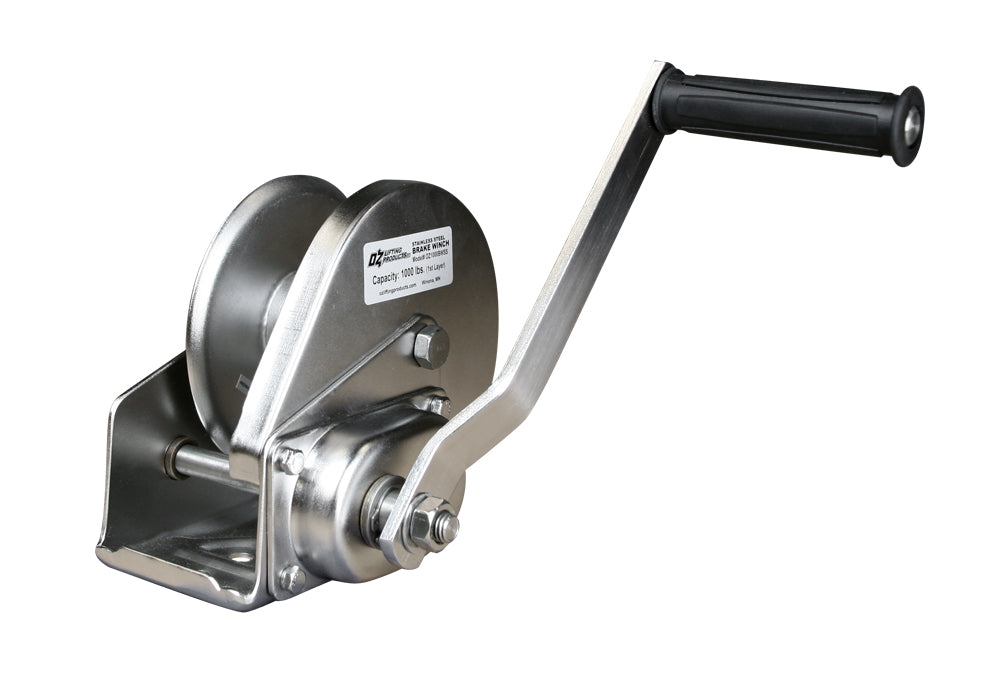
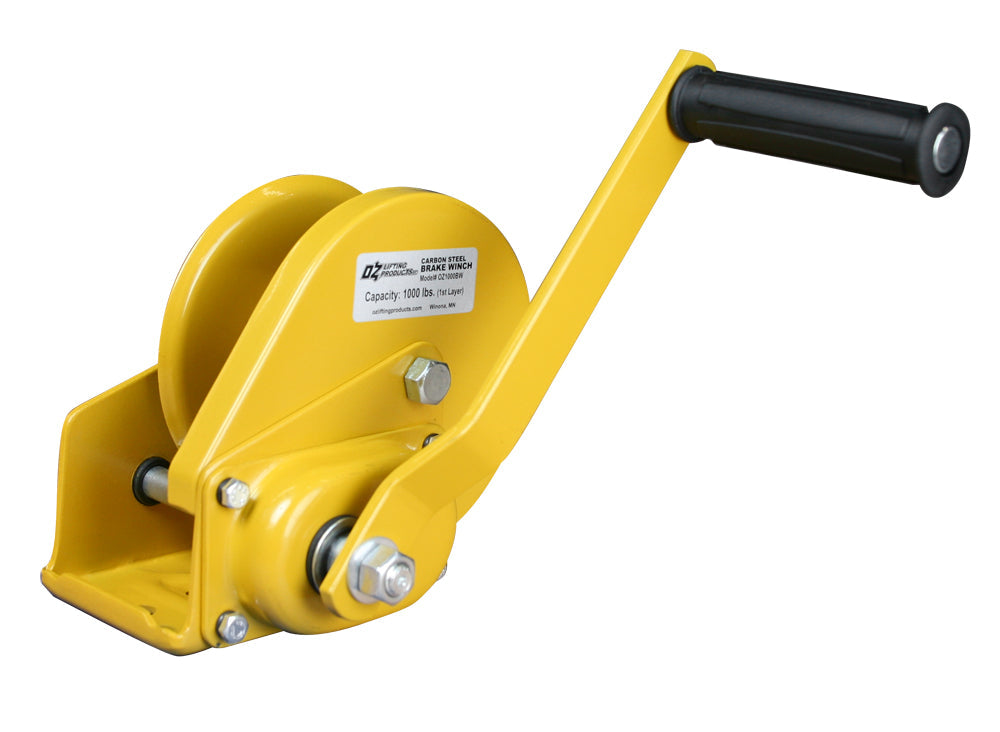
Pulling only or lifting rated is the first fork. The single most important line on a hand winch spec sheet is whether the model is rated for pulling only or for lifting, and Thern prints the answer right in the model name. The 500 lb direct drive winch at $236 and the open gear 750 lb worm gear model at $327 are marked for pulling only: they will drag a load across a floor or tension a line, but nothing in them is designed to hold a load hanging in the air. Add a load-holding brake and the same frame becomes lifting rated, which is why Thern lists a 1,000 lb single reduction winch both ways from $325. OZ Lifting brake winches, from $85 in carbon steel and $269 in stainless, carry an automatic brake built for exactly that duty. The rule has no exceptions: never suspend a load from a winch the maker rates for pulling only, however firmly the gearing seems to hold.
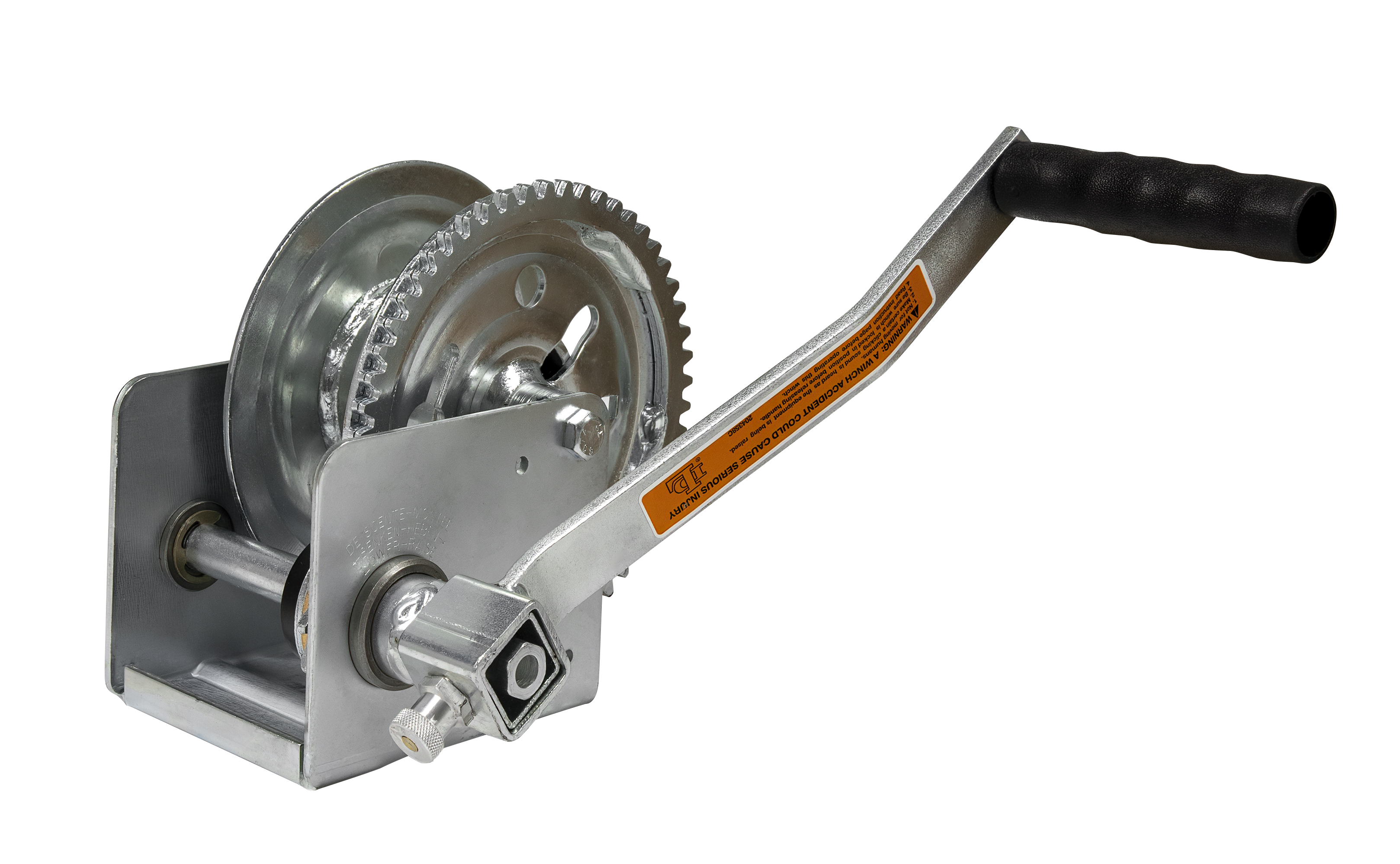
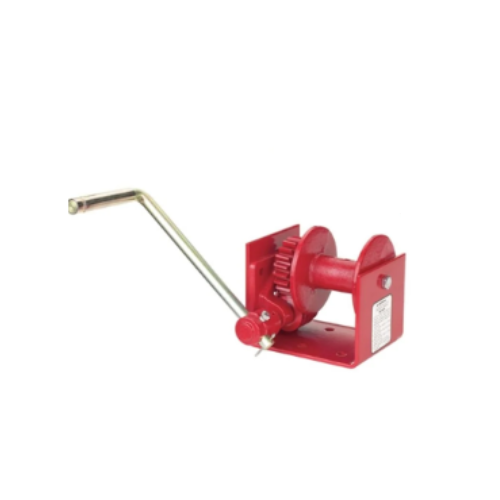
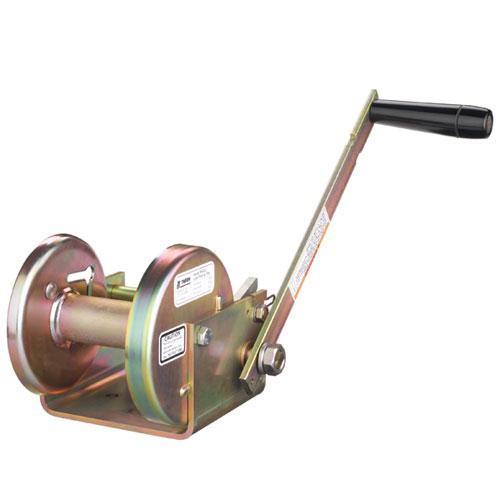
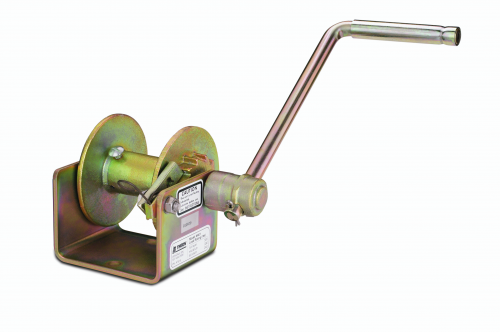
Gearing sets the cranking effort and the line speed. Four drive types climb in mechanical advantage. The $236 direct drive winch is the plainest, a handle straight onto the drum for light utility pulls where gearing would be overkill. Spur gears add a reduction: single reduction models from $325 crank fast for lighter lines and frequent travel, while double reduction models from $675 trade speed for pulling power and scale from 2,000 lb up to a 10,000 lb build. Worm gearing multiplies hardest, and because a worm drive resists back-driving, the handle stays controlled and the load holds its place the moment you stop turning. The Thern worm gear line runs to 4,600 lb, and the 2,000 lb version is drill driveable when cranking by hand gets old. Slow line speed is the price of that holding power, so match the reduction to how hard and how often the winch actually works.
The frame: carbon steel, stainless, and the release mechanism. Carbon steel is the default and the cheapest way to buy capacity: the OZ carbon steel brake winch starts at $85 across 1,000, 1,500, and 2,000 lb ratings. Stainless earns its premium in washdown, marine, and outdoor service where a carbon frame would rust out; the OZ stainless brake winch runs from $269, and Thern builds a stainless spur gear winch from $1,265 in 1,000 and 2,000 lb lifting-rated versions. Inside every hand winch is a pawl and ratchet that lets the drum turn one way and locks it the other, with a free-spool or neutral position for paying out slack line quickly before the load comes on. Learn your winch release before you load it, because controlled lowering is a slow, deliberate reverse crank, not a flipped lever. OZ even offers the 1,000 lb brake winch in a left handed version for awkward mounting positions.
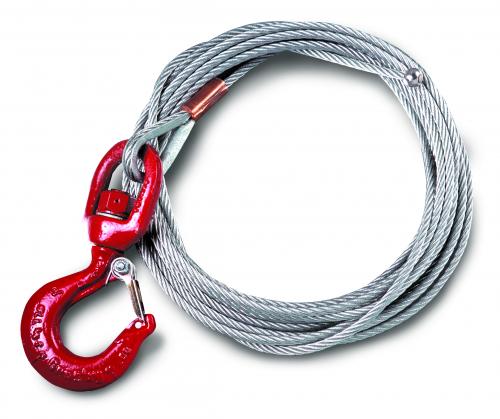
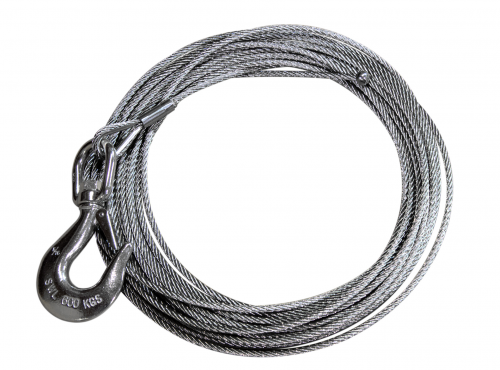
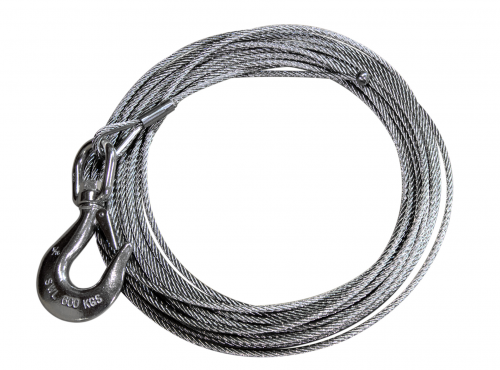
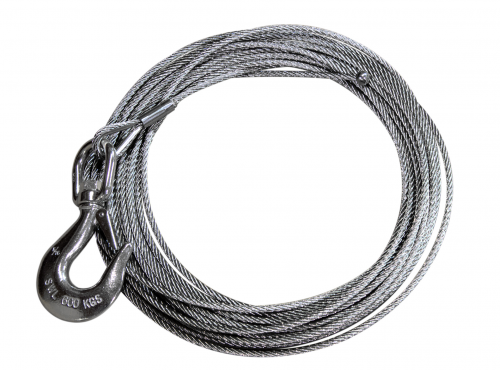
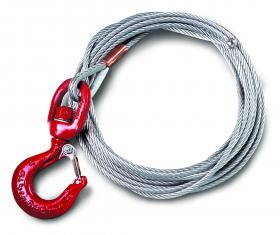
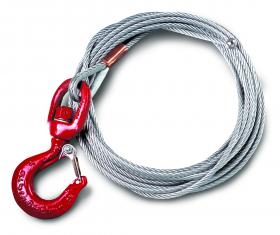
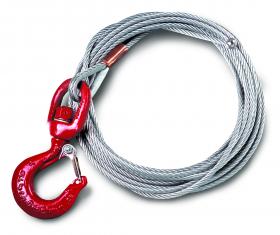
Rope is a rated component, and the drum has rules. Most hand winches ship bare, so the wire rope gets specified like any other rated part. The winch ropes collection carries Thern galvanized and stainless assemblies from 3/16 to 3/8 inch sized to each winch, and OZ assemblies split by electric or manual fitment that should never be swapped across. Two habits keep any of them alive: leave the manufacturer minimum dead wraps on the drum, because the rope anchor alone is not rated to hold the load, and spool under tension so upper layers cannot crush into loose lower ones. Remember that rated line pull is measured on the first layer of the drum, where the working diameter is smallest; every layer that builds on top raises the diameter, so pull drops and speed rises as the drum fills. When the rope has to change direction, the Thern vertical lead block in wire rope pulleys turns it without grinding the strands over structure.
Goods winches for davit and gantry work. The REID PLUSWINCH is a different animal from the crank-and-drum utility winches: a 1,100 lb manual goods winch from $1,503, built to bolt onto a lifting column and raise or lower loads under control. It ships with a choice of galvanized or stainless wire rope in three lengths and a mounting bracket matched to the specific REID system it serves, which is why it belongs with the davit cranes and portable gantry cranes we carry rather than with the flatbed and shop winches. If your lift already runs on a REID davit or gantry column, order the PLUSWINCH with the bracket that fits it and the rope length your reach demands, and treat it as the lifting-rated part of an engineered system, not a bolt-on afterthought.
When to put the crank down, and the standard over all of it. A hand winch is right for jobs that happen occasionally: positioning a machine, tensioning a line, raising a gate. When the same pull repeats all day, a motor pays for itself, and the OZ and Thern power units in industrial electric winches take over; for continuous shift-long duty, the plant-air tuggers in air tugger winches meter speed and stall at overload without cooking a motor. For straight-line cable pulls that never lift, the wire grips and pullers in cable pullers and grips grab the conductor itself. Whatever the drive, winches fall under ASME B30.7, the volume formerly titled Base-Mounted Drum Hoists, which covers construction, installation, operation, and inspection for drum winches. It asks the same discipline as the rest of your rigging: rated load marked and respected, a look before use, and periodic inspection of rope, brake, and drum kept on record.
Frequently Asked Questions
No. Only a winch the manufacturer rates for lifting can hold a load hanging in the air, because a lifting-rated model has a load-holding brake and a pulling-only model does not. Thern marks each winch in the model name, so a 500 lb direct drive or an open gear 750 lb worm gear winch is for pulling and tensioning only, while the brake versions and OZ Lifting brake winches are built to raise and hold. Hanging a load from a pulling-only winch is the most dangerous mistake in the category.
Total the entire load first: the object itself plus the rope, hook, and any rigging between the winch and the load, then round up to the next rating with margin. Also check the manufacturer per-layer figures rather than the headline number, because rated line pull is measured on the first layer of the drum and drops as the rope stacks up. If the job needs full capacity at the end of a long pull, size the winch to the pull at the layer you will actually be working on.
Spur gears crank faster and suit lighter lines and frequent travel, which is why the single reduction models are the quick everyday choice. Worm gears multiply harder and resist back-driving, so the handle feels controlled and the load holds when you pause, at the cost of slow line speed. Choose spur for speed and repeated travel, worm for heavier loads, steadier holding, and the higher capacities up to 4,600 lb. If cranking a worm winch by hand gets tiring, the drill driveable 2,000 lb model takes a power drill on the input shaft.
Carbon steel is the default and the cheapest way to buy a given capacity, and it is the right call for dry indoor shop and yard work. Stainless steel earns its higher price in washdown, food, marine, and outdoor service, where a carbon frame would corrode. OZ Lifting builds the same brake winch in both, and Thern offers a stainless spur gear winch for wet and coastal duty. Match the metal to the environment, not to the load.
When the same pull repeats through the day, a motor pays for itself and saves the operator. A hand winch is ideal for occasional work such as positioning a machine, tensioning a line, or raising a gate. Once the duty becomes frequent or continuous, step up to an electric winch, or to an air tugger for shift-long running that meters speed and stalls safely at overload. For straight-line cable pulls that never lift, a wire grip or cable puller is the better tool.