Manual Chain Hoists
A manual chain hoist is the hand-powered chain block that lifts a load straight up under a beam with no wired-in motor and no air line, and this collection gathers the full multi-brand shelf of them. You pull a loop of hand chain, a gear train multiplies that pull, and a load brake parks the weight the instant you stop. The range climbs a clear ladder: the William Hackett WH-C4 near $110 and the Harrington CF at the value end, Bison and Coffing LHH blocks through the middle, and the heavy-duty Harrington CB, CM Cyclone, and Chester Zephyr reaching to 20 and 25 tons at the top, plus stainless and spark-resistant builds for washdown and hazardous work. Capacities run from a quarter ton up past twenty, in lift heights from a few feet to thirty. The buying order stays simple: set the capacity, set the lift, decide how the hoist hangs, then match the build to where it has to live.
Compare Manual Chain Hoists
| Model | Price | Capacity | |
|---|---|---|---|
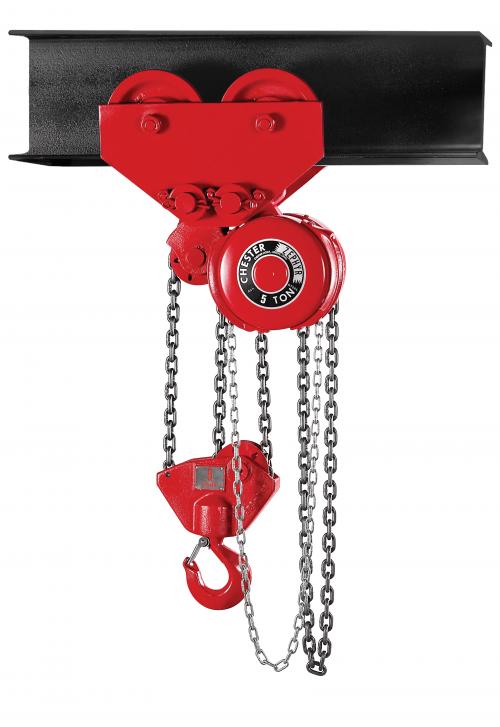
| Chester Zephyr Low Headroom Geared Trolley Hand Chain Hoist | $18,336 | 1.5-25 ton | View → |
| Chester Zephyr Steel Low Headroom Plain Trolley Hand Chain Hoist | $16,836 | 1.5-25 ton | View → |
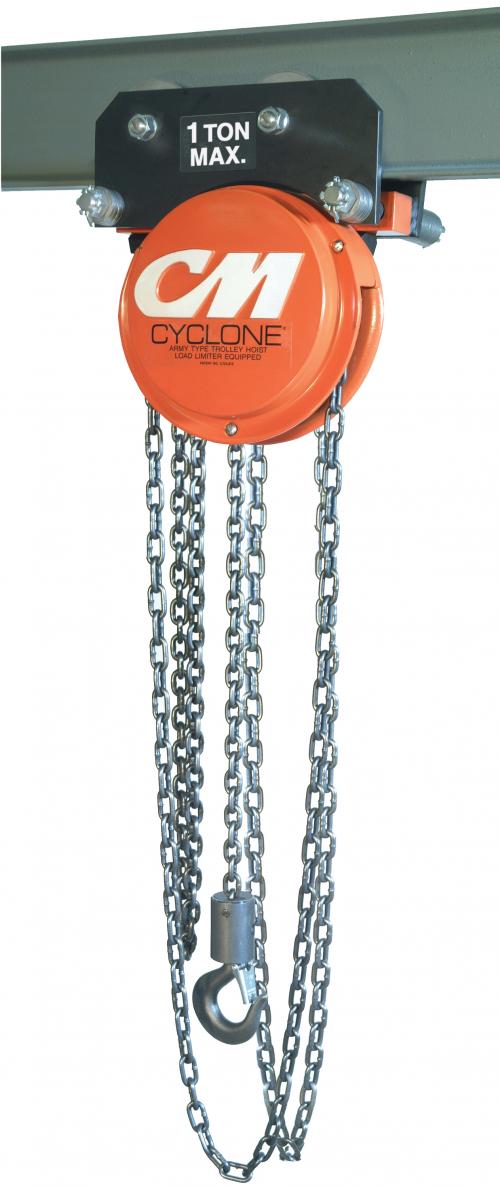
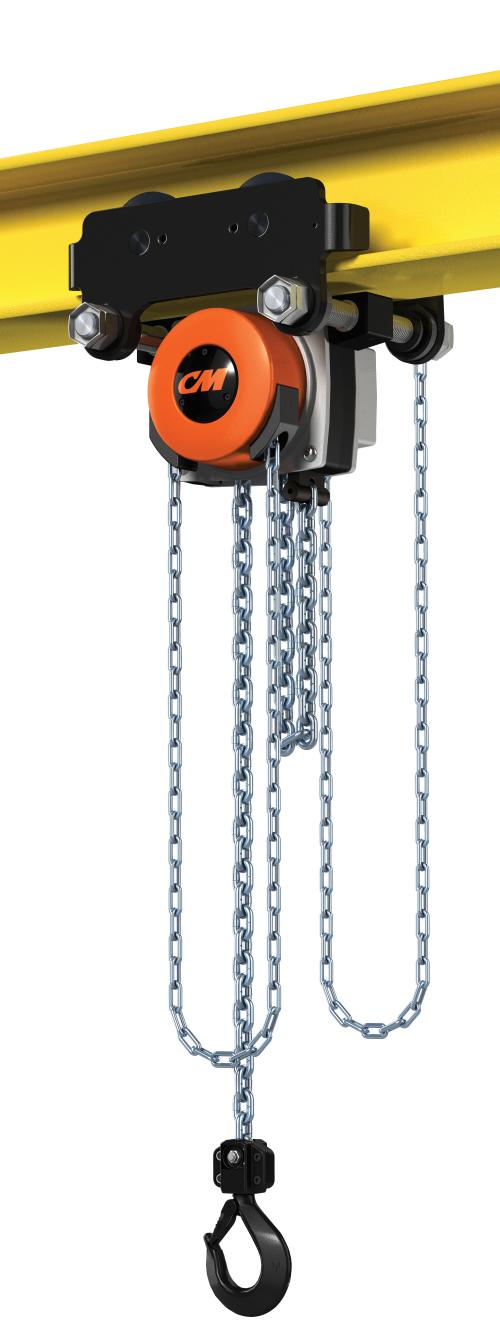
| CM Cyclone Hand Chain Hoist with Low Headroom Trolley | $10,204 | 1/2-6 ton | View → |
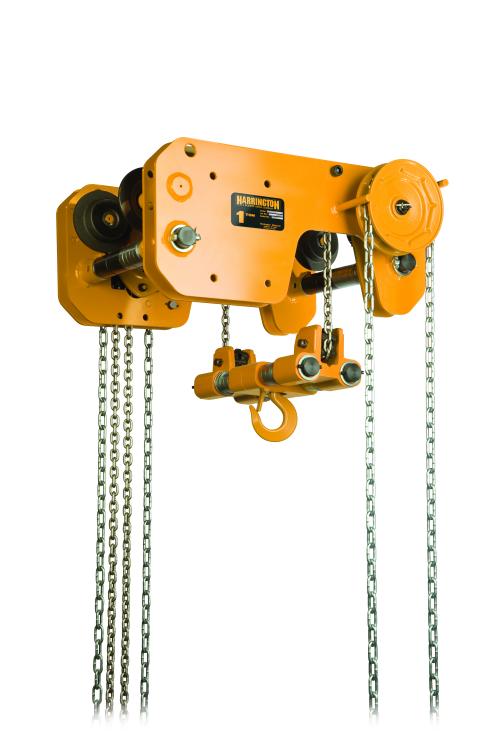
| Harrington SHB Ultra Low Headroom Trolley Hoist | $9,345 | 1-10 ton | View → |
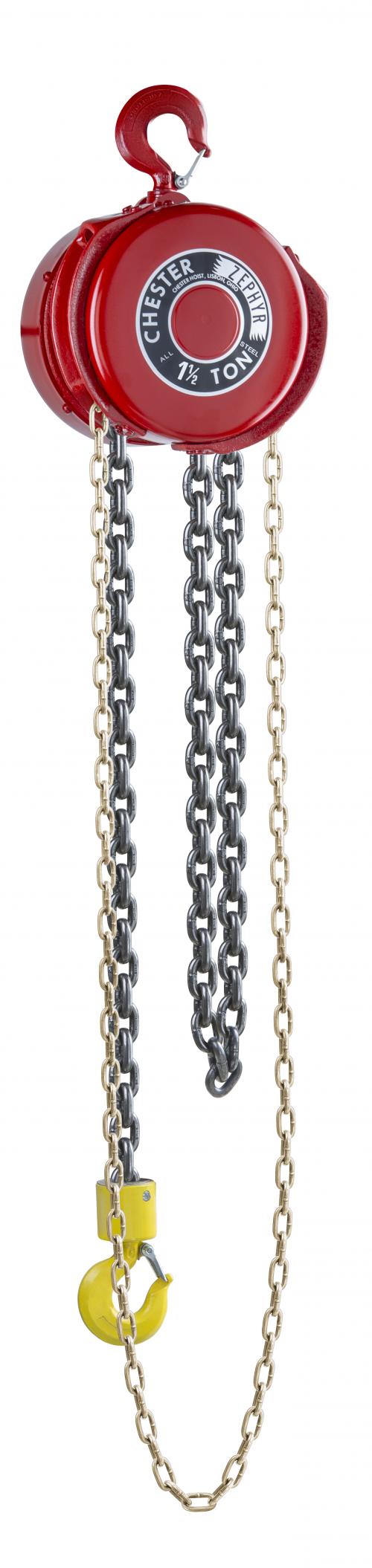
| Chester Zephyr Army Chain Hoist | $9,184 | 1/2-10 ton | View → |
| CM Cyclone Hand Chain Hoist with Army-Type Trolley | $7,991 | 1/4-12 ton | View → |
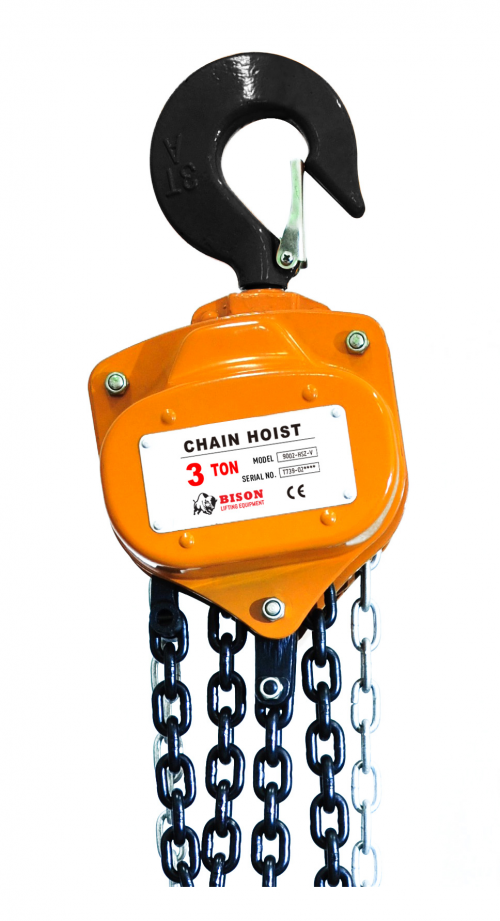 In Stock
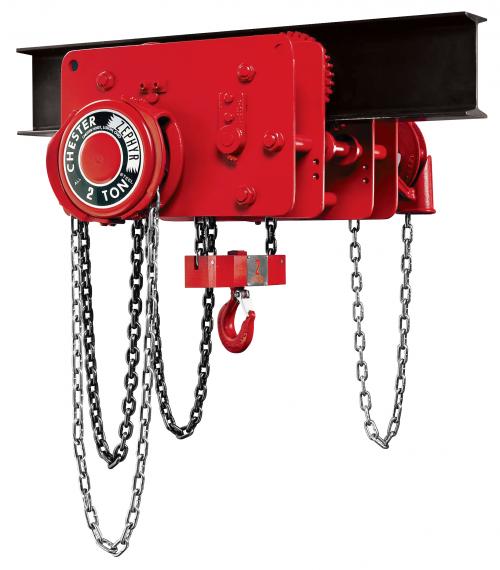 In Stock
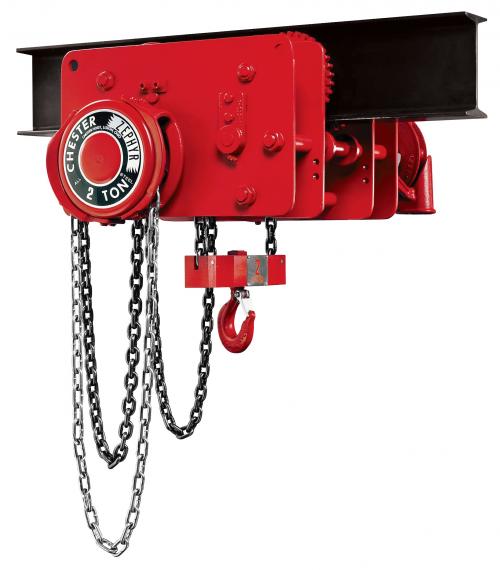 In Stock
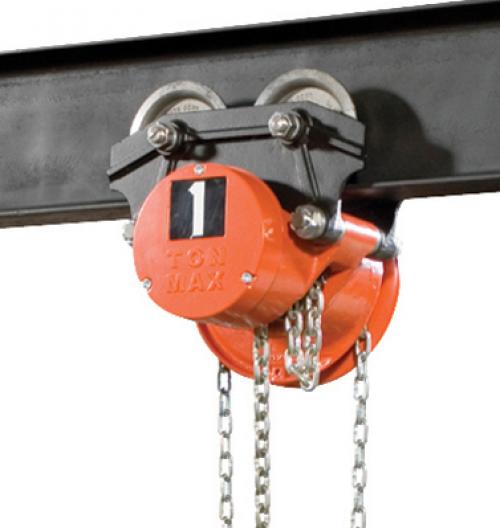 In Stock
 In Stock
 In Stock
 In Stock
 In Stock
 In Stock
 In Stock
 In Stock
 In Stock
 In Stock
 In Stock
 In Stock
 In Stock
 In Stock
 In Stock
 In Stock
 In Stock
 In Stock
 In Stock
Manual Chain Hoists Buying Guide
How a hand chain block holds tons on a light chain. A hand chain hoist turns a light pull into a heavy lift through two mechanisms working together. First, a gear reduction: hauling the endless hand chain spins a pinion that drives the load sheave through a train of gears, so many feet of hand chain travel raise the load chain a short distance, and the effort you feel drops by that same ratio. That is why one person can inch tons upward by hand. Second, the load brake. Most blocks here use a Weston-type screw brake, where two friction discs sandwich a ratchet pawl and the load itself clamps the discs shut through a coarse-thread screw. Stop pulling and the weight holds on its own; pull the slack side and it lowers against that friction, a hair at a time. Nothing electrical, nothing to lose power, which is why a chain block is the lifting tool that goes wherever the job is, on or off the grid.
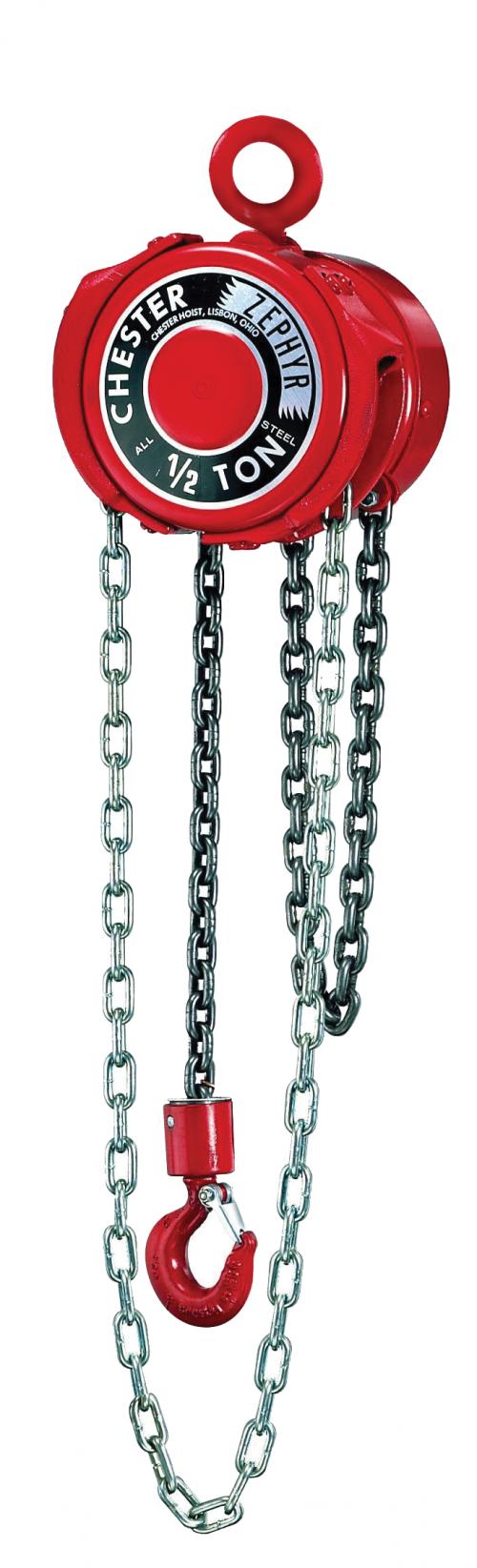
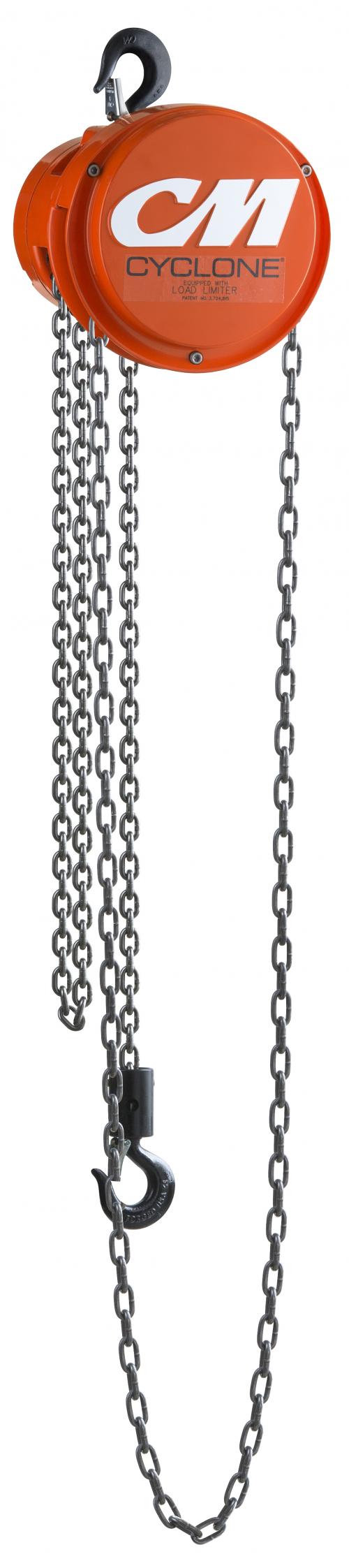
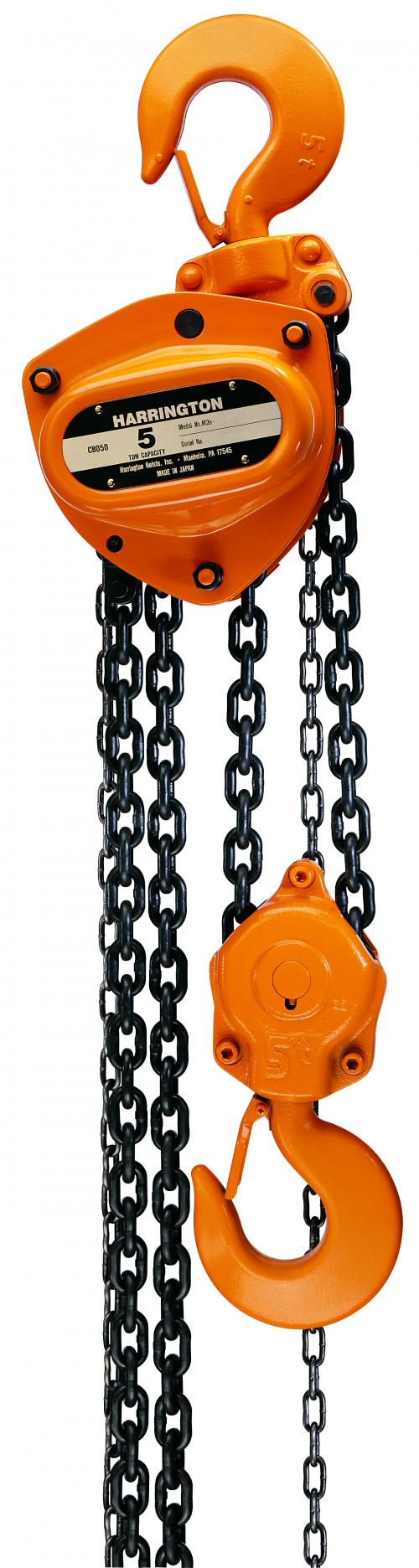
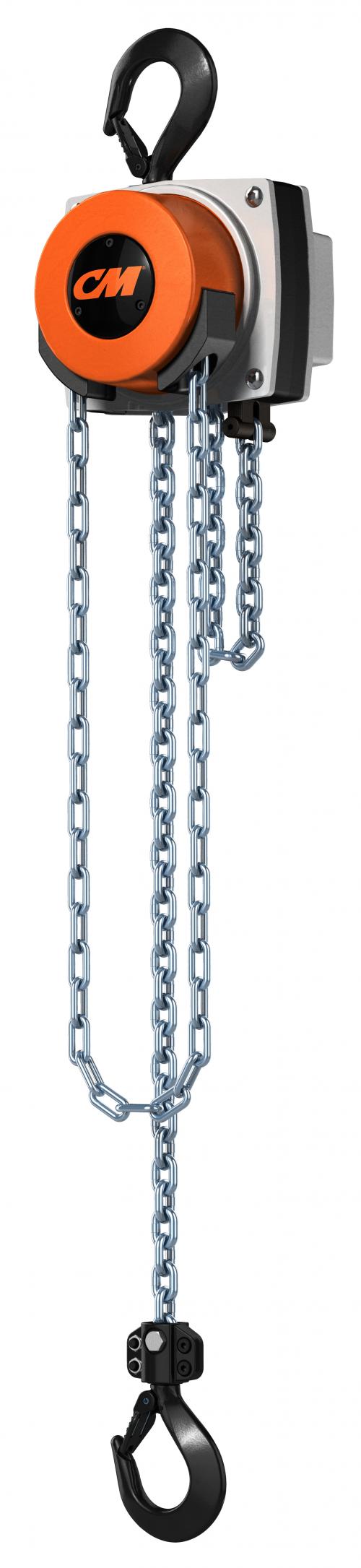
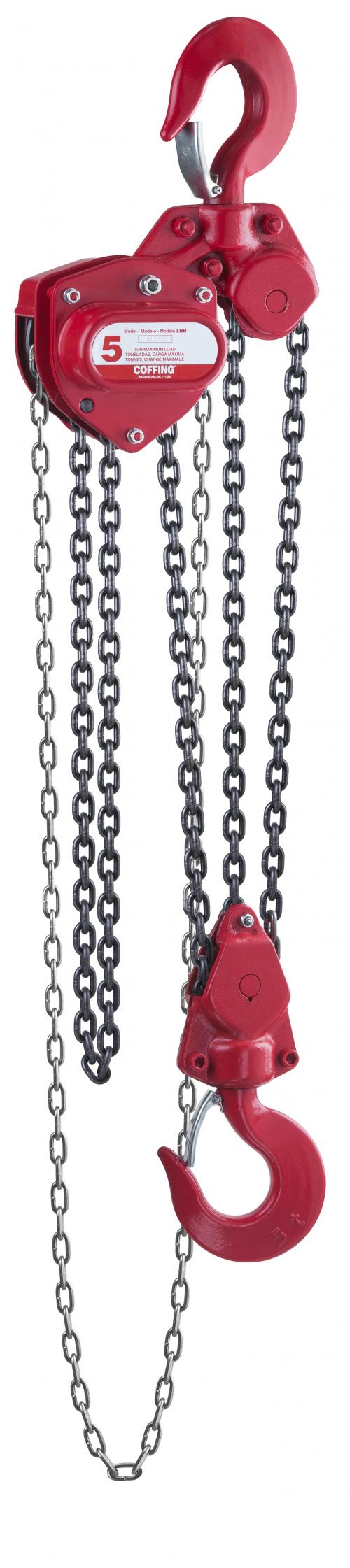
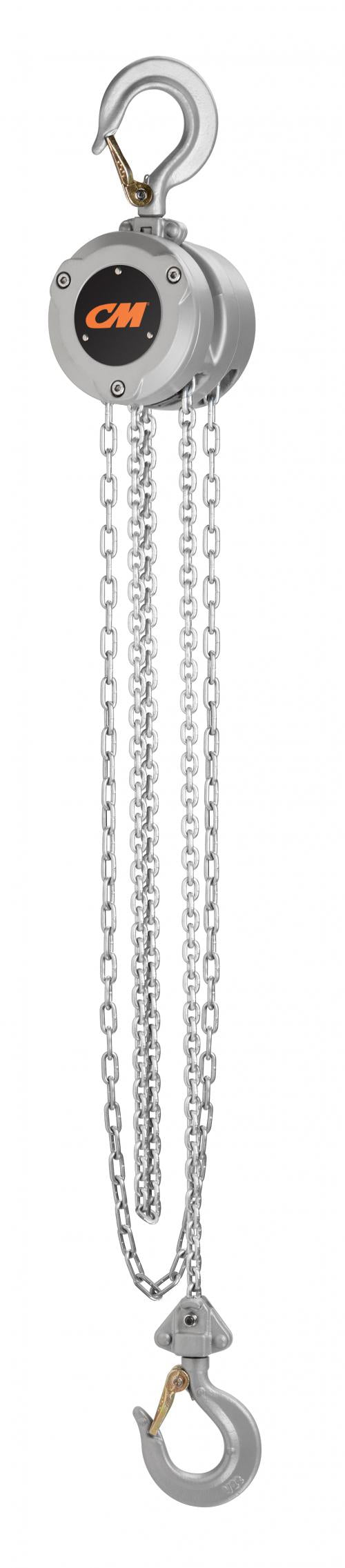
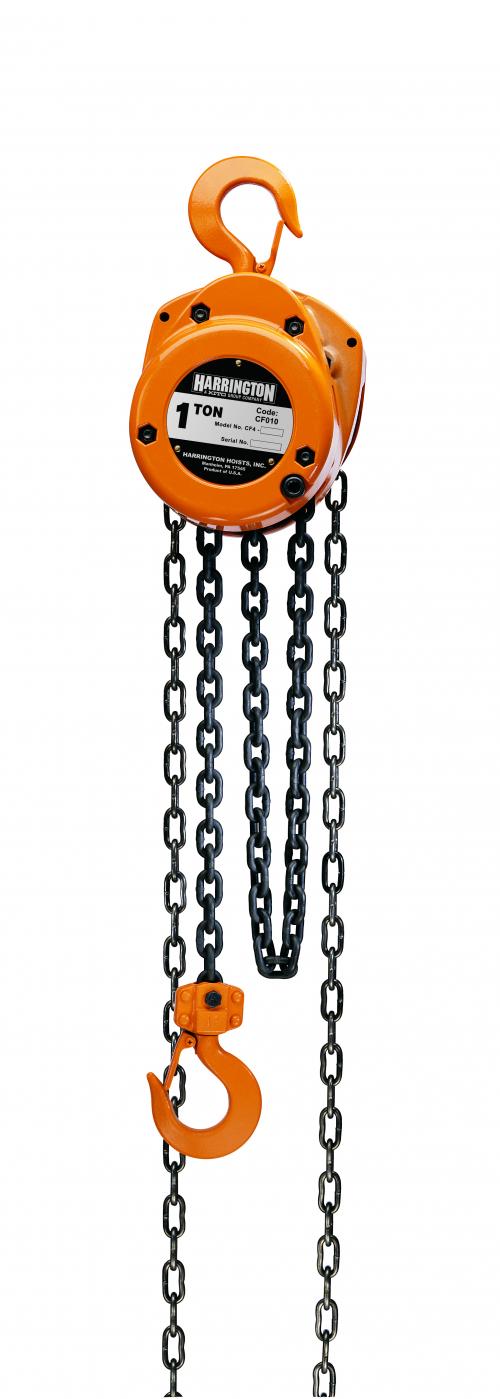
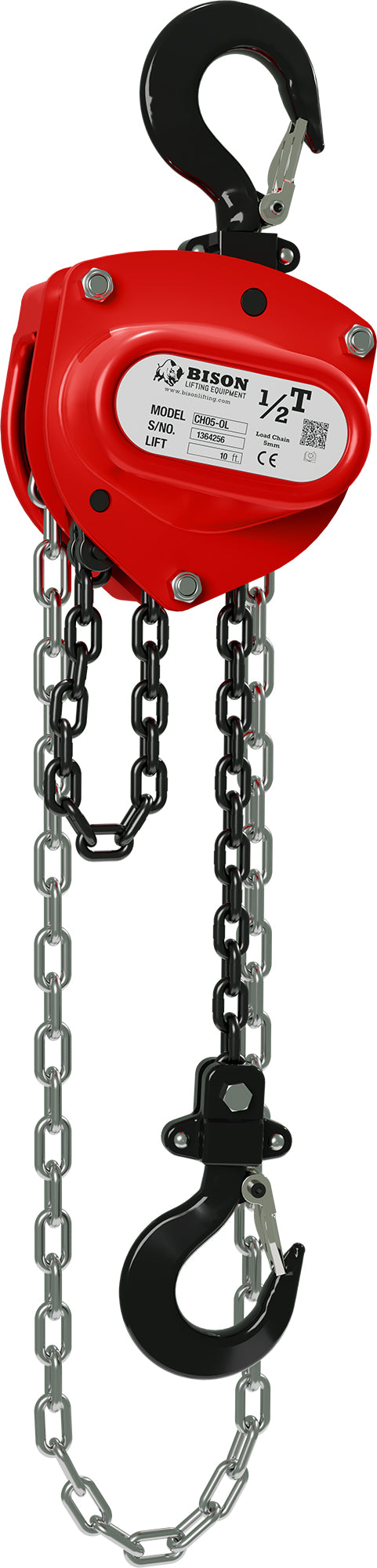
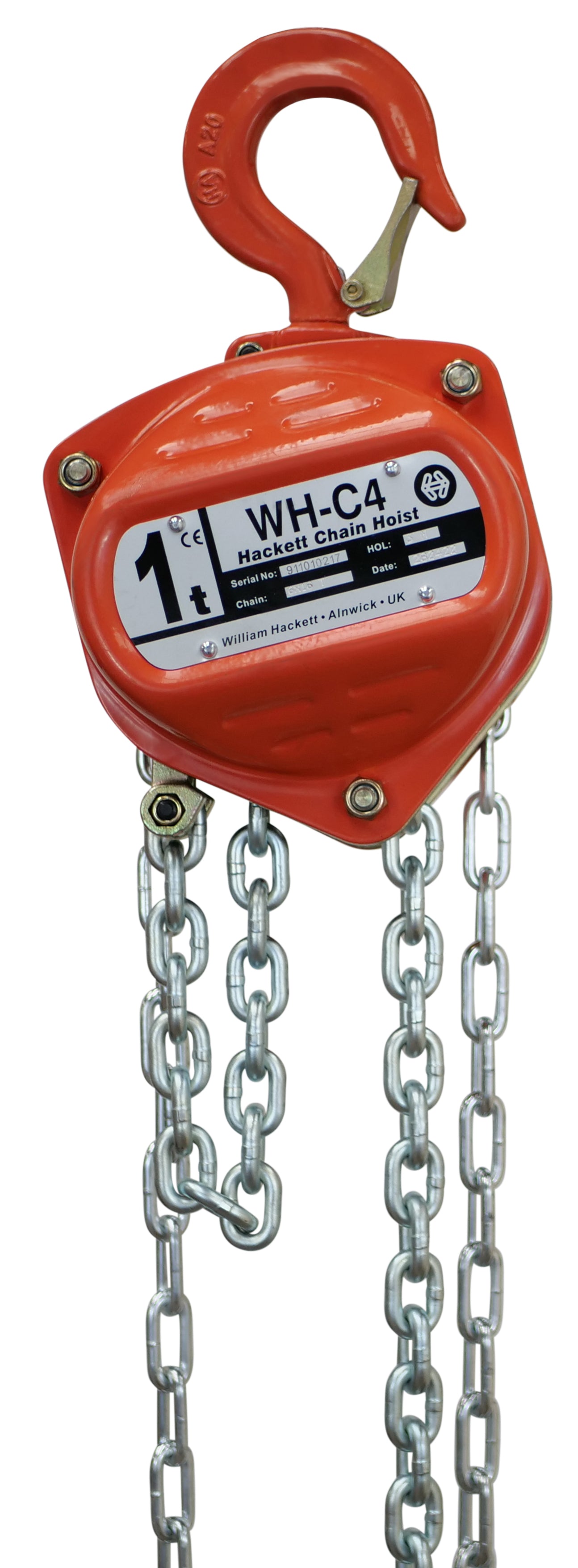
The brand ladder, from a $110 block to shipyard iron. The shelf climbs a clear price and duty ladder. At the entry end the William Hackett WH-C4 lands near $110 in 1/2 and 1 ton, and the Harrington CF, a medium-duty block from about $333, covers 1/2 through 5 ton for maintenance and general shop work. Bison's value blocks run 1/2 to 10 ton from $175, and the Coffing LHH is the familiar American shop block across the same range. The middle and top are where duty and features separate. The Harrington CB is the heavy-duty answer, with a one-piece machined pinion that keeps its gears aligned under full-capacity pulls and a slip clutch that stops you lifting past the rating, in capacities to 20 ton. The CM Cyclone reaches 10 ton, and the CM Hurricane 360 adds a patented hand chain cover that rotates a full 360 degrees so you can pull from any angle or in a tight corner, with a Mini 360 from about $410 for light picks. At the very top, the Chester Zephyr climbs to 25 ton for shipyard and heavy-industrial iron.
Capacity, lift, and how much chain you will haul. Two numbers size the block: capacity and lift. Set capacity to the whole hanging weight, the load plus the slings and shackles below the hook, then round up to the next rating rather than sizing right at your heaviest pick. Lift is the vertical drop the hook has to cover, and it costs you twice: every foot of load chain you order adds hand chain to pull and a longer tail to coil and store, so size the drop to the job and no further. Capacity also changes how the block feels to run. Light ratings lift on a single fall of load chain and move quickly per pull; as capacity climbs, the hoist reeves the load chain over multiple falls to hold the weight, which means more hand chain to haul for the same rise. A 10 ton block is slow by design. Order 10 or 15 foot lifts for typical bay heights, and step up to 20 or 30 only when the drop truly needs it.
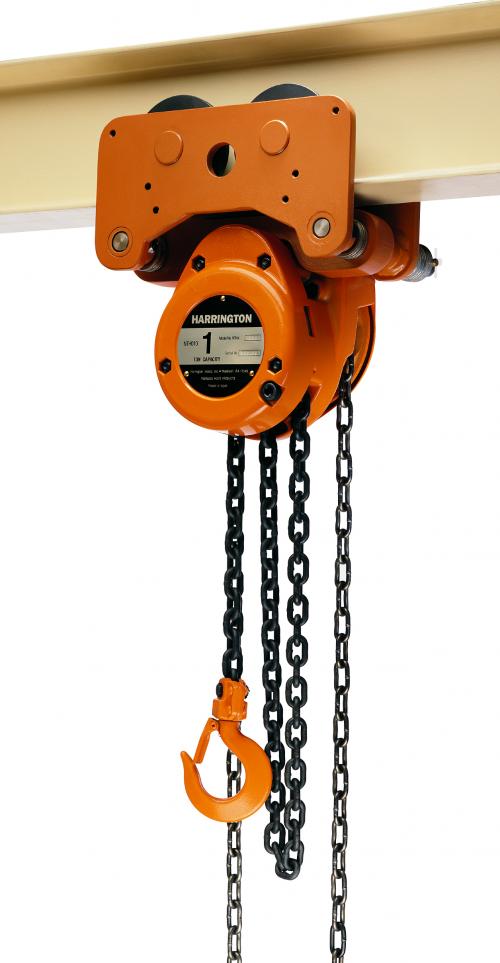
Low headroom blocks and built-in trolleys. Headroom, the space between the beam and the hook at full lift, decides more installs than buyers expect, and a standard block eats a foot or more of it. Where steel is tight, the low-headroom builds pull the load up close to the beam: the Harrington SHB ultra-low-headroom trolley hoist recovers lift height under cramped steel, and the Chester Zephyr low-headroom plain and geared trolley models do the same at heavier capacity. Several blocks here arrive married to a trolley, so you buy one rated unit instead of matching separate parts: the Harrington NTH Navy trolley hoist, the CM Cyclone with army-type or low-headroom trolley, and the CM Hurricane 360 integrated trolley hoist. If you would rather choose the running gear yourself, the beam clamps and trolleys live one shelf over in suspension points. Match any trolley to your beam flange width and to the hoist capacity.
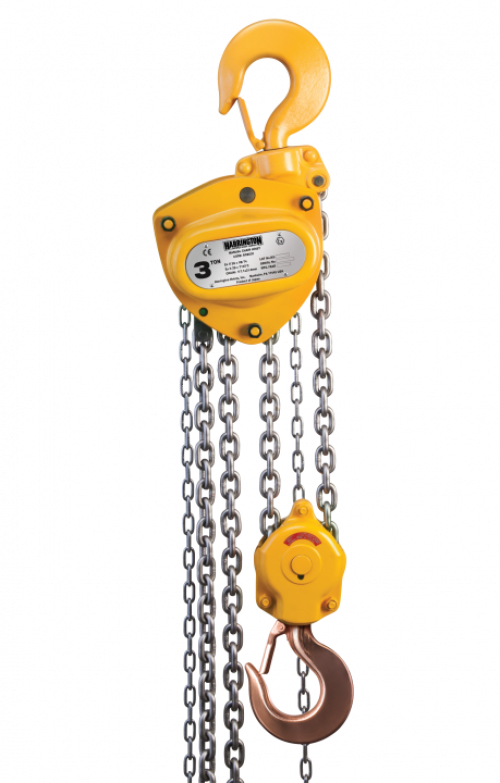
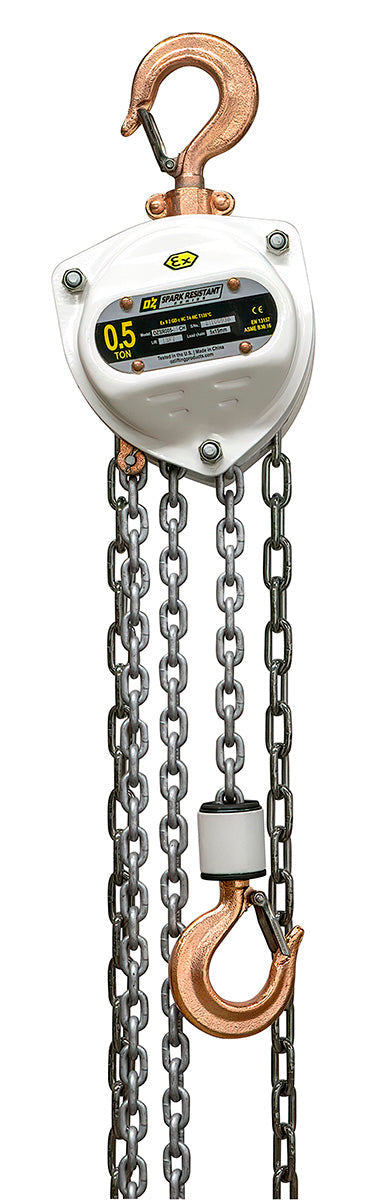
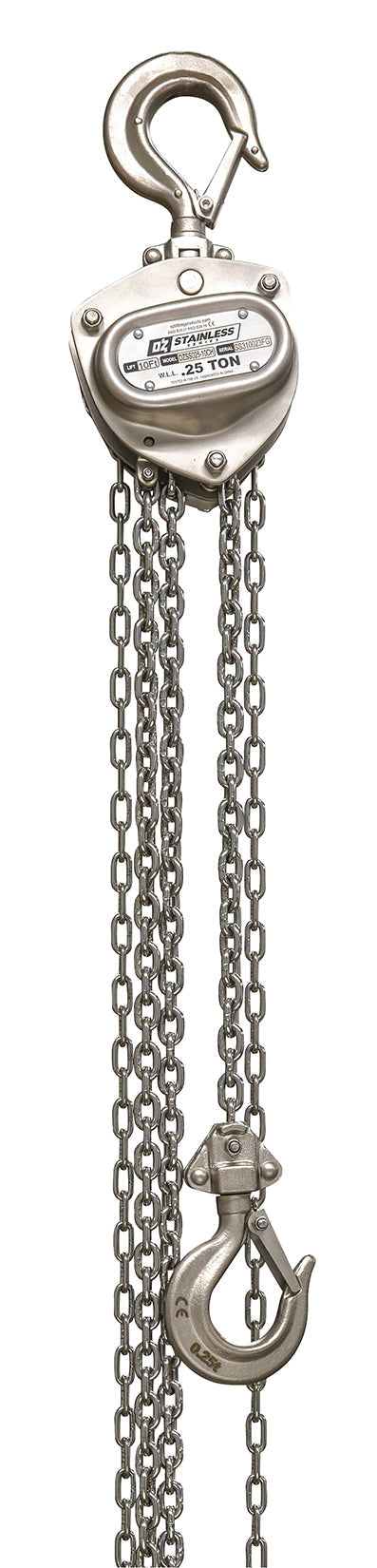
Overload protection, stainless, and spark resistance. Three build options handle the jobs a plain steel block should not. Overload protection: the Bison overload-protection blocks and the Harrington CB carry a slip clutch that gives way before you can lift a load past the rating, which protects the hoist and the person on the chain. Corrosion and washdown: the OZ Lifting stainless steel block, 1/4 to 5 ton, survives food, marine, and chemical settings that rust a standard hoist, and gets specified where sanitation matters. Ignition: in areas with flammable vapor or dust, a stray spark is the hazard, so the spark-resistant OZ Lifting block to 10 ton and the Harrington RCB, 1/2 to 3 ton, use non-sparking components for classified locations. Pick the build for where the hoist has to live, then size capacity and lift the same way you would for any block.
Sizing it right and inspecting under ASME B30.16. Rate the block for everything that hangs, the load plus the slings and shackles below the hook, and where it rides a trolley, remember the trolley and hoist weight count against whatever holds them up. On the rules, hand-chain-operated hoists fall under ASME B30.16, the volume for overhead underhung and stationary hoists, which also covers electric and air chain hoists. It calls for a frequent visual check before use and a documented periodic inspection on intervals that tighten as service gets heavier. The three items that take a block out of service are the load chain (watch for stretch, wear, and gouges), the hooks (a widened throat opening or any crack), and the brake (any slip under load). Keep the rated capacity legible on the hoist and never load past it. And if the pull is not straight down, that is a job for a lever hoist, not a chain block.
Frequently Asked Questions
It is a hand-powered chain block that lifts straight up with no motor or air supply. You pull an endless hand chain, a gear reduction multiplies the pull so one person can raise heavy loads by hand, and a Weston-type load brake parks the weight the instant you stop pulling. Two friction discs clamp a ratchet pawl under the load, so the block holds on its own and lowers only when you pull the slack side against that friction.
Size capacity to the whole hanging weight, the load plus the slings and shackles below the hook, then round up to the next rating rather than buying right at your heaviest lift. Set the lift to the actual vertical drop the hook must cover, not the ceiling height, because extra load chain only adds hand chain to pull and a longer tail to store. Ten or fifteen foot lifts suit most bays; step up to twenty or thirty only when the drop needs it.
It tracks duty and budget. For occasional maintenance lifts, the William Hackett WH-C4 near $110 or the medium-duty Harrington CF from about $333 are plenty, and Bison and Coffing blocks cover general shop work from $175. For heavy, frequent, full-capacity lifting, step up to the Harrington CB with its one-piece machined pinion and slip clutch, the CM Cyclone, or the CM Hurricane 360 with its 360-degree rotating hand chain. The Chester Zephyr reaches 25 tons for the heaviest iron.
An overload clutch, which the Bison overload-protection blocks and the Harrington CB carry, slips before the hoist can lift a load past its rating. It stops the most common abuse of a hand block, where an operator keeps pulling on something too heavy, and it protects both the hoist and the person on the chain. It does not replace sizing the hoist correctly; it is a backstop, not a license to overload.
Some do. The Harrington NTH Navy trolley hoist, the CM Cyclone with army-type or low-headroom trolley, and the CM Hurricane 360 integrated trolley hoist arrive as one rated unit. Where the space between beam and hook is tight, the low-headroom builds like the Harrington SHB and the Chester Zephyr low-headroom trolley models pull the load up close to the beam. If you would rather choose the running gear yourself, the beam clamps and trolleys are in the suspension points collection; match any trolley to your beam flange width.
Hand-chain hoists fall under ASME B30.16, which requires a frequent visual check before use and a documented periodic inspection on a schedule that tightens as the hoist works harder. Watch three things: the load chain for stretch, wear, and gouges; the hooks for a widened throat opening or cracks; and the brake for any slip under load. Anything in doubt comes out of service until a qualified person clears it, and the rated capacity must stay legible on the hoist.