Pneumatic Hoists
A pneumatic hoist runs its lift on compressed air rather than an electric motor or a hand chain, and that one difference is why it lands the two jobs where the other drives struggle: work that runs all shift, and work that cannot risk a spark. This collection is built almost entirely on Harrington, with the Columbus McKinnon Shopair alongside it, and it spans the compact AH Mini-Cat at a couple hundred pounds up through six-ton hook and trolley machines. Capacities run from 250 lb to 6 ton in hook-mount, lug-mount, and integrated air-trolley versions, plus lube-free models for clean processes and spark-resistant models for hazardous areas. Prices begin in the mid four figures for a Mini-Cat and climb into five figures for the large-capacity and ATEX-rated units. The guide below takes the buy in order: why air at all, then capacity and speed, then the clean-or-hazardous question, then the air supply you need to feed it.
Compare Pneumatic (Air) Hoists
| Model | Price | Capacity | |
|---|---|---|---|
| Harrington TCKM Air Powered Trolley Hoist | $15,624 | 3-6 ton | View → |
| Harrington TCK Hook Mount Air Hoist | $10,407 | 3-6 ton | View → |
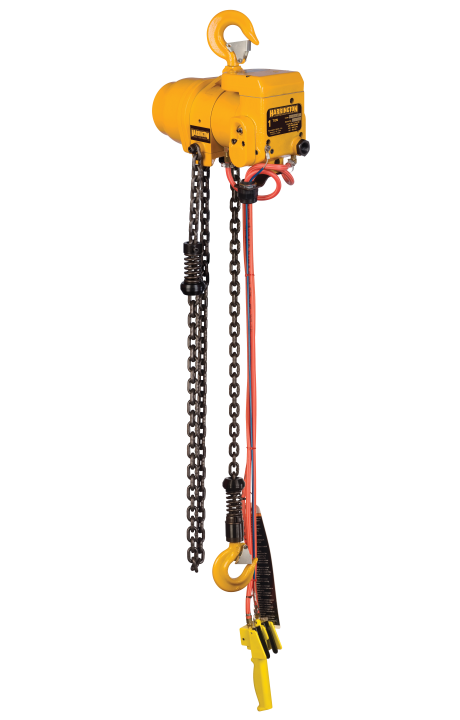
| Harrington TCRM Air Powered Trolley Hoists | $10,390 | 1/4-2 ton | View → |
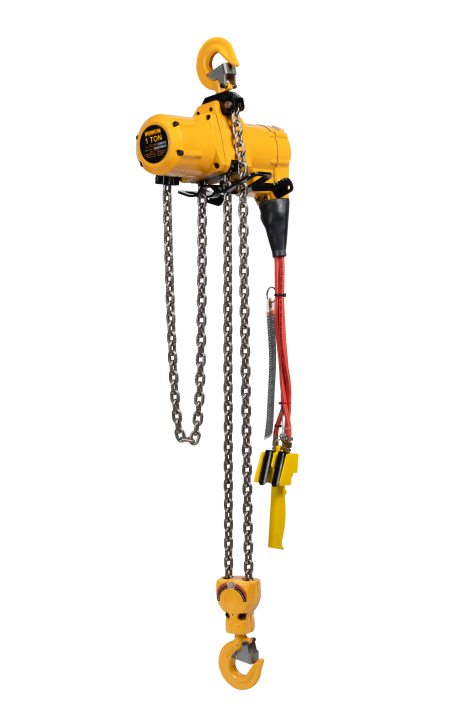
| Harrington TCLM Lube-Free Air Powered Trolley Hoists | $10,050 | 1/4-6 ton | View → |
| Harrington MCR Air Powered Trolley for TCK Series | $9,649 | 3-6 ton | View → |
| Harrington MCL Lube-Free Air Powered Trolleys | $8,579 | 1-6 ton | View → |
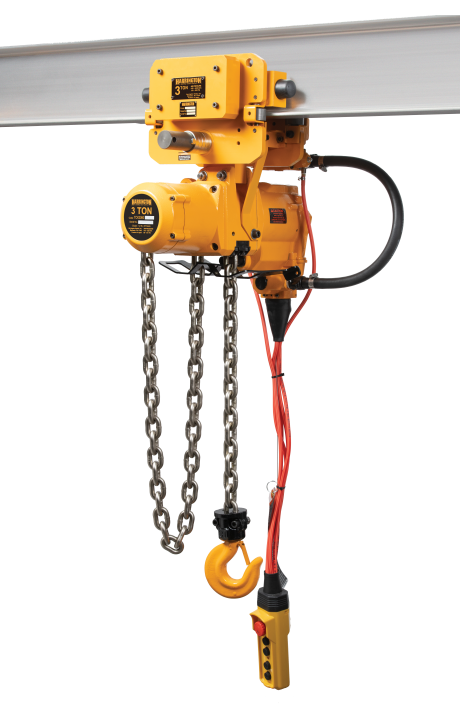 In Stock
 In Stock
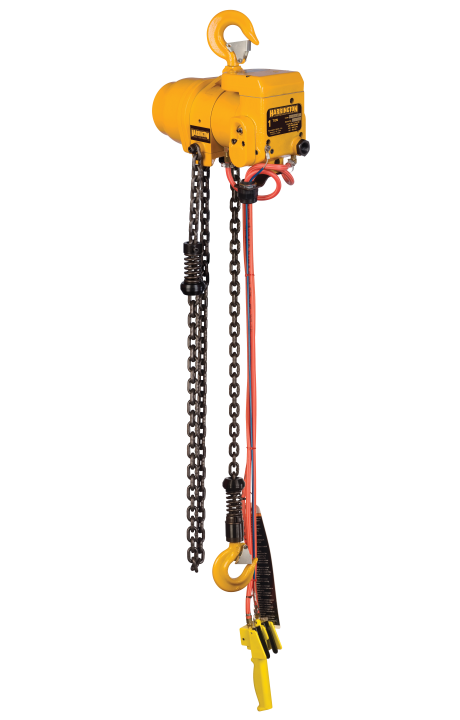 In Stock
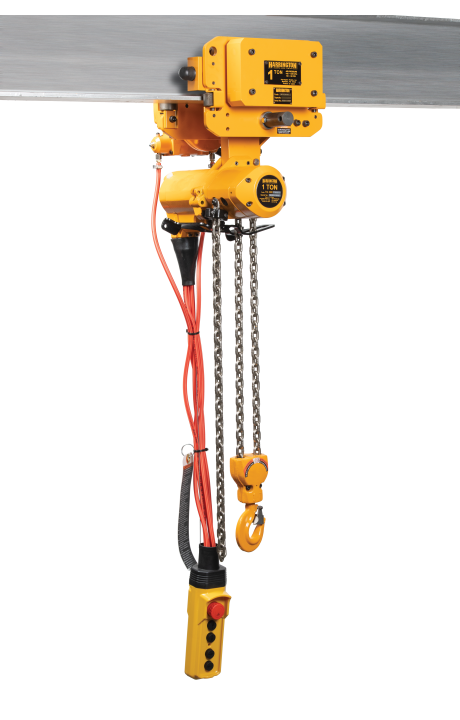 In Stock
 In Stock
 In Stock
 In Stock
 In Stock
 In Stock
 In Stock
 In Stock
 In Stock
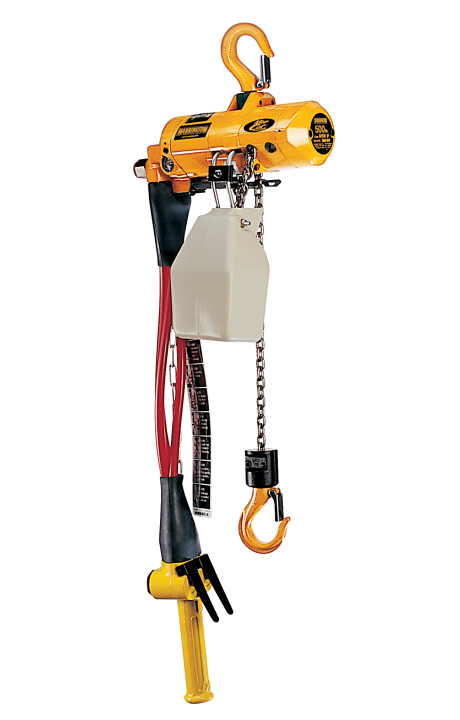 In Stock
Pneumatic (Air) Hoists Buying Guide
What a pneumatic hoist is for. A pneumatic hoist earns its price on two jobs, and neither one is the lift itself. The first is duty cycle. An electric hoist carries a rated run time, and a bargain unit cycling hard all shift eventually trips its thermal overload or cooks its windings; an air hoist has the compressed air flowing through the motor to carry that heat away, so it runs an unlimited number of starts and stops without overheating. The second is ignition. An air motor turns with no electrical arc, so it can work in an atmosphere where a spark would be a problem, which is why refineries, paint lines, and grain handling reach for air where an electric chain hoist is not an option. If your work is neither high-cycle nor hazardous, air is usually the wrong tool: it costs more up front and needs a compressor to feed it. Buy air when the hours or the atmosphere demand it.
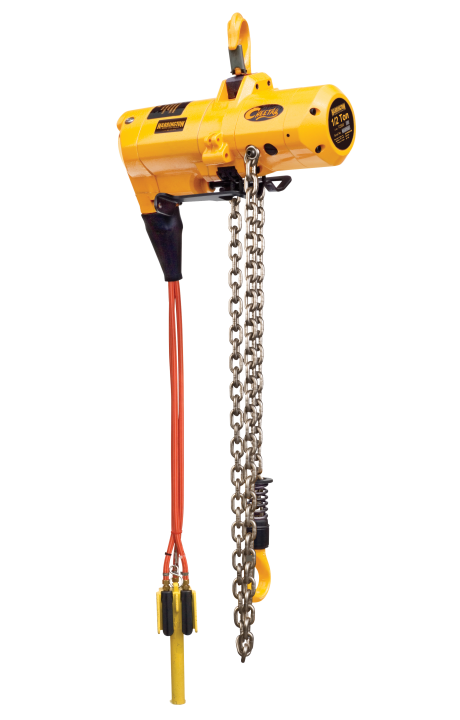
The vane motor, and why it feathers so well. Inside the housing is a rotary vane air motor: spring-loaded vanes ride in a rotor, compressed air pushes them around, and the exhaust vents out through a muffler. Two things fall out of that design. Because the airflow cools the motor as it works, the duty rating is effectively continuous, so the hoist tolerates the near-nonstop production and repositioning that would overheat other drives. And because you meter the lift with an air valve instead of switching a motor on and off, the speed is infinitely variable from a crawl to full rate. That fine control is the quiet reason assembly and machine-tending crews favor air: you can inch a load into a fixture with the pendant or pull cord and set it down without the slam of an on-off contactor. Harrington's TCR and Cheetah lines and the CM Shopair all run this kind of vane motor.
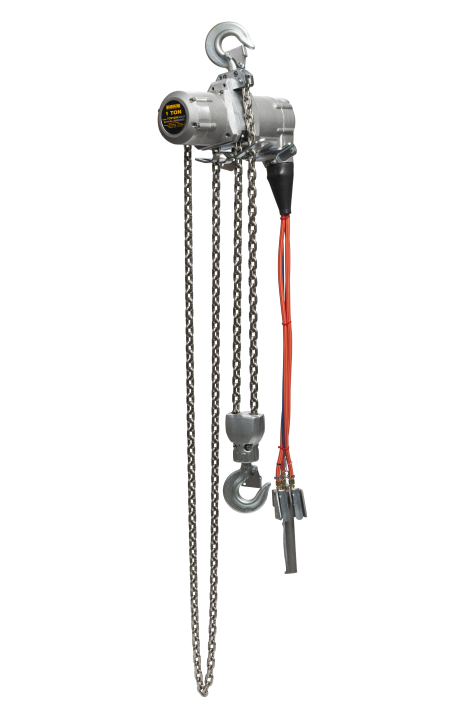
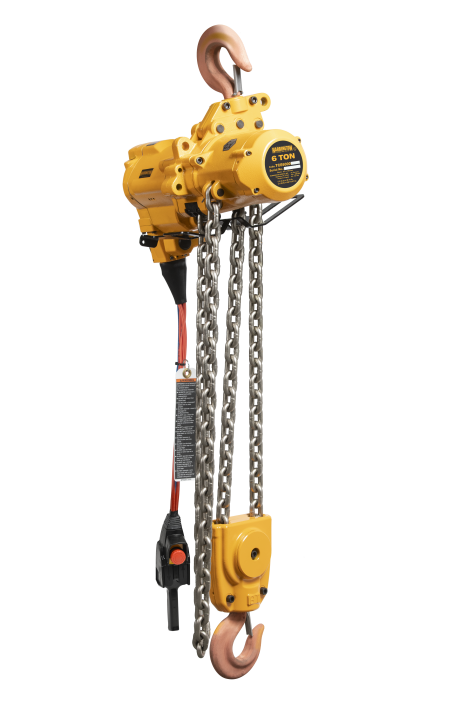
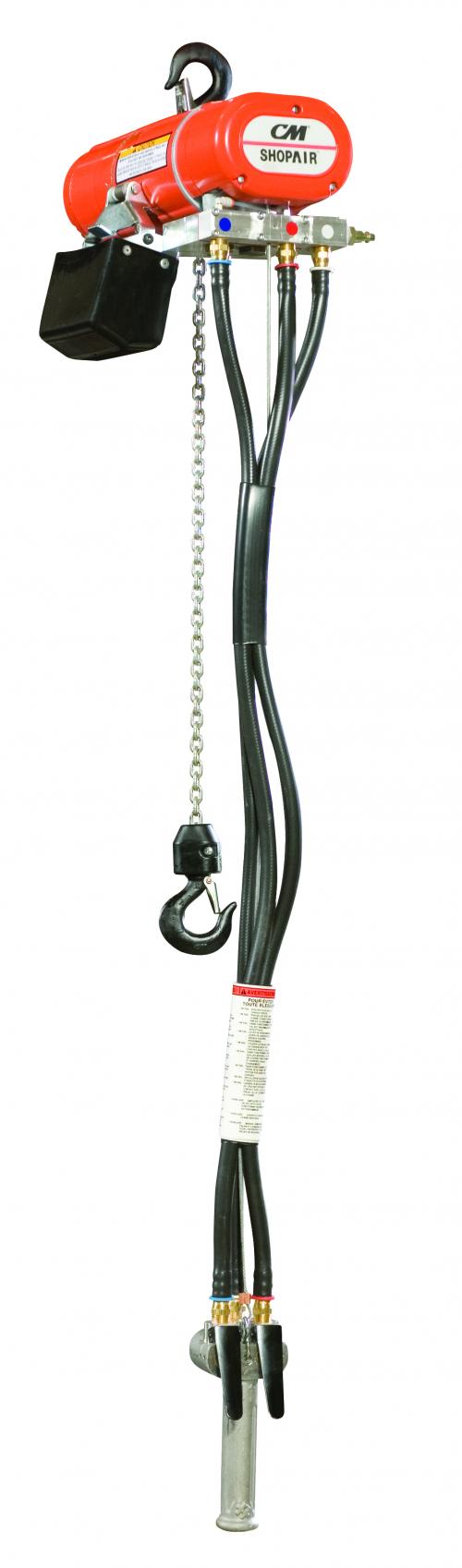
Capacity and speed come as a pair. Size the capacity the usual way: total the load plus the hook, sling, and below-hook gear, then round up. The range here starts small. The compact Harrington AH Mini-Cat handles 250 to 500 lb for light bench and machine work, the CM Shopair covers 250 lb to 1,000 lb, and the TCS Cheetah and TCR series carry the shop midrange from a quarter ton to two tons, with the TCK hook-mount taking it up to three and six tons. Read the speed alongside the tonnage, because on an air hoist the two trade directly: a TCR lifts around 68 feet per minute at a quarter ton and drops to roughly 19 feet per minute at two tons on the same air. Higher tonnage on a single frame comes from reeving more falls of chain, which halves the speed again and adds a taller hook block, so confirm the loaded unit still clears your headroom.
Clean-air work: lube-free and washdown. A conventional air motor needs a little oil in its air supply to protect the vanes, and that oil leaves the muffler as a fine mist. In a machine shop nobody cares; over an open food line, a pharmaceutical process, or a clean assembly it is a contaminant. That is the whole reason for the lube-free models. The Harrington TCL runs without air-line lubrication and vents no oil mist, in capacities from a quarter ton to six tons, and the TWC lube-free washdown series adds sealed, corrosion-resistant construction for wet sanitation areas in half-ton and one-ton sizes. Reach for lube-free whenever oil mist cannot land on the product below the hook; reach for the washdown build when the hoist itself gets hosed down. Both still want clean, dry, filtered air, they simply skip the lubricator.
The spark question, done properly. Spark-resistant is not a marketing word here, it is a rating. The Harrington TCE EX line is built with components chosen to reduce impact and friction sparking and is certified to the ATEX directive for Category 2 locations, meaning atmospheres made hazardous by IIB gases such as ethylene, methane, and propane or by IIIB combustible dusts. That puts it in petroleum, chemical, pharmaceutical, and similar plants where anti-sparking equipment is required, in capacities from a quarter ton to six tons. The rating covers the whole assembly, so if you truly need explosion protection, the chain, hooks, and trolley have to carry it too, not the motor alone. Match the hoist's marked category and gas or dust group to the classification of your specific area rather than assuming any air hoist is safe there; a plain air hoist is low-ignition but not certified.
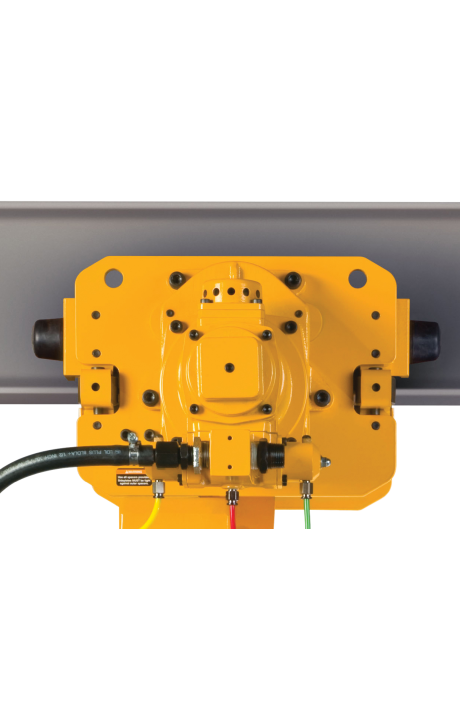
Hook, lug, or an air-powered trolley. How the hoist mounts is the last spec. A hook-mount unit like the Cheetah or the TCK hangs from a beam clamp or a trolley eye and is the simplest way in when the load stays in one spot. A lug-mount, offered on the TCR, bolts the hoist body directly to a trolley or structure for a lower, tighter installation. And where the load has to travel the beam, the integrated air-powered trolley versions, the TCRM, the lube-free TCLM, and the TCKM, run the trolley motor off the same air line as the hoist, so one air drop powers both lift and travel with no electricity anywhere on the machine. If you would rather add travel to a hook-mount hoist yourself, the beam clamps and plain, geared, and motorized trolleys live in the suspension points collection; match any of them to your beam flange width and the hoist capacity.
Feeding the hoist, and the inspection rules. An air hoist is only as good as the air behind it, and this is where installs go wrong. The motor wants a constant supply in the 60 to 90 psi range, and at full load a working hoist pulls real volume, on the order of fifty to seventy cubic feet per minute for the mid-capacity units, so a compressor and lines sized for a couple of impact wrenches will starve it and lose lifting speed. Put a filter-regulator-lubricator at the drop to deliver clean, dry, regulated air (leave the lubricator off the lube-free models), and size the line for the flow as well as the pressure. On the rules, air-powered chain hoists fall under ASME B30.16 exactly as electric and hand-chain hoists do: a pre-use check every shift, frequent inspections stepped up with heavier service, and a documented periodic inspection at least yearly, with the load chain gauged for stretch and the hooks watched for a widened throat. Keep the rated capacity legible and never load past it.
Frequently Asked Questions
Air wins on two conditions and loses everywhere else. Choose air when the hoist runs near-continuously, since the compressed air cools the vane motor and it handles unlimited starts and stops without overheating, and when the area cannot risk an electrical spark, since an air motor has no arc. If the job is neither high-cycle nor hazardous, an electric or manual hoist costs less and needs no compressor. The trade for air is the up-front price and the air supply you have to run to it.
Plan for a constant supply of roughly 60 to 90 psi, and size for volume as much as pressure. At full load the mid-capacity Harrington units draw on the order of fifty to seventy cubic feet per minute, so a small compressor sized for hand tools will starve the hoist and it will lift slowly. Run an adequately sized line and fit a filter-regulator-lubricator at the drop to deliver clean, dry, regulated air. On lube-free models you keep the filter and regulator but leave the lubricator off.
A standard air motor carries a little oil in its air supply to protect the vanes, and that oil exhausts as a fine mist. A lube-free hoist like the Harrington TCL runs without that lubrication and vents no oil mist, which matters over food, chemical, and pharmaceutical processes where oil cannot contaminate the product. The TWC lube-free washdown series adds corrosion-resistant, sealed construction for areas that get hosed down. If oil mist below the hook is a problem, buy lube-free; if not, a standard air hoist is cheaper.
Only the ones rated for it. A plain air hoist has no electrical arc and is low-ignition, but that is not the same as certified. The Harrington TCE EX line is built spark-resistant and certified to the ATEX directive for Category 2 areas with IIB gases like ethylene, methane, and propane or IIIB combustible dusts, for petroleum, chemical, and pharmaceutical plants. If your area is a classified hazardous location, match the hoist's marked category and gas or dust group to that classification, and make sure the chain, hooks, and any trolley carry the rating too.
Speed is infinitely variable on an air hoist because you meter it with a valve rather than switching a motor, so you can run anywhere from a crawl to full rate and feather a load precisely into place. Full-rate speed drops as capacity rises on the same frame: a Harrington TCR runs about 68 feet per minute at a quarter ton and around 19 feet per minute at two tons, and adding falls of chain for higher tonnage halves it again. Read the rated speed next to the tonnage when you compare models.