Lever Hoists
A lever hoist is the manual hoist you reach for when the pull is not straight down: a ratcheting handle drives the load chain, so the same tool lifts, pulls, and tensions at any angle a hand chain block cannot work. The shelf here is all chain-type ratchet hoists from Bison, CM, Coffing, Harrington, and OZ Lifting, from a value Bison unit around $184 and short-handle minis that ride in a truck box up through production-duty models and a stainless hoist for washdown and marine work. Capacities run from the light minis up to roughly nine tons, and several add free-chaining to pull slack fast plus an overload clutch that stops you cranking past the rating. The guide below takes the buy in order: confirm this is the right tool over a chain block, then size the capacity and lift, pick the handle and features you need, and check the unit against the standard that governs lever hoists.
Compare Lever Hoists (Come-a-longs)
| Model | Price | Capacity | |
|---|---|---|---|
| OZ Lifting Stainless Steel Lever Hoist | $934 | 1/4-3 ton | View → |
| CM Tornado 360 Ratchet Lever Hoist | $815 | 3/4-9 ton | View → |
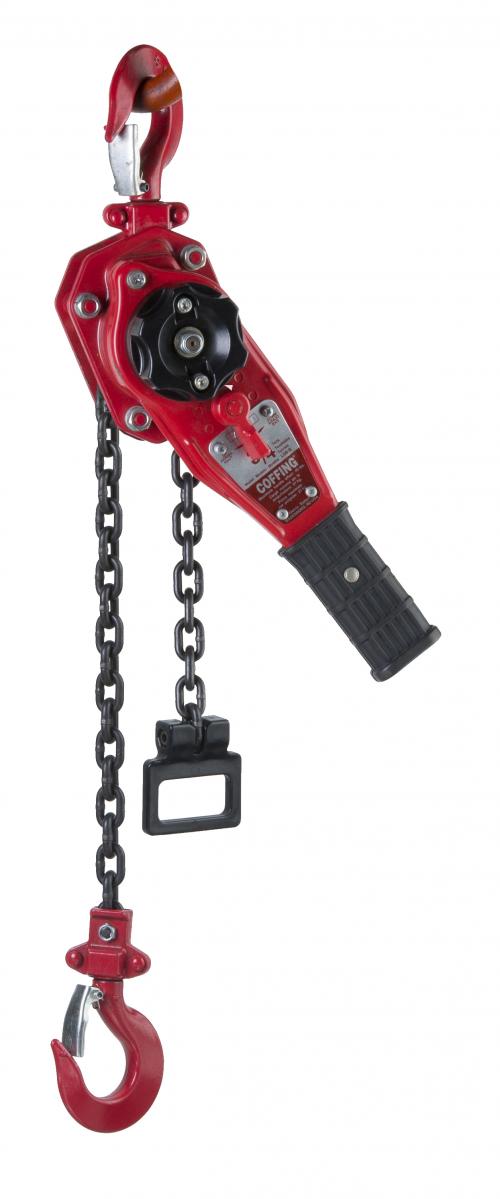
| Coffing LSB-NC Ratchet Lever Hoist | $626 | 3/4-6 ton | View → |
| Harrington LB Lever Hoist | $558 | 3/4-9 ton | View → |
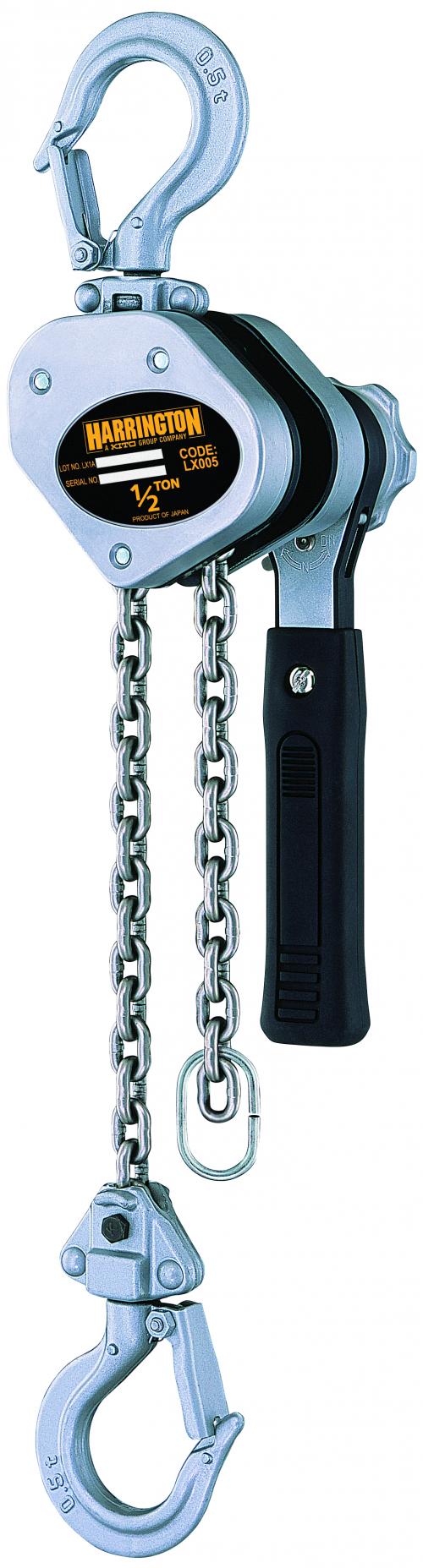
| Harrington LX Mini Lever Hoist | $355 | 1/4-1 ton | View → |
| CM Mini Ratchet Lever Hoist | $314 | 550-1,100 lb | View → |
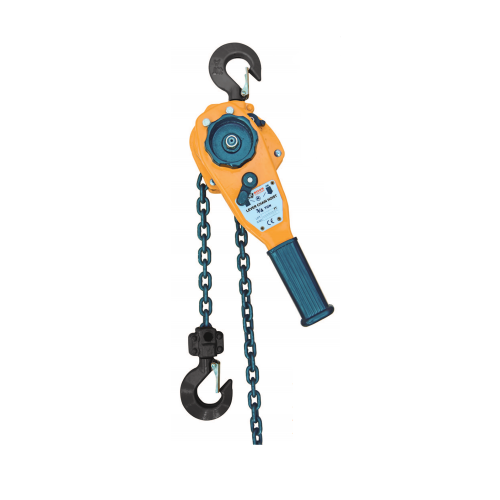 In Stock
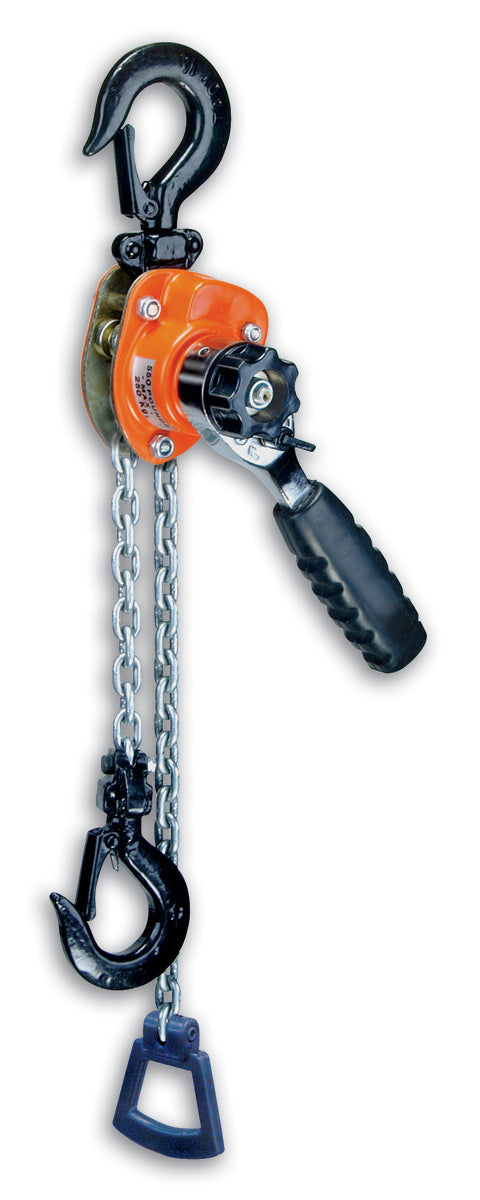 In Stock
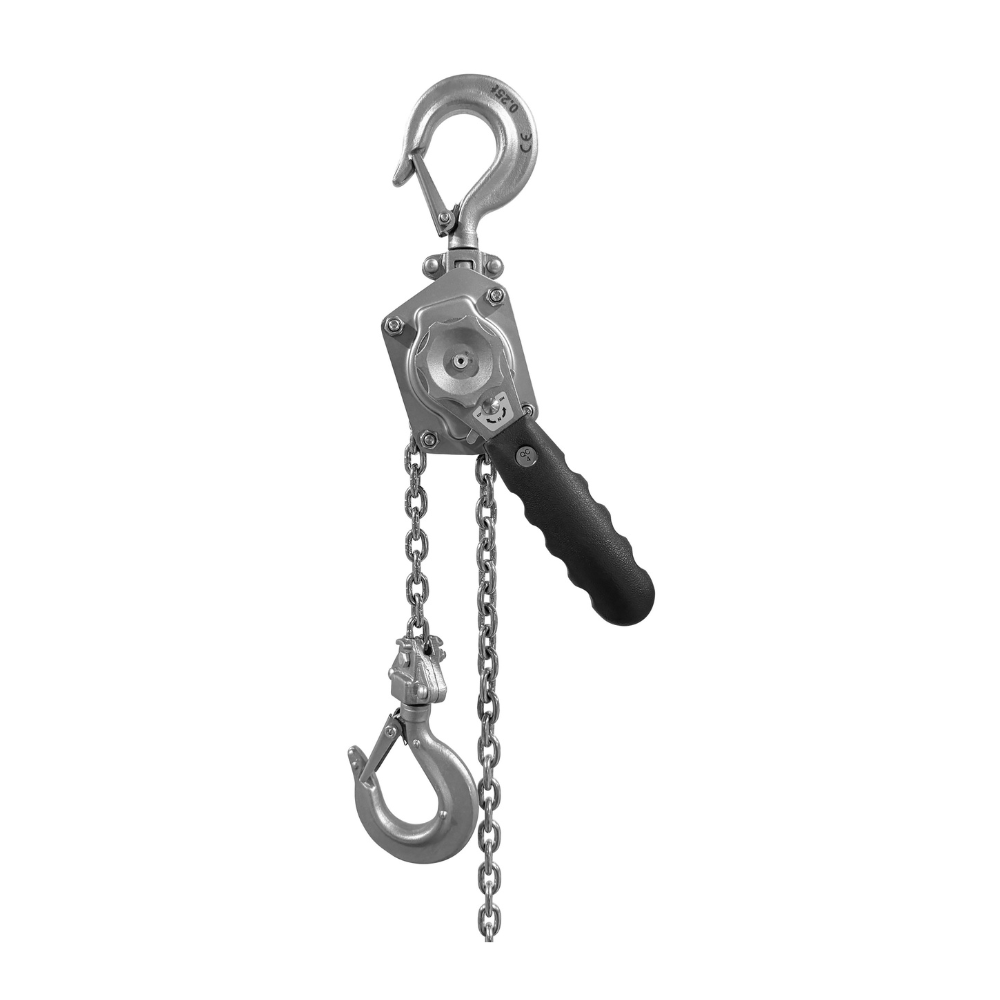 In Stock
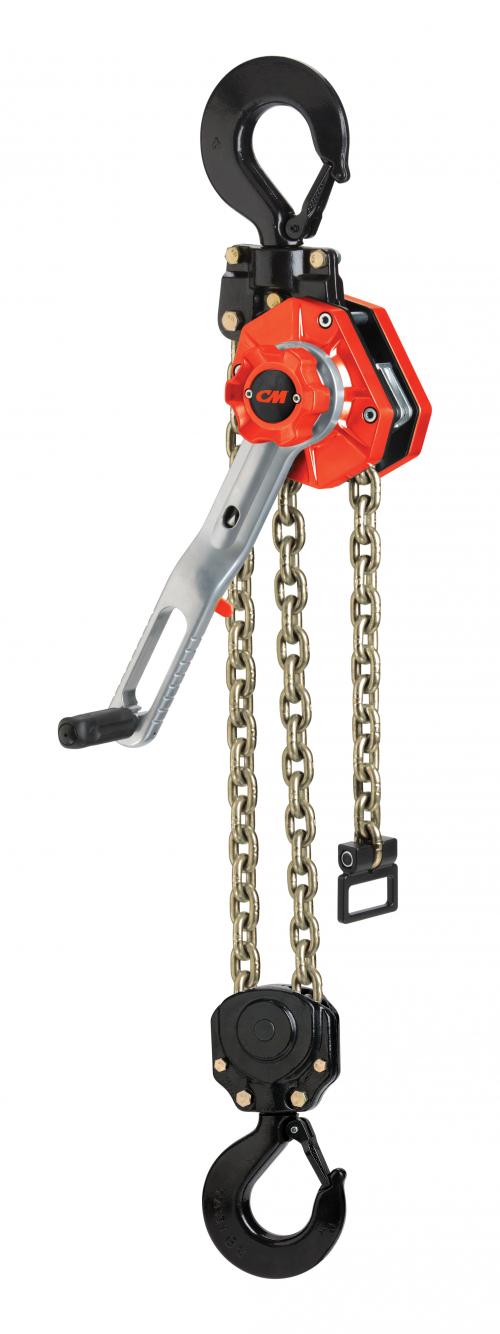 In Stock
 In Stock
 In Stock
 In Stock
 In Stock
 In Stock
Lever Hoists (Come-a-longs) Buying Guide
How a lever hoist actually moves the load. Swing the handle back and forth and a ratchet-and-pawl gear train advances the load chain one link at a time, so you gain a large mechanical advantage from a short stroke and can work the handle in whatever arc the space allows. A selector knob sets the direction: up, neutral, or down. Neutral is the free-chaining position, where the pawl disengages and you pull the chain by hand to close the gap to the load before you ever crank, which saves the ratcheting for the lift itself. The load is held by a Weston-type screw brake, the same friction-disc-and-ratchet mechanism a hand chain block uses: the weight clamps two friction discs shut against a ratchet pawl through a coarse-thread screw, so the load parks the instant you stop and lowers only against that friction. That is why a lever hoist holds tons on a handle a person can swing one-handed.
Come-along is a loose name, so know what you are buying. The nickname come-along gets applied to two different tools. Traditionally it meant a wire-rope cable puller with a drum, a lighter device for dragging and light pulling. Everything on this shelf is the other kind, a chain lever hoist, and the difference is real: the geared chain hoist multiplies your effort far more than a direct-acting cable arm, the load chain will not kink or throw wire splinters the way cable does, and it carries a genuine overhead lifting rating. These are rated lifting hoists built to ASME B30.21, not a light puller you would trust only to drag. If your job is a real overhead pick or a heavy tension, buy the chain lever hoist; keep the cable come-along for light horizontal drags where lifting is not involved.
The jobs a chain block cannot do. A hand chain block only pulls straight down. A lever hoist works at any angle, which opens up a whole class of jobs: tensioning guy wires and stays, pulling machinery into alignment, dragging a skidded load across a floor, snugging up rigging and pulling the slack out of a sling, cinching a load down for transport, and making the off-vertical or sideways picks that come up in field service and confined spaces. That versatility is the whole reason it lives apart from the manual chain hoists shelf. The two are not interchangeable. If the pull is straight down and repetitive, the chain block is cheaper and better; the moment the line runs horizontal, off-angle, or the task is tensioning rather than lifting, the lever hoist is the right tool and the block simply will not do it.
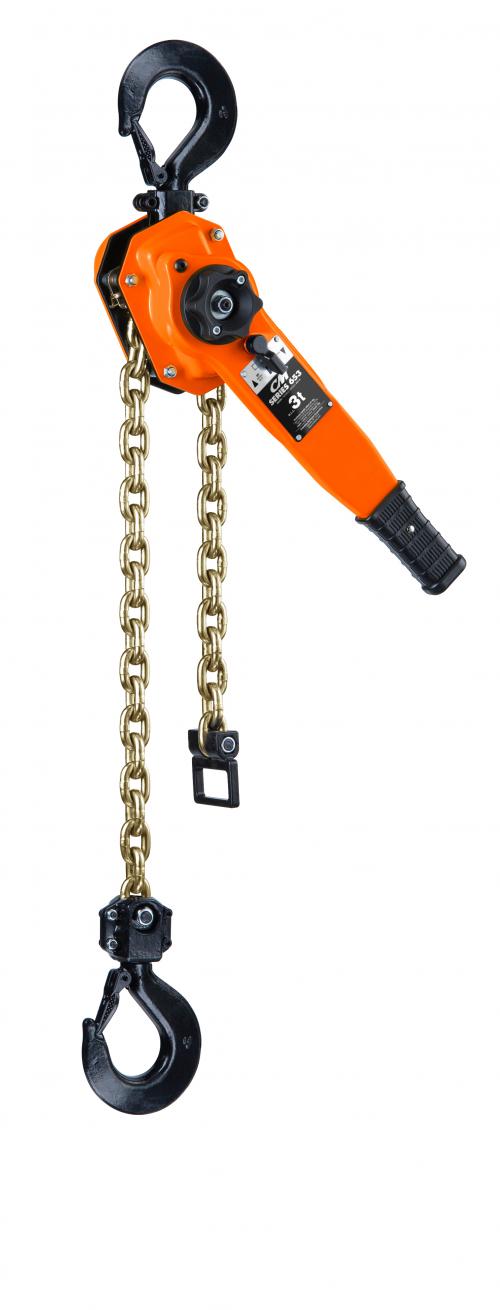
The handle, free-chaining, and getting into tight spots. Handle length and reach decide how a lever hoist works in real quarters. Short-handle minis get into cramped spots and travel in a truck box: the CM Mini ratchet lever hoist starts around $314 and the compact Harrington LX mini from about $355, both light enough to carry to the job. The CM Tornado 360 winds its handle a full 360 degrees like a sidewinder, so you can crank it where there is no room to reel a normal lever back and forth, and it climbs to roughly nine tons from around $815. In the middle sit the production and rigging workhorses, the CM 653A series from about $457, the Harrington LB from about $558, and the Coffing LSB from about $626, stepping up in capacity and duty. Free-chaining on these units lets you strip the chain out fast and close on the load before you take up tension, which is what makes a lever hoist quick to rig.
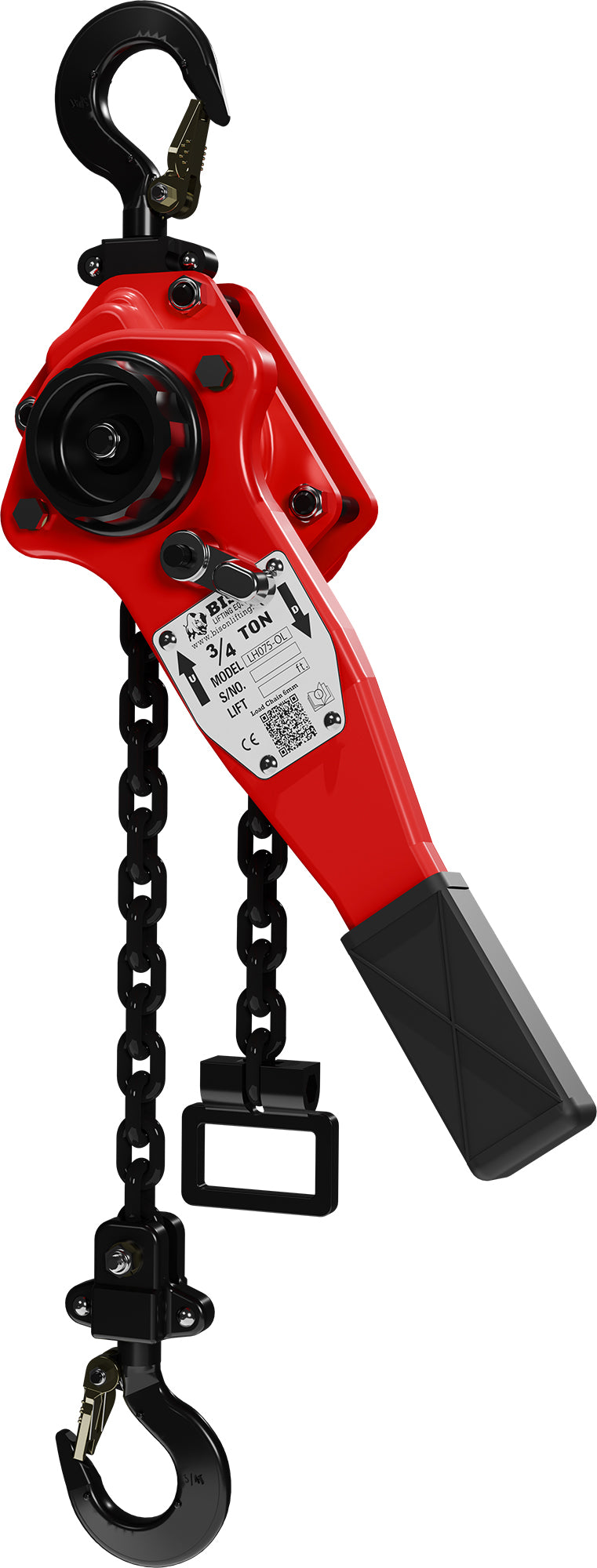
Overload protection you can buy in. A lever hoist gives a strong operator real leverage, which means a determined crank can drag a load past the hoist's rating without anyone feeling it. An overload clutch closes that gap. Built into the chain wheel, it slips in the lifting direction once the load exceeds the rating, so the handle keeps moving but the hoist stops raising the load; you can still lower normally to set it back down. The Bison overload protection lever hoist carries that feature from around $265, cheap insurance for crews that rig without a load cell or where over-cranking into a stuck or snagged load is a live risk. It protects the hoist, the load chain, and whatever structure is overhead all at once.
Size it, then check it against the standard. Rate the hoist for the whole hanging weight, not the bare load: add the slings, shackles, and any below-hook gear, then round up to the next capacity. Set the lift from the actual reach you need plus a margin, since every foot is more chain to feed and store. For washdown lines, food and pharma work, marine air, or any corrosive setting, the OZ Lifting stainless steel lever hoist resists what would rust a standard unit, from around $934. On the rules, lever hoists have their own volume: ASME B30.21 covers ratchet-and-pawl and friction-brake lever chain, rope, and web-strap hoists used for lifting, pulling, and tensioning, and it calls for a pre-use visual check plus a documented periodic inspection that tightens as service gets heavier. Gauge the load chain for wear and stretch, watch the hook throat opening, and confirm the handle, pawl, and brake work cleanly. Never extend the handle with a cheater pipe: the handle length is engineered to the rating, and a pipe is how people overload a hoist and shear a chain.
Frequently Asked Questions
Both use a Weston-type friction brake to hold the load, but the drive and the working angle differ. A hand chain hoist is worked by pulling a loop of hand chain and lifts straight down only. A lever hoist is worked by ratcheting a handle back and forth, and it works at any angle, so it lifts, pulls, and tensions where a chain block cannot. Buy the block for straight, repetitive vertical lifting; buy the lever hoist for off-angle picks, pulling, and tensioning jobs.
No. A cable come-along is a wire-rope puller with a drum, a lighter tool for dragging and light horizontal pulling. Everything on this page is a chain lever hoist: geared for far more mechanical advantage, running load chain that will not kink or splinter, and carrying a true overhead lifting rating under ASME B30.21. The come-along nickname gets used for both, but the chain lever hoist is the one to trust for a real overhead lift or a heavy tension.
Yes, that is one of its main uses. Because it works at any angle, a lever hoist tensions guy wires and rigging, pulls machinery into alignment, drags skidded loads, cinches loads down for transport, and takes the slack out of a sling. The free-chaining position lets you pull the chain out by hand to close on the anchor point quickly, then you ratchet the handle to build tension. Always keep it within its rated capacity for pulling just as you would for lifting.
It stops you from lifting past the hoist's rating. An overload clutch inside the chain wheel slips in the lifting direction once the load exceeds capacity, so the handle keeps moving but the load stops rising; you can still lower it normally. The Bison overload protection model builds this in from around $265. It is worth it for crews rigging without a load cell, or wherever cranking into a stuck or snagged load could otherwise overload the hoist unnoticed.
ASME B30.21, the lever hoist standard, calls for a visual check before each use plus a documented periodic inspection, on intervals that get shorter as duty gets heavier. Gauge the load chain for wear and elongation and replace it before it stretches past the limit, check the hooks and their throat opening, and confirm the handle, ratchet pawl, and brake operate cleanly. Never add a cheater pipe to the handle; the handle length is matched to the rating, and extending it is how loads and chains get overloaded.