Hand Chain Hoists
A hand chain hoist is the value anchor of overhead lifting: a gear-reduced chain block you hang from a beam and run by hauling a loop of hand chain, no motor, no power drop, no wiring. This collection is the full Bison line, a clean capacity ladder from a half-ton block starting at $175 up to a 10 ton unit, each offered with 10 or 20 feet of lift, plus a slip-clutch overload-protection range for crews that want a hard stop against an overloaded pull. Bison sits at the value end of the parent Chain Hoists hub for a reason: the mechanism is mature and shared across brands, so the money you save over a premium block still buys the same Weston-type brake and the same alloy load chain. The guide below sizes one to your work in order, capacity first, then lift height and the headroom it costs, then whether the overload models are worth their small premium.
Compare Bison Hand Chain Hoists
| Model | Price | Lift Height | Capacity | |
|---|---|---|---|---|
| Bison Manual Chain Hoist 10Ton x 10ft or 20ft | $1,251 | 10-20 ft | 10 ton | View → |
| Bison Manual Chain Hoist 5Ton x 10ft or 20ft | $643 | 10-20 ft | 5 ton | View → |
| Bison Manual Chain Hoist 1Ton x 10ft or 20ft | $219 | 10-20 ft | 1 ton | View → |
| Bison Overload Protection Hand Chain Hoists | $200 | — | 1/2-5 ton | View → |
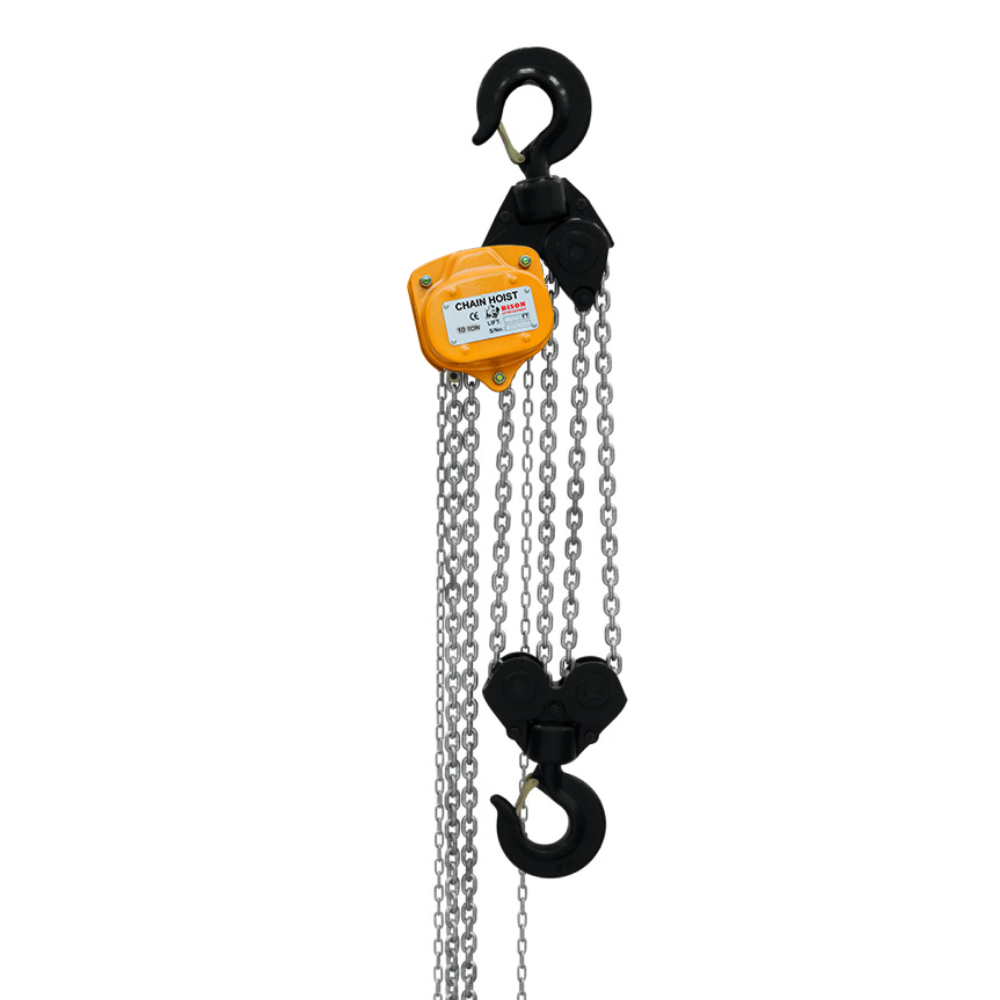 In Stock
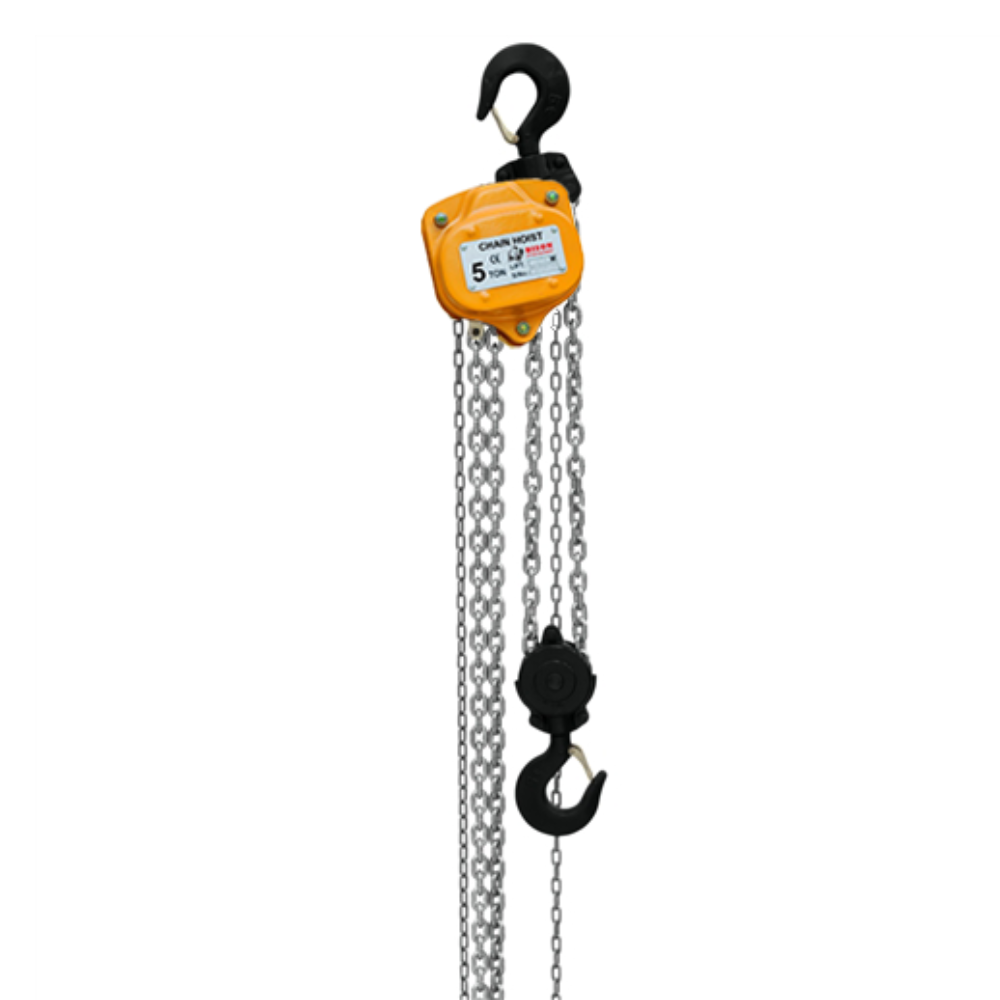 In Stock
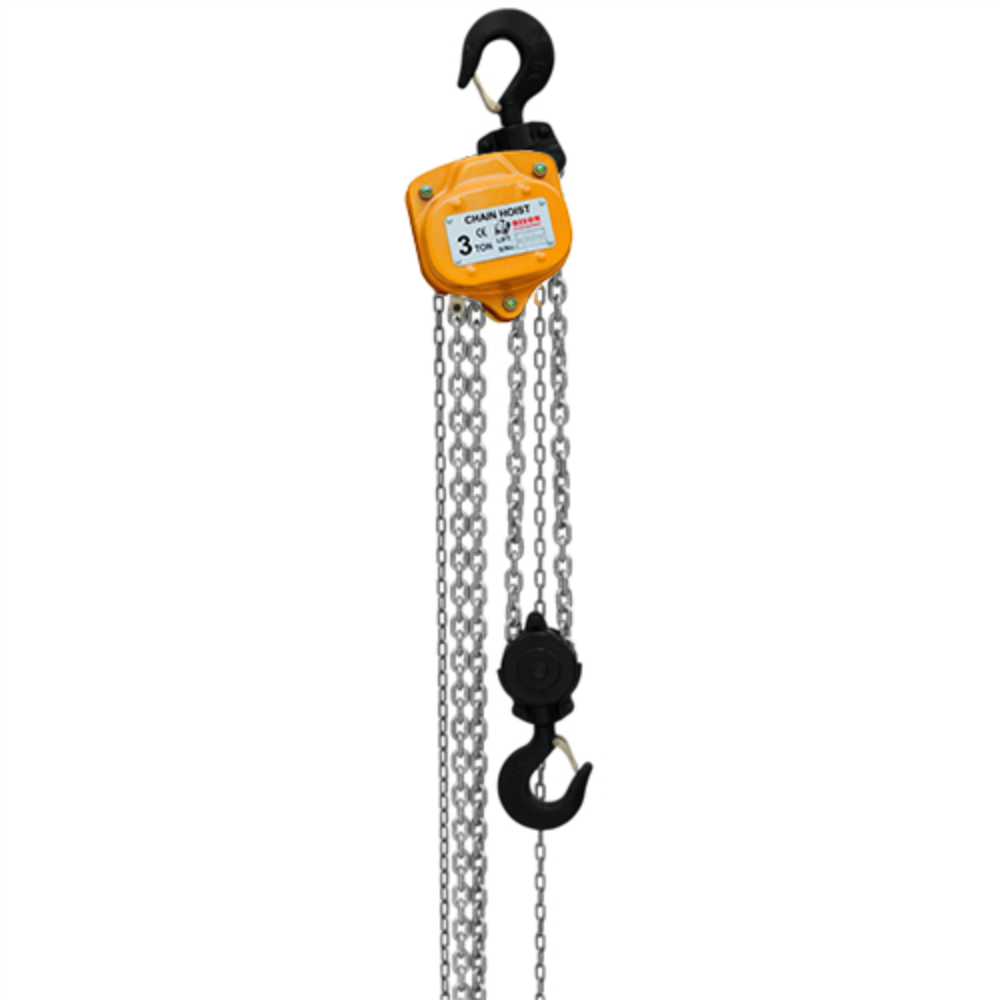 In Stock
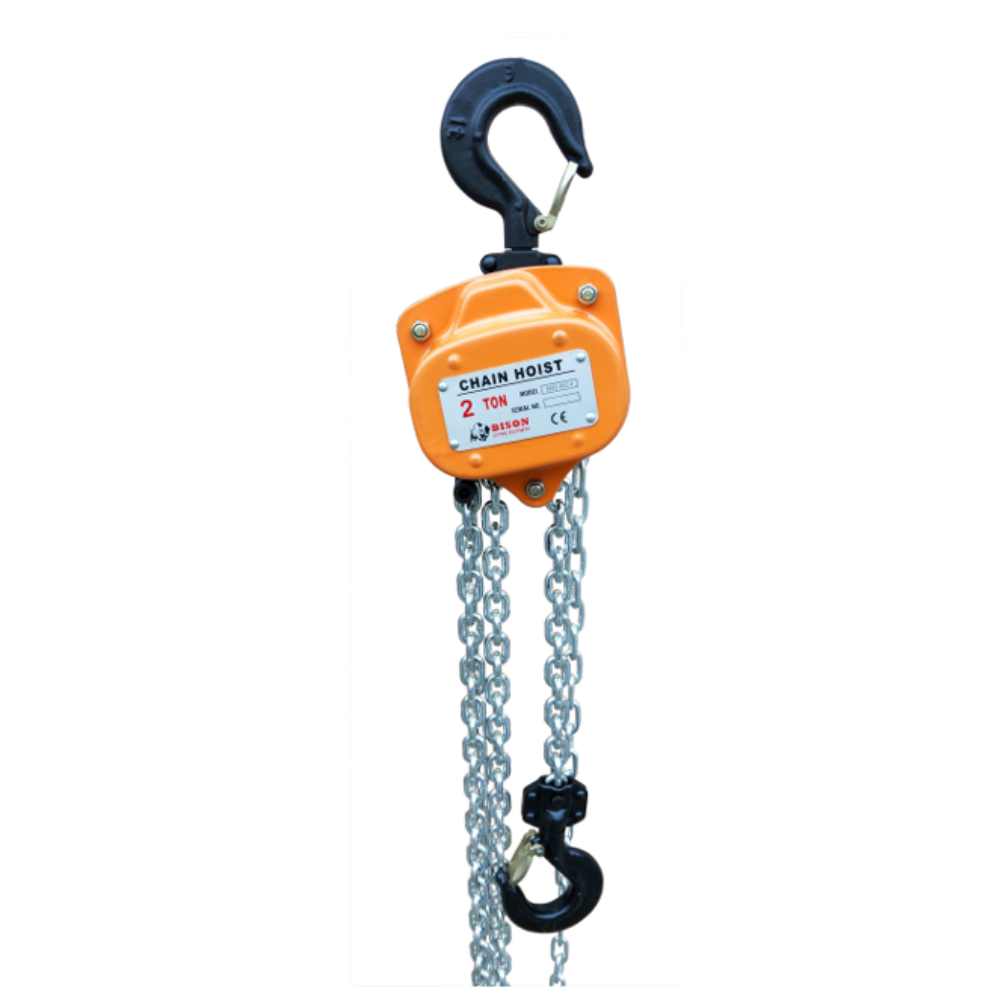 In Stock
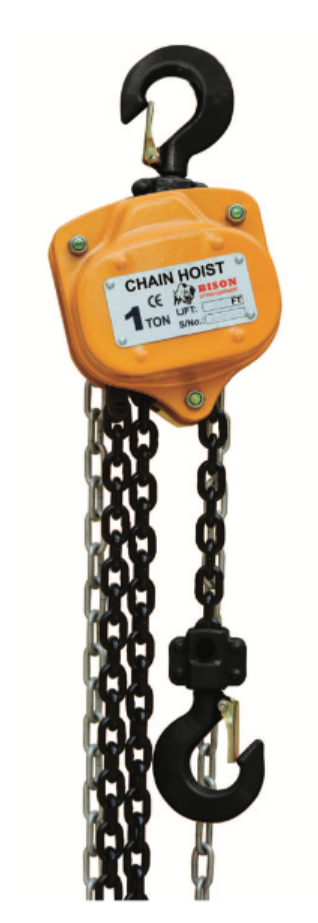 In Stock
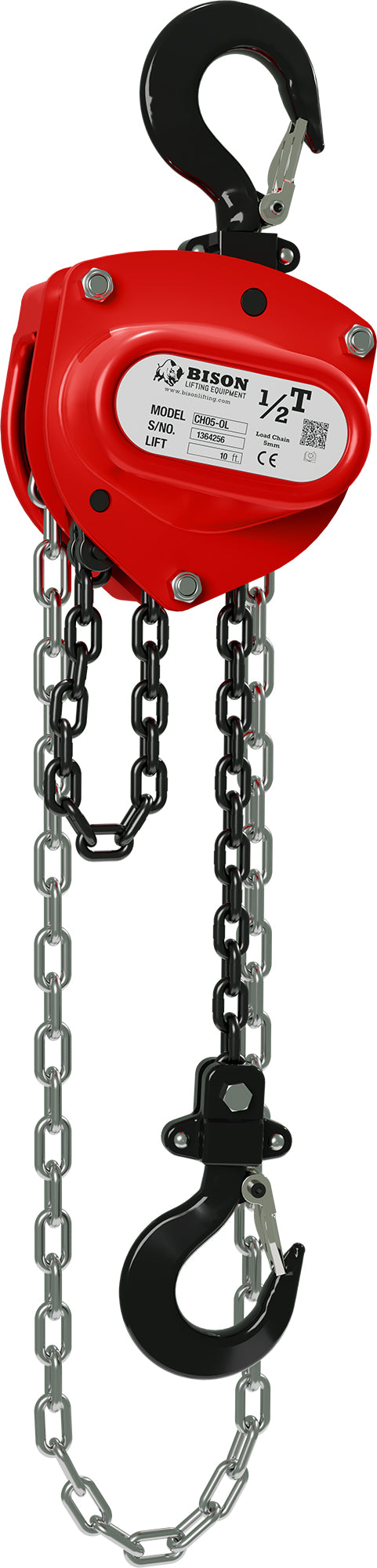 In Stock
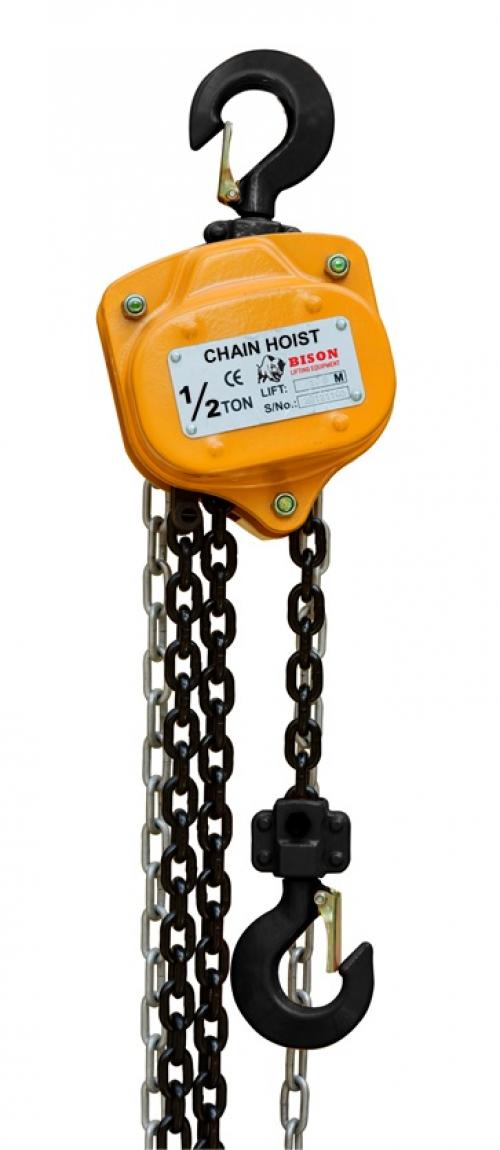 In Stock
Bison Hand Chain Hoists Buying Guide
Size the capacity to the Bison ladder. The Bison line is a clean capacity ladder, so sizing is mostly arithmetic. The half-ton block starts at $175, the 1 ton runs $218.75, the 2 ton $262.50, the 3 ton $402.50, the 5 ton $643.13, and the 10 ton lands at $1,251.25. Rate the hoist for the whole lift, the load plus the slings, shackles, and any spreader hanging under the hook, then round up to the next rung. A 1,900 lb pick with 150 lb of rigging is a 1 ton lift, not a half-ton one. The gap between rungs is cheap at the light end and steep once you pass 5 ton, which is the honest argument for buying one rung of headroom early: paying about $44 to move from a half-ton to a 1 ton block is easy insurance, while stepping a 5 ton up to a 10 ton roughly doubles the price. Buy for the heaviest thing this hoist will ever hold, not the average job, and never park the rating right at your worst-case load.
Ten or twenty feet of lift, and the headroom it costs. Every Bison block is offered in a 10 or 20 foot lift, and that is the second number to set. Lift is how far the hook drops, so measure from the beam down to the lowest point the load has to reach and buy the drop the job needs. Twenty feet costs a little more, $175 versus $227.50 on the half-ton for example, and every extra foot is load chain you coil, store, and keep clear of the work when the hook is up high. Headroom is the quieter spec. It is the fixed distance between the beam and the saddle of the hook with the hook all the way up, and it eats into your usable lift before you start. Heavier Bison blocks reeve the load chain over more falls to hold the rating, which raises headroom and slows the lift per pull, so a 10 ton block sits lower under the beam and rises more slowly than the half-ton. In a low bay, work out headroom plus the tallest load plus its top rigging before you trust the beam height.
What holds the load, and how it runs. Like every quality chain block, a Bison holds on a Weston-type screw brake, the friction-disc-and-ratchet mechanism the Chain Hoists hub explains in full. What matters at the point of use is how that translates for the operator. The load parks itself the instant you stop hauling and lowers only as you back the hand chain against brake friction, so there is no free-fall setting to get wrong. Hand effort climbs with capacity: the same gear reduction that lets you hold tons means the heavier blocks trade lift speed for a longer, easier pull, and a 10 ton block is a two-hand, steady-cadence job rather than a quick one. The alloy load chain and the rotating, latched hooks are the parts that wear, so run the chain through your fingers for gouges, stretch, and twist before a lift, and treat a hook that has visibly opened or will not hold its latch as a reason to retire the unit, not to keep pulling.
The overload-protection range and when to pay for it. Alongside the standard ladder, Bison builds an overload-protection line from 0.5 to 5 ton at a 10 foot lift, starting around $200. The difference is a slip clutch: a friction clutch set just above the rated load that gives way and stops taking chain if someone tries to lift past capacity, then resets on site once the load is corrected. It is a backstop, not a scale, so it will not tell you a load's weight and should never be used to test one, but it turns the single most common hand-hoist mistake, hauling on a load that is simply too heavy, into a clutch that slips instead of a hoist, chain, or rigging that fails. The premium over a plain block is small, on the order of $25 on the half-ton, which makes the overload models an easy call for rental fleets, shared shop hoists, and any crew that lifts unknown or mixed loads where the person on the chain cannot always know the weight.
Hanging it: hook, or a trolley on the beam. A hoist is only as good as what it hangs from. A Bison block ships with a top hook that drops straight over a beam clamp, a padeye, or a fixed anchor, which is all a single-spot lift needs. When the load has to travel along the beam, you want the hoist on a trolley instead, a plain push trolley you shove by hand or a geared trolley you drive with a second hand chain for precise placement. Trolleys and beam clamps are sized to your beam flange width and to the hoist capacity, and they live on the Chain Hoists hub alongside these blocks. Match the trolley rating to the hoist, confirm it fits your flange, and remember that a trolley adds its own height under the beam, one more claim on the headroom you measured earlier.
When a hand chain block is the wrong tool, and the rules that apply. A hand chain block is built for occasional vertical lifting a few times a shift, and it is the wrong buy when the work changes shape. If the same lift repeats all day as production, the manual pull becomes the bottleneck and a Bison electric chain hoist earns its motor. If the pull is sideways, angled, or a matter of tensioning and dragging rather than straight lifting, that is a lever hoist, not a chain block. And if you need spark-resistant, stainless, or a premium brand with a machined pinion, the broader manual chain hoists ladder is where those live. Whatever you hang, hand chain hoists fall under ASME B30.16, which covers their construction, operation, inspection, and maintenance and calls for a frequent visual check in service plus a documented periodic inspection on intervals that tighten as duty gets heavier. Keep the rated load legible on the hoist, inspect before you lift, and never exceed the number stamped on it.
Frequently Asked Questions
The Bison line runs as a capacity ladder from a half-ton block up to 10 ton, with 1, 2, 3, and 5 ton rungs in between. Prices start at $175 for the half-ton and rise to $1,251.25 for the 10 ton. Size for the total weight on the hook, load plus slings and shackles, and round up to the next rung rather than buying right at your heaviest lift.
Buy the drop your work actually needs. Measure from the beam down to the lowest point the hook must reach; if that is under about eight or nine feet the 10 foot lift is plenty, and the 20 foot version is there for high bays and deep pits. Every extra foot is load chain you have to coil and keep clear when the hook is raised, so longer is not automatically better. The 20 foot option adds a little to the price, for example $227.50 against $175 on the half-ton.
It adds a slip clutch that gives way if someone tries to lift beyond the rated capacity, then resets on site. It is a safety backstop against overloading, not a scale, so it will not weigh a load and should not be used to test one. Bison offers it from 0.5 to 5 ton for a small premium over the standard block, which makes it worthwhile for rental fleets and shared hoists where the operator may not know the load weight.
For a lift that happens in one spot, the top hook is all you need; drop it over a beam clamp or a rated anchor and go. Add a trolley only when the load has to move along the beam, a push trolley for hand positioning or a geared trolley for precise placement. Trolleys and beam clamps are matched to your beam flange and the hoist capacity, and both sit on the Chain Hoists hub with these blocks.
ASME B30.16, Overhead Underhung and Stationary Hoists, covers hand chain-operated hoists along with electric and air units, including their construction, operation, inspection, and maintenance. In practice that means keeping the rated load legible on the hoist, running a frequent visual inspection in service, and keeping a documented periodic inspection on file, with intervals that get shorter as the hoist works harder.