Coffing Hoists
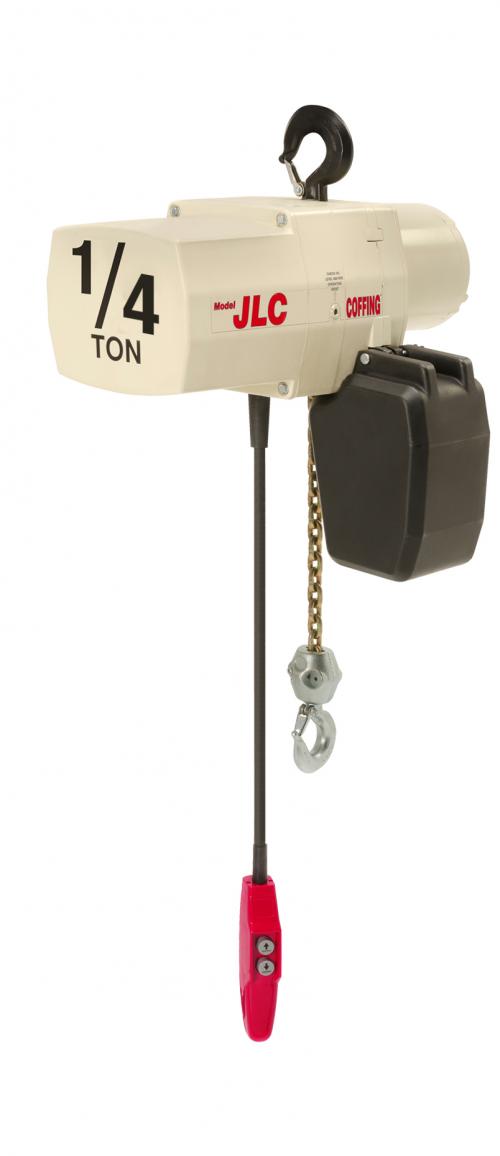
A Coffing hoist, in this catalog, means the JLC electric chain hoist, the powered production hoist Columbus McKinnon builds under the Coffing name for daily lifting. It hangs from a trolley or a fixed lug and raises loads on the load chain, with capacities from 1/8 ton up to 2 ton and lift heights of 10, 15, and 20 feet. We stock it alongside the universal beam trolley end stops that keep a trolley-mounted hoist from rolling off the end of its runway beam. This is a focused pair: one hoist built to run shift after shift, and the one accessory a beam-mounted install actually needs to stay safe. The guide below covers sizing, lift speed, shop power, and the standard that applies before you hang anything overhead.
Compare Coffing Electric Chain Hoists
| Model | Price | Capacity | Power | Overall Width | |
|---|---|---|---|---|---|
| Coffing JLC Electric Chain Hoist | $3,589 | 1/8-2 ton | 115V | — | View → |
| Bison Universal Beam Trolley End Stops | $284 | — | — | 3.2-4.25 in | View → |
Coffing Electric Chain Hoists Buying Guide
Size the capacity to the whole lift. The JLC's rated capacity has to cover the load plus everything below the hook: the slings, the shackles, and any lifting beam between them. Coffing builds the JLC in 1/8, 1/4, 1/2, 1, and 2 ton ratings, so total your worst case, add margin, and pick the next rating up rather than buying right at your maximum load. Capacity on this hoist comes partly from chain reeving, with the lighter ratings running a single fall of load chain and the heavier ones a double fall, which is why lift speed drops as capacity climbs. If you are replacing an existing hoist, match or exceed its rating and confirm the trolley or mount carries the same load.
Speed, lift height, and headroom. The JLC ships in 8, 16, and 32 FPM lift speeds and 10, 15, and 20 foot lift heights, and both choices are worth settling before you order. Faster line speed moves parts quicker on a high-cycle line, while a slower speed gives finer control for spotting a load onto a fixture, and select models offer a two-speed option with a 3 to 1 ratio that gives you both. Order the lift height to your actual hook travel, and remember that the standard push-button pendant drop is four feet less than the lift. Buy more chain than you need and it pools on the floor; buy too little and the hook will not reach.
Power: single phase or three phase. Confirm your shop power before you order, because the JLC is voltage-specific and not something you convert in the field on a whim. Single-phase 115/230 units suit a garage, a small shop, or a maintenance bay running off standard building power. Three-phase 230/460 units are the production standard, generally give better duty, and support the optional two-speed control. Match the hoist to the circuit you actually have at the mounting point, phase and voltage both, and plan the power drop and the pendant drop into the install.
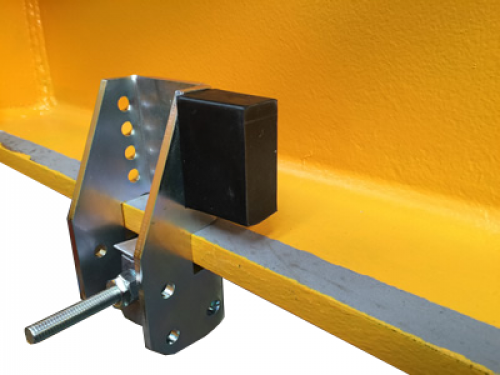
End stops finish a beam-mounted install. A hoist that rides a trolley on a runway beam needs a hard stop at each end so the trolley cannot run off. The universal beam trolley end stops we stock clamp onto standard I-beam and wide-flange runways and fit flange widths up to about 21.65 inches, bolting on without welding or drilling the beam. They are cheap insurance, priced under $300 a set, and they are the difference between a compliant runway and a trolley on the floor. Fit a stop at both ends of any beam a trolley-mounted JLC will travel, and set them so the trolley stops short of the beam end with room to spare.
The standard is ASME B30.16, and inspection is on you. Electric-powered chain hoists like the JLC fall under ASME B30.16, the standard for overhead underhung and stationary hoists, which covers construction, installation, operation, and inspection. In practice that means a frequent inspection before use, checking the load chain, hook, and limit stops, plus a documented periodic inspection on a schedule that tightens as service gets heavier. OSHA applies the same discipline to powered hoists in general industry. Keep the rated load marked and visible, never exceed it, never use the load chain as a sling, and take the hoist out of service the moment the chain, hook, or brake shows a problem.
Frequently Asked Questions
Coffing builds the JLC electric chain hoist in 1/8, 1/4, 1/2, 1, and 2 ton ratings. Size it to the load plus the weight of your slings, shackles, and any lifting beam, then pick the next rating up rather than buying right at your maximum. Confirm that the trolley or mounting point is rated for the same load.
It comes both ways. Single-phase 115/230 units run off standard shop or building power and suit garages, small shops, and maintenance bays. Three-phase 230/460 is the production standard, generally offers better duty, and supports the optional two-speed control. The hoist is voltage-specific, so match it to the circuit at your mounting point before ordering.
Standard lift heights are 10, 15, and 20 feet, and the push-button pendant drop is four feet less than the lift. Order to your actual hook travel: too much chain pools on the floor, and too little means the hook will not reach the load. Confirm the height at the mounting point, not at the floor.
If the hoist rides a trolley on a runway beam, yes. End stops keep the trolley from rolling off the end of the beam. The universal beam trolley end stops we carry clamp onto I-beam and wide-flange runways up to about 21.65 inches of flange width, install without welding, and cost under $300 a set. Fit one at each end.
ASME B30.16 covers overhead underhung and stationary hoists, including electric-powered chain hoists like the JLC, across construction, installation, operation, and inspection. Do a frequent inspection before each use and a documented periodic inspection on a schedule set by how hard the hoist works, and take it out of service if the chain, hook, or brake is suspect.