CM Electric Chain Hoists
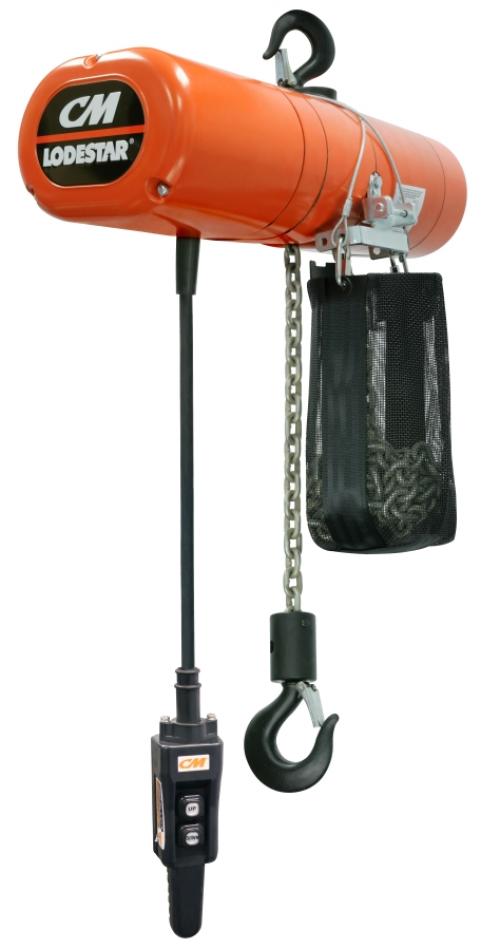
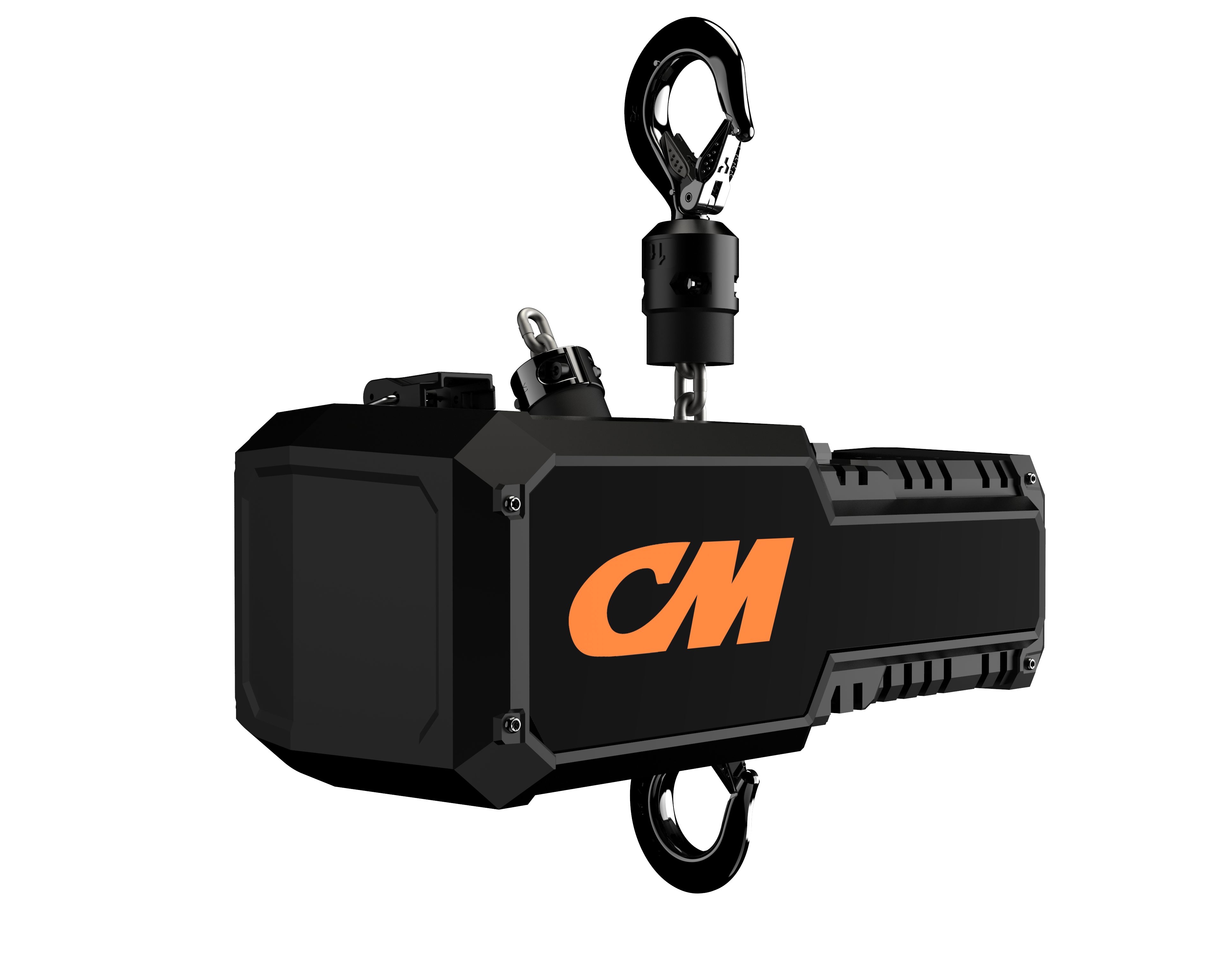
A CM electric chain hoist puts Columbus McKinnon's most recognized lifting motors over your work, and this collection carries the models American shops reach for first: the Lodestar, the compact ShopStar, the heavy Lodestar XL, the intelligent Lodestar VS, and the cordless BatteryStar. CM built the Lodestar into the default overhead hoist for production floors, stages, and auto shops, and the powered units here meet ASME B30.16 with an H4 duty rating that most bargain hoists cannot claim. Capacities run from a 250 lb ShopStar for workstation picks up through three phase Lodestar XL units at several tons for paper mills and heavy plant. You choose power source first, single phase for ordinary shop circuits or three phase for the busiest lines, then capacity, then lift and speed from the drop down. The guide below walks those decisions in the order that matters, and points you to the trolley end stops that keep the hoist safely on its beam.
Compare CM Electric Chain Hoists
| Model | Price | Capacity | |
|---|---|---|---|
| CM Lodestar XL Electric Chain Hoist | $14,353 | 2-6 ton | View → |
| Cm Lodestar Vs Variable Speed Electric Chain Hoist | $3,932 | 1/8-3 ton | View → |
| CM Lodestar Electric Chain Hoist Single Phase 115v | $3,384 | 1/8-3 ton | View → |
| CM® BatteryStar™ Battery Powered Chain Hoist | $3,216 | 1 ton | View → |
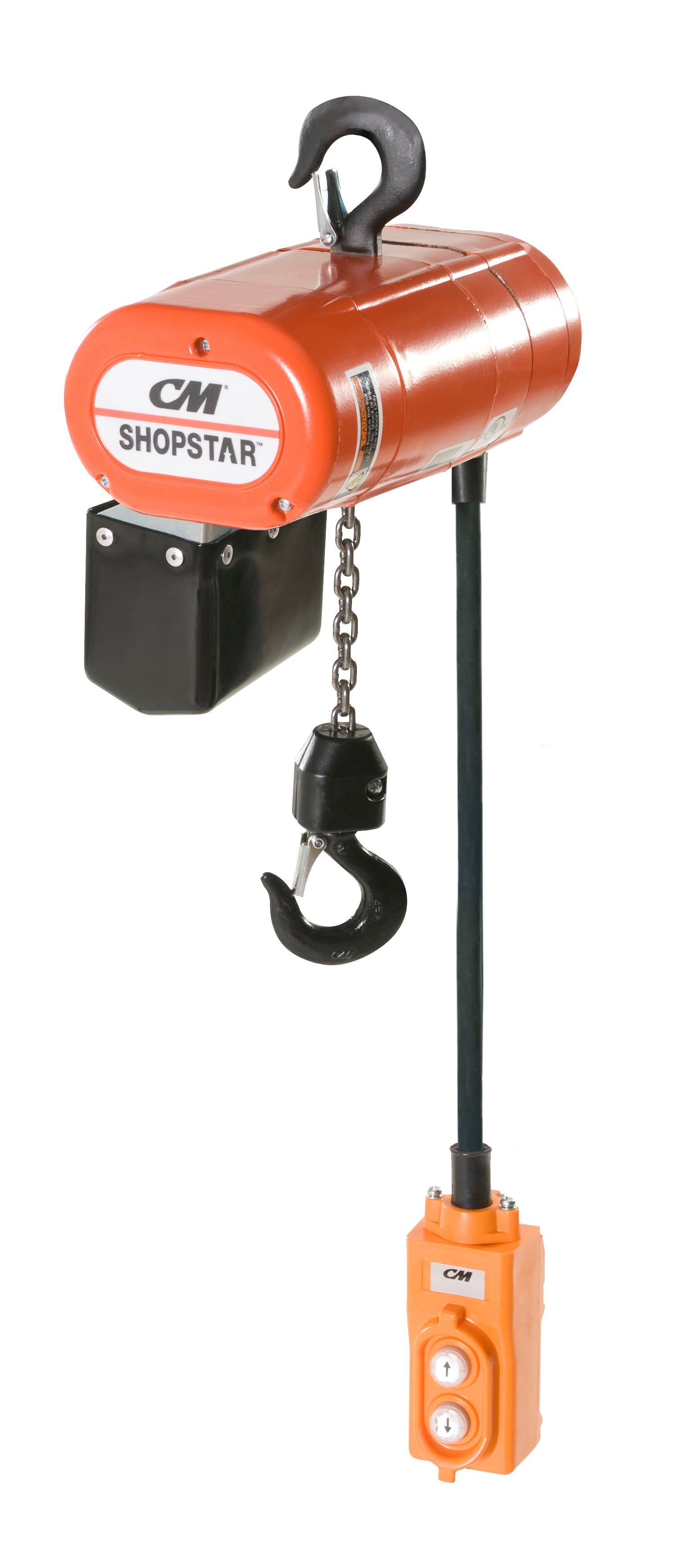
| CM Shopstar Electric Chain Hoist | $2,366 | 250-1,000 lb | View → |
| Bison Universal Beam Trolley End Stops | $284 | — | View → |
 In Stock
 In Stock
 In Stock
 In Stock
 In Stock
 In Stock
 In Stock
CM Electric Chain Hoists Buying Guide
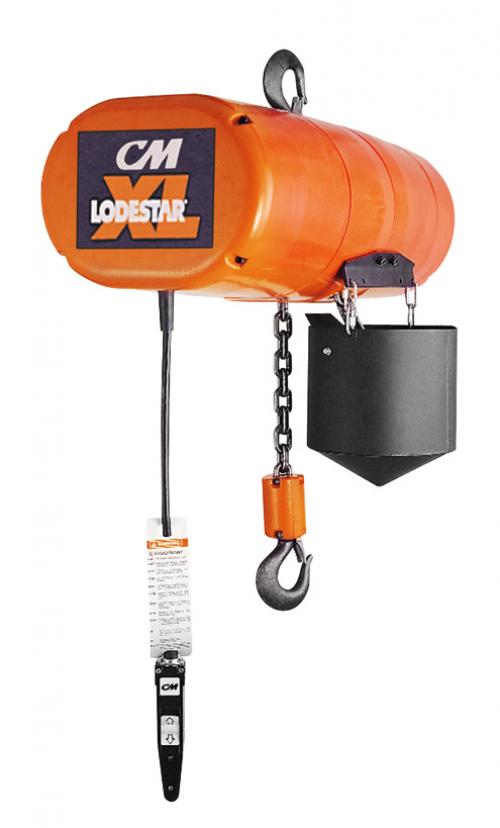
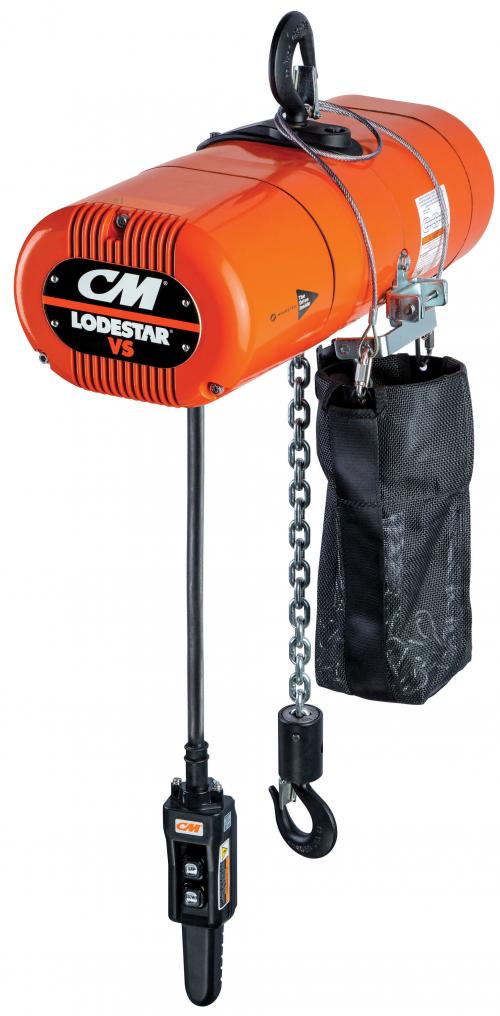
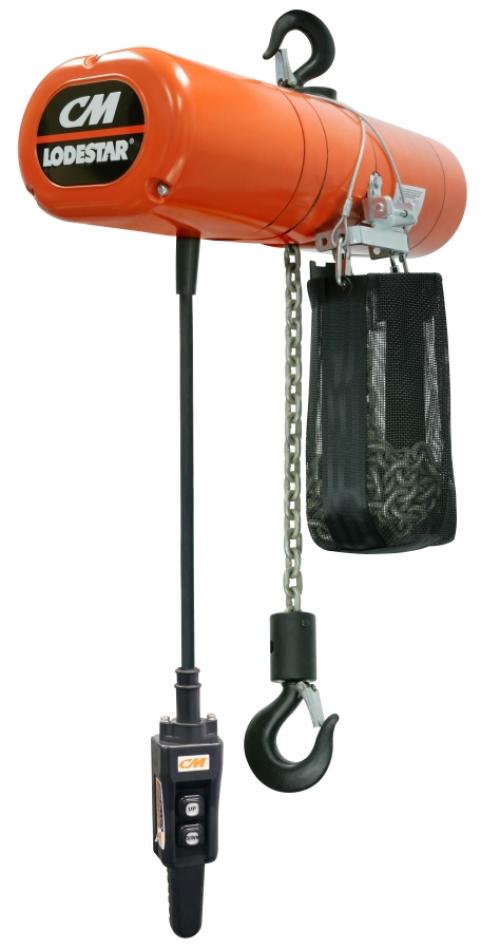
Start with the model, because CM builds one for each job. The five electric hoists here are not interchangeable, so match the model to the work before you touch capacity. The CM ShopStar is the light spot hoist: compact, lightweight, and built for 250 to 1,000 lb picks at a workstation, on a production line, or in an auto shop, from around $2,370. The Lodestar is the workhorse to 3 tons that earned CM its reputation, offered single or three phase. The Lodestar XL is the heavy end of the line, faster and higher capacity for plants that lift near rated load all shift. The Lodestar VS adds a variable frequency drive and onboard diagnostics for placement work, and the BatteryStar goes cordless for sites with no power. Every one of these lives in the wider electric hoists range if you want to compare CM against Harrington and Bison.
Size the capacity to the whole lift, then round up. The rated capacity has to cover everything hanging from the hook: the load, plus any sling, shackle, or lift beam between the hook and the load. Total the worst case, add margin, and round up to the next rating rather than buying right at your maximum. The ShopStar covers 250, 300, 500, 600, and 1,000 lb work where the loads are small and the moves are frequent. The standard Lodestar runs 1/8 through 3 tons, which handles the great majority of shop and stage lifting. When the loads climb past that, the Lodestar XL picks up from 2 tons and runs to the heavier end of the line at three phase power, with double reeved units and lifting speeds to 30 ft per minute for the busiest cells.
Single phase or three phase. Power source is the split that decides where the hoist can plug in. Single phase 115 or 230 volt hoists run on ordinary shop circuits, which is why the ShopStar and the smaller Lodestar single phase units suit garages, workstations, and light industrial bays with no three phase service. Three phase 230/460 volt is the production choice: it feeds the higher capacities, and dual speed models give you a fast speed for travel and a slow one for spotting a load into a fixture. The ShopStar and Lodestar are both offered either way, and the Lodestar XL is three phase only. If your building has three phase power and the hoist runs all day, buy three phase; if it does not, single phase keeps you off an electrician's schedule.
Duty class is the spec that predicts lifespan. Two hoists of the same tonnage can be built for very different lives, and the ASME HST performance standards capture that as duty classes H1 through H5. H2 covers light, infrequent service, H3 is a standard shop rating, and H4 means high volume handling of loads near rated capacity with running time up to half the work period. Both the CM Lodestar and the ShopStar carry an H4 classification, which is most of why they outlast bargain hoists of the same capacity, and the Lodestar VS exceeds H4. Size capacity to the heaviest lift with the usual margin, then confirm the duty class covers your busiest hour. Underbuying duty is the expensive mistake: the hoist passes every load test, then eats brakes and windings a year into heavy service.
Variable speed and cordless: two special cases. Two of these models solve problems the standard hoist does not. The Lodestar VS carries a Magnetek IMPULSE G+ Mini variable frequency drive for infinitely variable speed, or a two step setup, and you can plug a laptop into the control panel to read fault codes and condition monitoring without opening the case. Buy it when precise placement and uptime tracking justify the premium over a fixed speed unit. The BatteryStar takes the assignments with no power at all: a 1 ton cordless hoist with a wireless remote, a standard 20 ft lift that options up to 60 ft, and swap-in batteries, made for temporary lifts and remote job sites. Both keep the zinc plated Star Grade load chain and USA build the Lodestar line is known for.
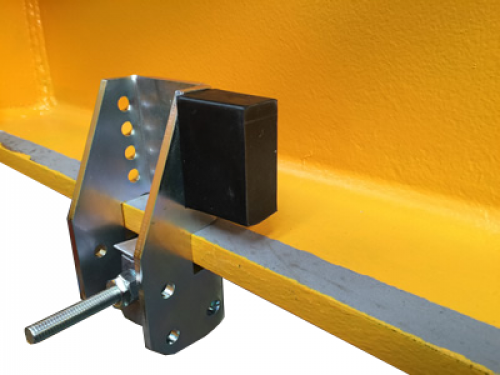
Suspension, trolleys, and end stops. A top hook hangs the hoist from a fixed point, and that is all many installations need. When the load has to travel, the hoist rides a trolley on the beam flange, so match the trolley to your flange width and pick push, geared, or motorized travel to suit how often the load moves. Whichever you run, the Universal Beam Trolley End Stops in this collection bolt to the beam ends and keep a rolling trolley from running off the rail, fitting flange widths from about 3.2 up to nearly 25 inches. One reminder that catches people out: the hoist and trolley weight count against the capacity of the jib crane or portable gantry they hang from, so include them when you rate the overhead structure. For hand chain and lever units, see manual hoists and trolleys.
ASME B30.16 and the inspection rhythm. Electric chain hoists are governed by ASME B30.16, and the CM units here are built to meet it, with NEMA 4X control stations on the Lodestar for weather and washdown areas. The standard sets a two part inspection rhythm: frequent visual checks in service, daily to monthly depending on how hard the hoist works, plus documented periodic inspections on intervals that tighten as service gets heavier. Keep the rated load marked on the hoist, never exceed it, watch the load chain for wear and stretch, and confirm the upper and lower limit switches stop travel where they should. File your proof of periodic inspection with the manual, and address any brake or chain fault before the next lift rather than after it.
Frequently Asked Questions
The ShopStar is the light, compact spot hoist for 250 to 1,000 lb work at a workstation, production line, or auto shop, and it starts around $2,370. The Lodestar is the heavier workhorse, rated 1/8 through 3 tons, and the standard for production floors and stages. Both carry an H4 duty class. Choose the ShopStar for frequent small picks in tight spaces, and the Lodestar when the loads run heavier or you want the broader capacity and speed range.
Single phase 115 or 230 volt hoists run on ordinary shop circuits, so they suit garages, workstations, and buildings with no three phase service. Three phase 230/460 volt feeds the higher capacities and dual speed control for production lines. The ShopStar and standard Lodestar are offered both ways; the Lodestar XL is three phase only. If your building has three phase power and the hoist works all day, buy three phase, otherwise single phase avoids an electrical upgrade.
H4 is an ASME HST performance rating for high volume service: handling loads near rated capacity with running time up to half the work period. The CM Lodestar and ShopStar are H4 rated, and the Lodestar VS exceeds it. Size capacity to your heaviest lift first, then make sure the duty class covers your busiest hour. A hoist that is underbuilt on duty passes load tests but wears out brakes and motor windings early under heavy cycling.
Yes, the CM BatteryStar is a 1 ton cordless chain hoist with a wireless remote, made for temporary lifts and remote job sites with no electrical service. It ships with a standard 20 ft lift, options up to 60 ft, and swap-in rechargeable batteries so a charged pack keeps it running. For a fixed shop with power, a corded Lodestar or ShopStar gives you more capacity and speed for the money.
It depends on the model and how you order it. Many CM electric hoists are available as hook mount units or with a trolley for beam travel, so pick the configuration that matches your installation. If you run a trolley, match it to your beam flange width and fit the Universal Beam Trolley End Stops in this collection to the beam ends so the trolley cannot roll off. Remember that the hoist and trolley weight counts against the rated capacity of the jib or gantry overhead.