Electric Hoist with Trolley
An electric chain hoist with trolley combines two motions in one package: the hoist raises and lowers the load, and the trolley carries it along a beam so you can move a load down a line instead of only straight up. The range here is Harrington, built around the single-phase SEQ and SNER families for shops on standard power and the three-phase ER and NER series for heavier plant, with each hoist offered on a push, geared, or motorized trolley. Capacities run from a 500 lb mini up through 20 ton on the large three-phase frames, and every unit is designed to the ASME B30.16 hoist standard. The trolley turns a fixed lifting point into a working span, which is what a monorail, a jib, or a bridge crane needs to earn its keep. The pages below sort the choice by the three decisions that actually pick the model: how the trolley travels, what power you have, and what beam it rides.
Compare Electric Chain Hoist with Trolley
| Model | Price | Capacity | Lift Height | |
|---|---|---|---|---|
| Harrington ERM 3Ph Motorized Trolley Electric Chain Hoist | $8,525 | 1/8-20 ton | 10-20 ft | View → |
| Harrington SNERM Single Phase Motorized Trolley Electric Chain Hoist | $7,052 | 1/4-3 ton | 10-20 ft | View → |
| Harrington SEQ 1Ph Dual Speed Motorized Trolley Electric Chain Hoist | $6,430 | 1/8-1 ton | 10-20 ft | View → |
| Harrington ERG 3Ph Geared Trolley Electric Chain Hoist | $4,655 | 1/8-20 ton | 10-20 ft | View → |
| Harrington ERP 3Ph Push Trolley Electric Chain Hoist | $4,422 | 1/8-10 ton | 10-20 ft | View → |
| Harrington NERG 3Ph Geared Trolley Electric Chain Hoist | $3,882 | 1/8-20 ton | 10-20 ft | View → |
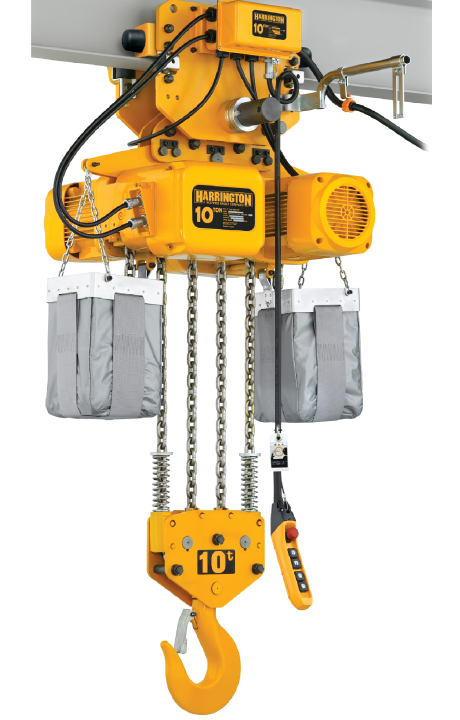 In Stock
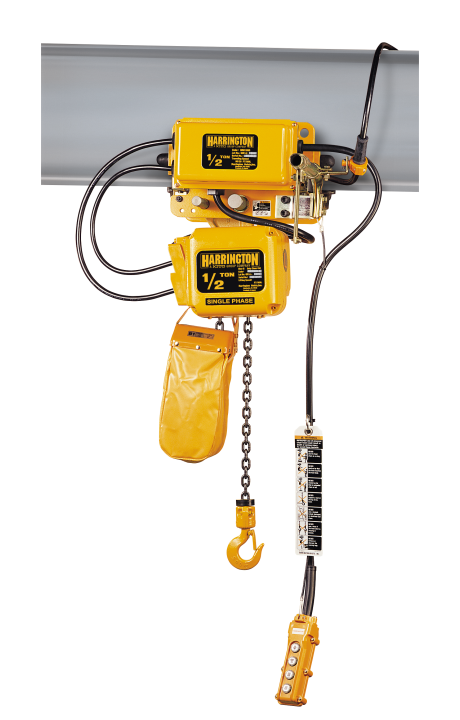 In Stock
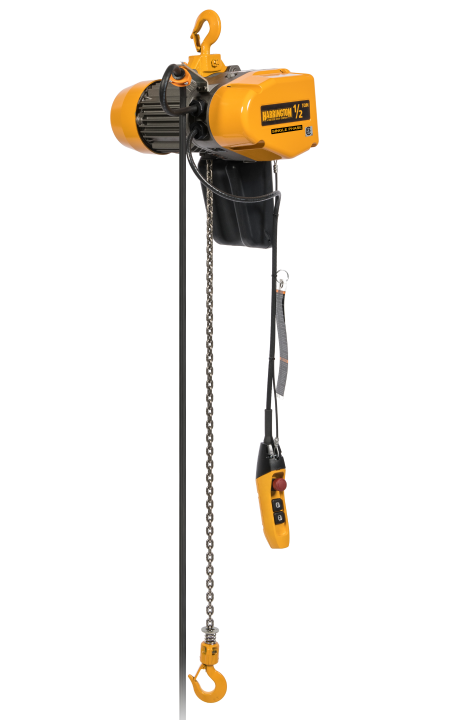 In Stock
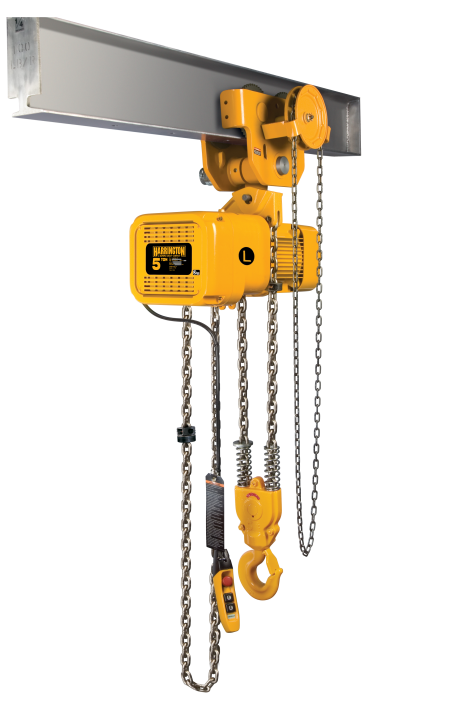 In Stock
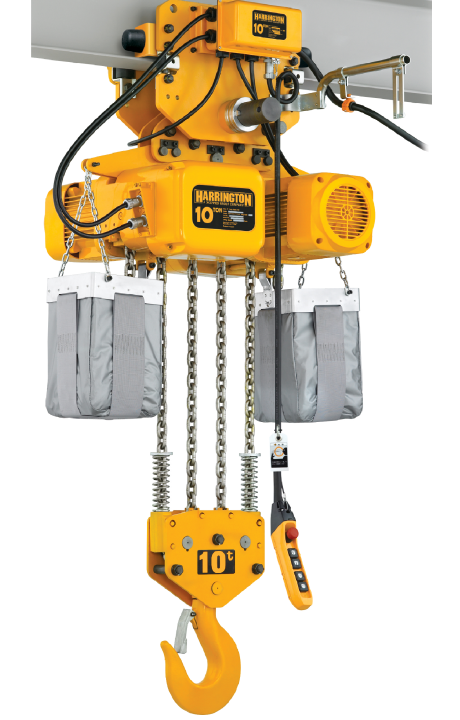 In Stock
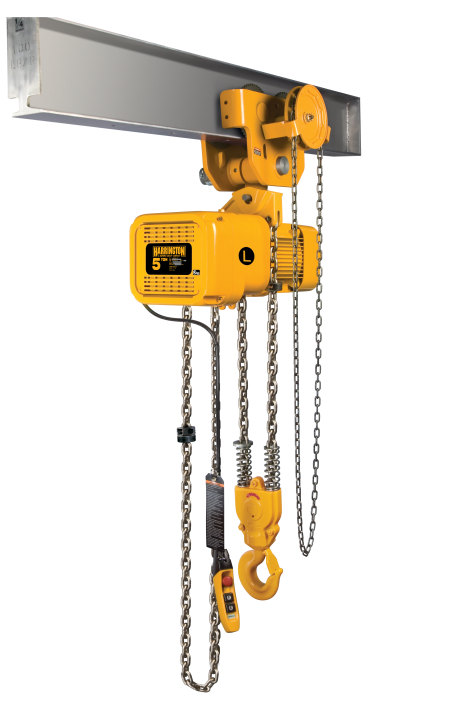 In Stock
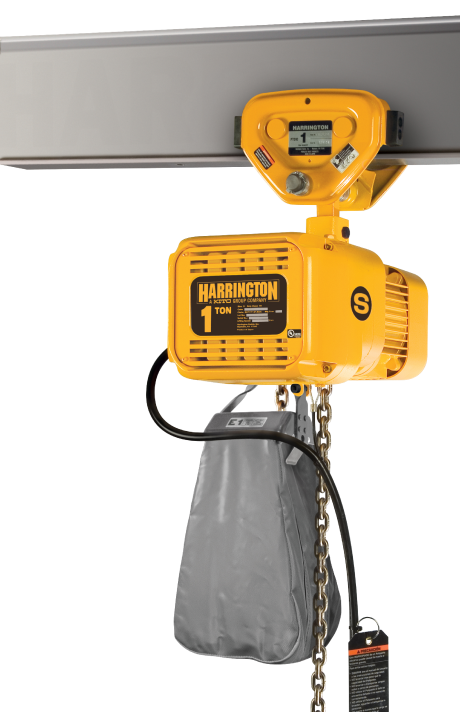 In Stock
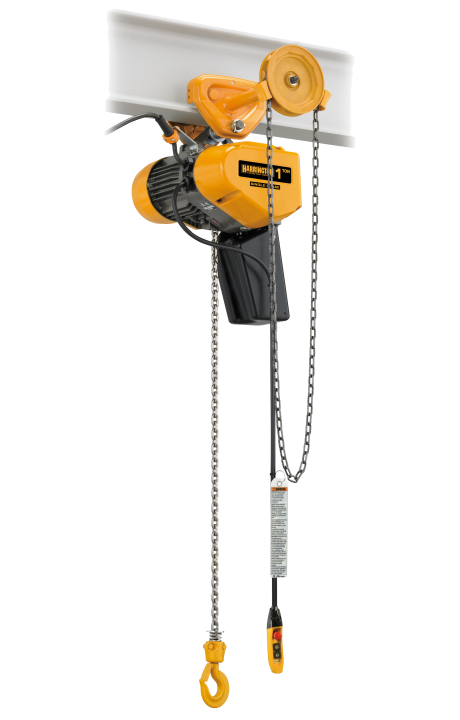 In Stock
 In Stock
 In Stock
 In Stock
Electric Chain Hoist with Trolley Buying Guide
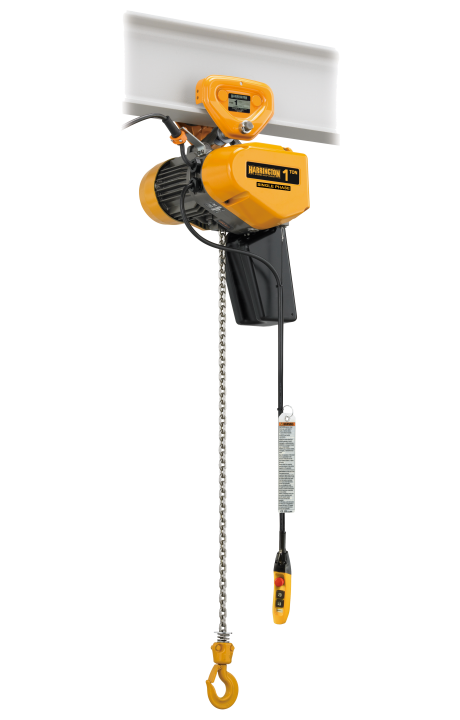
Push, geared, or motorized: choose how the trolley travels. The traverse type is the first fork in the road and it drives most of the price. A push trolley is the simplest and cheapest: you move the load by hand along the beam, which suits light loads, short runs, and low duty. A geared trolley adds a hand chain and gear reduction so one person can inch a heavier load into an exact position without a shove, the right pick for assembly, maintenance, and tight-clearance placement. A motorized trolley drives itself along the beam with its own motor, which is what high-frequency work and heavier loads want, since nobody is pushing tonnage by hand all shift. Harrington offers its PT push, GT geared, and MR motorized trolleys across the same hoist families, so you choose the hoist for the lift and the trolley for the travel. If you are still weighing whether you need travel at all, the hook-mounted units in electric chain hoists lift in place for less.
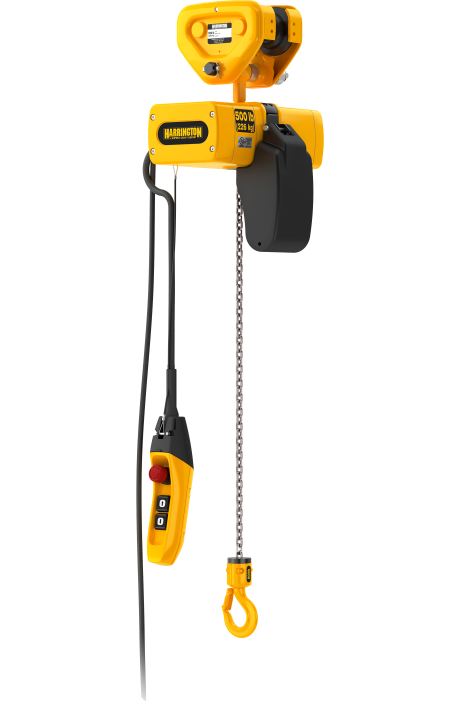
Match the power to your building: single-phase or three-phase. What comes out of your wall decides half the catalog. If you only have single-phase power, common in small shops and workstations, Harrington's SEQ series runs on reconnectable 115V or 230V single-phase with dual-speed VFD control, and the SNER series gives single-phase operation in a low-headroom body up to 3 ton. The mini SEMP push-trolley unit covers the light end at 500 and 1,000 lb where a compact single-phase hoist is all the job needs. Three-phase power opens the ER and NER families, which carry the range up to 20 ton and are the standard choice for production plants and heavy maintenance. Do not order a three-phase hoist for a single-phase building expecting to sort the power out later; confirm the supply first. The powered-traverse models across both power types live in harrington motorized hoists.
The trolley has to fit the beam it rides. A trolley is matched to the beam, not merely to the hoist. Two beam numbers govern the fit: the flange width, which the trolley's side plates adjust to span, and the flange thickness and profile, since tapered S-beam flanges and flat wide-flange beams sit differently under the wheels. Adjustable trolleys cover a range of flange widths with spacer washers, but every model has a minimum and a maximum, so measure your beam's flange before you buy. If your runway curves, the trolley also has a minimum curve radius it can negotiate, and Harrington lists a wider minimum flange for curved-beam service than for a straight run. Finally the trolley carries its own capacity rating that has to meet or beat the hoist hung under it. Get the beam measured, confirm the flange falls inside the trolley's range, and check the curve radius if the monorail turns.
Budget the headroom, and treat the pair as one machine. A hoist on a trolley hangs lower than the same hoist on a hook, because the trolley sits on top of the beam and the hoist body drops below it, and that stack eats into your lift height. Work out the clear height under your beam, subtract the trolley and hoist headroom, and confirm what is left clears your tallest load plus its rigging. Low-headroom designs exist for exactly this squeeze: the Harrington SNER body is built short, and the geared and push trolleys tuck the hoist close to the beam. The pair's combined weight also counts against the beam and its supports, not the load alone, so the runway and its connections have to carry hoist, trolley, and rated load together.
Size to the whole lift, and read the speed. Rate the hoist for everything on the hook, the load plus any below-the-hook rigging, then round up to the next capacity rather than sizing right at your maximum. Speed is the other number worth reading on these listings: lifting speed is given in feet per minute, and Harrington's option lists pair each capacity with its FPM, so a 1 ton might come at 14 or 28 FPM depending on the model. Faster is not automatically better. A slower speed often means finer spotting and a lower current draw, while a fast hoist saves real time on tall, repetitive lifts. Match the speed to the work. Duty matters too: a hoist run hard all shift needs more thermal headroom than one that lifts a few times a day, so buy for your real cycle, not an occasional peak.
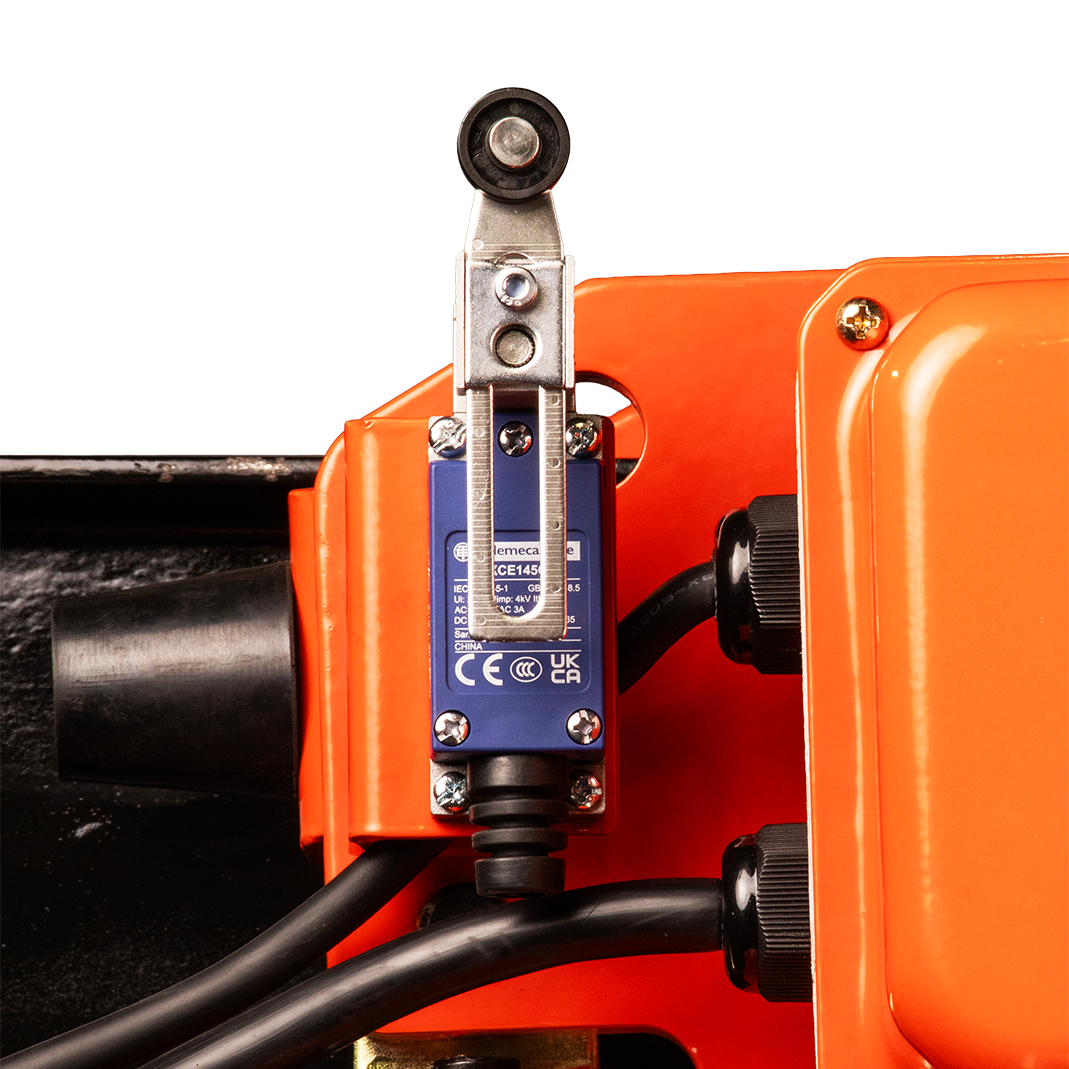
Motorized traverse: controls, limits, and stops. A motorized trolley brings its own controls into the picture. Travel is driven from the same pendant or radio that runs the hoist, and a dual-speed traverse lets the operator ease a load up to a station and set it without the drift a single-speed drive leaves. Because a powered trolley can run a load into the end of the beam, end stops on the runway are not optional, and travel limit switches add a controlled cutoff before the trolley reaches them. The Bison limit switches for trolley sold here mount to the trolley for that job. Order the matching controls, stops, and any cable management with the hoist so the traverse is a finished, safe system on day one, with the spares and add-ons in electric hoist accessories.
ASME B30.16, marking, and inspection. Electric chain hoists fall under ASME B30.16, the standard for overhead underhung and stationary hoists, which sets the rules for construction, installation, operation, inspection, testing, and maintenance. In practice that means the hoist arrives marked with its rated load and that marking has to stay legible, the load is never exceeded, and inspection follows a set rhythm: a frequent check by the operator before use plus a documented periodic inspection on intervals that tighten as service gets heavier. Look at the load chain, hooks, brake, limit switches, and the trolley wheels. The runway the trolley rides is its own responsibility: the beam, its splices, and its supports should be specified or verified by a qualified person for the combined hoist, trolley, and rated load before the first lift.
Frequently Asked Questions
A push trolley moves by hand and is the cheapest, good for light loads and short runs. A geared trolley adds a hand chain and gearing so you can spot a heavier load precisely without shoving it, which suits assembly and maintenance work. A motorized trolley drives itself with a motor, the right choice for heavy loads and high-frequency lifting. Harrington offers all three across its hoist families, so pick the hoist for the lift and the trolley for how you need to travel.
Check your building supply first. The Harrington SEQ and SNER families run on single-phase 115/230V for shops and workstations without three-phase service, up to 3 ton. The ER and NER series need three-phase power and carry the range to 20 ton. A three-phase hoist will not run on single-phase power, so confirm the supply before ordering rather than planning to fix it later.
Measure the beam flange width and note the profile before you buy. Adjustable trolleys span a range of flange widths with spacer washers, but each model has a minimum and a maximum, and tapered S-beams sit differently than flat wide-flange beams. If your runway curves, check the trolley's minimum curve radius too; Harrington lists a wider minimum flange for curved-beam service. The trolley's own capacity also has to meet or beat the hoist under it.
More than with a hook mount, because the trolley sits on the beam and the hoist hangs below it. Measure the clear height under your beam, subtract the combined trolley and hoist headroom, and confirm the remainder clears your tallest load plus its rigging. If headroom is tight, a low-headroom body like the Harrington SNER and a close-coupled geared or push trolley reclaim some of that height.
Electric chain hoists are covered by ASME B30.16, which calls for the hoist to be marked with its rated load, never overloaded, and inspected on a schedule: a frequent check before use plus a documented periodic inspection that tightens with heavier service. Inspect the chain, hooks, brake, and trolley wheels. The beam and its supports are a separate matter and should be verified by a qualified person for the full hoist, trolley, and load.
Yes. A powered trolley can drive a load into the end of the runway, so end stops on the beam are required, and travel limit switches such as the Bison unit sold here give a controlled cutoff before the trolley reaches them. Order the stops and any limit switches with the hoist so the traverse is a finished, safe system from the first lift.