Wire Rope Hoists
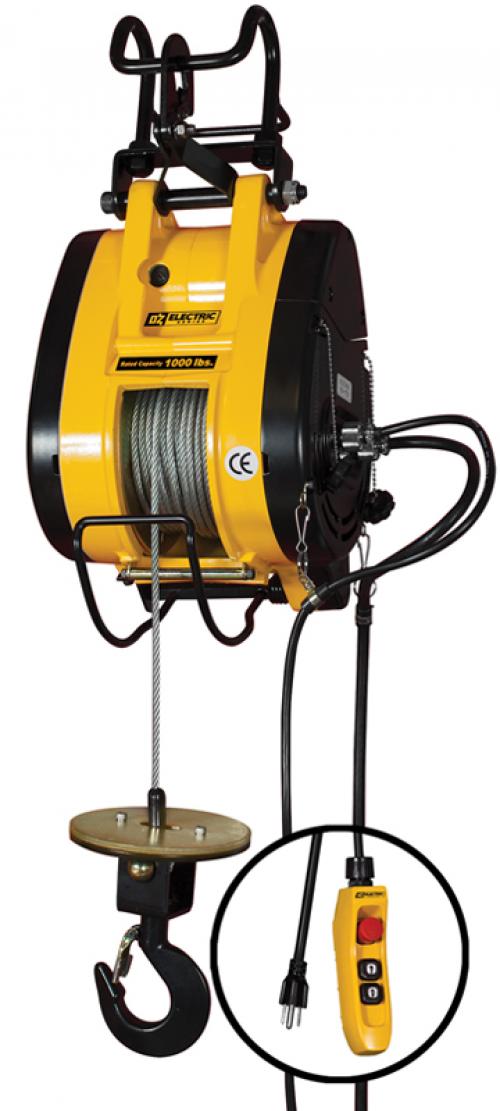
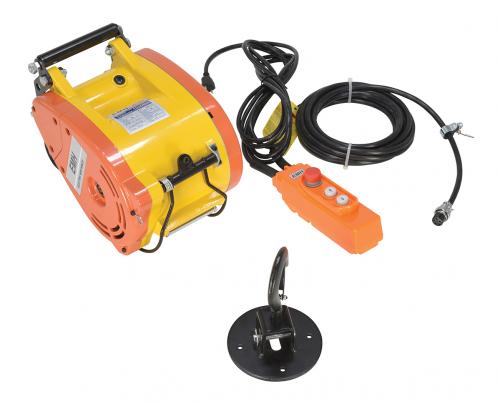
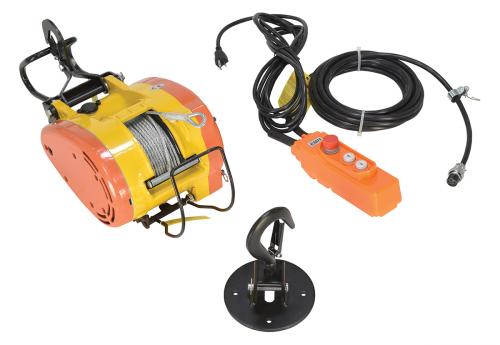
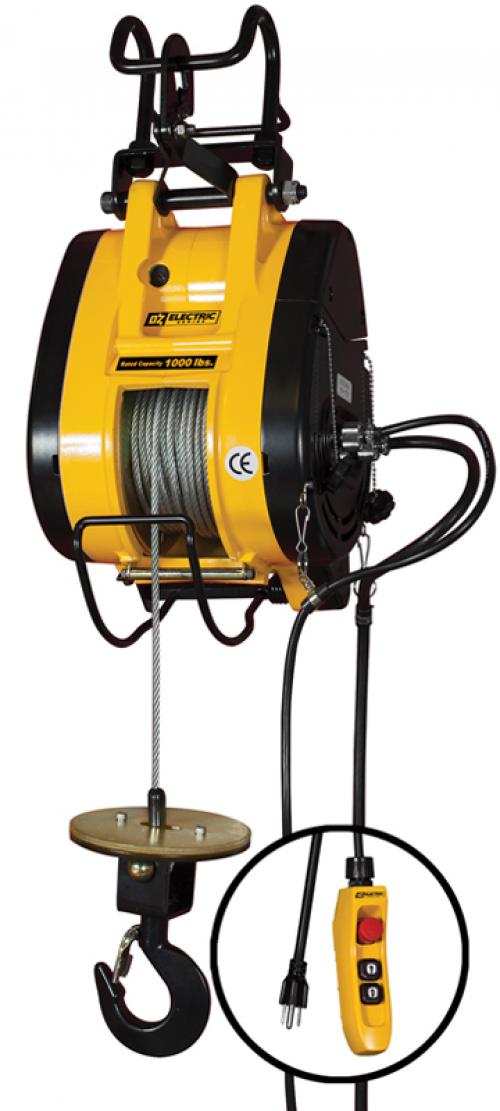
A wire rope hoist raises the load on steel cable wound around a grooved drum, and that mechanical difference from a chain hoist is why it climbs higher and faster in the same headroom. The units on this page are light-capacity single-phase machines: Vestil rope hoists rated 300 to 1,000 pounds and OZ Lifting builders hoists at 500 and 1,000 pounds, all running on an ordinary 115-volt outlet with 90 feet of lift. They are the tool for pulling material up the outside of a building, feeding a scaffold platform, or running a tall vertical lift where dragging that much chain would be a chore. Prices start around $817 for the compact Vestil and climb with capacity and the mounting hardware you add. The guide below covers how a rope drum works, how to size one of these hoists, how to mount it to your structure, and the wire rope inspection habits that keep it safe at height.
Compare Electric Wire Rope Hoist
| Model | Price | Capacity | Lift Height | Power | Motor Voltage | |
|---|---|---|---|---|---|---|
| OZ Lifting 1000lbs Electric Builders Hoist, 115V | $1,345 | 1000 lb | 90 ft | 15 ft | 115/1/60 | View → |
| Vestil Electric Rope Hoist- 1000Lb, 115v, 90ft lift | $1,215 | 1000 lb | — | 115V | — | View → |
| OZ Lifting 500lbs Electric Builders Hoist, 115V | $1,065 | 500 lb | 90 ft | 15 ft | 115/1/60 | View → |
| OZ Lifting Builder's Hoist Scaffold Mount Bracket for OBH5000 and OBH1000 | $555 | 1,000 lb | — | — | — | View → |
 In Stock
 In Stock
 In Stock
 In Stock
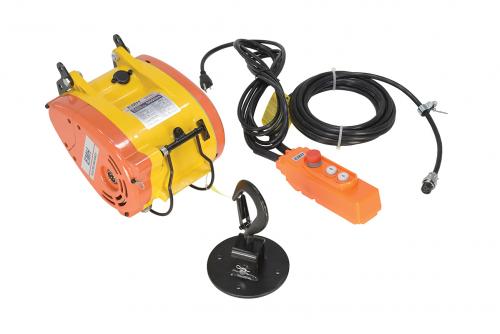 In Stock
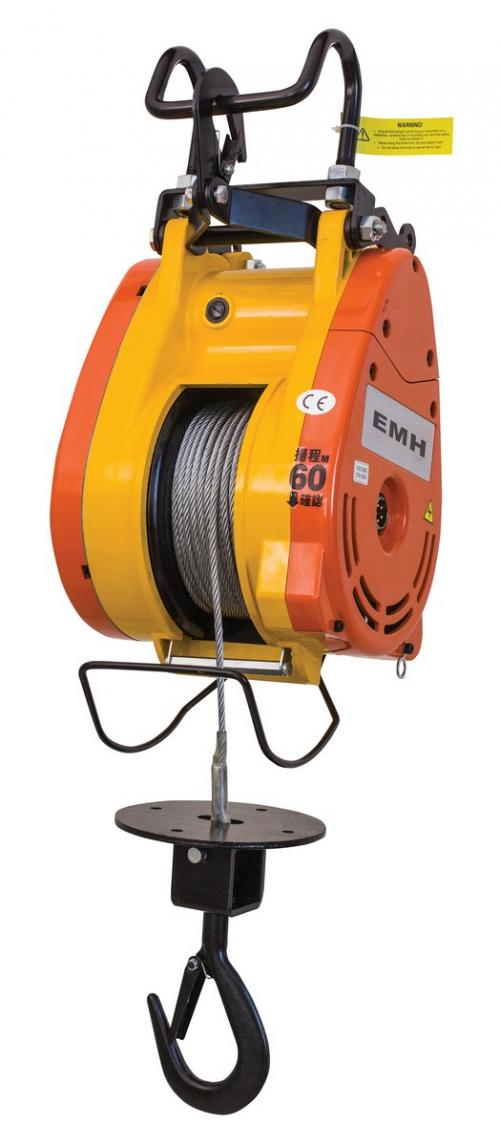 In Stock
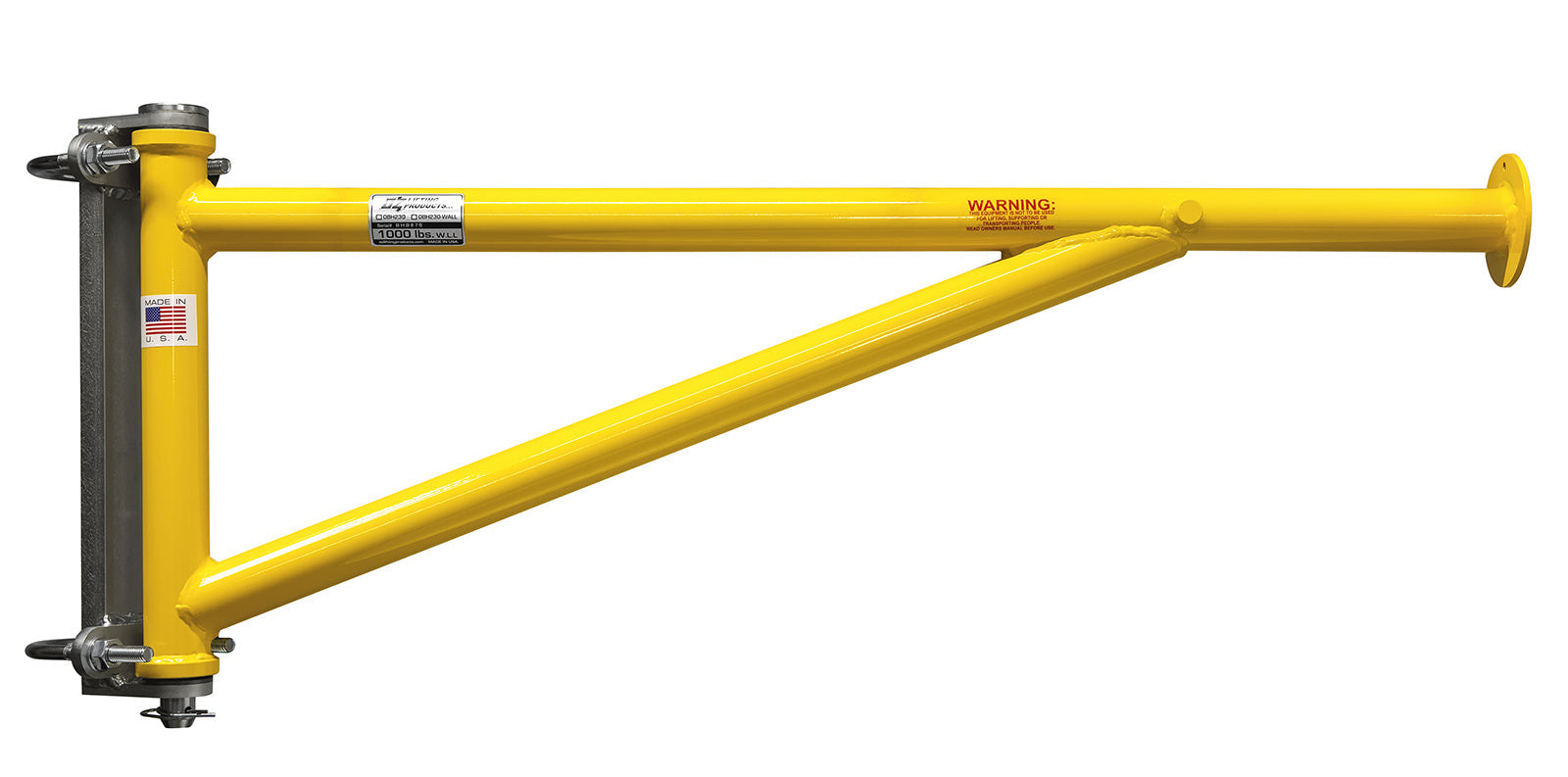 In Stock
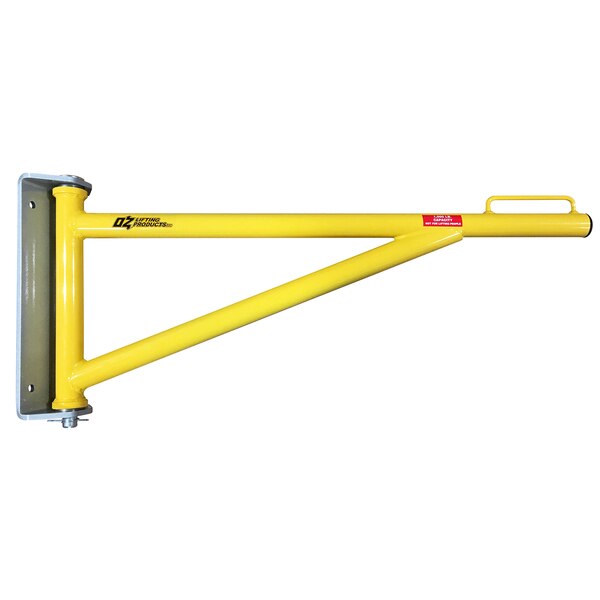 In Stock
Electric Wire Rope Hoist Buying Guide
How a wire rope hoist actually works. The part that defines the machine is the drum. A wire rope hoist winds steel cable onto a grooved, rotating drum instead of hauling chain over a pocketed liftwheel, and that single difference drives everything else. Rope spools flat and tight in its grooves, so a drum stores a long lift in a compact body: these units carry 90 feet of cable in a housing not much bigger than a chain hoist that would lift a fraction of that height, and rope runs smoother and faster than chain snapping link by link over a wheel. The trade is geometry. A single line of rope off a drum lets a freely hung load spin and drift, so heavy industrial wire rope hoists double-reeve the rope through a lower block to get true vertical lift that raises the hook straight up. The light 115-volt units here run a single line, which is fine for hauling material up a wall where a little sway does not matter, and worth knowing before you expect crane-grade positioning from a builders hoist.
What is on this page: light-capacity 115V units. Every hoist in this collection is a light-capacity, single-phase machine built to run off a standard wall outlet. The Vestil electric rope hoists cover 300, 500, 700, and 1,000 pounds, all on 115-volt power with 90 feet of lift, starting around $817 for the 300-pound unit and running to about $1,215 for the 1,000-pound model. The OZ Lifting builders hoists sit alongside them at 500 and 1,000 pounds, also 115-volt, priced near $1,065 and $1,345. This is deliberately the light end of the wire rope world. The 10- and 20-ton three-phase wire rope hoists that ride overhead cranes in heavy fabrication are a different class of machine and a different install; what lives here is the portable, plug-in tool a roofing or masonry crew actually carries to a site. If your job is feeding a scaffold or lifting bundles to a roof, this is the right shelf. If you need a production hoist bolted under a runway, start at the electric hoists hub instead.
Sizing: capacity, lift height, and duty. Size capacity the honest way: the heaviest load you will lift plus the bucket, the sling, or whatever carries it, then pick the next rating up and stop. On a single-line hoist the rated capacity is the straight line pull, so there is no reeving math to do here, which keeps the choice simple at 300, 500, 700, or 1,000 pounds. Lift height is fixed at 90 feet across the line, enough for most low- and mid-rise work, so the real question is whether that reaches your top landing with rope to spare on the drum. Duty matters too. These are intermittent-duty motors sized for a crew loading and unloading, not a continuous production cycle, so let the motor rest between long pulls and it will last. If you are cycling all shift near capacity, you have outgrown a builders hoist and want a duty-rated production unit.
Mounting: scaffold, wall, or beam. How the hoist attaches to your structure decides whether it is usable on your site, and the mount is a separate buy. The OZ builders hoists mount three ways: a scaffold bracket that clamps the hoist to standard frame scaffolding, a wall bracket that lags into structure, or a beam clamp for steel. This collection carries the OZ scaffold mount bracket near $555 and the wall mount bracket near $383, both rated for the 500- and 1,000-pound builders hoists. Work out the mount before you order the hoist, because the bracket is what puts the machine where the load has to go, and a hoist with no rated attachment point is just a motor in a box. Confirm the bracket matches your hoist model and that whatever you clamp or lag it to can carry the rated load plus the weight of the hoist itself.
Wire rope or chain, and where builders hoists overlap. Wire rope is not always the answer, and the honest comparison is worth making. Pick a wire rope hoist when the lift is tall or you want speed and a long line stored compactly, which is exactly the scaffold-and-roof work these units are built for. Pick an electric chain hoist when you need precise slow-speed spotting, higher capacity in a shop, or a hoist you can service link by link, since chain shrugs off grit and abuse that punish rope on a drum. And if your whole problem is getting material up the outside of a building, look at the construction hoists too, since the OZ and Vestil builders units cross-list between both collections and the choice there is about mounting and site logistics more than the rope itself.
Wire rope inspection and the standards that apply. Two standards frame these machines. ASME B30.16 is the safety code for overhead hoists and covers electric wire rope hoists alongside chain, setting the rules for operation, inspection, and maintenance; ASME HST-4 is the matching performance standard written specifically for overhead electric wire rope hoists. The part that needs your attention on the floor is the rope. Steel cable wears in ways chain does not, so inspect it on schedule and pull it from service on the recognized criteria: kinking, crushing, unstranding, or birdcaging where the strands splay open, corrosion, and broken wires, with the common threshold being several randomly distributed broken wires within a single rope lay. Keep the rope spooling cleanly in the drum grooves, never let it pile or cross-wind, and never run the hook up into the drum. A wire rope hoist that gets a real look before each shift and a competent periodic check is a safe machine; the one that spools a frayed rope is the one that fails at height.
Frequently Asked Questions
A wire rope hoist winds steel cable onto a grooved drum, while a chain hoist pulls load chain over a pocketed liftwheel. The drum stores a long lift compactly and runs faster, which is why wire rope suits tall pulls like scaffold and roof work. Chain gives better slow-speed spotting, handles grit and abuse well, and is easier to service link by link, so it stays the default for shop and production lifting.
Every unit in this collection lifts 90 feet on a single line of wire rope. Capacities are 300, 500, 700, and 1,000 pounds on the Vestil rope hoists and 500 and 1,000 pounds on the OZ Lifting builders hoists. Because they are single-line, the rated capacity is the straight line pull, so there is no reeving math: total your load honestly and pick the next rating up.
No. All of them run on standard 115-volt single-phase power, the same as an ordinary wall outlet, which is why a crew can plug one in on almost any site. That is different from the large three-phase wire rope hoists used under overhead cranes, which need 230- or 460-volt three-phase service. If you are lifting light material up a scaffold or wall, single-phase 115V is all you need.
The OZ builders hoists mount three ways: a scaffold bracket that clamps to standard frame scaffolding, a wall bracket that lags into structure, or a beam clamp for steel. The scaffold and wall mount brackets are sold separately, near $555 and $383 respectively, and both are rated for the 500- and 1,000-pound units. Sort out the mount before you buy the hoist, and confirm the point you attach to can carry the rated load plus the hoist's own weight.
Give the rope a visual check before each shift and a documented periodic inspection by a competent person on the schedule ASME B30.16 sets. Pull the rope from service when you find kinking, crushing, unstranding, or birdcaging where strands splay open, corrosion, or broken wires, with a common threshold being several randomly distributed broken wires within one rope lay. Keep it spooling cleanly in the drum grooves so it does not pile or cross-wind.
Not entirely. A single line of rope off a drum lets a freely hung load rotate and drift, which is acceptable when you are hauling bundles up a wall where a little sway does not matter. True vertical lift, where the hook rises dead straight, comes from double-reeving the rope through a lower block, which is how heavy industrial wire rope hoists are built. The light 115-volt units here are single-line, so plan for some movement rather than crane-grade positioning.