Hydraulic Cylinder Parts
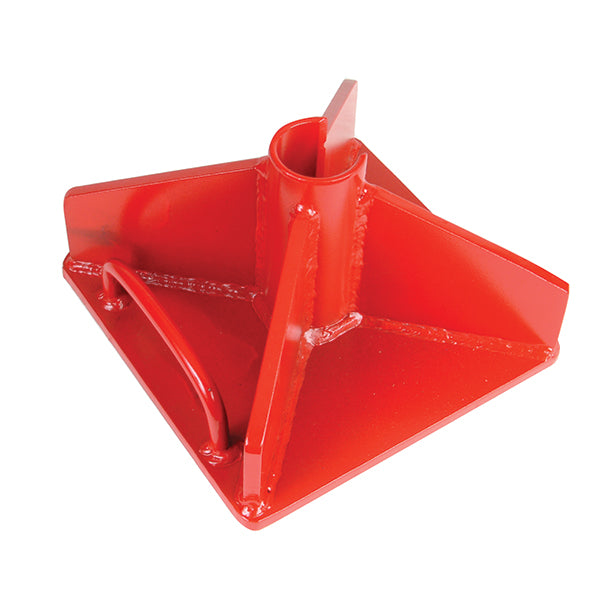
Hydraulic cylinder parts are the mounting hardware that turns a bare ram into a stable, fixtured tool, and the piece that earns its keep under load is the base. This collection is the BVA Hydraulics cylinder base line: square steel plates that bolt to the base mounting holes on a general-purpose single-acting cylinder and give it a wide, flat foot to stand on. They come matched to the cylinder by tonnage, from the 5 ton plate up through 25 ton, and run from around $135 to just under $450. A bare cylinder is a tall column with a small footprint, and that is exactly the shape that tips or punches into a floor when a load shifts. The base is the cheapest fix for both. The guide below covers matching the base to your cylinder and when you actually need one.
Hydraulic Cylinder Parts Buying Guide
What the base actually does. A general-purpose BVA cylinder is a one-piece alloy steel body with a hard chrome plunger and a small round footprint, built with collar threads up top and base mounting holes underneath for fixturing. The base bolts into those holes and turns that small footprint into a square steel foot: the 25 ton plate measures about 11 inches on a side. Widening the footprint does two things. It spreads the reaction force over more floor, so the cylinder does not punch a dimple into concrete or sink into a softer surface, and it lowers the tipping risk when the push is not perfectly plumb. A cylinder loaded even slightly off center wants to walk or lean, and a tall general cylinder leaning under tons of force is the failure nobody wants to stand near. The base adds no capacity and no stroke. It makes the capacity you already bought safe to use.
Match the base to the cylinder by tonnage. Each base is cut for one cylinder size. CB05 fits the 5 ton general cylinder, CB10 the 10 ton, CB15 the 15 ton, and CB25 the 25 ton, and both the bolt pattern and the plate size step up with the ram, so a base is not interchangeable across sizes. Right now the range covers 5 through 25 ton, which is the band of general cylinders most likely to be stood upright on a floor and jacked. The bigger rams in the hydraulic cylinders collection, the 50 and 100 ton bodies, already sit on broad bases of their own, and the aluminum cylinders ship with an integral steel base plate, so not every cylinder needs a bolt-on foot. Buy the base that matches the exact tonnage of the cylinder it will live under. If you run several cylinder sizes, the plate is cheap enough to keep one dedicated to each ram rather than trying to share.
A base is not a substitute for cribbing. A wider foot helps, but the rules that govern any jacking job still apply. ASME B30.1, the standard covering hydraulic jacks, is built around setting the jack on a firm, level foundation and blocking the load as it rises, and a cylinder base is one layer of that discipline, not a replacement for it. On soft, uneven, or questionable ground, set the base on hardwood cribbing or steel plate so the load spreads further still, keep the push plumb, and crib the load itself so nothing rides on hydraulic pressure alone. Think of the base as the interface between the ram and whatever it stands on. It does its job best when what it stands on is solid.
Frequently Asked Questions
It bolts to the base mounting holes on a general-purpose single-acting cylinder and gives the ram a wide, flat steel foot. That footprint spreads the reaction force over more floor so the cylinder does not punch into concrete or sink into softer ground, and it resists tipping when the push is slightly off center. It does not add capacity or stroke; it stabilizes the cylinder you already have.
Match by tonnage. CB05 fits the 5 ton general cylinder, CB10 the 10 ton, CB15 the 15 ton, and CB25 the 25 ton. The bolt pattern and plate size change with each size, so the bases are not interchangeable. The line currently covers 5 through 25 ton.
No. Capacity comes from the cylinder's tonnage and bore, both fixed by the ram itself. The base only makes that rated capacity safer to use by widening the footprint and steadying the cylinder under load.
Not always. The BVA aluminum cylinders come with an integral steel base plate, and the larger tonnage rams sit on broad bases of their own. A bolt-on base earns its place under a tall general single-acting cylinder stood upright on a smooth or soft floor, or anywhere the push may run slightly off plumb.
No. ASME B30.1, the standard for hydraulic jacks, calls for a firm, level foundation and blocking the load as it rises. The base is one layer of that: set it on hardwood cribbing or steel plate on questionable ground, keep the push plumb, and crib the load so nothing rides on hydraulic pressure alone.