Hydraulic Hoses
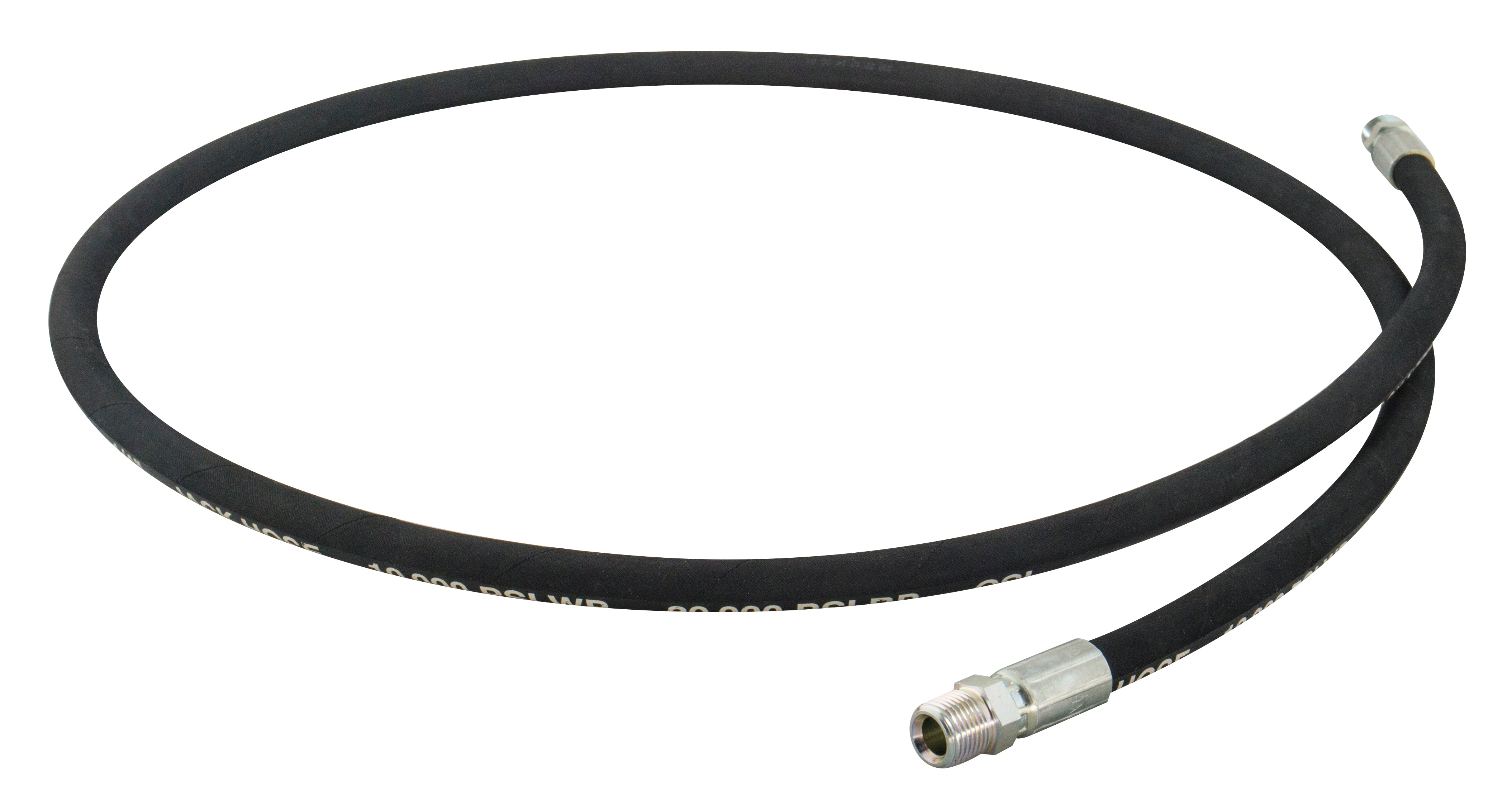
A hydraulic hose is the flexible line that carries oil from the pump to the cylinder, and at 10,000 psi it is holding back a working pressure most shop air lines never come close to. This collection is the BVA Hydraulics rubber hose line, built to the same 10,000 psi high-pressure standard as the rest of the BVA system, so a hose here threads onto a BVA pump or ram without an adapter or a pressure mismatch. It comes in 1/4 and 3/8 inch inside diameters and 3, 6, 10, and 20 ft lengths, with either a 3/8-18 NPTF threaded fitting on both ends or one end fitted with a CH38M high-flow quick coupler. Prices run from about $88 for a short quarter-inch line up to roughly $405 for the longest coupler-ended build.
Hydraulic Hoses Buying Guide
Match the hose to the system pressure, with no exceptions. A hydraulic hose carries the full output of the pump, so its rated working pressure has to meet or beat everything upstream of it. The whole BVA line, these hoses, the hydraulic cylinders, and the power units that feed them, is built to one number, 10,000 psi, the standard high-pressure rating the industrial world runs on. That shared rating is the point: a hose off this page threads onto a BVA pump port and a BVA ram with nothing in between. Never drop a lower-rated hose into a 10,000 psi circuit to save a few dollars, and never assume a hose pulled off an unknown machine is rated for this work. The hose is the part of the system that whips if it parts under load, so it is the last place to guess.
Bore first, then length. The two hose bores here move oil at different rates. The 1/4 inch line is the standard feed for single cylinders and most portable work. The 3/8 inch line has more than double the cross section, so it fills a larger or double-acting cylinder faster and loses less pressure over a long run. Pick the bore by the cylinder you are feeding, then pick length by reach. The 3 and 6 ft hoses keep the pump right at the work; the 10 and 20 ft hoses let the operator stand clear of the load or run a line out to a manifold that splits flow to several rams. Longer is not free: every extra foot adds a little pressure drop and one more length of line to route away from pinch points and heat. Buy the reach the job needs and stop there.
Threaded ends or a quick coupler. Each configuration comes one of two ways. The plain versions carry a 3/8-18 NPTF male thread on both ends, a dryseal tapered thread that seals metal to metal without tape or paste, right for a connection made once and left alone. The CH38M versions swap one threaded end for a BVA high-flow male quick coupler, so the hose snaps onto a matching female half and comes off again by hand with no wrench. Choose the coupler end when one pump feeds different tools through the day or a cylinder gets swapped between jobs. Choose the plain threaded hose for a fixed line that lives in one circuit. Spare couplers and other fittings sit in hydraulic accessories when you are matching halves across older gear, and the full system view is on the hydraulic equipment hub.
Treat a leak as an injury, not a drip. A pinhole in a pressurized hydraulic hose does not weep, it injects. Fluid can leave a hair-thin crack at hundreds of feet per second and drive under the skin, and an injection wound that looks like a minor puncture is a surgical emergency. Never run a hand or a finger along a pressurized line to find a leak. Depressurize the circuit first, then move a piece of cardboard along the hose to spot the spray. Inspect before every lift for cuts, bulges, kinks, cracked fittings, and abrasion, and retire a hose that shows any of them rather than nurse it through one more job. Respect the bend radius too, since a hose kinked tighter than it is rated for fails early right at the fitting. Route lines away from edges, heat, and moving parts, and keep them off the floor where a wheel or a dropped load can crush them.
Frequently Asked Questions
All of the BVA hoses in this collection are rated for 10,000 psi working pressure, the industrial high-pressure standard the rest of the BVA cylinders, pumps, and manifolds are built to. That shared rating lets any piece of the line connect without a pressure mismatch.
The number is the inside diameter, which sets how fast oil moves through the hose. The 1/4 inch line is the standard feed for single cylinders and portable work. The 3/8 inch line has more than double the cross section, so it fills a larger or double-acting cylinder faster and drops less pressure over a long run. Match the bore to the cylinder you are feeding.
CH38M is a BVA high-flow male quick coupler. On those configurations, one end of the hose carries that coupler instead of a plain thread, so the hose snaps onto a matching female half by hand and releases the same way with no wrench. It is the right pick when one pump feeds several tools or a cylinder gets swapped between jobs.
No. NPTF is a dryseal tapered thread designed to seal metal to metal as the threads deform against each other, so it holds without tape or pipe dope. Thread it clean and tight to the correct torque. The threaded versions here use a 3/8-18 NPTF fitting on both ends.
The 3/8-18 NPTF threaded ends follow a common port standard, so a threaded hose mates with any matching 3/8-18 NPTF pump or cylinder port regardless of brand, as long as that equipment is also rated for 10,000 psi. Quick couplers are the exception: coupler halves are brand-specific, so a CH38M coupler only mates with its matching BVA half, not a coupler from another maker.
Depressurize the circuit first, then run a piece of cardboard along the hose to reveal any spray. Never use your hand or fingers, because a pinhole leak can inject fluid under the skin at high pressure and cause a serious injury. Inspect for cuts, bulges, kinks, and cracked fittings before every use and replace any hose that shows damage.