Single Leg Chain Slings
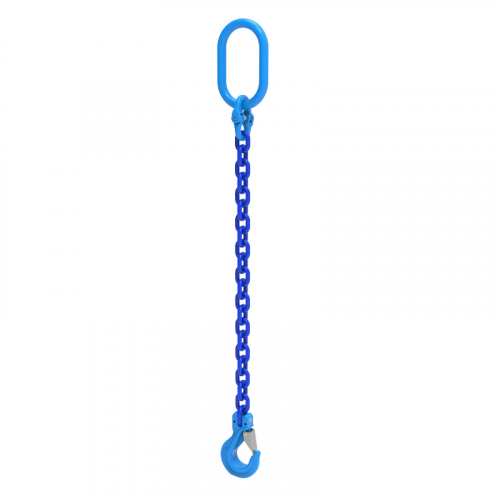
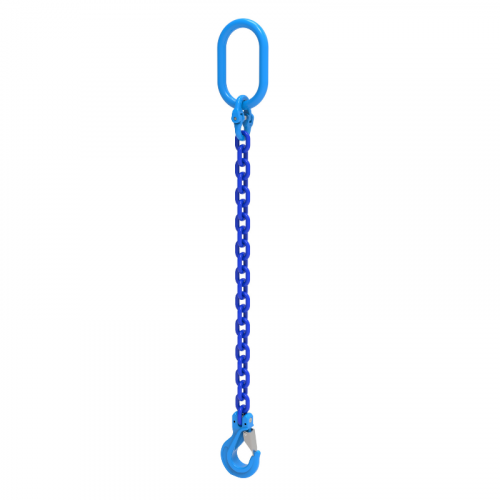
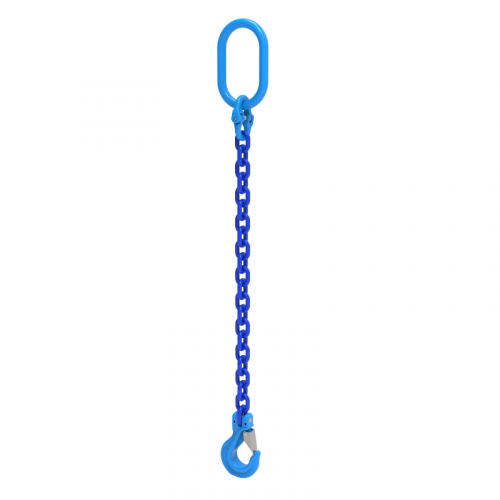
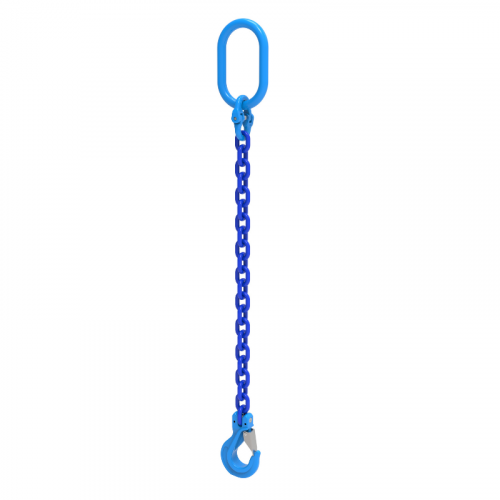
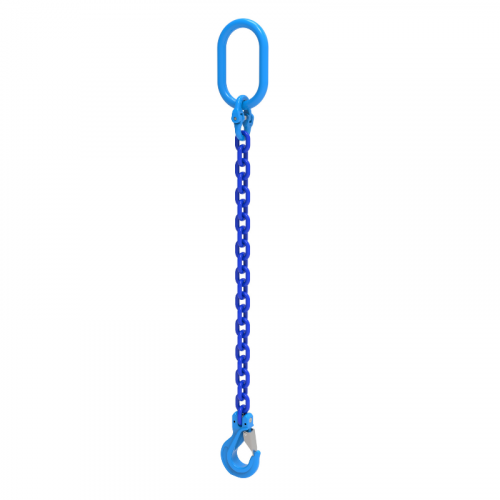
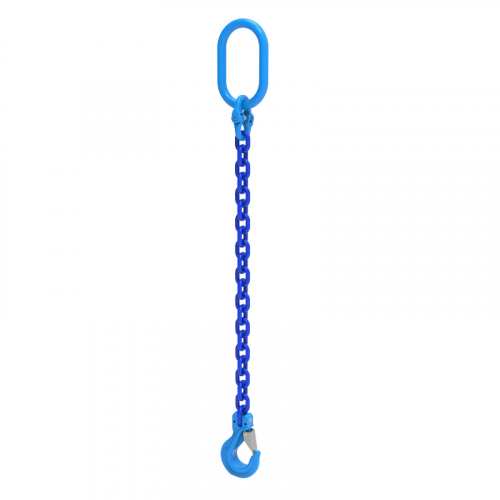
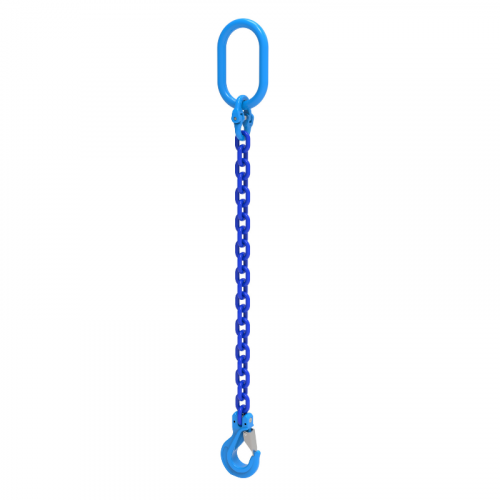
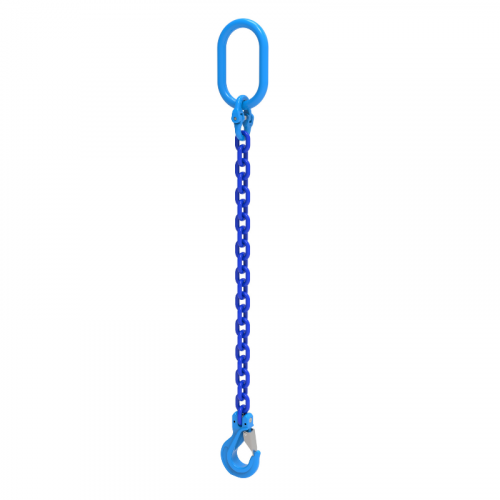
A single leg chain sling is the simplest rated lifting assembly you can hang from a hook: a master link on top, one length of alloy chain, and one hook at the bottom, assembled, tagged, and proof tested as a unit. This collection is built on William Hackett Grade 100 assemblies, from a 1/4 inch leg rated 2,700 lb vertical up to a 1 inch leg rated 59,600 lb, each configured to the reach and hook you pick. Grade 100 is the alloy to buy for this work: it carries roughly 25% more load than Grade 80 of the same diameter, shrugs off the heat, edges, and shop abuse that retire synthetic slings, and it can be inspected link by link over years of service. Every sling ships with a choice of effective working length from 3 to 30 ft, a standard latch hook or a self-locking hook, and an optional grab hook for shortening the leg on the job. The guide below covers grade, the hitches a single leg rigs, and the ASME B30.9 rules that keep it legal.
Compare 1 Leg Grade 100 Chain Slings
| Model | Price | Overall Length | Capacity | |
|---|---|---|---|---|
| William Hackett 1 Inch Diameter 59600lbs 1-Leg Chain Sling | $1,443 | 3-30 ft | 59600 lb | View → |
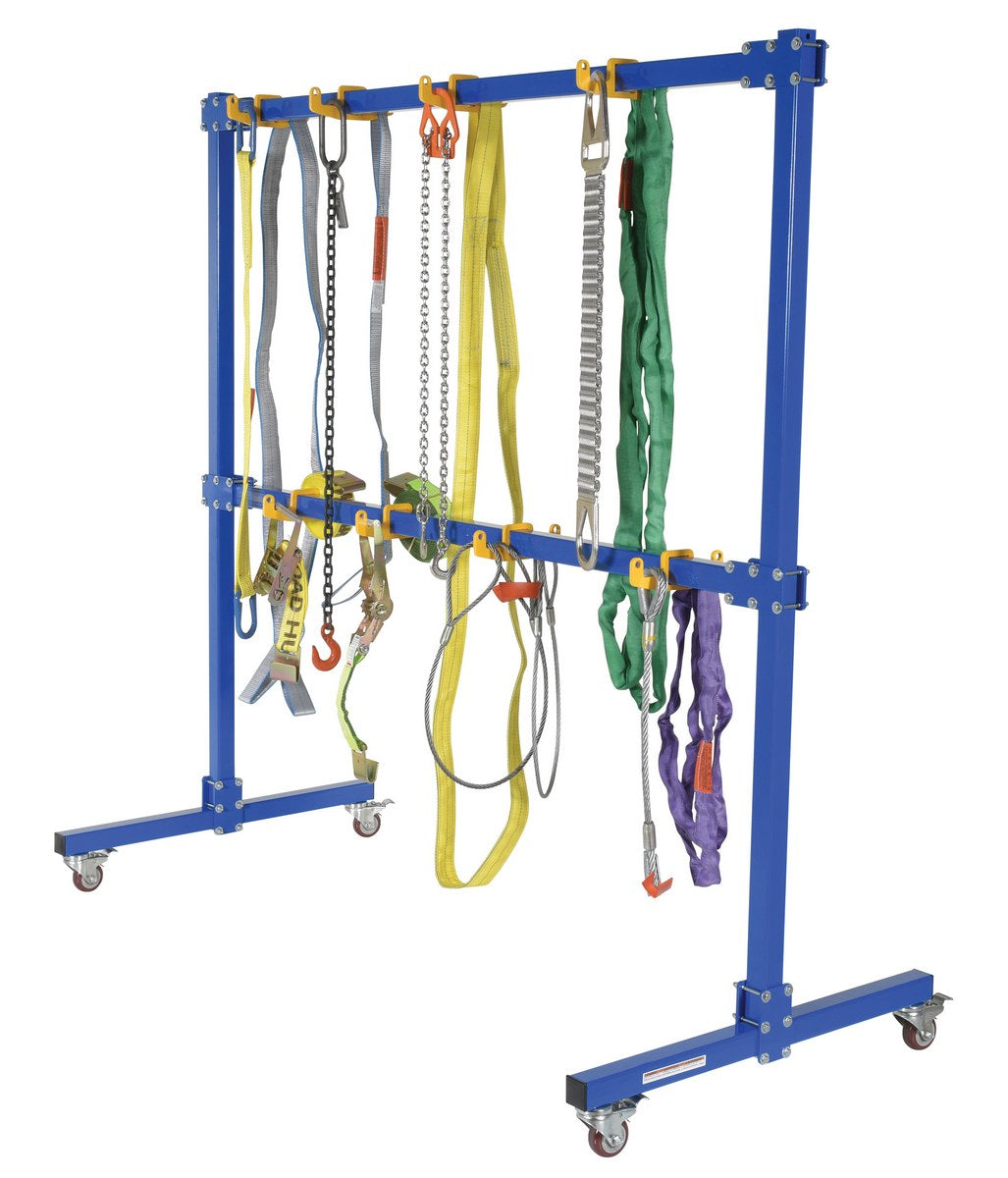
| Vestil Lifting Sling Rack | $519 | — | 2,000 lb | View → |
| William Hackett 7/8 Inch Diameter 42700lbs 1-Leg Chain Sling | $505 | 3-30 ft | 42700 lb | View → |
| WH 5/8 Inch Dia. x WLL 22600lbs Single Leg Grade 100 Chain Slings | $403 | 3-30 ft | 22,600 lb | View → |
| William Hackett 3/4 Inch Diameter 35300lbs 1-Leg Chain Sling | $348 | 3-30 ft | 35300 lb | View → |
| WH 1/2 Inch Dia. x WLL 15000lbs Single Leg Grade 100 Chain Slings | $228 | 3-30 ft | 15,000 lb | View → |
 In Stock
 In Stock
 In Stock
 In Stock
 In Stock
 In Stock
 In Stock
 In Stock
 In Stock
1 Leg Grade 100 Chain Slings Buying Guide
What a single leg does, and where a bridle takes over. A single leg is a one-load tool: master link, one run of chain, one hook, rigged as a straight vertical pull or choked around the load. There is no angle math to run, because there is only one leg carrying the whole weight in line with the hook. That simplicity is the reason to buy it. When the load has an offset center of gravity, needs to hang level, or wants two or more pick points to stay controlled, a single leg is the wrong tool and you step up to a bridle. The 2 leg Grade 100 chain slings hold two points and let you balance an off-center load, and the 4 leg Grade 100 chain slings spread a rigid frame, skid, or machine base across four corners. The full alloy range, single through four leg, lives in Grade 100 chain slings, and the wider family of alloy, wire rope, and bulk chain sits in Chain Slings & Lifting Chains.
Size the leg to the load and the hitch. The number on the tag is the vertical rating: one leg, straight pull, the load hanging in line under the hook. Change the hitch and the rating changes with it. Choke the leg back on itself and a chain sling carries about 80% of its vertical rating, and only when the angle of choke is 120 degrees or more; tighter than that and the number drops off fast. A true basket, both ends up to the hook with the load cradled in the bight, can carry up to twice the vertical rating, but only with vertical legs and a generous bearing diameter. Our single legs run 1/4 inch at 2,700 lb, 5/16 inch at 5,700 lb, 3/8 inch at 8,800 lb, 1/2 inch at 15,000 lb, 5/8 inch at 22,600 lb, 3/4 inch at 35,300 lb, 7/8 inch at 42,700 lb, and 1 inch at 59,600 lb, starting near $102. Decide the hitch first, then size off the hitch-adjusted number, not the tag.
Why Grade 100 for a lifting chain. Grade 100 alloy is the current standard for overhead chain slings, and it earns its place on strength-to-weight. It carries roughly 25% more load than Grade 80 of the same diameter, so a lighter, easier-to-handle chain does the same lift, which matters most on the long legs a crew rigs by hand all day. It also holds full rated load from minus 40 F up to 400 F, with published reduction tables above that and removal from service past 1,000 F, which is where chain leaves every synthetic behind: OSHA caps polyester and nylon slings at 194 F. If the lift is cool, clean, and easy on the sling, the synthetics in lifting slings are cheaper and lighter for the capacity, whether that is a round sling, a flat webbing sling, or a wire rope sling. Chain is what you buy for heat, sharp edges, and abuse that would cut a synthetic through in a single pick.
Pick the hook and the length. Two build choices decide how the sling handles day to day. The hook comes as a standard hook with a spring latch, the quick, familiar pick-and-place fitting, or a self-locking hook whose gate stays shut under load and will not roll open if the rigging shifts, which is the safer choice for loads that can spin or lifts left rigged. Effective working length runs from 3 to 30 ft; order the length that keeps the load off the ground with the hook at a comfortable height, since usable reach is measured bearing point to bearing point, master link seat to hook saddle. You can also add a chain adjustment grab hook, which lets you drop a chain link into the hook to shorten the leg and dial in reach on the job. Used as a cradle grab hook it shortens the leg with no loss of rating, so one adjustable sling covers loads of different heights instead of a rack of fixed lengths.
Match the end fittings, or buy the assembly whole. A rig is only as strong as its weakest piece, so every fitting has to at least match the chain. The advantage of an assembled single leg is that the matching is already done: master link, Grade 100 chain, and hook are sized together, proof tested, and tagged as one rated unit, so there is no mismatched-component guesswork. When you are repairing a sling, building a custom reach, or replacing a worn hook, the loose pieces live in Grade 100 chain components, with more hooks, coupling links, and connectors in lifting hooks & connectors and screw-in lifting points for the load side. Store the slings off the floor and out of the weather when they are not on a hook; the Vestil lifting sling rack keeps a set hung straight, sorted by rating, and easy to inspect at $519.
Inspection and removal under ASME B30.9. Chain slings fall under ASME B30.9, the sling standard, which calls for a visual check before each use and a documented periodic inspection on a schedule that tightens as the sling works harder. The removal criteria for alloy chain are concrete: stretched links, which show up as a chain that no longer collapses freely or measures long against its record, bent or twisted links, nicks, gouges, and cracks, and a hook that has opened at the throat or worn past the maker's limit. A missing or illegible tag also takes the sling out, because the tag carries the rating and traceability that make the sling legal to use. New assemblies here are proof tested to twice their working load limit before they ship, which is the manufacturer's test, not a license to overload; rig to the WLL on the tag, and when any link or hook is in doubt, the sling comes out of service until a qualified person rules on it.
Frequently Asked Questions
Plan on losing about 20%. A chain choker carries roughly 80% of its vertical rating, and only when the angle of choke is 120 degrees or greater; a tighter choke angle drops the capacity further. So a 1/2 inch leg rated 15,000 lb vertical is closer to a 12,000 lb sling once you choke it. Size off the hitch you actually plan to rig, not the tag number.
Grade 100. At the same diameter it carries about 25% more load than Grade 80, which means a lighter, more manageable chain does the same lift, and hand-rigging long legs all day is easier for it. The whole collection is Grade 100 William Hackett for that reason. Grade 80 still shows up in older assemblies and in some fittings, so never mix grades in one sling and always read the tag.
Order the length that lifts your tallest load clear of the floor with the hook at a working height, measured bearing point to bearing point from the master link seat to the hook saddle. Lengths run 3 to 30 ft. If your loads vary in height, add the chain adjustment grab hook and one sling covers the range, since dropping a link into a cradle grab hook shortens the leg with no loss of rating.
A standard hook with a spring latch is the fast, familiar fitting for pick-and-place work where you rig, lift, and strip the same load. A self-locking hook keeps its gate shut under load and will not roll open if the rigging shifts, so it is the safer pick for loads that can rotate, lifts left rigged, or anything overhead where a released hook would be dangerous. The price gap is small, so when in doubt, buy the locking hook.
Yes, with both ends up to the hook and the load cradled in the chain, and a true basket can carry up to twice the vertical rating. The doubling only holds when both legs rise vertically and the chain bears on a generous diameter; spread the legs or run the chain over a tight radius and the gain falls away. For loads that need to stay level or have an offset center of gravity, a two or four leg bridle is the right tool instead of basketing one leg.