Wire Rope Slings
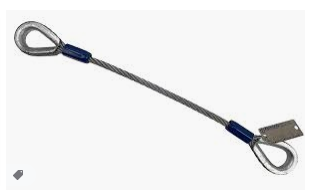
Wire rope slings are the middle ground in the sling rack: tougher and more heat tolerant than polyester, lighter and cheaper than alloy chain, and stiff enough to hold a loop open while you thread a pick. This collection covers Holloway Houston eye-and-eye single legs, the six-strand style most rigging shops reach for first, in rope diameters from 3/8 to 1 inch and effective lengths from 2 to 20 ft, starting near $7. Each is a single-part body with a spliced eye at both ends, rated to a 5 to 1 design factor, with the 1 inch topping the range near 8 tons vertical. When your lifts run hotter, sharper, or heavier than one of these can take, the chain and round sling shelves pick up where wire rope stops.
Compare Wire Rope Slings
| Model | Price | Capacity | Overall Length | |
|---|---|---|---|---|
| Vestil Lifting Sling Rack | $519 | 2,000 lb | — | View → |
| Stren-Flex Import Wire Rope Sling - Eye & Eye w/ Thimbles | $35 | — | 20 ft | View → |
| Stren-Flex Domestic Wire Rope Sling - Eye & Eye | $18 | — | 3-20 ft | View → |
| Holloway Houston Inc. Single Leg Wire Rope Sling Eye & Eye | $12 | 1.1-7.2 ton | 1-8 in | View → |
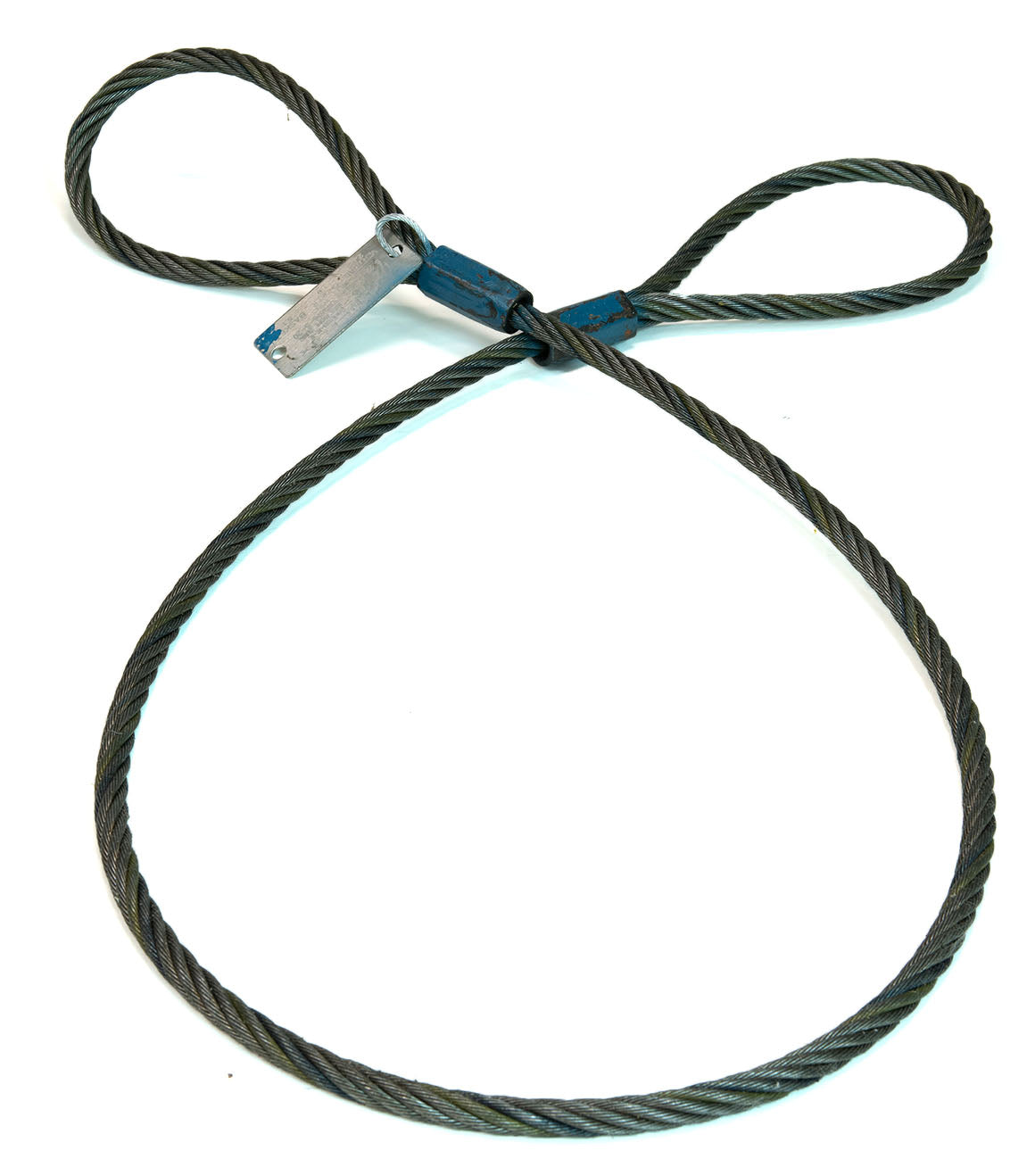 In Stock
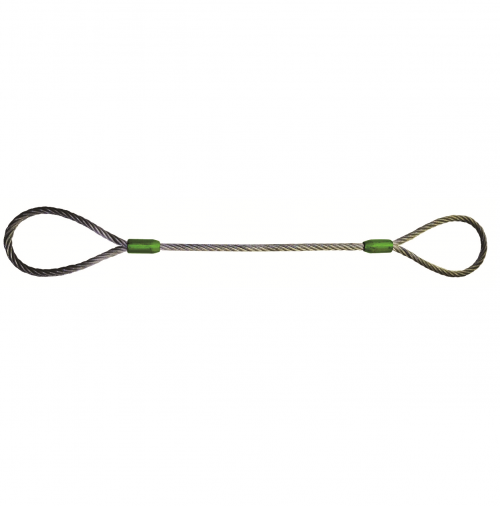 In Stock
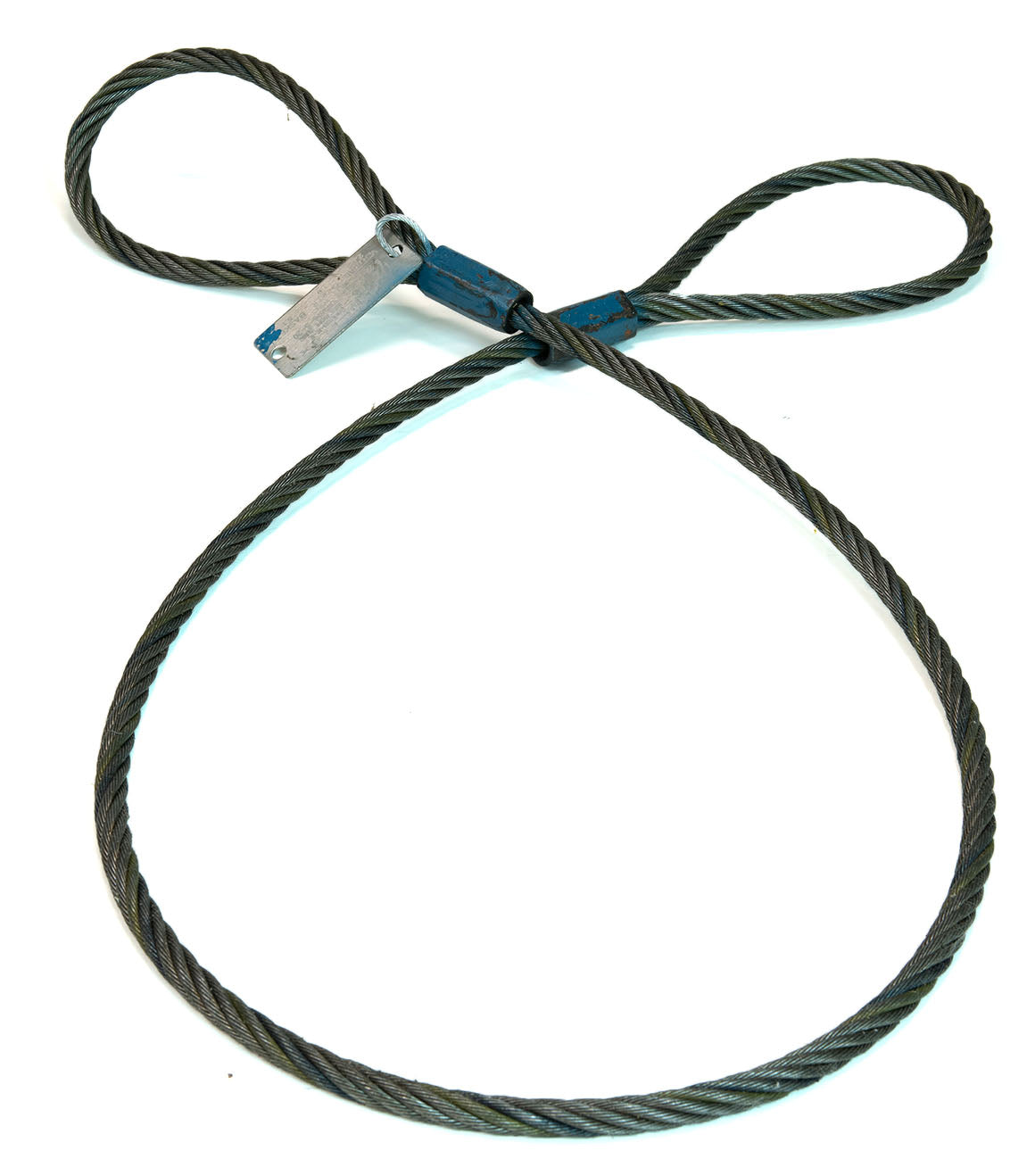 In Stock
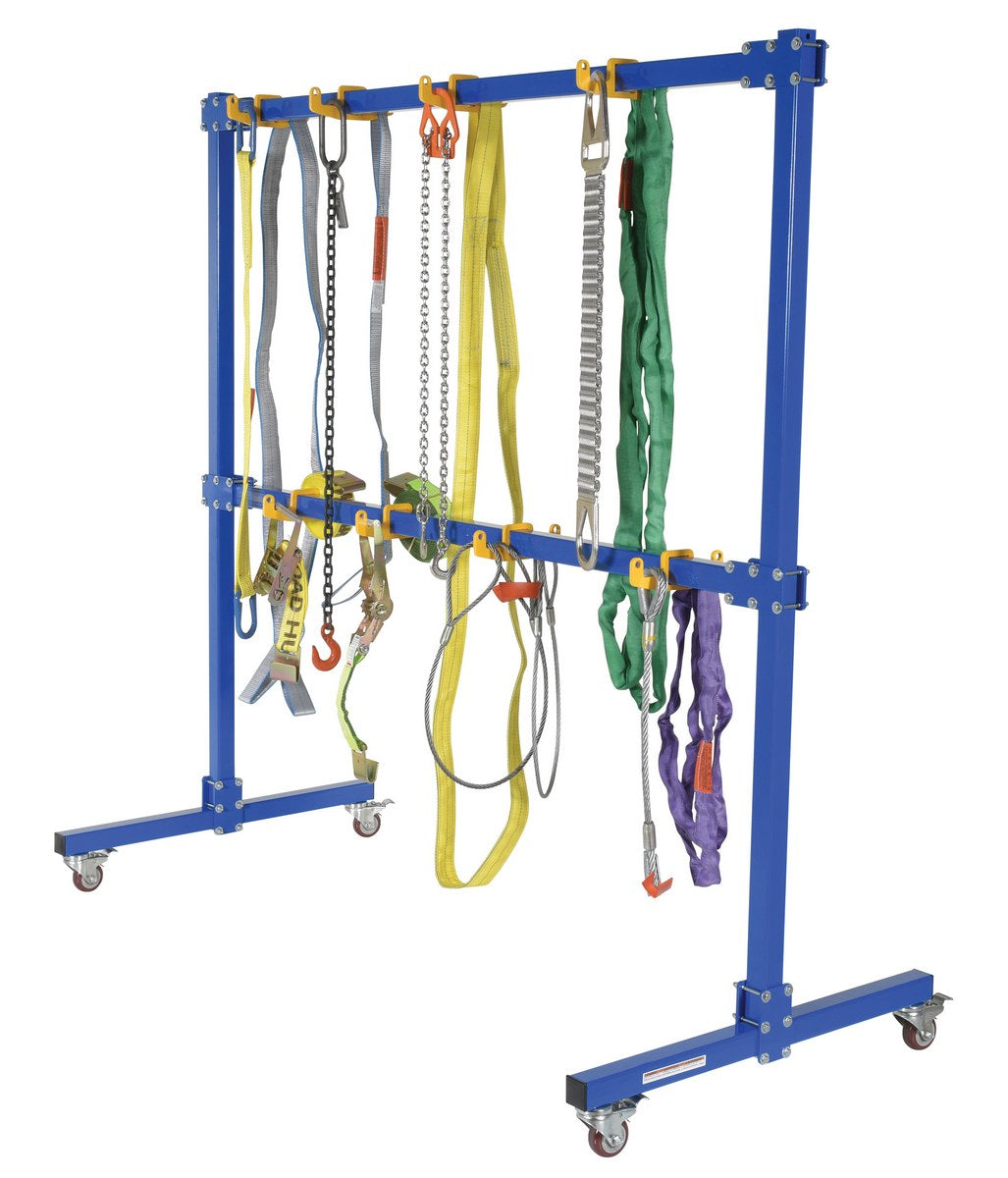 In Stock
 In Stock
Wire Rope Slings Buying Guide
Where wire rope earns the pick. Reach for wire rope when synthetic is too fragile and chain is more than you need. A loaded webbing sling or round sling dragged across a bare steel edge can be cut through in a single lift; wire rope shrugs off the same corner. It also holds its shape, so a single leg stands open for a one-hand pick where a limp strap flops over. What it gives up is surface friendliness: the same stiff strands that resist abrasion will mar soft or polished finishes, and a kinked wire rope sling never fully recovers. When the lift is hot, sharp, and repeated all day, step up to a Grade 100 chain sling, which you can inspect and repair link by link over years of service.
The D/d ratio sets the real rating. The rated capacities on a wire rope sling assume the rope bends around something with a generous diameter. Published basket and choker figures for six-strand rope are built on a D/d ratio of 25 to 1, meaning the object inside the bend is at least 25 times the rope diameter. Choke or basket a 1 inch sling around a 2 inch pin and you are far below that, and the sling's real capacity falls well under the tag. Keep the load contact large, pad sharp corners with sleeves, and rig each eye over a pin no larger than the natural eye width. In a straight choker, plan on roughly 75% of the vertical rating.
Inspect wire rope by the wires, not the cover. Wire rope retires on different signs than synthetics. ASME B30.9 pulls a single-part, strand-laid sling from service at ten randomly distributed broken wires in one rope lay, or five broken wires in one strand in one lay, so learning to spot and count broken wires is the core skill here. Add kinks, birdcaging, crushing, corrosion at the wires or fittings, heat damage, and a missing or illegible tag to the removal list. A visual check goes before every use, with a documented periodic inspection on a schedule set by how hard the slings work. Hanging them on the Vestil sling rack rather than piling them on a concrete floor slows the corrosion and crushing that quietly shorten a sling's life.
Heat is where wire rope pulls ahead. This is the practical reason to keep wire rope on the rack next to your synthetics. OSHA 1910.184 permanently retires a fiber-core wire rope sling exposed above 200 F, while a metallic-core sling built on an independent wire rope core, or IWRC, can run to 400 F before you follow the manufacturer's reduction guidance. Polyester is finished at 194 F. If your picks come off a press, a furnace line, or anything that radiates heat, specify IWRC and confirm the core when you order, since a fiber core looks identical from the outside but quits at half the temperature.
Frequently Asked Questions
Capacity climbs with rope diameter, and ours run 3/8 to 1 inch. But diameter alone does not set the safe load: your hitch, sling angle, and the D/d ratio at the bend all cut into it. Start from the heaviest real load, pick the hitch, then match the sling to the manufacturer's rating for that hitch rather than guessing from the rope size.
It is a single length of wire rope with a spliced loop, or eye, formed at each end. That makes it the most flexible single-leg style: you can rig it vertical straight off the hook, wrap it as a choker, or run it as a basket, and the same sling covers all three. Match the effective working length, the eye-to-eye dimension, to the headroom and hitch you plan to use.
IWRC, an independent wire rope core, resists heat and crushing far better and holds its rating to 400 F, against 200 F for a fiber core. You cannot tell them apart from the outside, so confirm the core when you order if the sling will see heat, heavy compression, or hard daily duty.
A web or round sling retires on cuts, holes, abrasion, and heat glaze that you can see on the face. Wire rope retires mostly on broken wires you have to look for and count: ten in one rope lay, or five in one strand in one lay, plus kinks, birdcaging, crushing, and corrosion. It is a closer inspection, which is one reason wire rope suits repeated production lifts.
Yes. Plan on about 75% of the vertical rating in a straight choker, and keep the choke point on a generous diameter so you stay near the D/d ratio the capacity is based on. Choking hard over a small pin or a sharp corner drops the real capacity further than the 75% figure suggests.