Web Bridles
A web bridle is a lifting bridle built from flat polyester webbing, assembled with an oblong master link at the top and a fixed set of legs below, so the whole rig hangs off one crane hook as a single unit. These are the slings you reach for when a load has fixed pick points, hoist rings, eye bolts, or welded lugs, and you want the legs already fitted with the hooks or eyes that mate to them. This collection is built on Lift-All's Tuff-Edge web in single, double, triple, and quad leg configurations, widths from 1 to 4 inches, in 1 and 2 ply, with sling hook, eye, or endless bottom ends. Lengths run from a few feet out to 30 feet per leg, and pricing starts around $75 for a short single leg and climbs into four figures for wide quad assemblies. The guide below sorts leg count, end style, width, and the rules that govern every synthetic sling.
Compare Web Bridles
| Model | Price | Width | Ply | Legs | Web Material | |
|---|---|---|---|---|---|---|
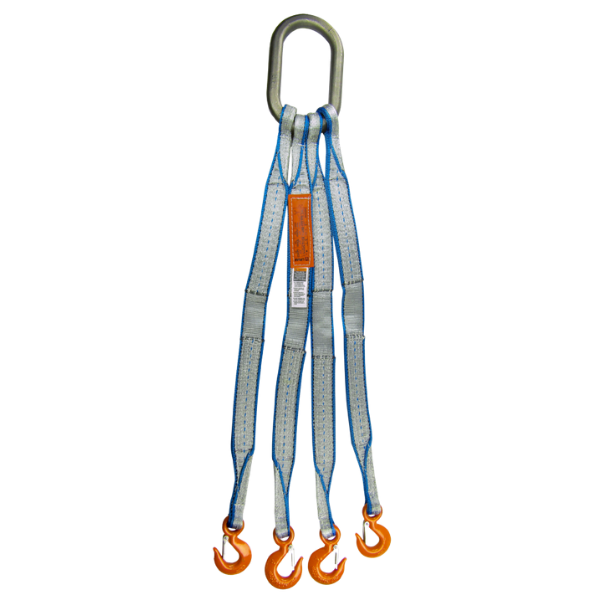
| Lift-All 2-Ply Quad Oblong w/ Sling Hook Tuff-Edge Web Bridle 4" | $2,888 | 4" | 2 | Quad (4-leg bridle) | Tuff-Edge III | View → |
| Lift-All 1-Ply Quad Oblong w/ Sling Hook Tuff-Edge Web Bridle 4" | $2,442 | 4" | 1 | Quad (4-leg bridle) | Tuff-Edge III | View → |
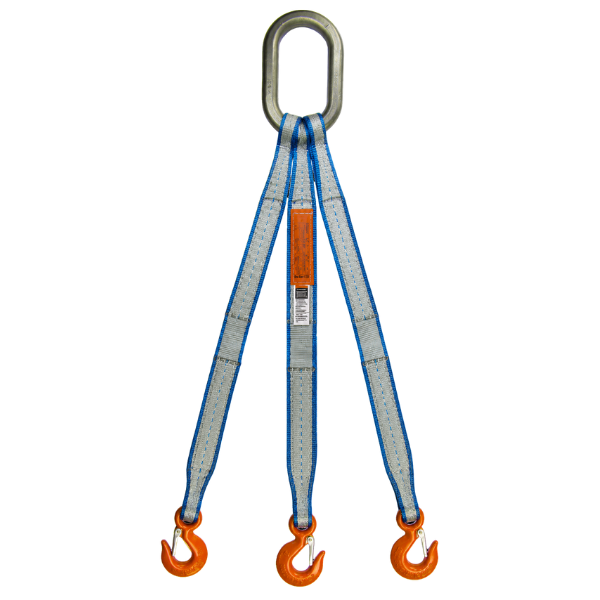
| Lift-All 2-Ply Triple Oblong w/ Sling Hook Tuff Edge Web Bridle 4" | $1,734 | 4" | 2 | Triple (3-leg bridle) | Tuff-Edge III | View → |
| Lift-All 1-Ply Triple Oblong w/ Sling Hook Tuff Edge Web Bridle 4" | $1,245 | 4" | 1 | Triple (3-leg bridle) | Tuff-Edge III | View → |
| Lift-All 2-Ply Triple Oblong w/ Sling Hook Tuff Edge Web Bridle 3" | $1,122 | 3" | 2 | Triple (3-leg bridle) | Tuff-Edge III | View → |
| Lift-All 2-Ply Quad Oblong Endless Tuff-Edge Web Bridle 1" | $668 | — | 2 | Quad | Tuff-Edge III Polyester | View → |
 In StockIn Stock
 In StockIn StockIn StockIn StockIn Stock
 In Stock
 In StockIn StockIn StockIn StockIn StockIn StockIn StockIn StockIn StockIn StockIn StockIn StockIn StockIn Stock
 In StockIn StockIn StockIn StockIn StockIn StockIn StockIn StockIn StockIn StockIn StockIn StockIn StockIn StockIn StockIn StockIn StockIn StockIn StockIn StockIn StockIn StockIn StockIn StockIn StockIn StockIn StockIn StockIn StockIn StockIn StockIn StockIn Stock
Web Bridles Buying Guide
What a bridle is, and when to buy one assembled. A bridle is a finished sling assembly: an oblong master link that drops on the hook, legs of Tuff-Edge web hanging from it, and a bottom end on each leg that attaches to the load. Lift-All's standard web for bridles is Tuff-Edge III, the same cut-resistant webbing used across its web slings, so the bridle inherits that edge protection in a factory-sewn multi-leg build. The reason to buy the assembly rather than rig loose slings and shackles is repeatability. When a load has permanent lift points at known spacing, a machine base with four hoist rings or a skid with two lugs, a matched bridle lands the right legs on the right points every time, with no loose hardware to inventory or drop. If you would rather assemble your own from single slings and connectors, the wider lifting slings range covers those pieces; the bridle is the pre-built answer for a repeat lift.
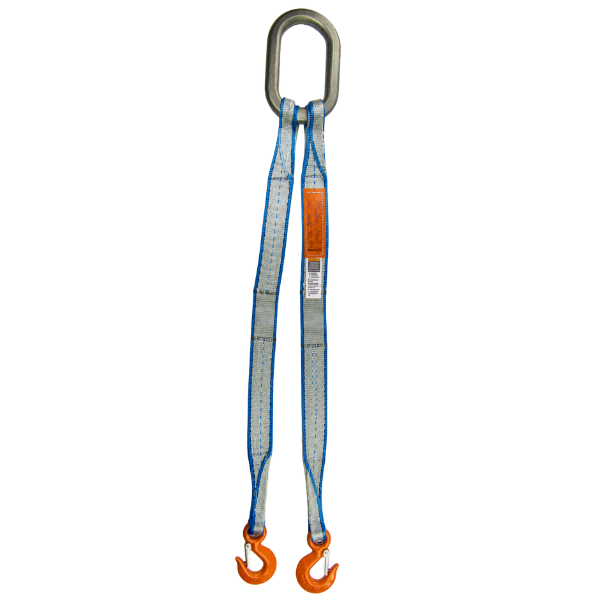
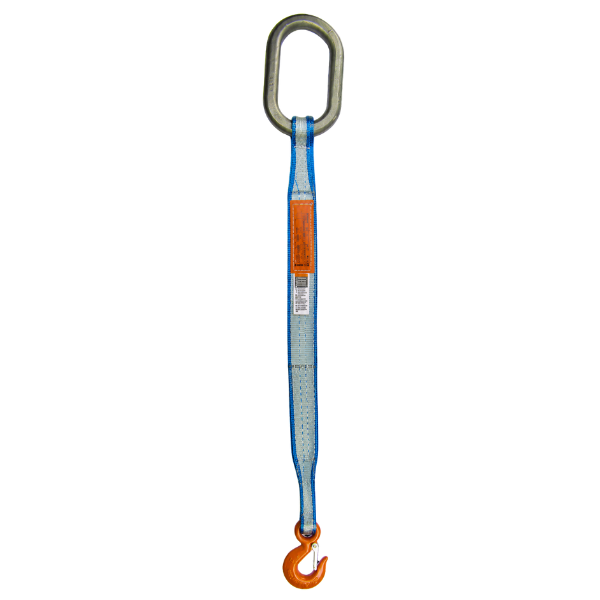
Count the legs to match the pick points. Leg count follows the number of attachment points on the load. A single leg is for a load with one pick point over its center of gravity, a coil on a hook or a drum with a single bail. A double handles two points and lets the load hang level between them. Triple and quad bridles are for rigid rectangular loads, machine frames, weldments, and palletized equipment with lift points at each corner. One rule matters on the quad: on a rigid load, sound rigging practice figures the assembly as if only three legs carry the weight, because a stiff load rarely seats evenly on all four and the fourth leg works as stability against tipping rather than added capacity. So a quad is not a stronger double; buy the leg count that matches the load's real pick points, and size each leg for its share plus the angle.
Bottom ends: sling hook, eye, or endless. The bottom of each leg is where the bridle meets the load, and this collection carries three styles. Sling hooks are the fast connection: they drop straight onto hoist rings and eye bolts, which is why hooked bridles suit pick-and-place work where the rig hooks up and strips off the same load repeatedly. Eye-end legs finish in a sewn web eye instead, meant to take a shackle or to choke around a member, the choice when you want to add your own hardware or cinch the leg. Endless legs are continuous loops with no fitting at all, so you can rotate the contact point between lifts and spread the wear over the whole body rather than gnawing one spot. Pick hooks for speed on fixed points, eyes for shackled or choked connections, and endless where wear life is the priority.
Width and ply set the capacity. A web bridle scales the same two ways a flat sling does. Width adds bearing across the face, and this collection runs 1, 2, 3, and 4 inch web; the wider the leg, the more it spreads its share of the load across painted or machined surfaces without chewing them. Ply stacks layers: a 2 ply leg roughly doubles the single ply rating at the cost of a thicker, stiffer sling that hugs the load less willingly. The arithmetic on the tag is per leg, and then the number of legs and the angle rewrite what the whole bridle can pick. If you want the full breakdown of the per-inch ratings and the end styles behind a web leg, the web slings collection lays it out; on a bridle, favor width when the goal is protecting the load and add ply when you need more capacity in the same width.
The leg angle is doing the math for you. The rating stamped on a bridle leg is a vertical pull, but a bridle almost never pulls straight down; the legs angle in toward the master link, and that angle multiplies the tension in each leg. Take a 10,000 lb load on two legs. Straight up, each leg sees 5,000 lb. At 60 degrees from horizontal each carries about 5,800 lb, at 45 degrees about 7,100, and at 30 degrees the full 10,000, double the naive split. The same physics governs every multi-leg rig, and the fix is cheap: longer legs stand at a steeper angle for a given spread. When you specify a bridle, buy the leg length that keeps your angle at 60 degrees or better over the load's pick spacing, and confirm you have the hook height for it before you assume the building has room.
The rules every synthetic bridle lives by. Web bridles are built and rated to ASME B30.9 and inspected against OSHA 1910.184, with WSTDA-WS-1 behind the webbing itself, and they carry a 5:1 design factor: minimum breaking strength is five times the rated load. That margin absorbs wear and shock, so rig to the rated load, not to the breaking point. Polyester and nylon web may not be used above 180 degrees F, and polyester loses strength quietly before anything looks melted, so a hot load is a job for a chain sling instead. A choker leg holds its rated value only when the angle of choke stays at 120 degrees or more; tighter than that, use the manufacturer's reduced number. Pad every corner and edge, keep the sewn tag legible, and pull any bridle from service the moment the tag is unreadable or the Tuff-Edge damage marker shows through.
Frequently Asked Questions
It is a finished multi-leg lifting sling made from flat polyester webbing, with an oblong master link at the top and one to four legs hanging from it, each ending in a sling hook, a sewn eye, or an endless loop. The bridle hangs from a single crane hook and spreads to the load's fixed lift points, so it rigs as one assembly rather than a handful of loose slings and shackles.
Match the leg count to the number of pick points on the load. One point over the center of gravity takes a single, two points take a double, and rigid loads with lift points at each corner take a triple or quad. On a rigid load, figure a quad as if only three legs carry the weight, since a stiff load seldom bears evenly on all four and the fourth leg mainly adds stability against tipping.
Sling hooks connect fastest to hoist rings and eye bolts, so they suit repeat pick-and-place lifts. Eye ends take a shackle or choke around a member when you want to add your own hardware. Endless loops let you rotate the wear point between lifts to extend the sling's life. This collection carries all three across 1 to 4 inch widths in 1 and 2 ply.
OSHA 1910.184 caps polyester and nylon web slings at 180 degrees F, and polyester loses strength before it shows visible damage. For loads that are hot, or all sharp edges, move to a chain sling, which shrugs off heat and abrasion that retire synthetic web.
A web bridle is lighter, cheaper, and gentler on painted or machined surfaces, and it is the right pick for clean loads with fixed lift points at ambient temperature. A chain bridle is the choice when the lift involves heat above 180 degrees F, sharp edges, or rough daily shop abuse, and when you want to inspect the assembly link by link over years of service.
Bridles are built and rated to ASME B30.9 with a 5:1 design factor, meaning minimum breaking strength is five times the rated load, and they are inspected against OSHA 1910.184. Rig to the rated load on the tag, keep the tag legible, pad every corner, and retire any bridle whose tag is unreadable or whose Tuff-Edge damage marker is showing.