2 Leg Chain Slings
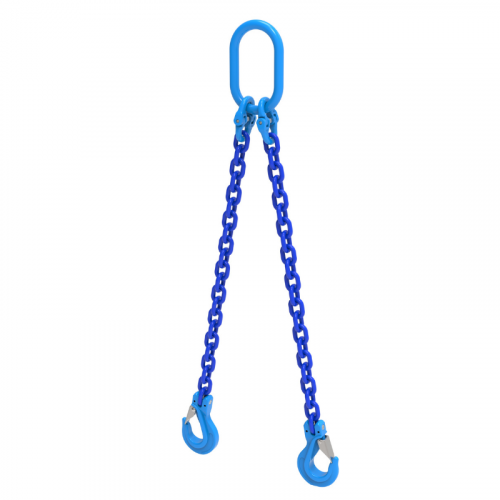
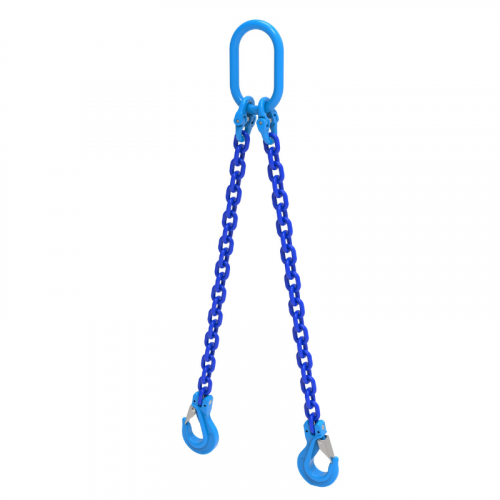
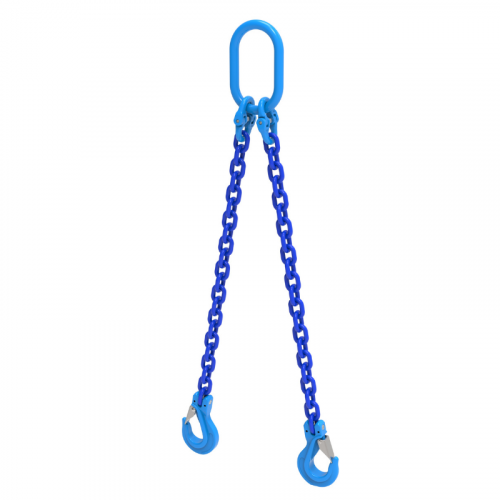
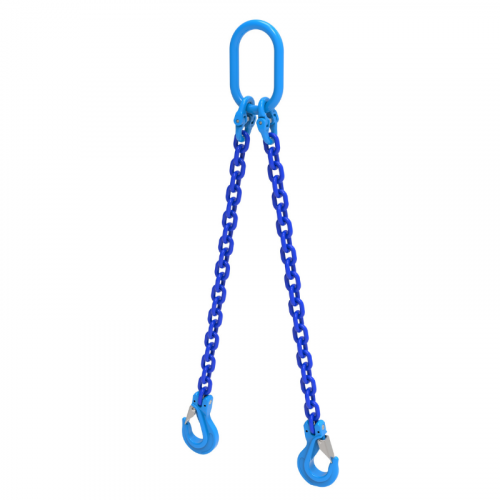
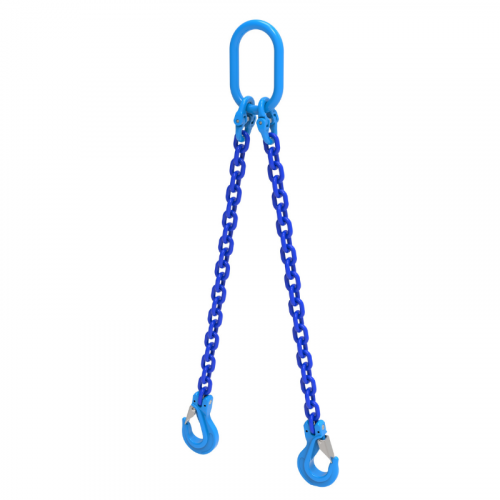
A 2 leg chain sling is two legs of alloy chain hung from one master link, sized for a load that carries two pick points and needs to ride level under the hook. This collection is built on William Hackett Grade 100 assemblies, from 1/4 inch chain rated 3,800 lb up to 1-1/4 inch rated 127,800 lb, with starting prices from around $194. Each sling arrives with the master link, both legs, and the hooks matched and tagged as one unit, in effective working lengths from 3 to 30 ft. The rated capacity on the tag already accounts for two legs standing at a 45 degree angle, so the number you read is the number you rig to. Grade 100 alloy carries about 25% more working load than Grade 80 at the same chain diameter, which is why the double stays light enough to handle by hand even at the heavier ratings. Standard latch hooks or self-locking hooks ship on every size, with optional grab hooks for shortening a leg in the field.
Compare 2 Leg Grade 100 Chain Slings
| Model | Price | Overall Length | Capacity | |
|---|---|---|---|---|
| William Hackett 1-1/4 Inch Diameter 127800lbs 2-Leg Chain Sling | $5,782 | 3-30 ft | 127800 lb | View → |
| William Hackett 1 Inch Diameter 84200lbs 2-Leg Chain Sling | $2,505 | 3-30 ft | 84200 lb | View → |
| William Hackett 7/8 Inch Diameter 60400lbs 2-Leg Chain Sling | $949 | 3-30 ft | 60400 lb | View → |
| WH 5/8 Inch Dia. x WLL 32000lbs Double Leg Grade 100 Chain Slings | $762 | 3-30 ft | 32,000 lb | View → |
| William Hackett 3/4 Inch Diameter 49900lbs 2-Leg Chain Sling | $601 | 3-30 ft | 49900 lb | View → |
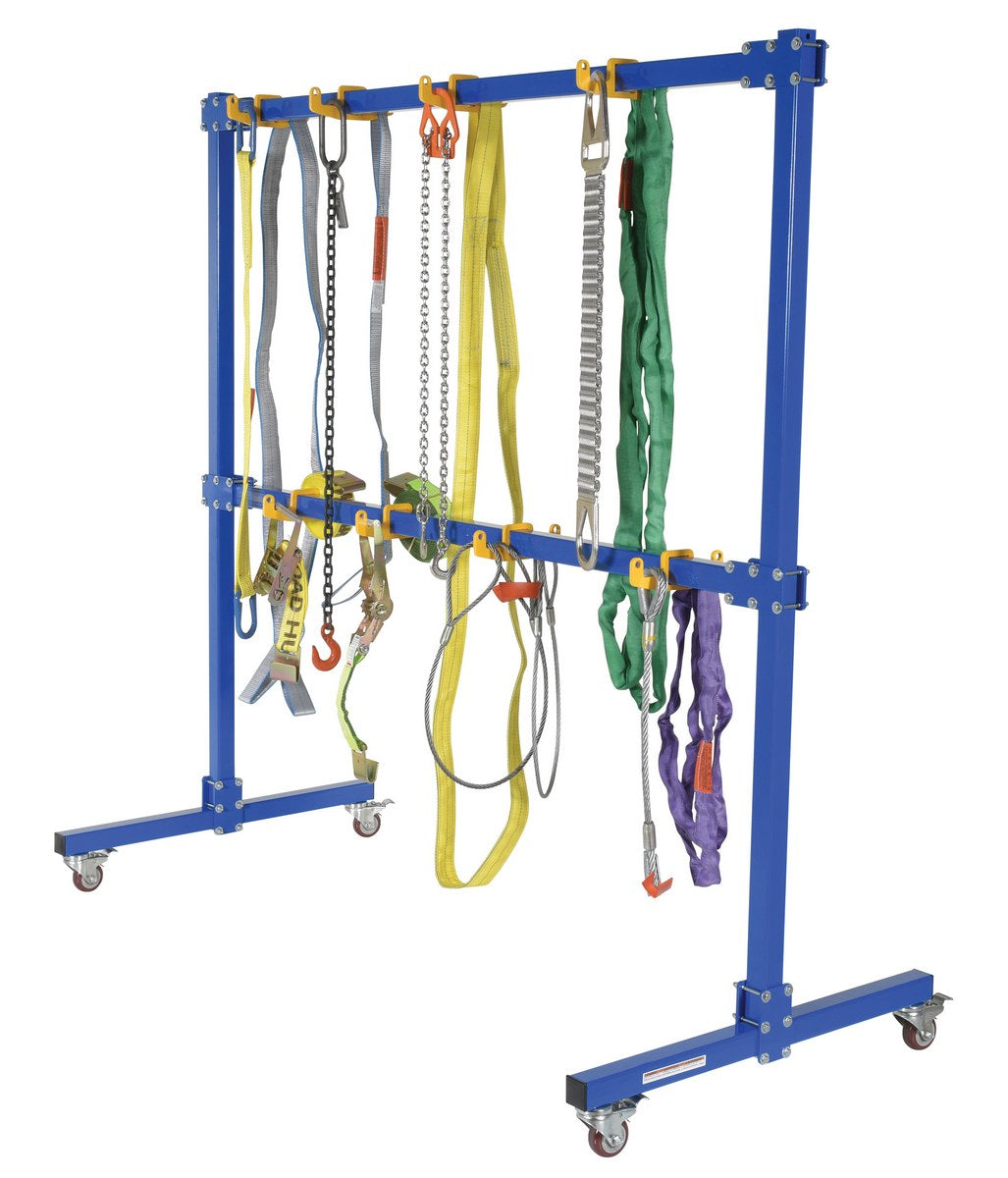
| Vestil Lifting Sling Rack | $519 | — | 2,000 lb | View → |
 In Stock
 In Stock
 In Stock
 In Stock
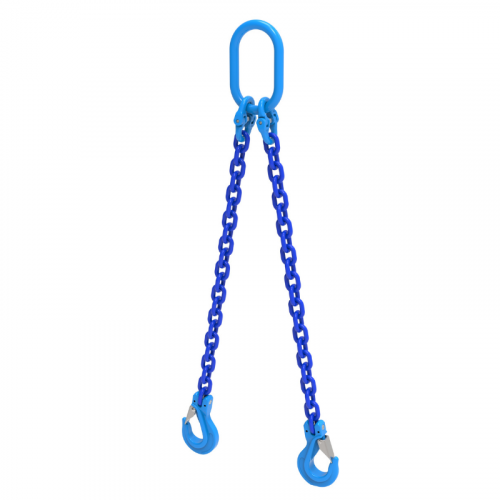 In Stock
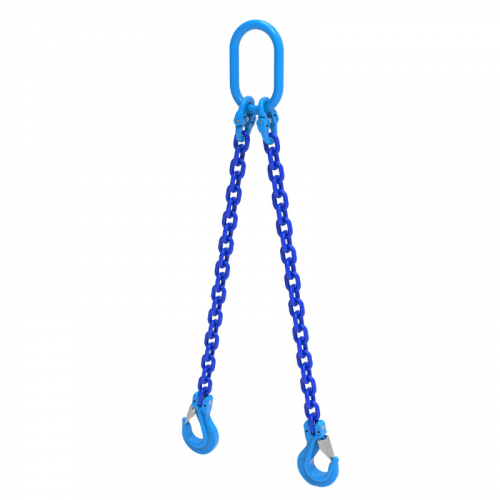 In Stock
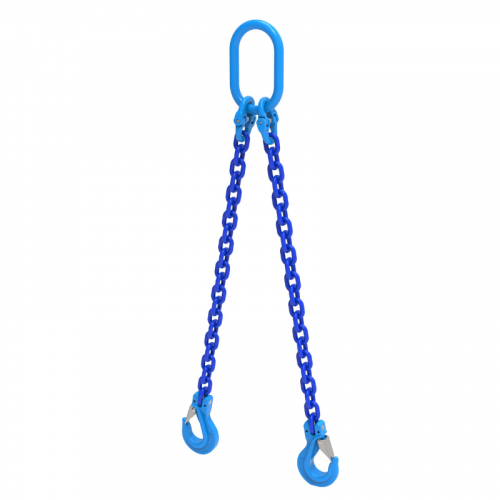 In Stock
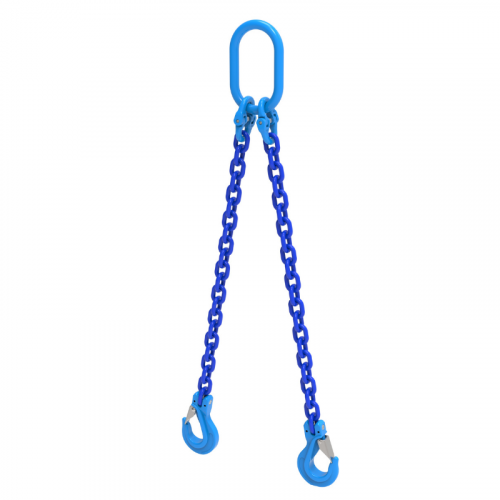 In Stock
 In Stock
 In Stock
2 Leg Grade 100 Chain Slings Buying Guide
When a two-leg sling is the right pick. Leg count follows the load's pick points, not its weight. A single leg is for a load that hangs plumb from one lifting point: an eye, a bail, or a central lug. Step up to two legs when the load has two pick points set apart and needs to ride level under the hook, which covers most beams, weldments, and machine bases with a lug at each end. When a rigid load carries four corners, a 4-leg sling spreads the pick, though only three of its legs are ever counted on in the rating. The whole William Hackett range in Grade 100 chain slings runs single, double, and 4-leg off the same chain and fittings, so you match the configuration to the load and let the tag set the size.
What the tag already assumes. Run the arithmetic on the tags and the design basis falls out. The 1/2 inch single leg rates 15,000 lb; the 1/2 inch double rates 21,200 lb, which is two legs at a 45 degree angle from horizontal rather than a naive 30,000. That 1.4 factor, roughly two legs times the sine of 45 degrees, is the EN 818-4 mode factor William Hackett rates to, and it holds up and down the range: 1/4 inch reads 2,700 lb single and 3,800 lb double, 5/16 inch reads 5,700 and 8,100. The takeaway is that the printed capacity is conservative on purpose, figured around legs at a real working angle rather than a straight vertical pull, so you size off the tag without a second calculation as long as you keep the legs at 45 degrees or steeper.
Sling angle moves the tension fast. The tag's 45 degree assumption cuts one way and bites the other. Rig the two legs steeper than 45 degrees, closer to vertical, and each leg carries less tension than the rating assumed, so the margin lands in your favor. Rig them flatter and tension climbs quickly, because more of the load pulls sideways along each leg instead of straight up. At 30 degrees from horizontal each leg carries the full load rather than half of it, double its fair share, and rigging practice treats angles below 30 degrees as off-limits because the numbers run away. The fix costs nothing but planning. Longer legs stand at a steeper angle over the same spread, so order the working length that keeps your legs at 45 degrees or better, and confirm the headroom above the load first, since the master link sits well above the pick points.
Leveling an off-center load. Two legs ride level only when the hook sits over the load's center of gravity. On a symmetric load with equal legs that happens on its own; on an off-center load the sling tips until the hook finds the balance point, and one leg quietly takes more than its share. The clean answer is to shorten the long side. Order the double with the Chain Adjustment Grab Hooks option and a rigger can grab up a leg in the field to bring an off-center load level instead of buying a custom reach for every job. One caution worth knowing: a plain grab hook that pinches the chain link reduces the leg's working load limit, usually by about 20%, while a cradle-style grab hook that fully supports the link holds full rating. Loose grab hooks, replacement legs, and shortening clevises live in Grade 100 chain components if you build and repair your own assemblies.
Why chain carries these lifts. Chain is the sling you reach for when the lift would destroy a synthetic. Grade 100 alloy holds its full rated capacity up to 400 F, with published reduction tables above that, where polyester webbing and round slings come out of service at 194 F. It shrugs off the edges, weld spatter, and shop abuse that cut and abrade soft slings, and it can be inspected link by link across years of service instead of being retired on the first bad nick. Against Grade 80, Grade 100 carries about 25% more working load at the same chain diameter, so a double hits its rating on thinner, lighter chain, which matters when a rigger is handling two legs by hand. If you are still weighing chain against a softer sling, the broader chain slings collection lays the families side by side.
Hooks, tags, and ASME B30.9. Two hook choices ship on these slings. The standard sling hook with a latch is the default and the economical pick; the self-locking hook adds a spring-loaded gate that stays shut under vibration and load, which earns its place on repeated lifts and anything that could shake a latch open. Whichever you choose, chain slings fall under ASME B30.9 and OSHA 1910.184, which call for a visual check before every use plus a documented periodic inspection on a schedule that tightens as the sling works harder. The removal criteria are concrete: a missing or illegible tag, cracks or breaks, links stretched or worn past the maker's allowance, bent or gouged links, and a hook opened at the throat all take the sling out of service until a qualified person rules on it. The assembly is proof tested and tagged as one unit when it ships, so keep that certificate filed with your periodic records.
Frequently Asked Questions
For the whole two-leg sling, with both legs standing at a 45 degree angle from horizontal. That works out to about 1.4 times a single leg of the same chain, not double it. The 1/2 inch single rates 15,000 lb and the 1/2 inch double rates 21,200 lb for exactly that reason. Size off the assembly tag and keep your legs at 45 degrees or steeper, and the printed number stays honest.
Match the tag rating to your load weight. This collection runs from 3,800 lb on 1/4 inch chain up to 127,800 lb on 1-1/4 inch, so there is a size for most picks. Because the rating already assumes a 45 degree leg angle, you do not need a separate calculation as long as you rig at that angle or steeper. When headroom allows, order a longer working length so the legs stand steeper over the same spread.
Get the crane hook over the load's center of gravity, then shorten the leg on the high side. Ordering the sling with the Chain Adjustment Grab Hooks option lets a rigger grab up one leg in the field to bring an off-center load level. Note that a plain grab hook pinching the link cuts that leg's working load limit by roughly 20%, while a cradle-style grab hook that supports the link keeps full rating.
No. OSHA 1910.184 and ASME B30.9 require alloy steel chain, which in practice means Grade 80 or Grade 100, for any overhead lift. Grade 70 transport chain and binder chain are securement products for tying down loads on trailers and never belong over a hook. Every William Hackett assembly here is built from Grade 100 alloy chain and tagged for overhead lifting.
The standard sling hook with a latch is the economical default and fine for controlled shop and yard lifts. Choose the self-locking hook when the load could vibrate, spin, or bump the rigging, or on repeated production lifts, since its spring gate stays positively shut under load rather than relying on a latch that can be knocked open.